
 Willie Regan
Picture this: a warm, inviting kitchen filled with the mouth-watering scent of simmering pork, garlic, and soy sauce. The conversation flows, laughter bubbles over, and everyone looks forward to the delicious feast ahead. That’s the magic of serving Adobo Pork, a dish that’s equally comfortable at a family gathering or a casual weekend meal. This flavorful dish pairs beautifully with jasmine rice and a bright green side salad or some steamed vegetables. Trust me, you won’t want to miss out!

Adobo is more than a dish; it’s a beloved staple in Filipino cuisine, steeped in history and culture. Its simplicity shines through its transformative flavors, making it a go-to for busy weeknights and elaborate gatherings alike. With perfectly tender pork simmered in a savory and tangy sauce, it quickly becomes a family favorite that kids and adults alike can relish.
You Might Also Like These Recipes!
What is Adobo Pork?
Adobo Pork is a Filipino dish that generally consists of pork marinated and slow-cooked in a mixture of soy sauce, vinegar, garlic, bay leaves, and peppercorns. It’s one of the most iconic recipes in the Philippines, often representing the heart of Filipino home cooking. The beauty of this dish lies not just in its flavors but also in its adaptability; families across the Philippines have their own special twists, making it a cherished recipe that gets passed down from generation to generation.
Why You’ll Love This Adobo Pork Recipe
This Adobo Pork dish is a favorite for numerous reasons. First, it’s incredibly easy to prepare with minimal prep work needed. Second, the slow cooking creates a depth of flavor that makes the pork melt-in-your-mouth tender. Lastly, it’s a frugal dish that stretches your grocery budget while making everyone happy at the dinner table. Pair it with jasmine rice, and you have yourself a satisfying meal that will keep you coming back for more.
The Ingredients You Will Need To Make This Dish
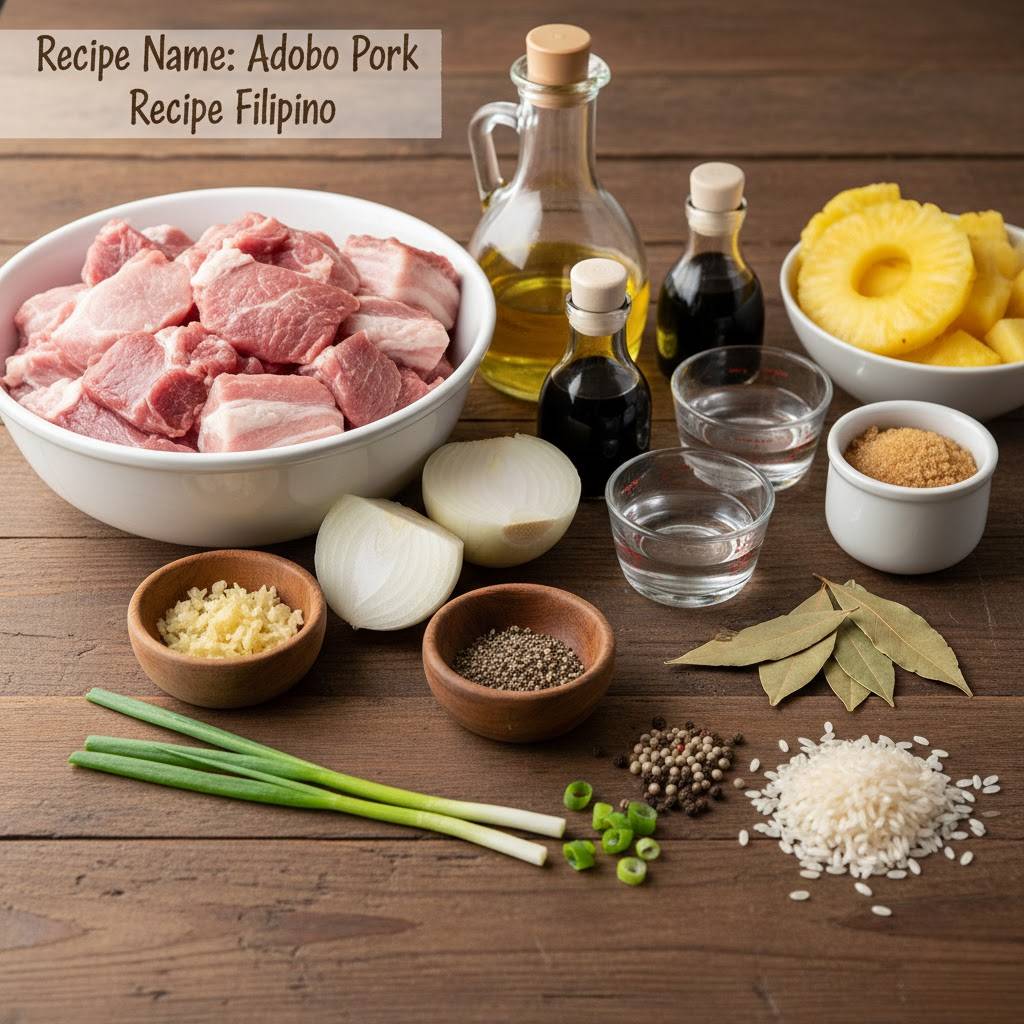
Here’s what you’ll need for this scrumptious Adobo Pork:
– 1 kg (2 lb) pork shoulder (cut into 6 cm/2.5-inch cubes, preferably with some fat for flavor)
– 6 cloves garlic, finely minced for that punch of flavor
– 1 medium onion, cut into wedges
– 2 tbsp vegetable oil, or any neutral-flavored oil you have on hand
– 3 cups water
– 1/2 cup light soy sauce, though you can use regular/all-purpose if that’s what you have
– 1 1/2 tsp dark soy sauce
– 1/4 cup rice vinegar, or regular white vinegar in a pinch
– 3 tbsp brown sugar, tightly packed for sweetness
– 1 1/2 tsp black peppercorns, though you can omit if you prefer less heat
– 5 bay leaves, fresh is best, but dried will do
– Optional:
– 6 pineapple rings, each cut into pieces (about 8 pieces total) from canned pineapple in juice, or 2 cups of fresh pineapple chunks
– 2 green onions, finely sliced for garnish
– 2 batches of jasmine rice (or any rice of your choice—garlic rice pairs wonderfully!)
How to Make Adobo Pork
Let’s break down the steps to create this cozy dish. The process is straightforward but yields incredible results that will fill your home with enticing aromas and create a warm atmosphere. Read on for a detailed step-by-step guide!
Step-by-Step Directions
Step 1: Brown the Pork

In a large, heavy-bottomed pot, heat the vegetable oil over medium-high heat. Once the oil is shimmering, add half of the pork cubes to the pot, searing them on all sides until golden brown—this should take about four minutes. Once nicely browned, remove the pork and set it in a bowl, then repeat with the remaining pieces. This step builds a beautiful base flavor for the dish, so don’t skip it!
Step 2: Sauté the Aromatics
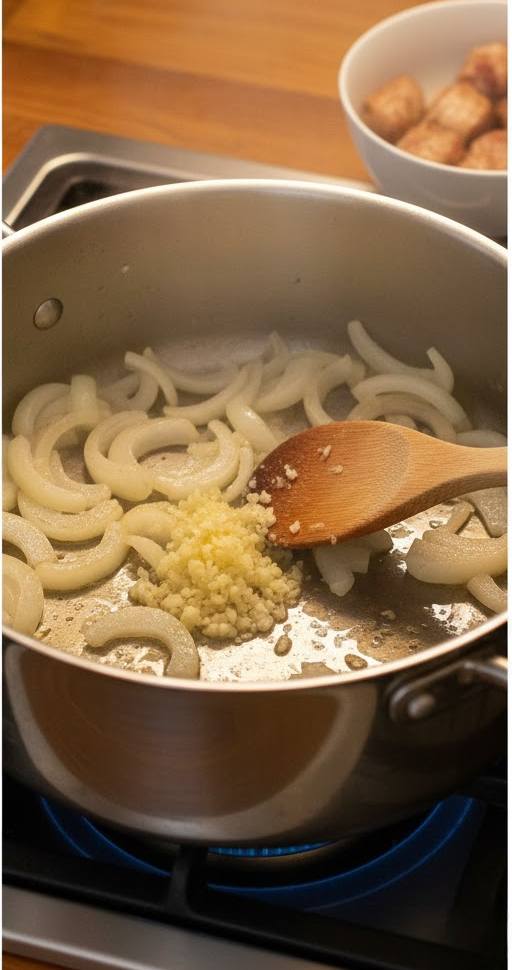
Lower the heat to medium and toss in the onion wedges. Sauté them for about two minutes until they start to soften, then add the minced garlic and continue to cook for an additional minute until it becomes fragrant. You want these ingredients to become friends, developing flavor together.
Step 3: Create the Braising Liquid
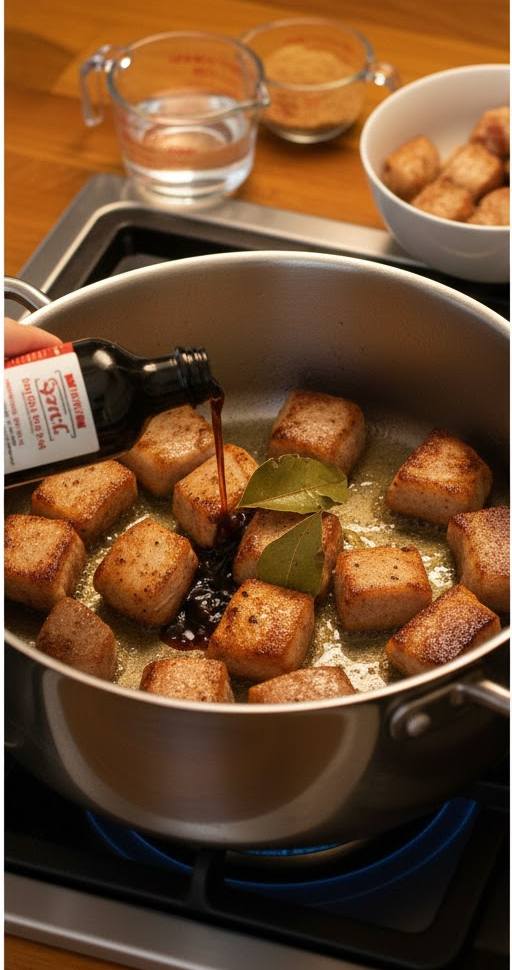
Now it’s time to bring about the magic. Pour in the water, both light and dark soy sauces, rice vinegar, brown sugar, black peppercorns, and bay leaves. Stir everything together to ensure the sugar has dissolved. Return the browned pork and any accumulated juices from the bowl back into the pot.
Step 4: Cook Low and Slow
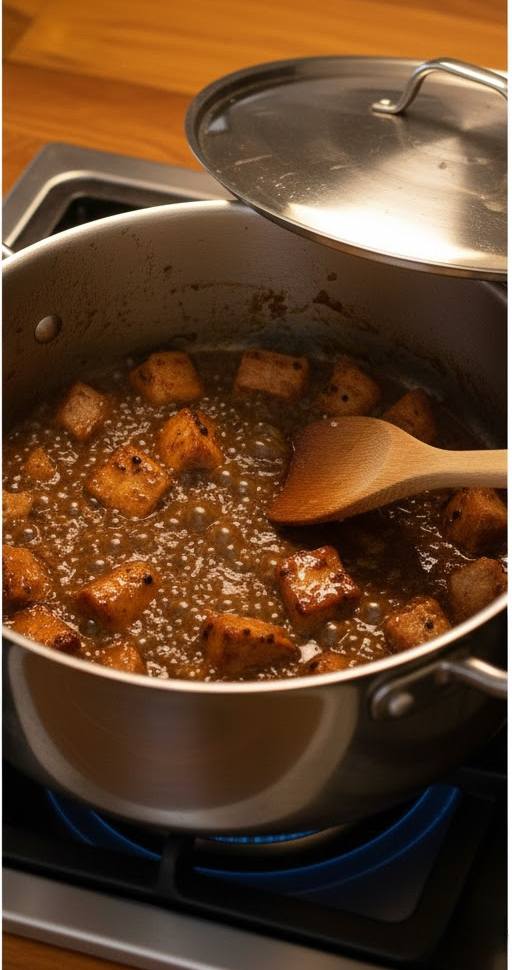
Increase the heat and bring the pot to a gentle boil. Once it’s bubbling, partially cover the pot with a lid, leaving just a small crack for steam to escape. Lower the heat and let it simmer for about an hour and a half, giving you that fall-apart tender texture. Keep an eye on it—if it’s not tender by the end, let it simmer a little longer. Trust me, it’s worth the wait!
Step 5: Caramelize the Pineapple (Optional)
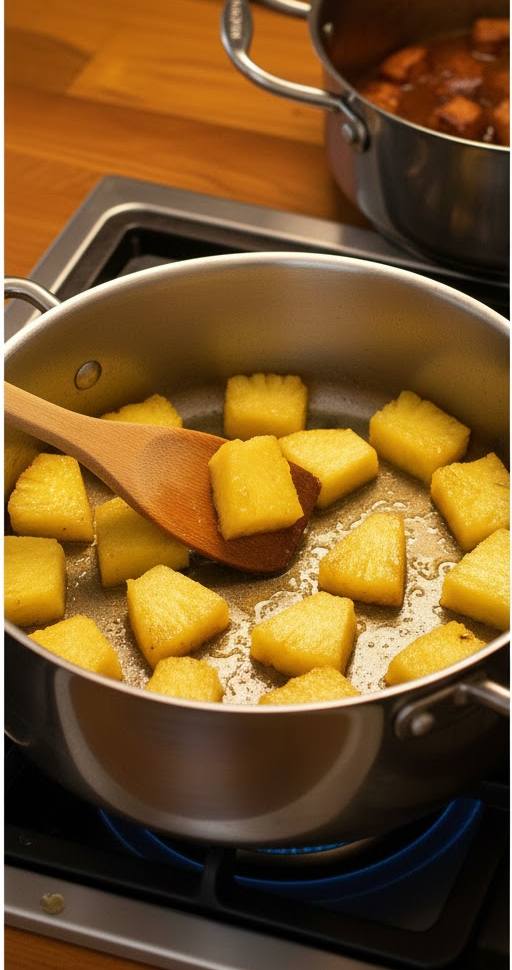
While your pork is bubbling away, heat the additional oil in a non-stick skillet over medium heat. Arrange the pineapple pieces in a single layer and cook for about four minutes on each side, or until they achieve a lovely golden color. Set these aside; they’ll add a wonderful contrast to the savory notes of your dish.
Step 6: Reduce the Sauce
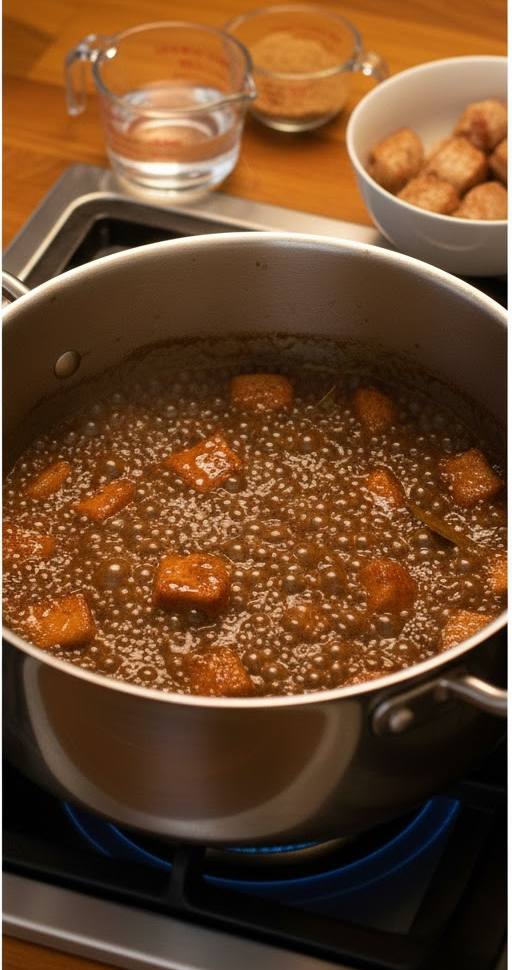
After the pork is nice and tender, carefully remove it from the pot with a slotted spoon. Increase the heat to high and let the sauce boil for around 7-10 minutes, reducing the liquid to about 1 1/2 cups. This will thicken it slightly while intensifying the flavors.
Step 7: Combine and Serve

Bring the pot’s temperature down to low and stir the tender pork and caramelized pineapple back into the sauce, allowing everything to warm through. When it’s ready, serve it over fluffy jasmine rice, garnished with finely sliced green onion for that fresh touch.
Notes
– Cut selection matters: Pork shoulder with some fat creates a more flavorful dish. Avoid too lean cuts.
– Adjust the sweetness: Depending on your palate, you can play with the brown sugar to balance the tanginess of the vinegar.
– Vegetable oil alternatives: If you have coconut oil, it adds a lovely tropical note to the dish.
– Time-saver tip: You can prepare the sauce and browning the pork ahead of time, storing them separately until you’re ready for the slow-cooking stage.
– Pineapple preference: If pineapple isn’t your thing, feel free to skip it or substitute it with a different fruit for a sweetness upgrade.
Storage Tips
To store the Adobo Pork, allow it to cool completely at room temperature first. After that, transfer it to an airtight container or a zip-lock bag. It will keep well in the fridge for up to four days. For longer storage, you can freeze it for up to three months. Just make sure to thaw it in the refrigerator overnight before reheating.
Nutrition Information
A serving of Adobo Pork contains approximately 450 calories. It’s a well-balanced dish that provides a good source of protein, essential vitamins, and minerals, especially when served with rice or vegetables. This dish is hearty and fulfilling, making it a great option for dinner.
Serving Suggestions
– Over Jasmine Rice: The light and fluffy texture of jasmine rice perfectly complements the rich sauce and tender pork.
– With Garlic Rice: Serve with garlic rice for an extra layer of flavor.
– On a Bed of Greens: Try spooning it over a fresh salad for a delightful twist.
– With Tortillas: Shred the pork and use it as a filling for tacos. Top with slaw or fresh pico de gallo.
– Accompanied by Steamed Vegetables: Pair it with steamed broccoli or green beans for a colorful, nutritious meal.
What Other Substitutes Can I Use in Adobo Pork?
– Meat Alternatives: You can substitute pork with chicken thighs or drumsticks for a lighter version.
– Vinegar Variations: Try apple cider vinegar for a fruitier taste, or even tamarind paste for an interesting twist.
– Sugar Substitutes: If preferred, use honey or agave syrup in place of brown sugar.
– Soy Sauce Alternatives: For a gluten-free option, use tamari instead of soy sauce.
– Additional Vegetables: Add bell peppers or carrots for a heartier dish that brings in more vegetables.
Conclusion
Creating Adobo Pork might just become one of your new favorite kitchen memories. The comforting flavors, the happy sounds of family around the table, and the satisfaction of a delicious meal made with love—what more can you ask for? It truly is an iconic dish in Filipino cuisine that transcends borders and bridges hearts. So gather those ingredients, roll up your sleeves, and get ready to savor every delightful bite!
You Might Also Like These Latest Recipes!
Buffalo Chicken Alfredo Recipe
BBQ Chicken Bowls with Sweet Potatoes and Coleslaw (Whole30) Recipe

Adobo Pork Recipe Filipino – Grandma’s Tasty Recipes
Ingredients
Method
- In a large, heavy-bottomed pot, heat the vegetable oil over medium-high heat. Once the oil is shimmering, add half of the pork cubes to the pot, searing them on all sides until golden brown—this should take about four minutes. Once nicely browned, remove the pork and set it in a bowl, then repeat with the remaining pieces. This step builds a beautiful base flavor for the dish, so don’t skip it!
- Lower the heat to medium and toss in the onion wedges. Sauté them for about two minutes until they start to soften, then add the minced garlic and continue to cook for an additional minute until it becomes fragrant. You want these ingredients to become friends, developing flavor together.
- Now it’s time to bring about the magic. Pour in the water, both light and dark soy sauces, rice vinegar, brown sugar, black peppercorns, and bay leaves. Stir everything together to ensure the sugar has dissolved. Return the browned pork and any accumulated juices from the bowl back into the pot.
- Increase the heat and bring the pot to a gentle boil. Once it’s bubbling, partially cover the pot with a lid, leaving just a small crack for steam to escape. Lower the heat and let it simmer for about an hour and a half, giving you that fall-apart tender texture. Keep an eye on it—if it’s not tender by the end, let it simmer a little longer. Trust me, it’s worth the wait!
- While your pork is bubbling away, heat the additional oil in a non-stick skillet over medium heat. Arrange the pineapple pieces in a single layer and cook for about four minutes on each side, or until they achieve a lovely golden color. Set these aside; they’ll add a wonderful contrast to the savory notes of your dish.
- After the pork is nice and tender, carefully remove it from the pot with a slotted spoon. Increase the heat to high and let the sauce boil for around 7-10 minutes, reducing the liquid to about 1 1/2 cups. This will thicken it slightly while intensifying the flavors.
- Bring the pot’s temperature down to low and stir the tender pork and caramelized pineapple back into the sauce, allowing everything to warm through. When it’s ready, serve it over fluffy jasmine rice, garnished with finely sliced green onion for that fresh touch.


