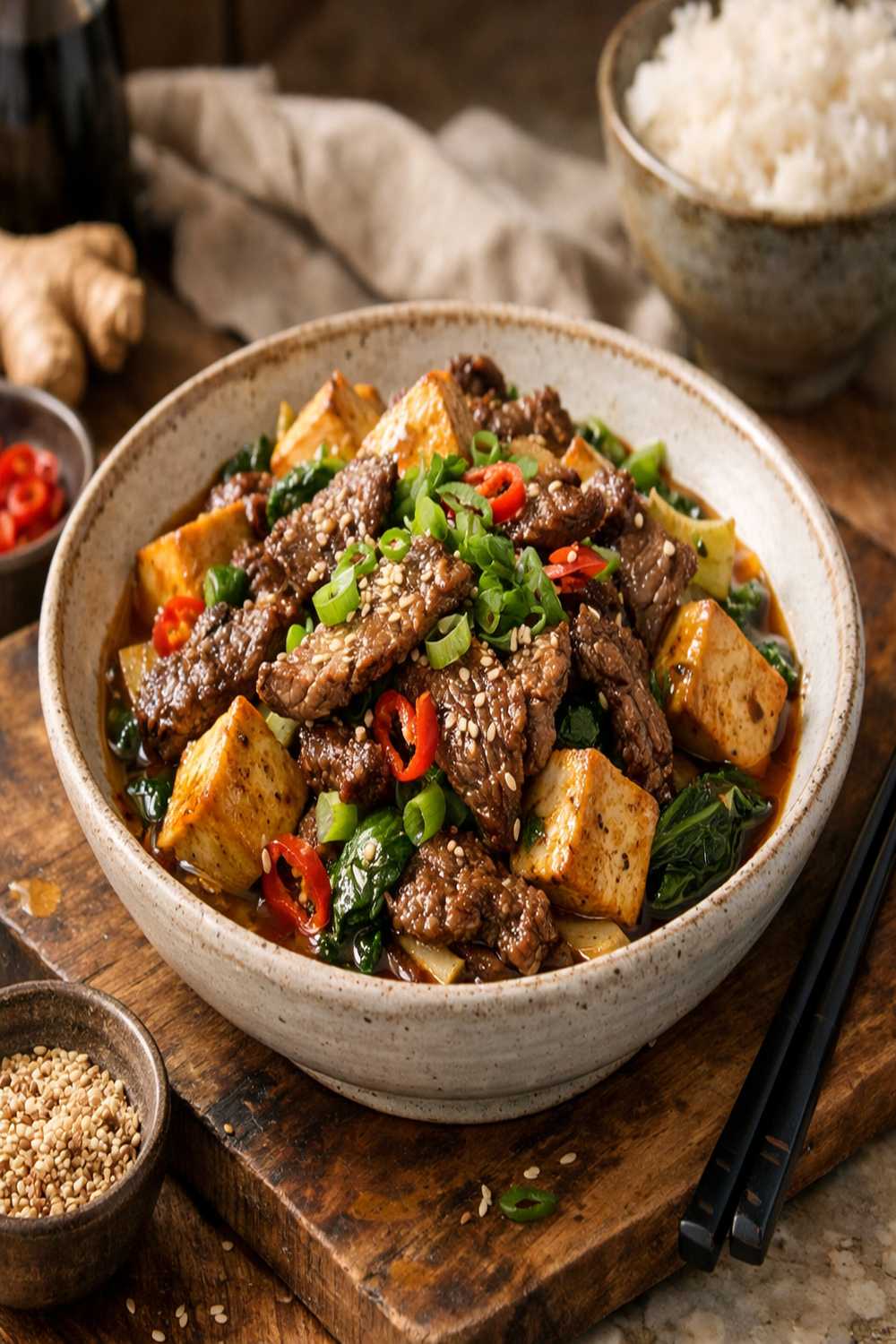

Ingredients
Method
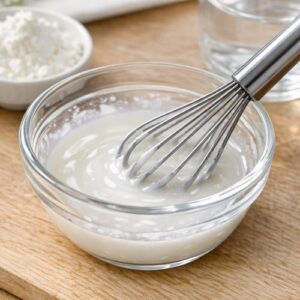
Step 1: Prepare Your Cornstarch Slurry (The Foundation of Everything)
- In a small bowl, add 1 tablespoon of cornstarch. Pour in 2 tablespoons of water—just enough to make a thin paste. Whisk until completely smooth with no lumps. This is critical. Lumpy cornstarch creates grainy sauce instead of silky sauce. Once smooth, add the remaining sauce ingredients: soy sauce, sweetener, hoisin, sake or rice wine, and stock powder. Stir until everything dissolves and combines fully. Set this beside your wok. You cannot stop to mix this once cooking begins.
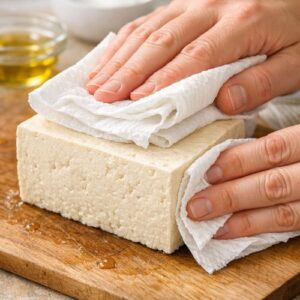
Step 2: Cut and Press Your Tofu (No Waterlogged Sadness)
- Pat your firm tofu block dry with clean paper towels—this matters more than you'd think. Wet tofu won't brown even slightly and will release water into your sauce. Cut the tofu into ½-inch cubes (about the size of dice). Don't worry about perfection; consistency in size is more important than precision. Set the cubes on a paper towel-lined plate while you prepare the rest. This extra drainage step prevents the mushy tofu problem entirely.
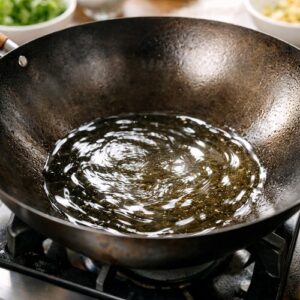
Step 3: Heat Your Oil to True Wok Temperature
- Place your wok or large skillet over high heat. Add 2 tablespoons of peanut oil. The oil should shimmer and move like water, not sit heavy and still. When you see the surface ripple with movement, you're ready. This is the moment where impatience ruins everything. Wait for it. My grandmother would say, "The wok tells you when it's ready. Listen."
Step 4: Bloom the Aromatics (The Magic Moment)
- The instant the oil shimmers, add your minced garlic. Cook for exactly 10 seconds, stirring constantly. You'll smell it transform—from raw to golden. Don't wait longer. Garlic burns in seconds, and burned garlic tastes bitter and ruins everything downstream. The moment it's fragrant, add your minced ginger. Stir for another 10 seconds. Same principle. You're not cooking these; you're releasing their essential oils. Then add your minced scallions. 30 seconds total, stirring continuously. When the scallions soften slightly, you move to the next step.
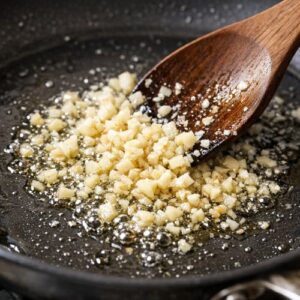
Step 5: Add the Beef and Build Your Umami Base
- Add all 5 ounces of ground beef to the wok. Break it into small pieces immediately using your spatula or wooden spoon. Don't let it clump. As it hits the heat, it'll release moisture and start browning. Keep breaking it up for 3-4 minutes until the outside is visibly browned and the pink is gone. This isn't just about food safety—it's about developing flavor compounds through the Maillard reaction. The beef releases savory, umami-rich compounds that will coat every cube of tofu.
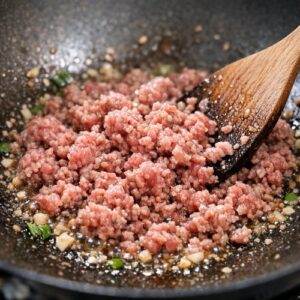
Step 6: Introduce the Chili Bean Sauce (Careful With Heat)
- Once the beef is browned, add 2 teaspoons of chili bean sauce. This is where many recipes fail—they dump it in and let it burn. Instead, stir constantly for 30 seconds to distribute it evenly. The sauce will coat the beef, and you'll see the color deepen. The fermented heat and umami depth transform what was simple ground beef into something complex and crave-able. This is the moment my grandmother would smile. This is where technique becomes flavor.
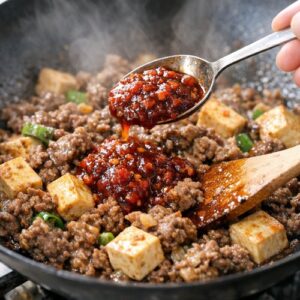
Step 7: Add the Tofu and Pour the Sauce (The Gentle Assembly)
- Gently add your pressed tofu cubes to the wok. Don't stir aggressively; stir gently and slowly, ensuring the tofu is distributed throughout without breaking. You want every cube surrounded by the beef and aromatics. Now, pour in your prepared sauce mixture (the cornstarch slurry plus everything else). Stir gently but continuously. This is where the magic happens.
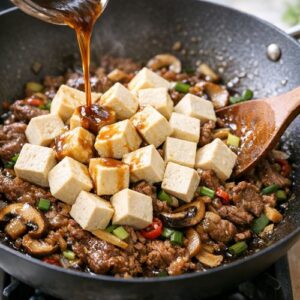
Step 8: Let the Sauce Thicken (Patience Rewarded)
- Watch the sauce carefully for 1-2 minutes. It will go from thin and watery to glossy and coating. You'll see it change in real-time. The cornstarch gelatinizes, the flavors meld, and suddenly you have something that looks like restaurant-quality sauce clinging to every piece. When the sauce coats the back of your spoon and leaves a trail, you're done. The tofu will have absorbed flavors deeply without becoming mushy.
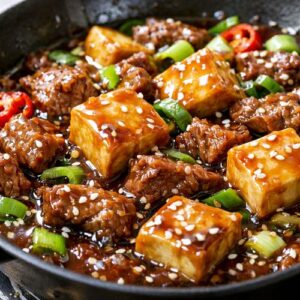
Step 9: Finish With Sesame Oil (The Final Signature)
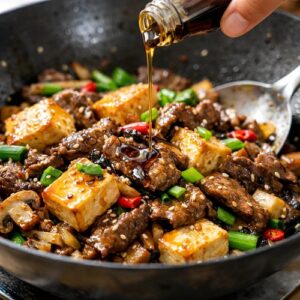
- Remove the wok from heat. Drizzle 1 teaspoon of dark sesame oil over everything and stir gently to combine. The residual heat will release its aroma without damaging its delicate heat-sensitive compounds. This final step is what separates this from a good dish to an unforgettable one. The nutty, toasted aroma is my grandmother speaking through this meal.
Notes
- Using soft or silken tofu instead of firm—it disintegrates before the sauce even thickens, leaving you with beige slurry. Always choose firm. Extra-firm works but requires slightly longer sauce time. Test by gently pressing tofu with your finger—firm tofu bounces back; soft tofu doesn't.
- Not pressing the tofu dry—excess water leaches out during cooking, diluting your sauce and preventing any browning. Pat it aggressively with paper towels. Better yet, wrap cubes loosely and let them sit on a plate for 10 minutes while you prep other ingredients.
- Walking away during the aromatics step—garlic and ginger burn in seconds, and there's no recovering from burned aromatics. Stay present. Stir constantly. The moment you smell them, you're done with that step. Move to the next.
- Overcrowding the wok with heat too low—the beef won't brown if the wok isn't hot enough, and the tofu will steam instead of sear. High heat is non-negotiable. If your wok can't fit everything comfortably in one layer initially, brown the beef completely before adding anything else.
- Skipping the cornstarch slurry step—thickening sauce with just cornstarch and water creates lumps. Pre-mixing it smooth with a small amount of water prevents this entirely. This single step is the difference between amateur and professional results.