
Ingredients
Method
Step 1: Build Your Sauce Foundation
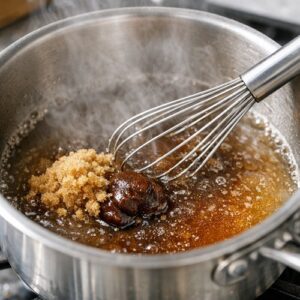
- Begin by heating ¼ cup of filtered water until it steams gently. Add your beef stock concentrate and brown sugar, stirring until both dissolve completely—this takes about 45 seconds of steady stirring. The reason we dissolve these ingredients in hot water first is to create an even flavor distribution. Once combined, add the soy sauce and sesame oil, then set this precious mixture aside to cool slightly. You're creating the soul of your dish right here, so taste it—it should be savory with a whisper of sweetness and that distinctive sesame aroma.
Step 2: Prepare Your Ingredients (mise en place)
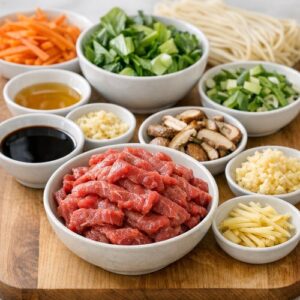
- Traditional Chinese cooking demands that all ingredients be prepped before you touch a hot pan. Slice your beef against the grain into pieces about ⅛-inch thick—this is crucial for tenderness. Cut your carrots on a sharp bias into 2-inch pieces; the diagonal cut exposes more surface area for cooking and adds visual appeal. Break broccoli into florets of similar size so they cook evenly. Dice your onion, mince your garlic, and have everything arranged within arm's reach of your stove.
Step 3: Sear the Beef with Purpose
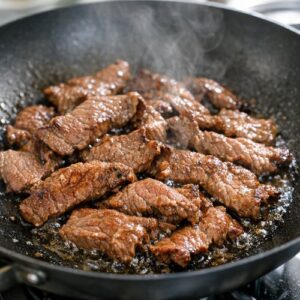
- Heat your skillet or wok to a medium-high temperature—you want it hot enough that a drop of water sizzles and evaporates immediately. Add 1 tablespoon of your cooking oil and let it shimmer. Working quickly, add the beef in a single layer and resist the urge to move it. Let it cook undisturbed for 60-90 seconds until the bottom develops a golden-brown crust. This Maillard reaction creates hundreds of flavor compounds while sealing in the beef's juices. Flip the beef and cook for another minute until just cooked through—remember, it will continue cooking as it sits. The beef should still have a hint of pink; it will finish cooking when we combine it with the vegetables. Remove it to a clean plate. This step is non-negotiable in authentic preparation because it builds what chefs call "fond"—those caramelized bits stuck to the pan that will deepen your sauce.
Step 4: Cook Your Vegetables in Sequence
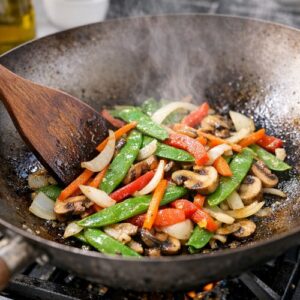
- This is where traditional technique truly shines. Using the same pan (don't wash it—that fond is liquid gold), add another tablespoon of oil. Add your onion pieces and cook them without stirring for 2-3 minutes until the edges turn golden. This technique, called "kissing," develops sweetness in the onions. Stir them once and cook for another minute until they're softened but still have texture. Remove to a clean plate. Add your carrot pieces to the pan and cook for 3-4 minutes, stirring occasionally. Carrots take longer because of their density, and you want them tender but not soft. Add your broccoli florets and cook for 2-3 minutes, then add your minced garlic and cook for just 30 seconds—garlic burns quickly and becomes bitter if overcooked. Return the onions to the pan along with the cooked beef.
Step 5: Bring It All Together
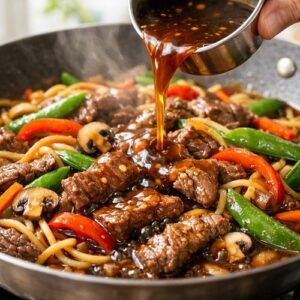
- Pour your sauce over the beef and vegetables and let everything simmer gently for 2 minutes. This is when all the individual flavors begin to marry, when the ingredients stop being separate components and become a unified dish. You'll notice the sauce coating everything, the aromas rising from the pan intensifying. This moment—when you can smell the depth developing—is what authentic cooking is about.
Step 6: Add the Noodles and Final Toss
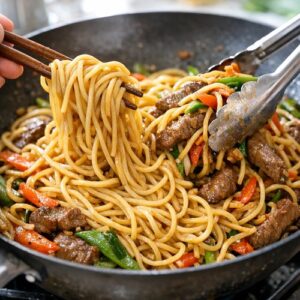
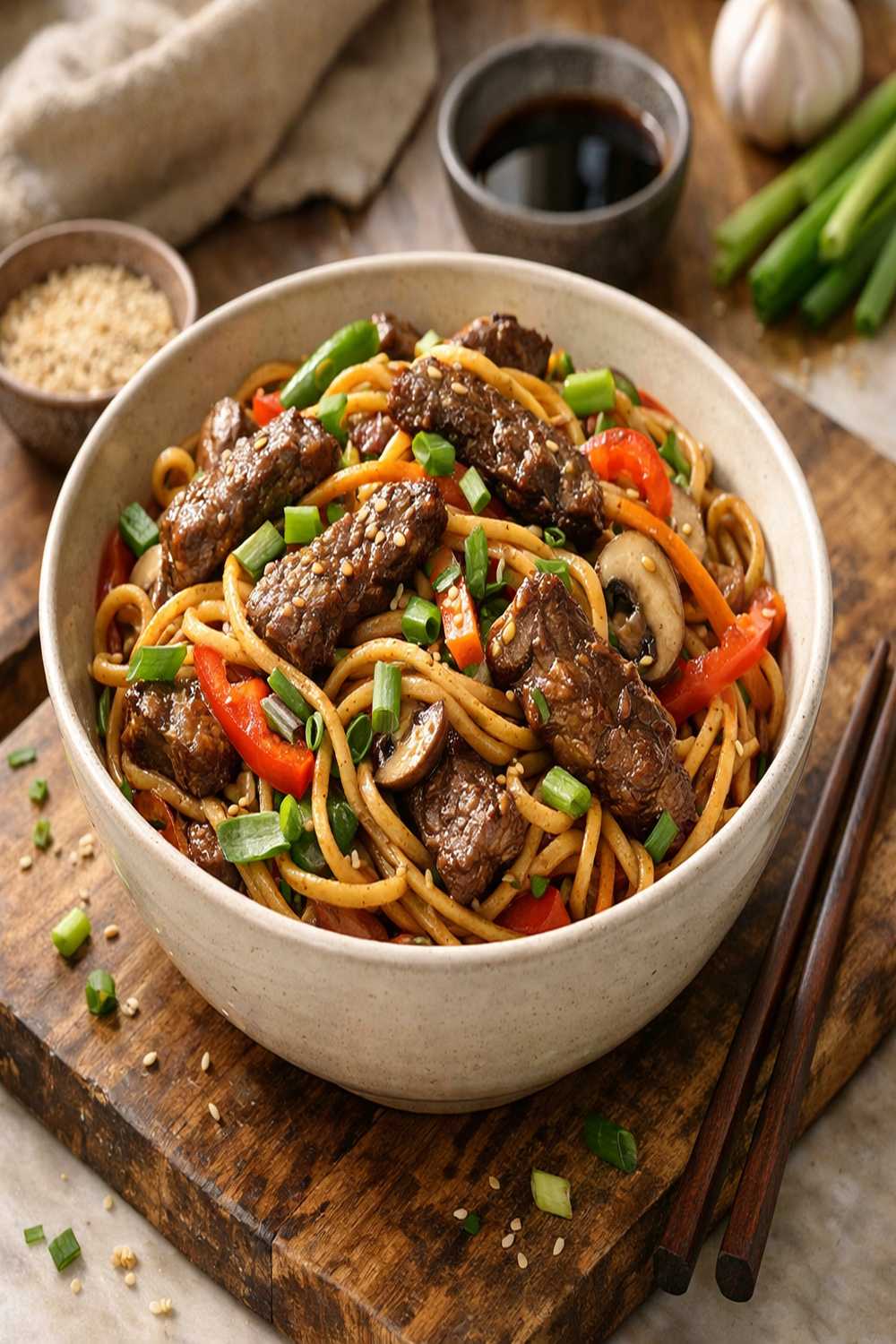
- Add your cooked lo mein noodles to the pan and, using two utensils (chopsticks are traditional, but tongs work beautifully), gently toss everything together for about 1 minute. You're not stirring aggressively; you're folding and combining, ensuring every strand of noodle gets coated with sauce and every piece of vegetable and beef is distributed evenly. Taste and adjust seasoning—you might want a tiny pinch more soy sauce for depth or a drop more sesame oil for aroma. Transfer to a serving bowl or individual bowls and serve immediately. The heat should still be releasing steam, and the noodles should be tender but with a slight al dente quality to their bite.