
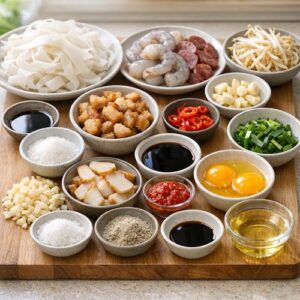
Ingredients
Method
Step 1: Prepare Your Mise en Place With Precision
- Before you heat the wok, every single ingredient must be prepped and arranged in the order you'll use it. This isn't just about convenience—it's non-negotiable for food safety and texture. Raw prawns need to be on a separate plate from the fish cake, because cross-contamination risk is real. Your garlic must be minced, not chopped, because larger pieces will burn before the wok finishes cooking. Your noodles should be loosely broken apart with your fingers, not mashed. The eggs need to be whisked together in a small bowl. All your soy sauces and oyster sauce should be combined in a third small bowl, creating what chefs call your "sauce mixture." This preparation stage, which my grandmother called "setting the stage," typically takes 10-12 minutes. It feels slow, but it's the difference between controlled excellence and chaotic scrambling.
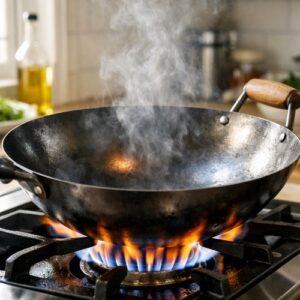
Step 2: Heat Your Wok to the Critical Temperature Threshold
- Set your burner to high heat and place your wok over the flame. Here's the key: you're looking for the wok to reach approximately 400-425°F, and you'll know it's ready when a single drop of water flicked onto the surface immediately vaporizes into steam with an aggressive hiss. This takes 3-4 minutes on a gas burner, or 5-6 minutes on electric. The wait feels long, but insufficient heat temperature is the number one reason home cooks fail at wok cooking. The food will steam rather than sear, and you'll end up with soggy, pale noodles instead of the glossy, caramelized ribbons you're after.
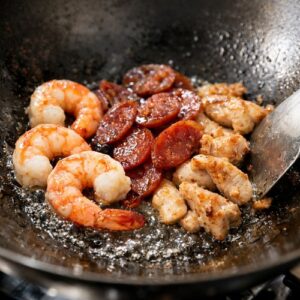
Step 3: Build Your Flavor Foundation With the Protein
- Once your wok is properly heated, add 1.5 tablespoons of lard or high-heat oil. It should shimmer and flow like water within 2-3 seconds. Immediately add your minced garlic—and I mean immediately. The residual heat will bloom the garlic's aromatic compounds, releasing allicin and other sulfur compounds that form the flavor foundation. Stir constantly for exactly 8-10 seconds. Any longer and it burns, turning bitter. Then add your Chinese sausage slices. The sausage already contains rendered fat, so it won't stick. Toss and stir for 12-15 seconds until you see the edges starting to caramelize with dark brown spots. Finally, add your prawns and fish cake simultaneously. This is your protein layer. Stir-fry for 45-60 seconds—you're aiming for the prawns to just turn opaque and firm, not rubbery. The fish cake warms through. The entire process for this step should take about 1.5 minutes.
Step 4: The Noodle Integration Phase
- This is the moment of truth. Your proteins are cooked and creating a flavorful base, and now you introduce the noodles. Add your prepared rice noodles directly to the wok, along with the remaining 1.5 tablespoons of oil. This is where many home cooks make their critical mistake—they try to gently mix. Don't. You need to use two utensils (a spatula and wooden spoon work beautifully) to aggressively toss and turn the noodles, working to coat every strand with the fat and break up any clumps. This should take 45-60 seconds of constant, vigorous movement. You'll see the noodles start to pick up brown spots—that's the Maillard reaction beginning. This is good.
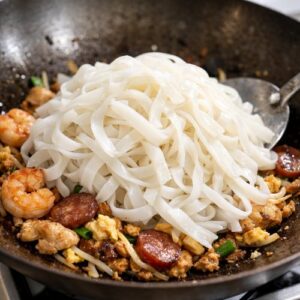
Step 5: Sauce Integration and the Egg Ribbon Technique
- Once your noodles are heated through and showing signs of browning on their flat edges, pour your prepared sauce mixture around the perimeter of the wok, not directly onto the noodles. This distributes it more evenly and prevents clumping. Toss continuously for 20-25 seconds while the sauce coats everything. You'll notice the noodles darkening as they absorb the soy sauces. This is exactly what you want. Now, create a small well in the center of the noodles by pushing them toward the sides of the wok. Pour your whisked eggs into this well. Let them sit undisturbed for 5 seconds—this creates a cooked base layer. Then, using your spatula, gently stir the eggs, breaking them into ribbons as they cook. After 10-12 seconds, fold these egg ribbons throughout the entire noodle mixture. The residual heat will finish cooking the eggs while they coat the noodles in a silky layer.
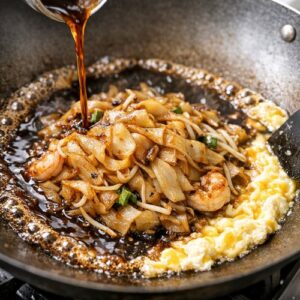
Step 6: Aromatics and Final Assembly
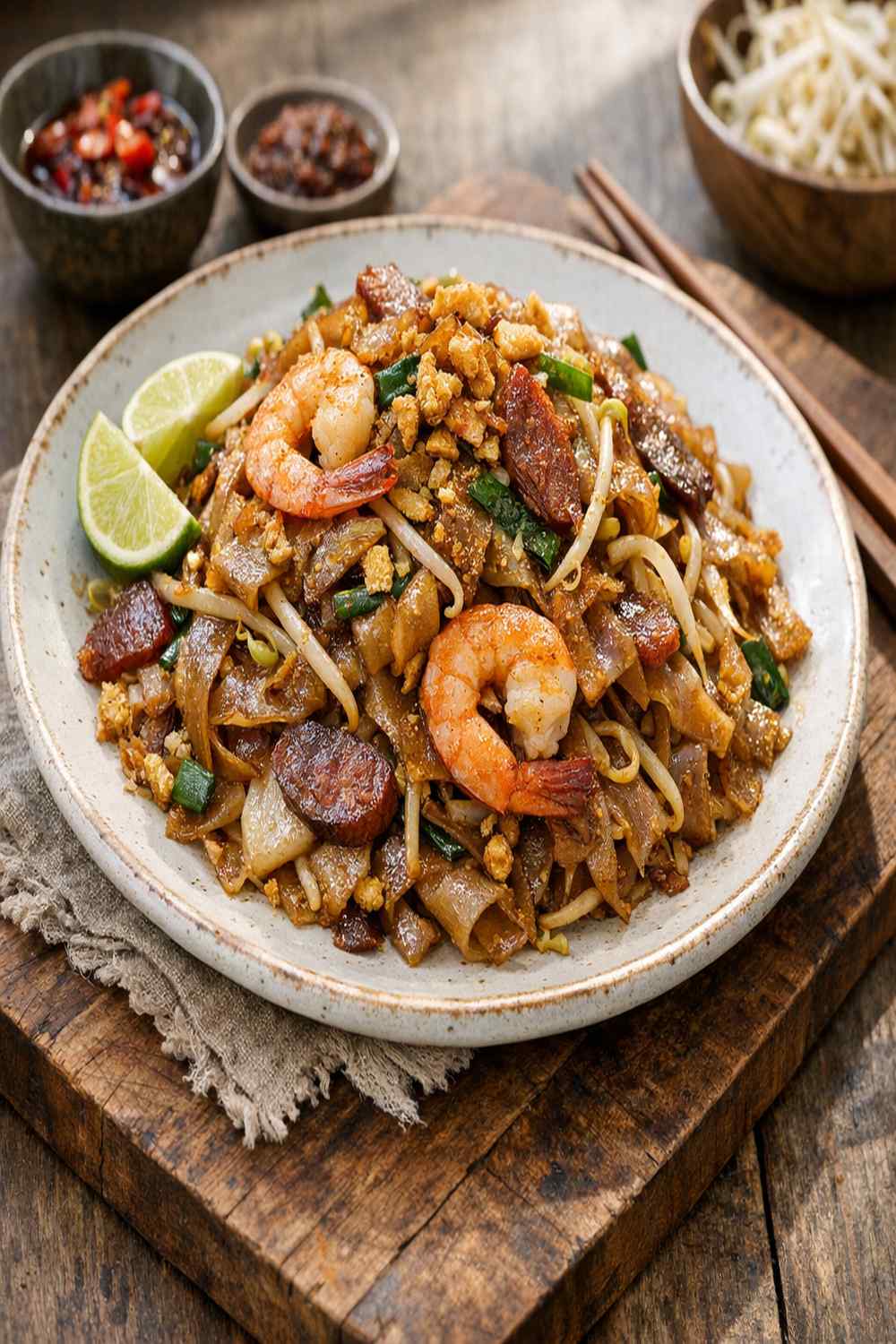
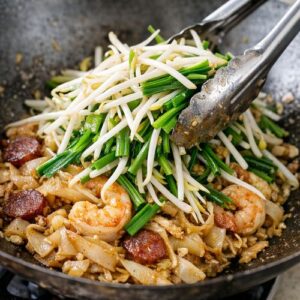
- Remove your wok from heat immediately—this prevents overcooking. Add your garlic chives and fresh bean sprouts, tossing constantly for 15-20 seconds off heat. The residual temperature will soften the chives slightly while the sprouts maintain their crunch. Finally, drizzle the sesame oil over the entire dish and toss once more. The cool oil hitting the warm noodles creates a subtle nutty aroma. The entire cooking process from wok heating to plating should take approximately 8-10 minutes. It's fast, intense, and requires your full attention.
Notes
- Don't wash your wok between the protein and noodle stages - the fond (browned bits) that stick to the wok contain concentrated Maillard products and flavor compounds. When you add noodles, these bits dissolve into the oil, creating extraordinary depth that clean-wok cooks never achieve.
- Let your rice noodles come to room temperature before cooking - cold noodles straight from the refrigerator will cause oil temperature to drop below the critical 350°F threshold, resulting in absorption rather than coating. Room temperature noodles integrate with hot oil seamlessly.
- Use fresh, not dried, rice noodles - the moisture content in fresh noodles creates steam that prevents sticking and keeps them from absorbing excessive oil. Dried noodles require pre-soaking and lead to a heavier, greasier final dish.
- Taste your sauce mixture before it hits the wok - soy sauces vary significantly between brands, and some are considerably saltier than others. If your mixture tastes slightly over-salted on its own, it's perfect; the noodles will dilute it to the ideal level during cooking.
- Keep a damp kitchen towel nearby - high-heat wok cooking occasionally produces splatters. A damp cloth cools these hot oil spots before they can cause burns or create smoke.