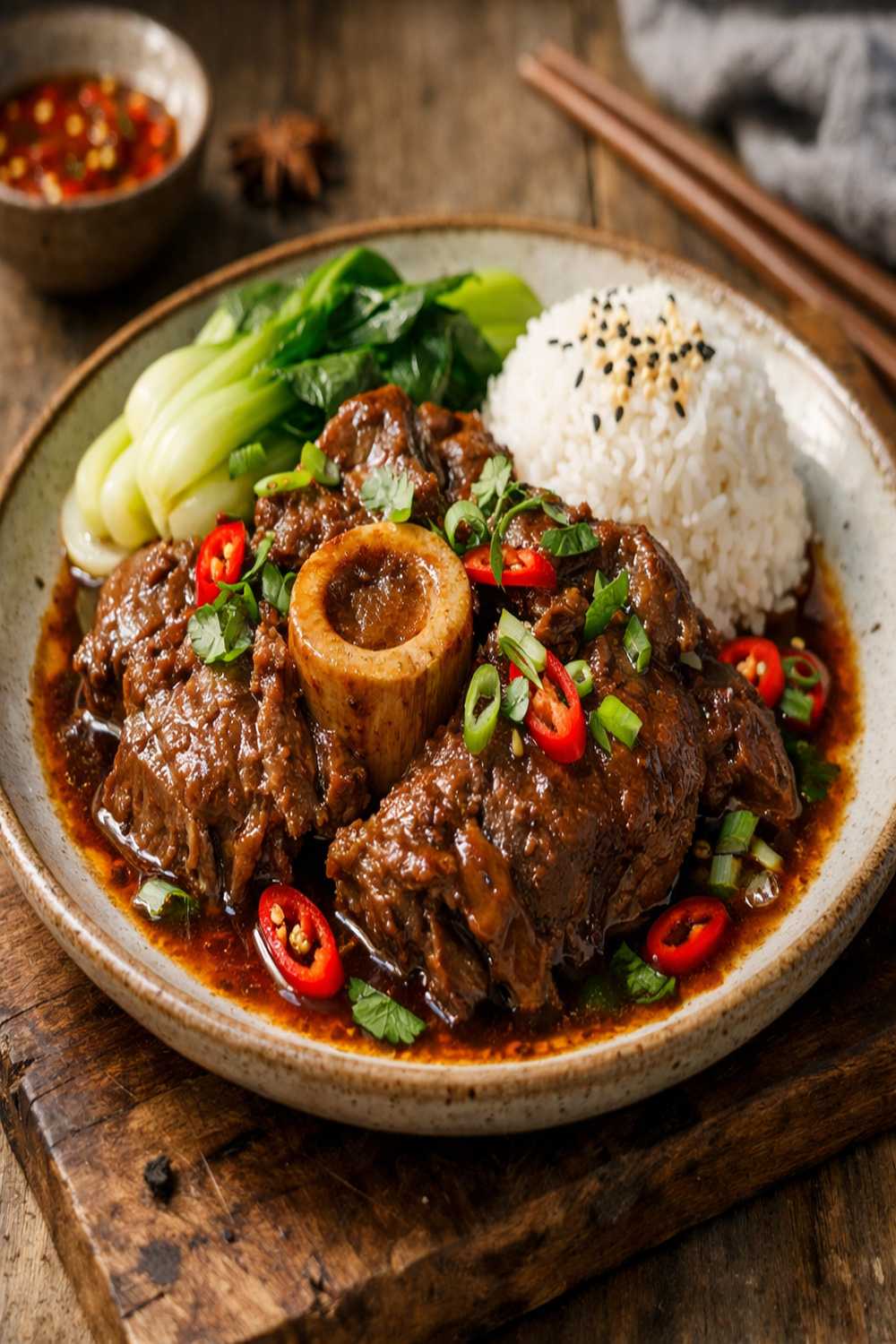

Ingredients
Method
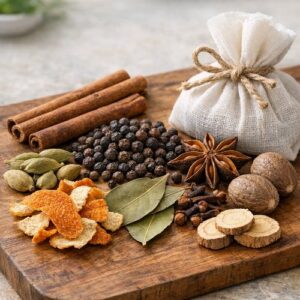
Step 1: Prepare Your Aromatics and Spice Sachet
- Start by gathering all your spices—the cinnamon sticks, cardamom, peppercorns, star anise, cloves, tangerine peel, bay leaves, liquorice slices, nutmeg, and fennel seeds. You have two options here: place them all in a small tea infuser ball, or wrap them securely in a small piece of cheesecloth tied with kitchen twine. I prefer cheesecloth because it allows more contact between the spices and the braising liquid, creating deeper flavor penetration. Double-check that your sachet is tightly sealed—you don't want loose spices floating through your finished dish. While you're preparing the spice sachet, smash your garlic cloves gently (no need to peel them), and slice your ginger into thin rounds without peeling. The skin of the ginger is where much of the flavor lives, and leaving it on adds subtle complexity. Cut your scallions into 3-inch pieces, keeping white and light green sections separate from the darker green tops—you'll add the whites and light greens during braising and the dark tops as a fresh garnish at the end.
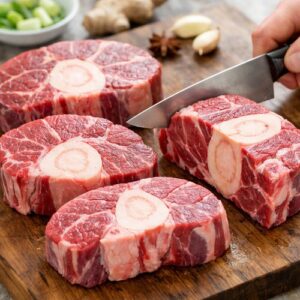
Step 2: Prepare Your Beef Shank for Braising
- Ask your butcher to cut the beef shank into 2 to 3 cross-sectional pieces, each about 5 to 6 inches long. If you're cutting it yourself, use a sharp chef's knife or have your butcher do this with a saw—it's much easier and cleaner than you might expect. The cross-sections allow more surface area for the braise to penetrate while keeping the meat structurally intact throughout cooking. Pat the beef dry with paper towels. This step matters more than you might think—moisture on the surface prevents proper contact between meat and braise, and it can promote sticking. Set your prepared beef on a clean plate and keep it nearby.
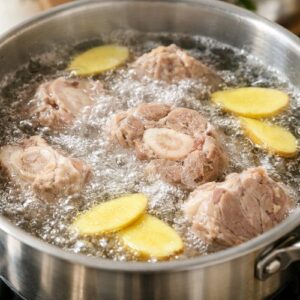
Step 3: Blanch and Clean Your Beef
- Fill a medium to large pot with water (about 2 quarts) and bring it to a rolling boil. Carefully add your beef shank pieces and the ginger slices. You're not cooking the beef here—you're blanching it. After about 3 to 4 minutes, you'll see a grayish, foamy film rise to the water's surface. This is myoglobin and other impurities releasing from the meat. This step is crucial in traditional Chinese cooking because it creates a cleaner, clearer braising liquid and a more refined finished dish. Once that film appears consistently, carefully pour everything into a fine-mesh colander set in your sink. Rinse the beef pieces thoroughly under cool running water, rubbing them gently to remove any remaining film. Rinse your pot completely as well—we're starting fresh from here.
Step 4: Build Your Braising Liquid
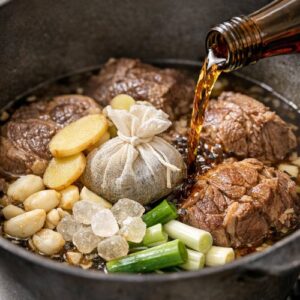
- Return your cleaned beef and ginger to the pot. Add your spice sachet, the Shaoxing wine, crushed garlic, scallion whites and light greens, rock sugar, light soy sauce, dark soy sauce, and your 4 cups of water (or stock if you're using it). The liquid should come up to about an inch above the beef. If it doesn't quite cover, add a touch more water. Season with approximately 1 teaspoon of kosher salt—this seems conservative, but the soy sauces are already quite salty, and you can always adjust at the end. Take a moment to look at what you've built: the beef resting in this amber-colored liquid surrounded by aromatics and spices. This is where the magic happens. Bring everything to a rolling boil over high heat—you'll notice the liquid darkening slightly as the flavors begin to marry.
Step 5: Transition to a Gentle Simmer
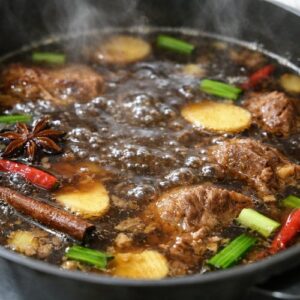
- Once you reach a full boil, immediately reduce the heat to the lowest setting your stove allows. You want a barely perceptible simmer—just the occasional lazy bubble breaking the surface, not an active boil. This is the most important step. Low-and-slow cooking is what transforms that tough, collagen-rich meat into something impossibly tender. Too much heat, and the muscle fibers tighten and squeeze out moisture. If your stovetop runs hot, you might need to place the pot on a diffuser ring to ensure truly gentle heat. Alternatively, you can transfer everything to a heavy Dutch oven and finish the braise in a 275°F oven, which provides more even, controlled heat. Set a timer for 60 minutes and resist the urge to check constantly. The lid should be left off or just slightly ajar—you want some liquid to reduce and concentrate.
Step 6: Test for Doneness
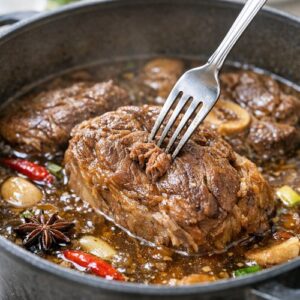
- At the 60-minute mark, pierce the thickest part of a beef shank piece with a fork or small knife. The meat should offer almost no resistance—it should pierce as easily as butter. If there's still significant resistance, continue simmering for another 15 to 20 minutes. The difference between perfectly tender and overcooked is sometimes just 10 minutes, so check frequently toward the end. You want the meat to be fork-tender but still holding its shape, not falling apart or falling off the bone. The braising liquid should have reduced by about one-third and turned a beautiful mahogany-brown color. Taste a spoonful of liquid and adjust seasoning with salt and a splash of rice vinegar if desired—the vinegar adds brightness that cuts through the richness of the braise.
Step 7: Cool and Rest Your Beef
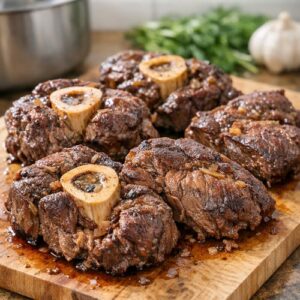
- Carefully remove the beef shank pieces from the braising liquid and transfer them to a cutting board or serving platter. Let them cool for about 10 minutes—they'll be extremely hot. While they cool slightly, you can strain the braising liquid if you prefer a clear sauce, or keep it rustic with the aromatics. Remove the spice sachet (and the ginger and garlic pieces if you like, though they add wonderful flavor if left in). For absolute maximum flavor development, let the beef cool completely to room temperature, then return it to the braising liquid and refrigerate overnight. The cold overnight rest allows flavors to penetrate even deeper into the meat, and when you reheat it gently the next day, the result is phenomenal. The fat will also solidify on top, making it easy to lift off if you prefer a leaner version.
Step 8: Slice and Serve
- Once the beef has cooled, slice it crosswise (perpendicular to the bone) into ½-inch-thick pieces. The meat should slice cleanly without shredding. If it does shred slightly, that's actually a sign you've nailed the texture—it's incredibly tender. Arrange the slices in a shallow bowl, ladle the braising liquid generously over top, and garnish with the reserved scallion greens, a few sesame seeds if you have them, and perhaps a drizzle of chili oil for those who like heat. Serve immediately with steamed jasmine rice, white rice, or even rice noodles to soak up that precious braising liquid.
Notes
- Make the spice sachet a day ahead. Measuring and tying spices beforehand removes any last-minute stress and allows you to grab everything quickly when you're ready to braise. Store it in a small container on your counter.
- Use beef or pork stock instead of water for deeper flavor. If you have homemade stock on hand, use it instead of plain water. The gelatin and collagen in the stock creates an even more luxurious final braise. Chicken stock works too, though it's slightly more delicate.
- Don't skip the blanching step, even though it seems extra. This is traditional for a reason. The clearer braising liquid looks more refined, and the process removes flavors you don't want—primarily the "raw" iron taste that can make beef broths taste metallic. It takes five minutes and elevates the entire dish.
- Invest in a meat thermometer if you're unsure about doneness. The meat is perfectly done at an internal temperature of 190-195°F, which is higher than most people think but crucial for the collagen breakdown you're after. The meat is safe to eat at 145°F, but it won't be the melt-in-your-mouth texture you're seeking.
- Save every drop of that braising liquid. This is liquid gold in culinary terms. Use it as a base for soups, a cooking liquid for grains, or simply as a sauce for other proteins. It freezes beautifully for up to three months.
- Room-temperature beef shank is actually delicious. Leftover braised beef is phenomenal sliced thin and eaten at room temperature with a drizzle of the sauce. It makes an incredible sandwich filling or a composed salad when paired with fresh greens and rice vinegar.