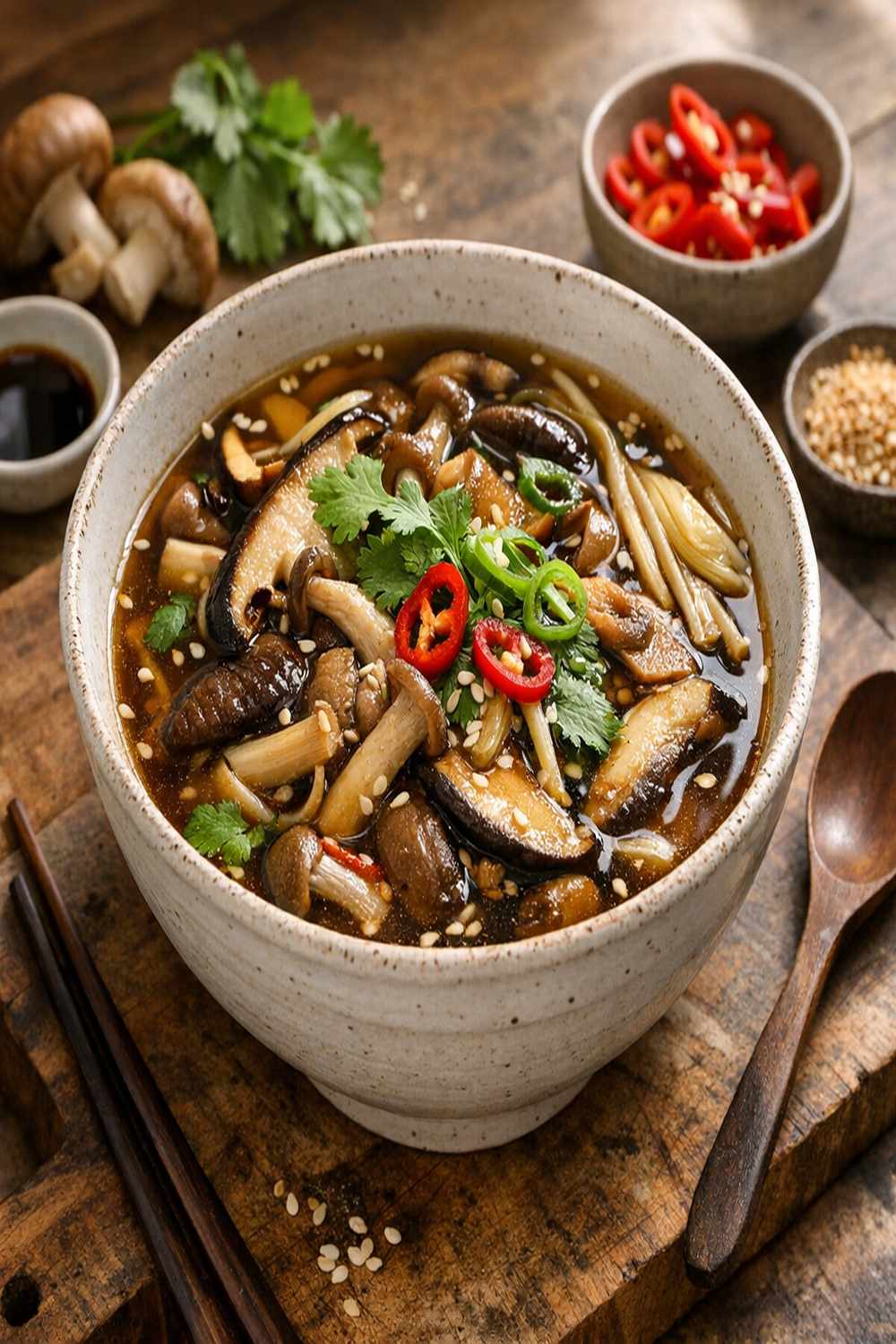

Ingredients
Method
Step 1: Prepare Your Mushrooms With Respect
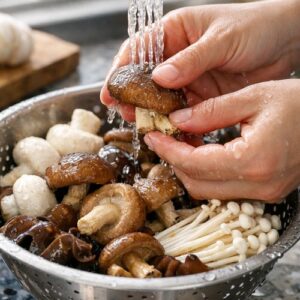
- Start by gently rinsing your mushrooms under cool running water, using your fingers to remove any soil from the caps and stems. Mushrooms are about ninety percent water, so they're actually more forgiving than people think—brief, gentle rinsing won't hurt them. Pat them completely dry with a clean kitchen towel. This matters tremendously. Any surface moisture will create steam instead of allowing proper browning. While they dry, detach the stems from the caps. Don't waste anything. Those stems carry just as much flavor as the caps—sometimes more concentrated, actually. Set everything aside on a clean plate.
Step 2: Begin the Searing—This Is Where Magic Happens
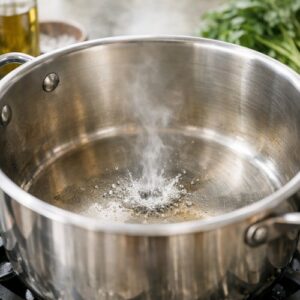
- Place your medium soup pot over medium-high heat. Let it warm for about two minutes until it's genuinely hot—not just warm, but hot enough that a drop of water would bead and dance across the surface. Now add your oil. Let it warm for about thirty seconds until it shimmers slightly. This is the critical moment. Arrange your mushroom caps cup-side up in a single layer. Nestle the stems between and around the caps. Don't crowd the pan—you need space for heat to contact each piece. You might hear a satisfying sizzle. That's what you want to hear. Don't stir. Don't fuss. Don't flip them. I know the instinct is strong, but this is a lesson in patience. Let them sit for about four minutes while the bottoms develop a deep, caramelized brown color. During this time, the mushrooms release their own moisture, which evaporates and concentrates their flavors.
Step 3: Let Them Complete Their Transformation
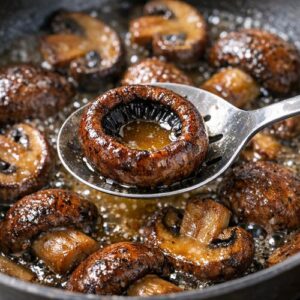
- After four minutes, carefully check one mushroom cap. You should see rich, mahogany-brown coloring. The liquid that accumulated in the cup should still be there—that's the mushroom's own essence. Reduce your heat to medium and let them continue cooking, undisturbed, for another four to six minutes. You're watching for the caps to develop deep caramelization while the stems turn golden. The mushrooms will give off more liquid as they continue cooking. This is exactly what should happen. That liquid is concentrated umami-rich juice that will form the foundation of your broth.
Step 4: Add the Water and Seasoning
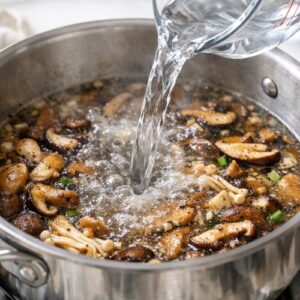
- Once your mushrooms are gorgeously browned, carefully pour in all four cups of water. You'll hear it hit the hot pan—this is the moment where all that caramelized flavor gets pulled into the liquid. Add your soy sauce. Stir gently to combine. Bring everything to a rolling boil over medium-high heat—this should take about three to four minutes. Once you see consistent bubbles breaking the surface, reduce the heat to low, cover the pot partially (leave the lid slightly ajar to allow some steam to escape), and let it simmer gently for five minutes.
Step 5: Season and Thicken If You Wish
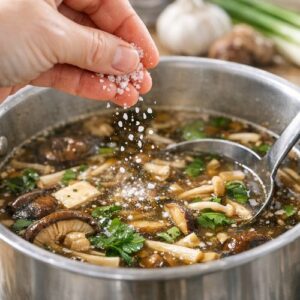
- After five minutes of gentle simmering, taste the broth. This is your moment to adjust. Add a pinch of sea salt and taste again. You're looking for that point where the earthy mushroom flavor is fully present but not overpowering. If you prefer a thicker, silkier soup, now is the time to use the cornstarch slurry. Stir the cornstarch mixture once more to ensure it's fully combined (the starch settles quickly), then slowly pour it into your simmering broth while stirring constantly. You'll see the soup transform from clear to opaque and slightly creamy. Simmer for just thirty seconds to fully activate the thickening power. If you prefer a clear, delicate broth, skip this step entirely—both versions are equally authentic and nourishing.
Step 6: The Finishing Touch
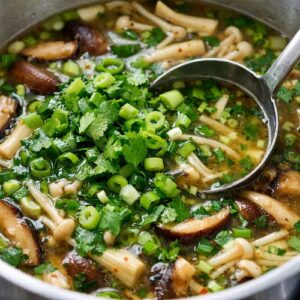
- Just before serving—and this timing is genuinely important—add your chopped cilantro and sliced scallions. Stir through gently. The fresh herbs should still have their bright color and vibrant aroma when the soup reaches your bowl. If you've got that ginger juice, a teaspoon stirred in now adds a whisper of brightness. A crack of white pepper finishes it beautifully. This is when the soup transitions from technically complete to truly alive.
Notes
- Stirring the mushrooms while they sear - This is the biggest one. I see cooks get nervous and start moving things around. The bottom of the pan stays at the right temperature for browning only if the mushrooms stay still. Trust the process. The mushrooms know what they're doing.
- Using mushrooms that are too wet - Rinsing thoroughly is fine, but they must be completely dry. Wet mushrooms will steam instead of sear, and you'll lose that crucial flavor development. Dry them as if you're preparing them for a special event—because you are.
- Overcrowding the pan - Even if you only have a small pan, resist the urge to layer mushrooms. Work in batches if necessary. Each mushroom needs direct contact with the hot pan surface. Crowding means steaming, not searing.
- Rushing the simmer - Some people want to boil the broth hard and fast, thinking it builds flavor quicker. It doesn't. Gentle simmering allows flavors to meld gracefully. This is low-and-slow cooking fundamentally—rushing defeats the purpose.