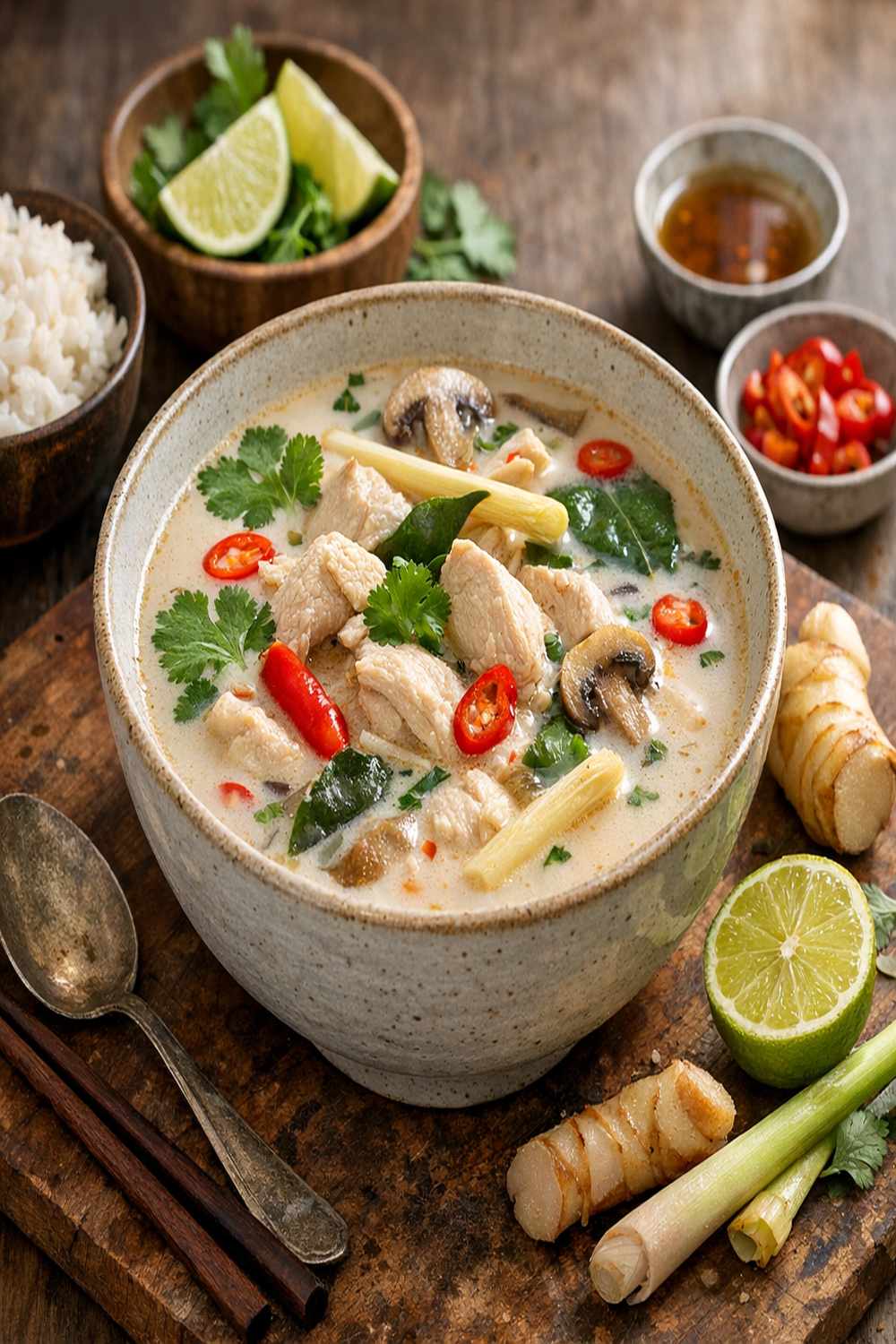

Ingredients
Method
Step 1: Prepare Your Aromatics While Everything Gets to Know Each Other
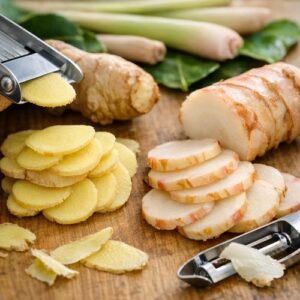
- Start by slicing your ginger and galangal into thin, even disks—about the thickness of a coin. I use a vegetable peeler or mandoline to keep things uniform, which helps them release their oils faster. Leave the skins on; they're packed with nutrients and flavor compounds that mainstream cooking schools taught us to discard. What a waste that was. Mince your lemongrass finely, removing the outer woody layers and using the pale, tender inner portions. If you're using lemongrass paste, save yourself the $0.30 and use it straight—the flavor is concentrated, not diminished. Dice your shallots into small, uniform pieces. This is where I save money: buy shallots instead of onions for this dish. They're often cheaper, and their natural sweetness is precisely what this soup needs.
Step 2: Begin the Foundation with Your Broth and Aromatics
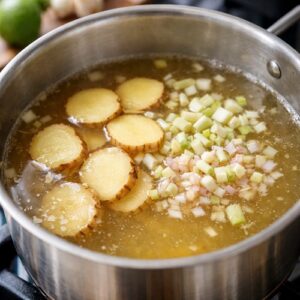
- Pour your 2 cups of broth into a large pot and bring it to a gentle simmer over medium heat. Add your sliced ginger, galangal, minced lemongrass, diced shallots, and the halved Thai chilies. Let these simmer together for 8 to 10 minutes. This isn't boiling—it's a slow, respectful heat that coaxes flavor without violence. This step is where patience becomes your greatest ingredient. I learned this from watching my grandmother work: she never rushed the aromatics. She'd stand there with her cup of tea, letting the kitchen fill with that particular perfume that told her the foundation was ready. That's when you know it's time to move forward.
Step 3: Add Your Chicken and Let It Become Tender
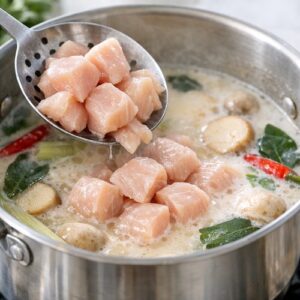
- While your broth is infusing, cut your chicken into bite-sized pieces—roughly 1 to 1.5 inches. Don't make them too small; they'll fall apart. If you're using thighs, cut them into slightly larger pieces since they hold together better than breasts. Add your chicken pieces directly to the simmering broth and aromatics. Maintain that gentle simmer—not a rolling boil. Let the chicken cook for 12 to 15 minutes, depending on thickness. The meat should be opaque throughout but still tender. If you're using thighs, give them an extra 2 to 3 minutes.
Step 4: Introduce Your Mushrooms and Coconut Richness
- Once your chicken is cooked through, add your sliced mushrooms. These will soften in about 4 to 5 minutes. Then comes the moment that transforms this from "soup" into something transcendent: pour in both cans of full-fat coconut milk. Stir gently, making sure the coconut milk blends evenly with the broth. The soup should take on a warm, creamy ivory color. Lower your heat to medium-low—you want barely a simmer now, just gentle movement. Aggressive boiling can cause the coconut milk to separate, which breaks the silky texture.
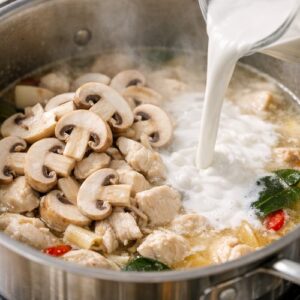
Step 5: Add the Kaffir Lime Leaves and Let Everything Marry
- Add your 8 kaffir lime leaves to the pot. These are the ingredient that separates authentic Tom Kha Gai from sad imitations. They add a floral, citrus note that you literally cannot replicate with lime juice alone. If you can't find them fresh, buy dried leaves—they cost less and work equally well in cooked applications. Frozen leaves are also excellent if you find them. Let everything simmer together for another 5 to 8 minutes. The soup should smell almost intoxicatingly fragrant at this point. This is the aroma that makes people walk into a kitchen and ask, "What on earth are you making?"
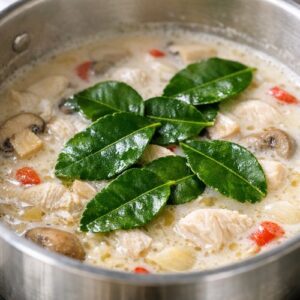
Step 6: Season to Perfection with Fish Sauce, Sugar, and Lime
- Now comes the seasoning that might seem intimidating but is absolutely crucial: fish sauce. I know—it smells like the ocean decided to become a condiment. But trust this step completely. The fish sauce adds umami depth that you can't taste as "fishy" once it's cooked—it just enhances everything, like adding salt amplifies sweetness. Stir in your 3 tablespoons of fish sauce. Let it incorporate for 1 minute, then add your 2 teaspoons of sugar. This balance—salt, sweetness, acid—is what Thai cooking teaches us about balance. Finally, add your 3 tablespoons of fresh lime juice. Taste the soup. You should taste: richness (coconut), warmth (ginger and galangal), brightness (lemongrass and lime), a whisper of heat (chilies), and depth (fish sauce and mushrooms). If it tastes flat, add a touch more salt. If it tastes sharp, add a touch more sugar. This is your kitchen, your palate, your meal.

Step 7: Final Rest and Serve with Intention
- Remove from heat and let the soup rest for 2 to 3 minutes. This allows the flavors to settle and meld into something coherent and whole. Ladle into bowls and top with fresh cilantro if you have it. Serve immediately while the warmth is still alive in the pot.

Notes
- Hunt for an Asian market near you—this is non-negotiable. I'm talking about the family-owned grocers in neighborhoods where the cuisine is lived, not curated. Galangal root costs triple at mainstream chains. Coconut milk is 50% cheaper when you're not paying for the "specialty" markup. These stores also sell fresh lemongrass in bundles for what a single stalk costs elsewhere. I learned this lesson my first year as a dietitian: economics matter as much as nutrition when we're talking about sustainable eating.
- Buy chicken thighs instead of breasts—they're cheaper and more forgiving. Thighs have natural fat that keeps them tender during the simmer, while breasts can dry out if you're not vigilant. A pound of thighs typically costs $2-3 less than breasts, and the flavor is deeper and more satisfying. This is where budget cooking wins: the "cheaper" cut is actually superior in this dish.
- Freeze fresh galangal, ginger, and lemongrass the moment you get home. These ingredients keep for months frozen and work beautifully in this recipe since they're simmered, not eaten raw. One root purchase makes 4-5 batches of Tom Kha Gai. I freeze them in portions wrapped in plastic wrap, then toss them straight into the pot from frozen—no thawing needed.
- Buy kaffir lime leaves dried instead of fresh if you can't find them locally. Dried leaves cost 60% less, last years in a sealed container, and perform identically in this soup. I keep a jar on hand year-round. Fresh leaves are lovely for visual appeal, but the flavor difference is imperceptible once simmered.
- Make your own broth or keep a "scrap bag" in the freezer. Every time you trim chicken, save those scraps. Boil them with water, onion skin, and carrot ends for 45 minutes and you've created free, superior broth that tastes nothing like bouillon. This single habit cut my soup-making costs by 30% once I stopped buying boxed broth.