
Ingredients
Method
Step 1: Build Your Sauce Foundation
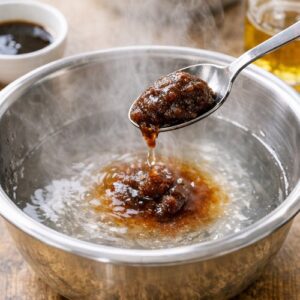
- Begin by heating ¼ cup of water until it's steaming—this is your blank canvas. Add your beef bouillon or broth concentrate to the hot water and stir until it completely dissolves. There should be no grainy texture remaining. This step matters because the heat helps the concentrate dissolve fully, whereas cold water would leave it lumpy and uneven. Once dissolved, add your brown sugar and stir thoroughly. The sugar won't dissolve completely into the broth, and that's exactly what you want—it will dissolve fully when the mixture heats again later. Now pour in your soy sauce and add a pinch of white pepper. Finally, stir in the rice vinegar if using. Set this mixture aside where it will stay warm. This is your liquid gold, the foundation that will make every element sing together.
Step 2: Prepare Your Ingredients with Intention
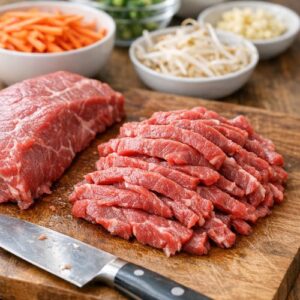
- While your sauce sits, prepare everything else. This is the most important step for low-and-slow cooking at home. Slice your beef sirloin or flank steak as thinly as you can manage—I like to partially freeze mine for 15 minutes first, which makes slicing much easier and creates those paper-thin pieces that cook in seconds. Cut against the grain, which means reading the lines in the meat and slicing perpendicular to them. This breaks down muscle fibers and results in incomparably tender meat. Cut your carrots into pieces about the size of a pencil, roughly an inch and a half long. Cut your broccoli into small florets, no larger than a walnut. Dice your onion into chunks about the same size as your carrot pieces. Mince your garlic finely or have it ready to press. The size consistency matters more than you might think—uniform pieces cook at the same rate, ensuring nothing is mushy while something else remains hard.
Step 3: Cook Your Noodles to Perfect Tenderness
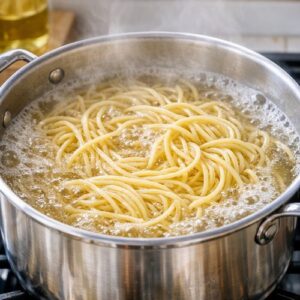
- Bring a large pot of salted water to a rolling boil. Add your lo mein noodles and cook according to package directions, but check them a minute before the recommended time. Authentic lo mein noodles should be tender but not soft—there's a subtle difference. When a noodle bends easily but still has a tiny bit of resistance in the center, they're perfect. Drain them completely in a colander and set aside. Don't rinse them unless they're overly sticky—the starch on their surface helps the sauce cling to them later.
Step 4: Sear Your Beef with High Heat
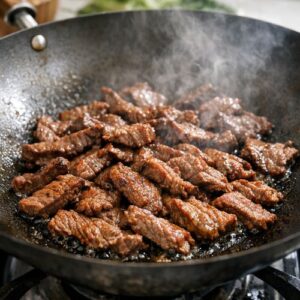
- Heat a large skillet or wok over medium-high heat. Once it's hot enough that a drop of water sizzles immediately, add 1 tablespoon of your cooking oil. Wait 30 seconds for the oil to heat through. This is crucial—cold oil in a hot pan creates that proper sear. Working in batches if necessary (never crowd the pan), add your sliced beef. Let it sit undisturbed for 30 seconds before stirring. This creates a light golden crust. Stir and cook for another minute until the beef is mostly opaque with just a hint of pink inside. The residual heat will continue cooking it. Remove it to a plate and set aside. Don't worry about it being fully cooked through—it will finish cooking when combined with the vegetables and sauce.
Step 5: Build Flavor Through Layered Cooking
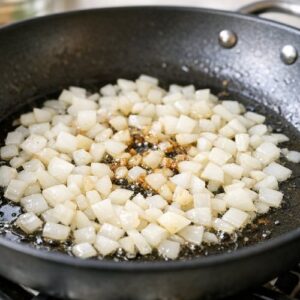
- In the same skillet, add another ½ tablespoon of oil. Add your diced onion and cook without stirring for two full minutes. This is a technique my grandmother swore by—letting the onion develop color and sweetness rather than constantly moving it around. After two minutes, stir and cook for another minute until the onion is golden and becoming translucent at the edges. Push the onion to the sides of the skillet and add your carrot pieces. Again, let them sit undisturbed for about a minute, then stir and cook for another two minutes. The carrots should be starting to soften but still maintain their structure. Add your broccoli florets and cook, stirring occasionally, for about three minutes. The broccoli should be bright green and slightly tender. Now press or mince your garlic directly into the pan with the vegetables. Stir constantly for about 30 seconds—this is just long enough to awaken the garlic's flavor without letting it burn. Burned garlic tastes bitter and harsh, which is why timing matters so much here.
Step 6: Bring Everything Together
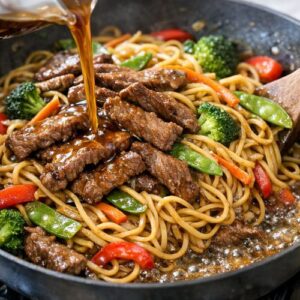
- Return your cooked beef to the skillet with all the vegetables. Pour your prepared sauce over everything and stir gently. The mixture should bubble slightly around the edges. Let it simmer, stirring occasionally, for about two minutes. This allows the flavors to meld and the sauce to coat everything evenly. You should see the sauce thickening slightly—this is the starch from the vegetables and the natural gelatin from the broth concentrate doing its work. Add your cooked noodles to the skillet. Using tongs or two wooden spoons, toss everything together gently but thoroughly, making sure every noodle gets coated with sauce and every piece of vegetable is distributed throughout. This should take about a minute of gentle tossing. Finally, drizzle the sesame oil over the top and toss one final time. The sesame oil should be added at the very end—it's a finishing touch that adds aroma and richness. This is what my grandmother meant by "tying the dish together."
Step 7: Serve Immediately
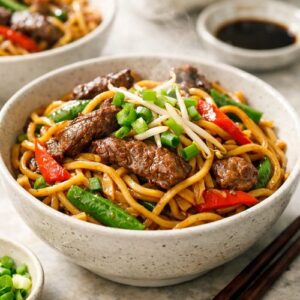
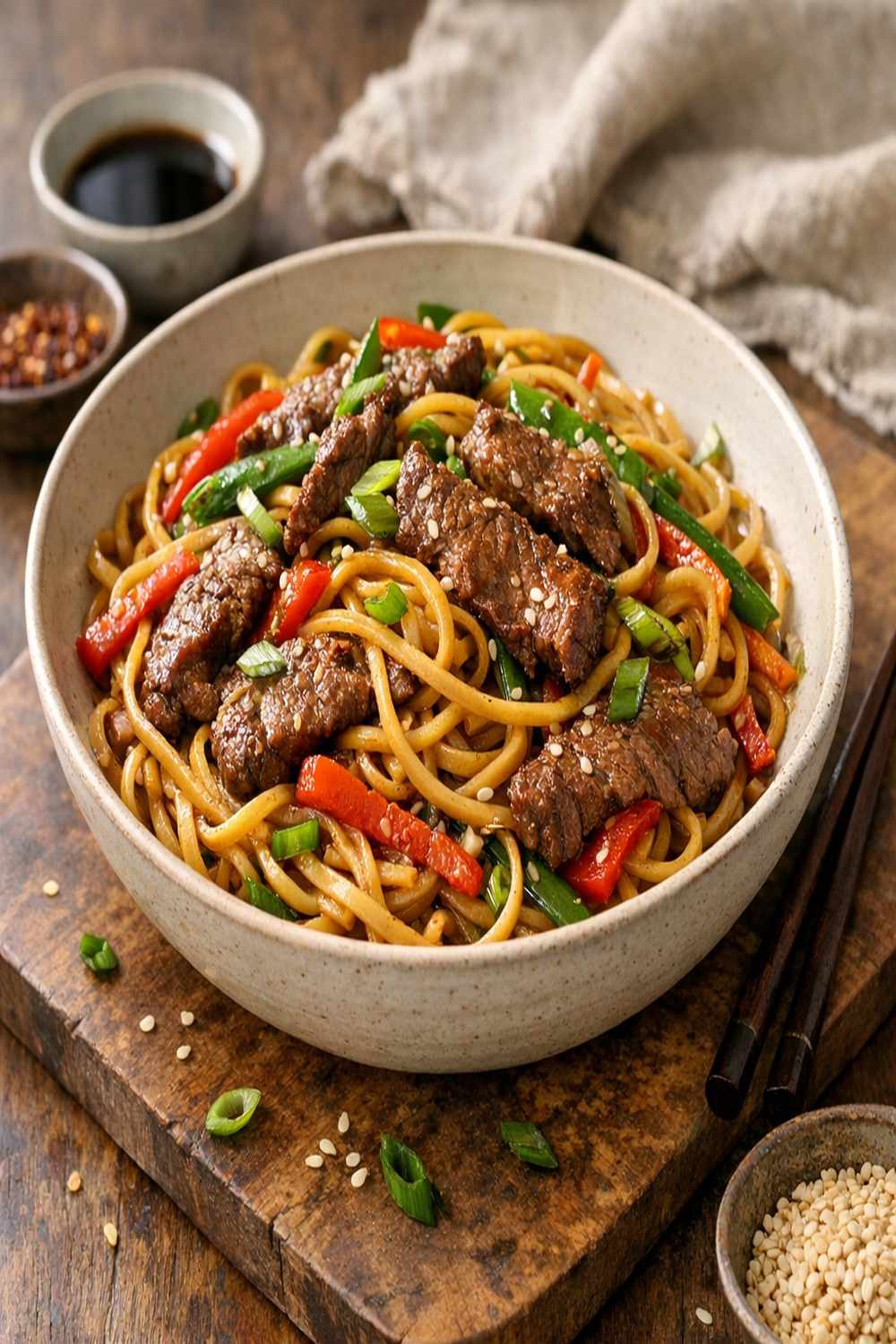
- Divide the lo mein among serving bowls while it's still hot. The heat helps release the aromas and keeps the noodles at their most tender. Serve immediately with chopsticks or a fork, depending on your preference. There's something important about eating this dish while it's warm—not piping hot, but genuinely warm. That's when all the flavors are most alive.