
Ingredients
Method
Step 1: Prepare Your Beef for the Marinade
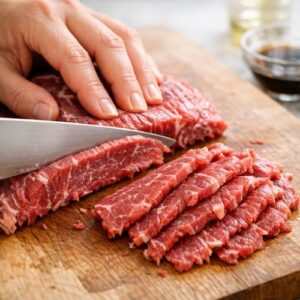
- Start by slicing your flank steak very thin, cutting against the grain of the meat. This is crucial—the grain runs lengthwise through the muscle, and cutting against it breaks up the fibers, making every bite tender. I use a sharp knife and take my time here. Place your sliced beef in a medium bowl, and set it aside while you prepare the marinade. This is the Korean technique that ensures tender, almost melting texture when cooked.
Step 2: Build Your Marinade with Intention
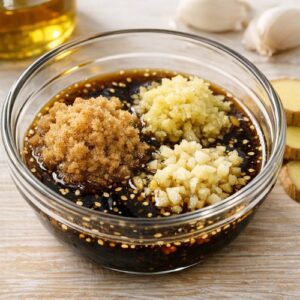
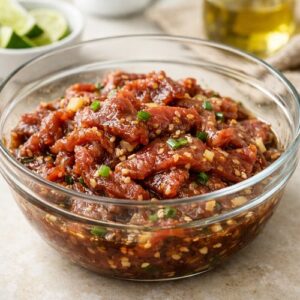
- In a small bowl, combine your sesame oil, minced garlic, grated ginger, soy sauce, and packed brown sugar. This combination is the soul of Korean bulgogi—the sesame oil brings a toasted, nutty richness, while the soy sauce provides umami depth. The brown sugar isn't just sweetness; it's a tenderizer and a caramelizing agent that will create those gorgeous dark edges on your beef. Stir this marinade together until the brown sugar completely dissolves into the liquid. Then add your black pepper and hot water, stirring again. The hot water helps distribute the flavors evenly and allows the sugar to fully incorporate. Taste it—it should smell like a Korean steakhouse, sweet and savory and deeply aromatic. Pour this marinade over your sliced beef and stir gently to ensure every piece gets coated. Now comes the hard part: cover the bowl and refrigerate for at least 4 hours, but ideally overnight. This is where my grandmother's wisdom about low-and-slow cooking comes in. The long marinade allows the flavors to penetrate the meat fibers, tenderizing it further while infusing it with flavor from the inside out. I know overnight feels like a long time when you're hungry, but I promise you—this wait is non-negotiable for the best results.
Step 3: Bring Your Beef to Room Temperature
- About 30 minutes before you're ready to cook, remove your marinated beef from the refrigerator and let it sit on the counter. This step is absolutely critical and is where many home cooks make their first mistake. Cold meat hitting a hot pan will cool the pan down, preventing proper caramelization. Room temperature meat will sizzle immediately, creating those beautiful browned edges that make bulgogi unforgettable. While the beef is coming to temperature, prepare your taco toppings. Slice your purple cabbage into thin ribbons—thin enough that it's almost translucent. Wash and roughly chop your cilantro. Slice your avocado just before assembly to prevent browning. Make your taco sauce by stirring together the sour cream, mayonnaise, garlic powder, sriracha, and fresh lime juice in a small bowl until smooth. This creamy, spicy, tangy sauce is where the Mexican flavors come alive.
Step 4: Sear Your Beef Until It Caramelizes
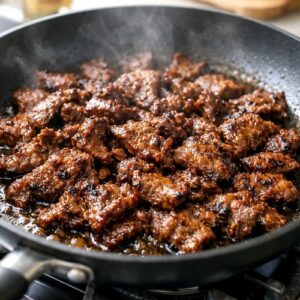
- Heat a large, heavy non-stick pan over high heat. You don't need to add any oil—the marinade has enough fat to cook the beef beautifully. Let the pan get genuinely hot; this is essential. You'll know it's ready when a single piece of beef placed in the center produces an immediate, strong sizzle. Once your pan is properly heated, add your beef in a single layer. Here's where I learned something crucial from Korean cooking: don't stir immediately. Let the meat sit undisturbed for 2-3 minutes. This allows the outside to caramelize, creating a flavorful crust. The Maillard reaction—that beautiful browning that happens when proteins and sugars interact with high heat—is creating layers of flavor that can't be rushed. After 2-3 minutes, when you see the meat is lightly browned on one side, stir it and continue cooking for another 3-5 minutes, stirring occasionally. The marinade will reduce, the liquid will evaporate, and the sauce will cling to the beef in a glossy, caramelized coating. This is how you know you're done: the meat is fully cooked through, the liquid has nearly disappeared, and the sauce is thick and clinging to each piece. It should smell absolutely incredible—toasted and sweet and savory all at once.
Step 5: Toast Your Tortillas Until Charred
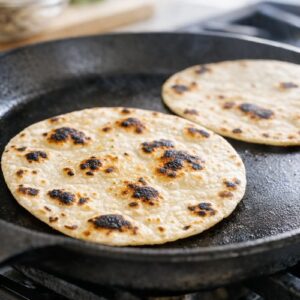
- While your beef is finishing, take a clean skillet or griddle and heat it over medium-high heat. You don't need any oil here either—just the dry heat of the pan. Tortillas cook quickly, so pay attention. Place one tortilla on the hot surface and let it sit for about 30 seconds, then flip and cook another 30 seconds. You're looking for light charring and a slight crisp, not a completely hardened shell. If you have a gas stovetop, you can hold the tortilla with tongs directly over the flame for a few seconds on each side—this creates beautiful charred spots and adds a subtle smokiness that brings in some of that Mexican grilled tradition. Stack your cooked tortillas on a clean kitchen towel to keep them warm and soft.
Step 6: Assemble Your Tacos with Generosity
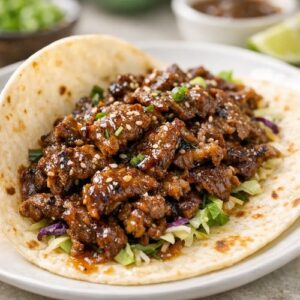
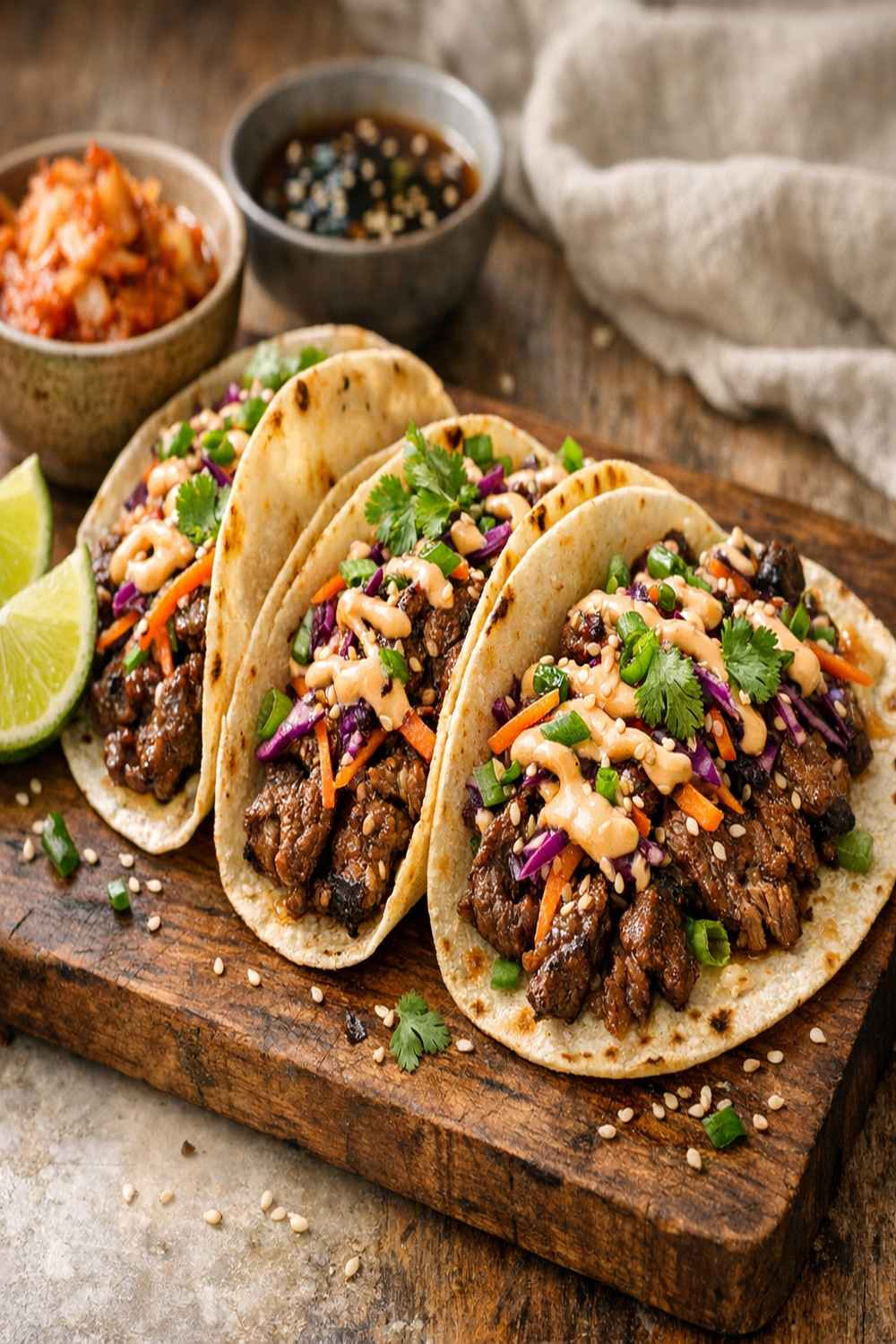
- Place a warm tortilla on your plate and fill it with a generous portion of caramelized bulgogi beef—the marinade and all. The sauce clinging to the meat is liquid gold; don't leave any behind. Top with a healthy handful of sliced purple cabbage. The crispness and slight bitterness of the raw cabbage creates a perfect textural and flavor contrast to the soft, sweet beef. Add a few sprigs of fresh cilantro for brightness and a subtle anise-like aromatics. Layer in slices of ripe avocado—the creamy richness is essential for balancing all the savory and spicy elements. Finally, drizzle generously with your spicy, creamy taco sauce. The combination of that Korean-marinated beef with Mexican-inspired toppings and this bridging sauce is where the magic truly happens. Finish with a squeeze of fresh lime juice if desired—the acidity wakes up every flavor and brings everything into focus. Serve immediately while the tortillas are still warm and the toppings are fresh.