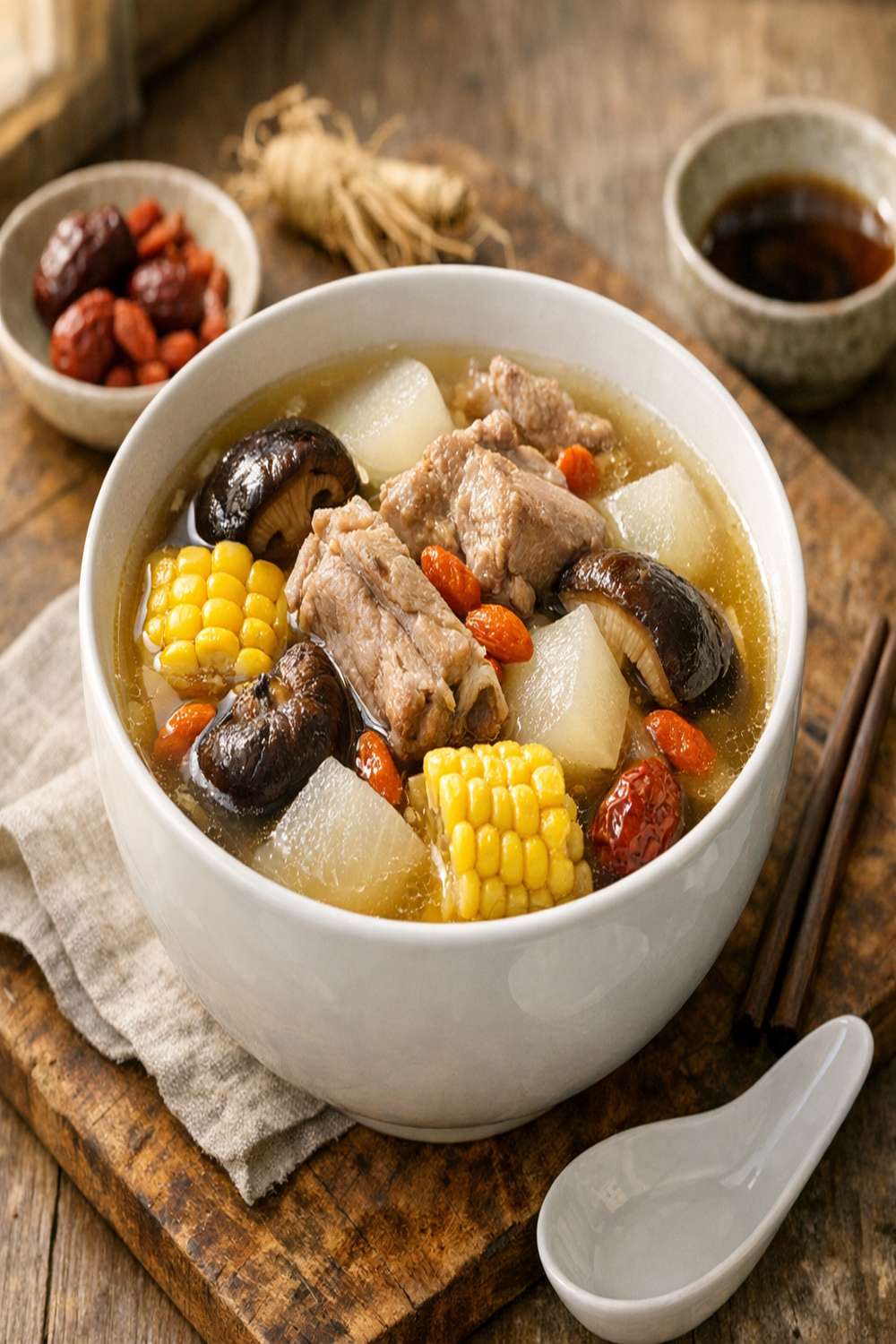

Ingredients
Method
Step 1: Prepare and Soak the Mushrooms
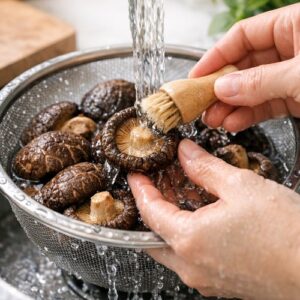
- Begin by rinsing your dried shiitake mushrooms under cool running water, gently brushing away any dust or forest debris clinging to the caps. These mushrooms have been dried and stored, so a quick rinse is essential for cleanliness. Place them in a bowl and pour warm (not boiling) water over them—enough to submerge them completely. Let them sit undisturbed for 2 to 3 hours. This is the first act of patience your soup asks of you. As the mushrooms rehydrate, they release their umami essence into the soaking water, creating what's essentially a delicate mushroom broth. When you're ready to cook, the mushrooms will have softened and opened like little flowers, and that soaking liquid becomes liquid gold for your final soup. Don't discard a single drop of it.
Step 2: Blanch the Pork for a Clean, Clear Broth
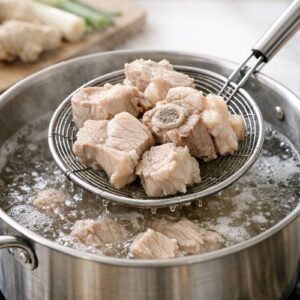
- This step might seem unnecessary, but it's the secret to achieving that beautiful, crystal-clear broth that's the hallmark of authentic Cantonese soup. Fill a large thick-bottomed pot with water—enough to just cover your piece of pork. Bring it to a rolling boil over high heat. Once the water is actively bubbling, carefully place your pork into the pot and let it return to a boil. You'll see foamy, grayish scum rise to the surface—this is impurities being released from the meat. Let it boil for approximately 2 to 3 minutes until you see this impurity layer form. Now, remove the pot from the heat. Using tongs, carefully lift the pork out of the water and place it on a clean cutting board. Drain the pot completely and rinse it thoroughly—you're washing away all those impurities. Rinse the pork piece under cool running water, gently rubbing it to remove any clinging particles. Rinse the pot one more time. This might seem like extra work, but you're building the foundation for a soup that's bright, pure, and free of the cloudiness that muddles flavor.
Step 3: Build Your Soup Foundation
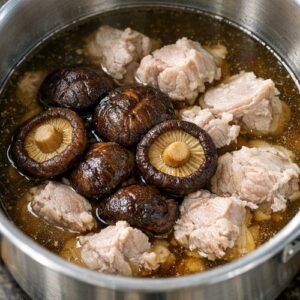
- Place your blanched, rinsed pork back into your clean pot. Add the rehydrated shiitake mushrooms, your mushroom soaking liquid (reserved, remember?), the 3.3 liters of fresh water, the carrot chunks, the smashed ginger, and the pitted red dates. The ginger should be smashed but not minced—you want it to release its essence gradually, not infuse too intensely all at once. Cover the pot with a lid and turn the heat to high, bringing everything to a boil. You should see steam escaping and hear the gentle rumble of active boiling. Once boiling, immediately reduce the heat to low. The key to perfect Cantonese soup is what I call the "gentle roll"—the broth should move slightly, with occasional small bubbles breaking the surface, but it should never be a vigorous, rolling boil. Cover and let this simmer for 2 hours. During this time, the pork will become tender and begin to release its flavor into the broth. The mushrooms will deepen the umami notes. The ginger will slowly warm the entire pot. This is the heart of the cooking time, and you're not doing anything except occasionally checking that the heat remains at that gentle simmer.
Step 4: Add the Chinese Yams and Continue Simmering
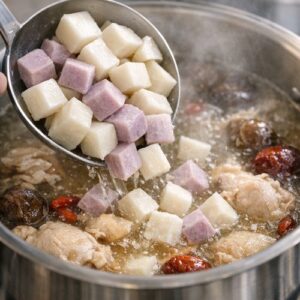
- After your 2 hours are complete, carefully add your peeled, chunked Chinese yams to the pot. These delicate white or pale purple pieces need about an hour of cooking to become fork-tender and creamy, but they'll fall apart if cooked too long or at too high a temperature. Bring the soup back to a gentle boil over medium heat, which will take about 5 to 7 minutes. Then immediately reduce the heat back to low and return to that gentle, barely-moving simmer. Cover and cook for exactly 1 hour. You'll notice something beautiful happening: the yams will gradually soften, and the broth will take on a very slightly creamy appearance—not from cream, but from the natural starches of the yam gently thickening the liquid. The aroma in your kitchen at this point is profoundly comforting, like a warm hug you can smell.
Step 5: Add Goji Berries and Finish the Soup
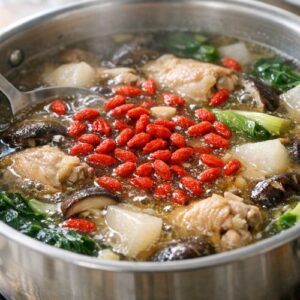
- In the final 5 minutes of cooking, scatter your dried goji berries across the top of the simmering soup. These tiny bright-red berries are delicate and benefit from only brief cooking—just enough time for them to plump slightly and infuse their subtle sweetness. Don't add them earlier or they'll lose their vibrant color and become mushy. A quick 5-minute simmer is all they need. Taste the broth now. It should be deeply flavorful, rich from the pork and mushrooms, sweetly rounded from the dates and yam, warmed from the ginger. This is the moment to adjust salt to your preference—I recommend starting conservatively and letting each person season at the table.
Step 6: Serve with Care and Intention
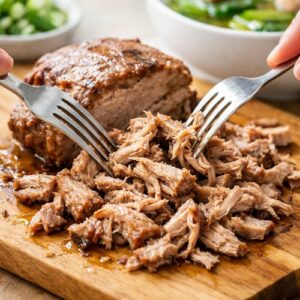
- Carefully remove the pork from the soup using tongs and place it on a cutting board. Using two forks, gently shred the meat into bite-sized pieces—it should be so tender that it nearly falls apart. Ladle the soup into serving bowls, distributing the vegetables, mushrooms, and berries evenly. Top each bowl with a portion of the shredded pork. Serve alongside small bowls of sea salt and light soy sauce so everyone can season to their own preference. This final gesture—letting people customize their own bowl—honors the individual, which is very much the Cantonese way.
Notes
- Use a Thick-Bottomed Pot - Thin pots create hot spots that can cause the bottom to scorch slightly, which clouds your broth. A heavy pot (stainless steel or quality enameled cast iron) distributes heat evenly and helps maintain that gentle, consistent simmer.
- Don't Skip the Mushroom Soaking Step - Those 2 to 3 hours aren't wasted time; they're essential preparation. Cold soaking (rather than hot) preserves more of the mushroom's delicate flavor compounds while still rehydrating them perfectly. If you're in a time crunch, use warm (not hot) water and soak for at least 1 hour, though the full 2-3 hours is worth planning for.
- Trust the Gentle Simmer - The hardest part of this recipe for most people is resisting the urge to turn up the heat. If you have a heat diffuser, place it between your burner and pot to maintain that perfect low temperature. You're looking for maybe one small bubble breaking the surface every 2-3 seconds, not an active boil.
- Cut Vegetables in Similar Sizes - Consistency matters here. Cut your carrot chunks roughly the same size as your yam chunks. They'll cook more evenly and create a more visually harmonious final dish.
- Taste as You Go, but Only at the End - Don't be tempted to taste partway through. The flavors are still developing and you'll get a false sense of the final result. Wait until the very end to do your final seasoning assessment.
- Reserve Extra Mushroom Soaking Liquid - If you find you've used less than anticipated during cooking, save the remainder. It's a wonderful addition to rice, risotto, or light stir-fries. It keeps in the refrigerator for up to 5 days.