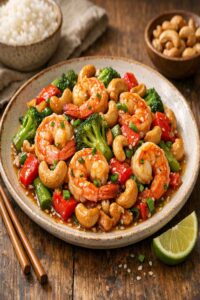
Cantonese Soup Recipe
This post contains affiliate links. As an Amazon Associate I earn from qualifying purchases.
There’s nothing quite like a bowl of warming Cantonese soup on a quiet afternoon—the kind that makes you feel held by generations of care. This traditional recipe pairs beautifully with steamed rice or light appetizers, and honestly, it’s the foundation for understanding how Asian culinary traditions honor both nourishment and wellness. If you love this style of slow-simmered comfort, you’ll also appreciate the depth of flavors in Asian Beef Shank Recipe, which uses similar low-and-slow methods to coax out every drop of golden richness.
Memories Simmering in a Pot: My Journey to This Cantonese Soup
I was eight years old, sitting on a wooden stool in my grandmother’s kitchen in Worcester, watching her move between the stove and her worn cutting board with a kind of quiet grace I didn’t understand then. She was making this very soup—the one I’m sharing with you today. I remember the smell most vividly: earthy mushrooms, the sweetness of jujubes, the gentle heat of ginger filling the small space like a warm embrace.
My grandmother never used a recipe. She moved by instinct, by memory, by the language of slow cooking that her own mother had taught her. But here’s what I discovered years later, after becoming a registered dietitian: that instinct was grounded in pure nutritional wisdom. Every ingredient she chose—the lean pork for protein, the dates for natural minerals, the goji berries for their antioxidant power—was working together to create something that nourished not just the belly, but the whole person.
Now, as a dietitian, I understand the science behind what my grandmother knew by heart. And I want to help you recreate that same magic in your own kitchen, with the confidence that you’re honoring both tradition and your family’s health.
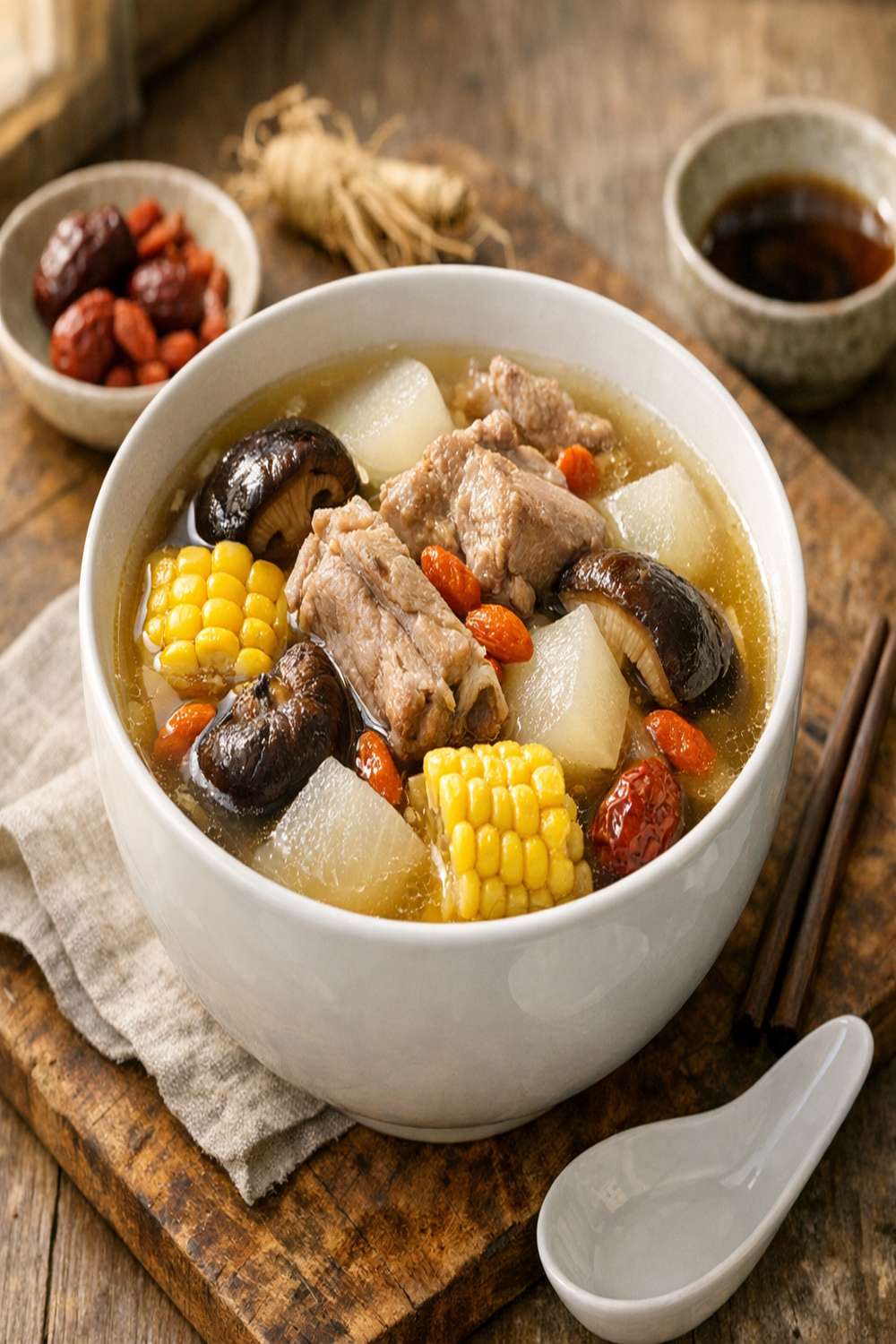
What is Cantonese Soup Recipe?
Cantonese soup is one of the most profound expressions of Asian wellness cooking—a tradition that stretches back centuries in Guangdong Province, China. It’s built on a philosophy that food is medicine, and medicine is food. Unlike Western broths that might simmer for hours but remain relatively simple, Cantonese soups are carefully orchestrated combinations of specific ingredients, each chosen for both flavor and its believed health benefits.
This particular version is what we call a “tonic soup.” It’s designed to warm the body, support digestion, boost immunity, and gently restore balance. The lean pork forms a clean, delicate foundation. The dried mushrooms bring umami depth and earthiness. The red dates (jujubes) add natural sweetness while being traditionally believed to calm the spirit and nourish the blood. The goji berries contribute a subtle tartness and powerful antioxidants. And the Chinese yam—tender and slightly sweet—brings a light, starchy richness that makes the whole thing feel incredibly comforting.
What makes this soup distinctly Cantonese is the technique: the low-and-slow simmering that allows flavors to marry without becoming heavy. The pork is blanched first to ensure a crystal-clear broth. The ingredients are added in stages so that nothing becomes overcooked or loses its essential character. It’s patient cooking—the kind that rewards you for slowing down.
Why You’ll Love This Cantonese Soup Recipe
- Deeply Nourishing Without Being Heavy – This soup provides substantial protein and minerals while remaining light and digestible. The slow-simmering method breaks down connective tissues in the pork, making it incredibly easy for your body to absorb and utilize these nutrients. Unlike heavy cream-based broths, this creates sustained energy without that sluggish feeling.
- Naturally Balanced Blood Sugar – The combination of lean protein, complex carbohydrates from the yam, and fiber from the vegetables means this soup won’t cause blood sugar spikes. You’ll feel satisfied for hours, not reaching for snacks an hour later.
- Packed With Antioxidants and Adaptogens – The dried mushrooms, goji berries, and red dates are traditional immune supporters. Modern nutrition science confirms they contain compounds that help your body manage stress and inflammation naturally.
- A Single Pot of Pure Comfort – This is complete nourishment in one vessel. Serve it as a light meal on its own, or pair it with rice. There are no complicated steps, no fancy equipment needed. Just patience and time.
- Infinitely Adaptable to Your Pantry – While the traditional ingredients are specific, this soup’s structure is forgiving. You can adjust quantities, swap similar vegetables, or modify based on what’s in season or what you have on hand.
- Makes Your Kitchen Smell Like Home – There’s something almost meditative about the gentle aroma that fills your space as this soup simmers. It signals to everyone around you that something meaningful is happening—that you’re investing time in nourishment.
The Ingredients
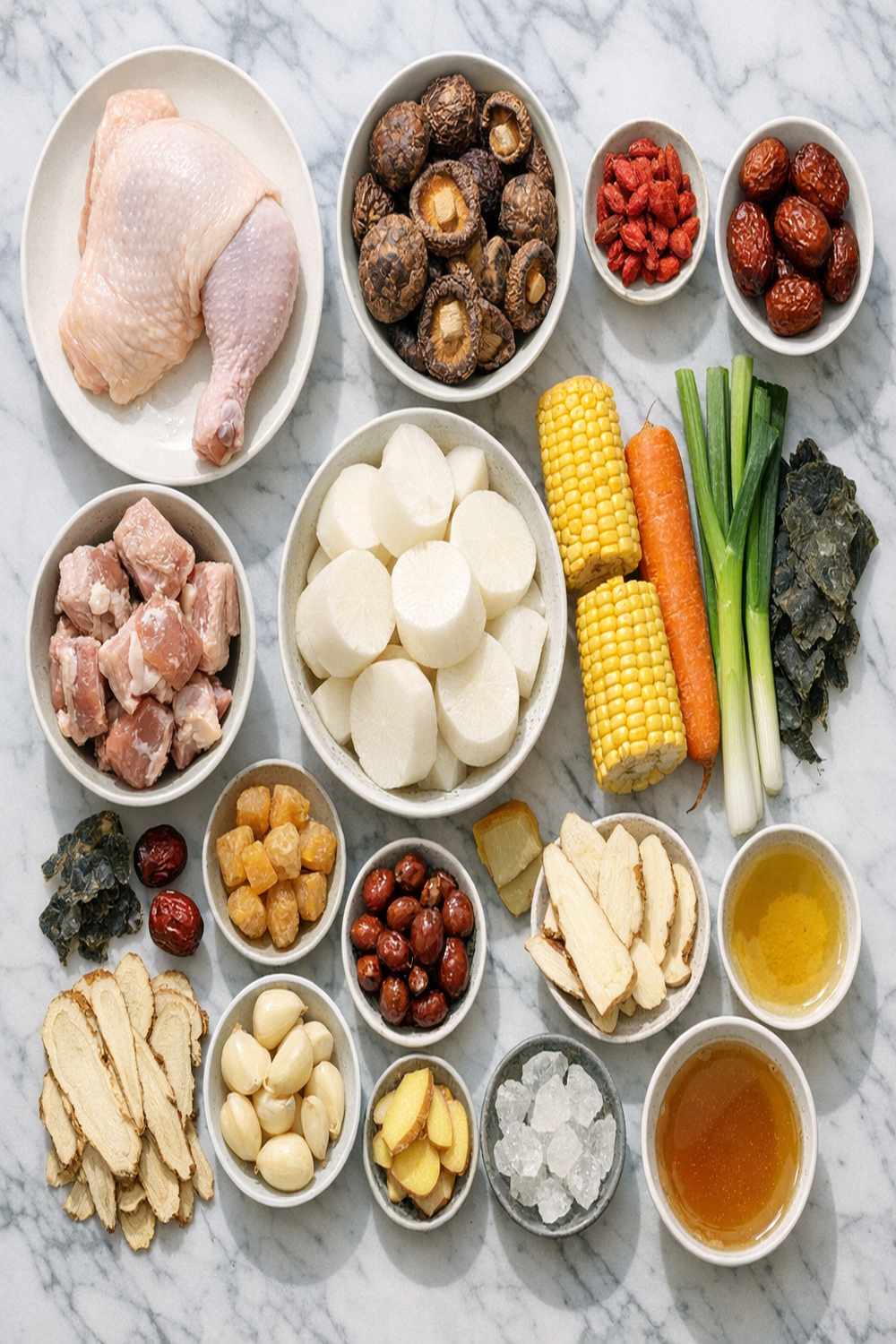
I’ve listed these ingredients in the order they’ll join the pot, which helps you stay organized as you cook. Each one brings something irreplaceable to the final bowl. This recipe serves approximately 6 people as a main course, or 8-10 as part of a larger meal.
- 4 large dried shiitake mushrooms (about 30 grams total, these will be rehydrated before cooking)
- 2 tablespoons light soy sauce (for serving alongside the shredded pork)
- 1 large chunk fresh ginger, approximately 2 inches, smashed with the flat side of your knife (smashing releases essential oils)
- 15 grams dried red dates, also called jujubes, pitted and halved (these look like wrinkled dark plums and are your natural sweetness)
- 1 large piece lean pork shoulder or butt, approximately 600 grams (choose meat with some natural marbling for maximum flavor, but lean enough to keep the broth clean and light)
- 15 grams dried goji berries (add these toward the very end to preserve their bright color and delicate flavor)
- 500 grams Chinese yams, peeled and cut into large chunks (these have a slightly chalky texture that becomes creamy when cooked)
- 2 teaspoons sea salt, plus more for serving (always taste and adjust at the table—everyone’s salt preference is different)
- 3.3 liters filtered or spring water (chlorinated water can mute the delicate flavors—worth the upgrade)
- 500 grams carrots, cut into large chunks (the natural sweetness develops beautifully during long cooking)
How to Make Cantonese Soup Recipe?
This soup asks for patience, but not active work. You’ll spend about 15 minutes on preparation, then let time and gentle heat do the transformation. The total cooking time is approximately 3 hours and 15 minutes, but most of that is you simply letting the pot do its quiet work.
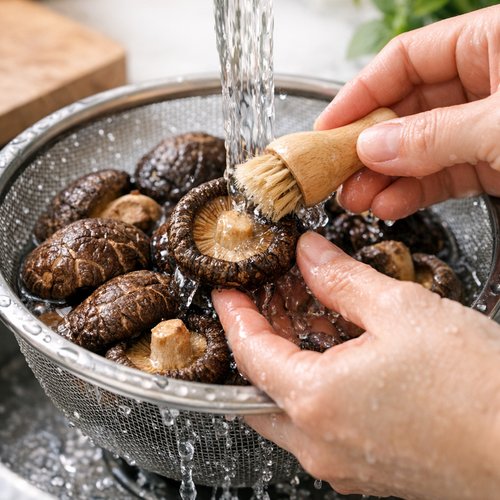
Step 1: Prepare and Soak the Mushrooms
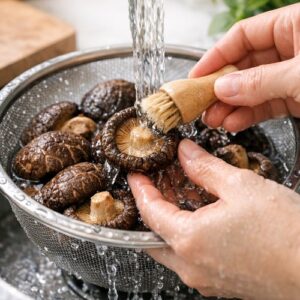
Begin by rinsing your dried shiitake mushrooms under cool running water, gently brushing away any dust or forest debris clinging to the caps. These mushrooms have been dried and stored, so a quick rinse is essential for cleanliness. Place them in a bowl and pour warm (not boiling) water over them—enough to submerge them completely. Let them sit undisturbed for 2 to 3 hours. This is the first act of patience your soup asks of you. As the mushrooms rehydrate, they release their umami essence into the soaking water, creating what’s essentially a delicate mushroom broth. When you’re ready to cook, the mushrooms will have softened and opened like little flowers, and that soaking liquid becomes liquid gold for your final soup. Don’t discard a single drop of it.
Step 2: Blanch the Pork for a Clean, Clear Broth
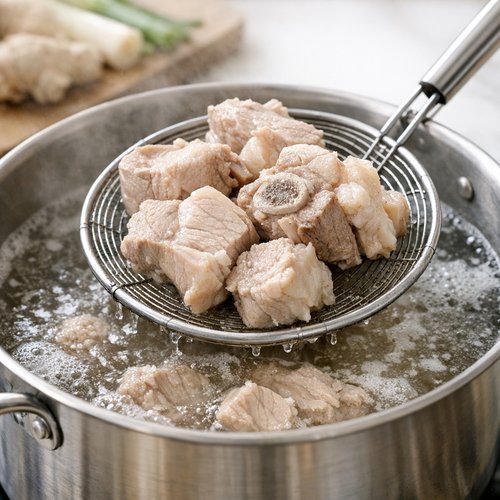
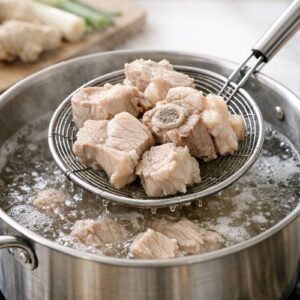
This step might seem unnecessary, but it’s the secret to achieving that beautiful, crystal-clear broth that’s the hallmark of authentic Cantonese soup. Fill a large thick-bottomed pot with water—enough to just cover your piece of pork. Bring it to a rolling boil over high heat. Once the water is actively bubbling, carefully place your pork into the pot and let it return to a boil. You’ll see foamy, grayish scum rise to the surface—this is impurities being released from the meat. Let it boil for approximately 2 to 3 minutes until you see this impurity layer form.
Now, remove the pot from the heat. Using tongs, carefully lift the pork out of the water and place it on a clean cutting board. Drain the pot completely and rinse it thoroughly—you’re washing away all those impurities. Rinse the pork piece under cool running water, gently rubbing it to remove any clinging particles. Rinse the pot one more time. This might seem like extra work, but you’re building the foundation for a soup that’s bright, pure, and free of the cloudiness that muddles flavor.
Step 3: Build Your Soup Foundation
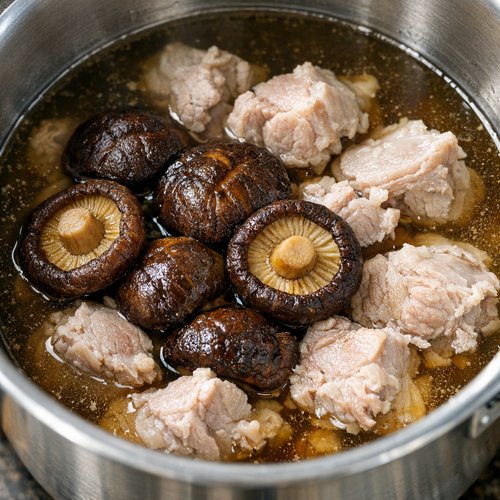
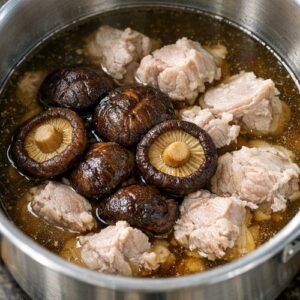
Place your blanched, rinsed pork back into your clean pot. Add the rehydrated shiitake mushrooms, your mushroom soaking liquid (reserved, remember?), the 3.3 liters of fresh water, the carrot chunks, the smashed ginger, and the pitted red dates. The ginger should be smashed but not minced—you want it to release its essence gradually, not infuse too intensely all at once. Cover the pot with a lid and turn the heat to high, bringing everything to a boil. You should see steam escaping and hear the gentle rumble of active boiling. Once boiling, immediately reduce the heat to low. The key to perfect Cantonese soup is what I call the “gentle roll”—the broth should move slightly, with occasional small bubbles breaking the surface, but it should never be a vigorous, rolling boil. Cover and let this simmer for 2 hours.
During this time, the pork will become tender and begin to release its flavor into the broth. The mushrooms will deepen the umami notes. The ginger will slowly warm the entire pot. This is the heart of the cooking time, and you’re not doing anything except occasionally checking that the heat remains at that gentle simmer.
Step 4: Add the Chinese Yams and Continue Simmering
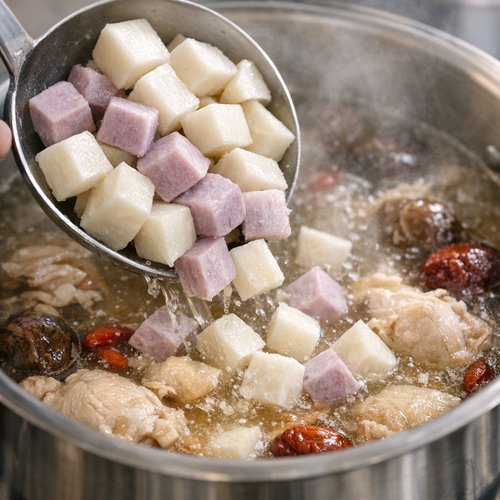
After your 2 hours are complete, carefully add your peeled, chunked Chinese yams to the pot. These delicate white or pale purple pieces need about an hour of cooking to become fork-tender and creamy, but they’ll fall apart if cooked too long or at too high a temperature. Bring the soup back to a gentle boil over medium heat, which will take about 5 to 7 minutes. Then immediately reduce the heat back to low and return to that gentle, barely-moving simmer. Cover and cook for exactly 1 hour.
You’ll notice something beautiful happening: the yams will gradually soften, and the broth will take on a very slightly creamy appearance—not from cream, but from the natural starches of the yam gently thickening the liquid. The aroma in your kitchen at this point is profoundly comforting, like a warm hug you can smell.
Step 5: Add Goji Berries and Finish the Soup
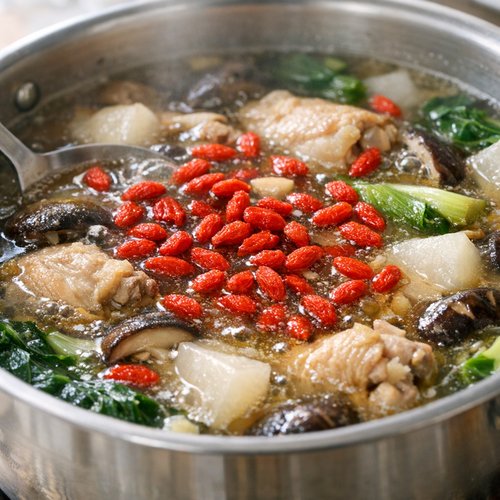
In the final 5 minutes of cooking, scatter your dried goji berries across the top of the simmering soup. These tiny bright-red berries are delicate and benefit from only brief cooking—just enough time for them to plump slightly and infuse their subtle sweetness. Don’t add them earlier or they’ll lose their vibrant color and become mushy. A quick 5-minute simmer is all they need. Taste the broth now. It should be deeply flavorful, rich from the pork and mushrooms, sweetly rounded from the dates and yam, warmed from the ginger. This is the moment to adjust salt to your preference—I recommend starting conservatively and letting each person season at the table.
Step 6: Serve with Care and Intention
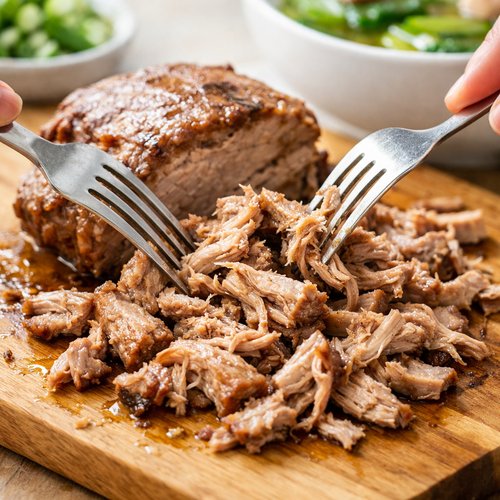
Carefully remove the pork from the soup using tongs and place it on a cutting board. Using two forks, gently shred the meat into bite-sized pieces—it should be so tender that it nearly falls apart. Ladle the soup into serving bowls, distributing the vegetables, mushrooms, and berries evenly. Top each bowl with a portion of the shredded pork. Serve alongside small bowls of sea salt and light soy sauce so everyone can season to their own preference. This final gesture—letting people customize their own bowl—honors the individual, which is very much the Cantonese way.
Expert’s Nutritional Insight: The Magic of the Long Simmer
As a registered dietitian, I want to highlight something that happens during those three hours of gentle cooking that you simply cannot replicate with quick cooking methods. The slow simmering breaks down the collagen in the pork into gelatin, which your body can immediately recognize and utilize for joint health, skin integrity, and digestive support. Simultaneously, the mushrooms’ beta-glucans become more bioavailable—meaning your body can actually absorb and use them—through the combination of heat and the acidic environment created by the dates.
The Chinese yam itself is fascinating from a nutritional perspective. It contains a compound called diosgenin, which has been traditionally used to support hormonal balance. Modern research is exploring its potential, and meanwhile, the yam provides easily digestible carbohydrates that won’t spike blood sugar when paired with the protein-rich pork and the fiber-rich mushrooms and vegetables.
This is why I call this a “tonic” soup: every single ingredient is working synergistically to create something greater than the sum of its parts. You’re not just eating dinner; you’re giving your body a gift of nourishment that will sustain you for hours.
Make-Ahead Guide: Planning for Busy Weeks
One of the greatest gifts you can give yourself is a batch of this soup prepared ahead. Here’s how I approach it in my own life:
- Complete Soup Storage: This soup keeps beautifully in the refrigerator for 4 to 5 days. Ladle it into glass containers with tight-fitting lids, leaving about an inch of headspace. The flavors actually deepen slightly as it rests, becoming even more rounded and harmonious. Reheat gently over medium-low heat, stirring occasionally, until warmed through. Never use high heat or you risk breaking down the delicate vegetables.
- Freezer Strategy: You can freeze this soup for up to 3 months, though I recommend doing so without the yams. Freeze the pork, broth, mushrooms, dates, and goji berries together. When you’re ready to serve, thaw overnight in the refrigerator, then reheat and add freshly cooked yams for optimal texture. This takes just 45 minutes and gives you a “made today” experience even when you’re using prepared components.
- Prep-Ahead Components: On a quiet weekend, I’ll soak my mushrooms, blanch my pork, and prep all my vegetables (storing them separately in airtight containers). This reduces active cooking day to about 15 minutes of assembly. The mushroom soaking liquid should stay in its own container in the refrigerator for up to 2 days.
- The Slow Cooker Option: After you’ve completed Steps 1 through 3 (the blanching and initial soup building), you can carefully transfer everything to a slow cooker set on low and cook for 6 to 8 hours instead of 3 hours on the stove. Add your yams in the final 2 hours. This is a beautiful option if you’re starting in the morning and want dinner ready by evening.
Tips and Tricks for Success
- Use a Thick-Bottomed Pot – Thin pots create hot spots that can cause the bottom to scorch slightly, which clouds your broth. A heavy pot (stainless steel or quality enameled cast iron) distributes heat evenly and helps maintain that gentle, consistent simmer.
- Don’t Skip the Mushroom Soaking Step – Those 2 to 3 hours aren’t wasted time; they’re essential preparation. Cold soaking (rather than hot) preserves more of the mushroom’s delicate flavor compounds while still rehydrating them perfectly. If you’re in a time crunch, use warm (not hot) water and soak for at least 1 hour, though the full 2-3 hours is worth planning for.
- Trust the Gentle Simmer – The hardest part of this recipe for most people is resisting the urge to turn up the heat. If you have a heat diffuser, place it between your burner and pot to maintain that perfect low temperature. You’re looking for maybe one small bubble breaking the surface every 2-3 seconds, not an active boil.
- Cut Vegetables in Similar Sizes – Consistency matters here. Cut your carrot chunks roughly the same size as your yam chunks. They’ll cook more evenly and create a more visually harmonious final dish.
- Taste as You Go, but Only at the End – Don’t be tempted to taste partway through. The flavors are still developing and you’ll get a false sense of the final result. Wait until the very end to do your final seasoning assessment.
- Reserve Extra Mushroom Soaking Liquid – If you find you’ve used less than anticipated during cooking, save the remainder. It’s a wonderful addition to rice, risotto, or light stir-fries. It keeps in the refrigerator for up to 5 days.
Common Mistakes to Avoid
- Skipping the Pork Blanching Step – I know it seems like an extra step, but this is what separates a cloudy, muddy-looking broth from a clear, beautiful one. The impurities released in boiling would stay in your finished soup, muting flavors and creating that grayish appearance.
- Cooking at Too High a Temperature – This is the most common mistake I see. High heat breaks down vegetables too quickly, creates a cloudy broth instead of a clear one, and can make the pork tough rather than tender. Your patience here directly translates to quality. Low-and-slow is non-negotiable.
- Adding Goji Berries Too Early – These delicate berries turn mushy and lose their brilliant color if cooked for the full 3-hour duration. They’re truly a last-minute addition. Save them for the final 5 minutes without exception.
- Using Intensely Hot Water for Mushroom Soaking – Boiling water will partially cook them and make them mushy. Warm water (around 160-180°F) rehydrates them gently while preserving their tender-but-still-structured texture.
Seasonal Variations: Adapting Your Soup Throughout the Year
- Spring: Add fresh spring onions (scallions) and a handful of young spinach in the final 10 minutes of cooking. The fresh, green energy mirrors the season. You can also swap out half the carrots for fresh bamboo shoots if you can find them.
- Summer: In hot weather, many Cantonese cooks shift to lighter broths. Keep the same base but reduce the cooking time to 2 hours total (blanch, then 2 hours simmer with all ingredients). Add more goji berries and consider adding dried lily buds (if you can find them), which are traditionally believed to cool the body energetically.
- Fall: This is when the traditional recipe truly shines, but you can amplify the warming spices. Add a star anise or two and increase your ginger slightly. Add dried goji berries and red dates generously—this is prime time for those ingredients in Cantonese cooking philosophy.
- Winter: Deepen the recipe by adding a piece of dried astragalus root (about 2 inches) if you can source it—it’s traditionally used in immune-supporting tonic broths. You can also add dried scallop (if you eat seafood) for additional umami depth. This is the season for the longest cooking times and the most generous portions.
Can I Store Cantonese Soup Recipe?
Absolutely—and I consider having this soup on hand one of the greatest acts of self-care. In your refrigerator, this soup keeps beautifully for 4 to 5 days in an airtight glass container. The flavors actually deepen as it rests, so day three or four might taste even better than day one. When reheating, use medium-low heat and stir occasionally to ensure even warming. Never use high heat, as this can break down the delicate vegetables and create an overly concentrated flavor.
For freezer storage, I recommend transferring cooled soup into freezer-safe containers, leaving about an inch of headspace at the top (the liquid will expand slightly). Properly frozen, this soup lasts for up to 3 months. Thaw overnight in the refrigerator whenever you want a nourishing meal ready quickly. Some people freeze the broth separately from the solids, which gives maximum flexibility—you can thaw just the amount you need.
A professional tip: if you’re freezing with the yams included, know that their texture becomes slightly softer upon thawing. For this reason, I prefer to freeze the broth with pork, mushrooms, and dates, then add freshly cooked yams during the final reheating. This preserves that tender-but-still-structured bite that makes the soup so satisfying.
Nutrition Information
Based on USDA nutritional database analysis, each serving of this soup (approximately 1.5 cups) contains roughly 220-260 calories, with 28 grams of high-quality protein from the lean pork. The carbohydrate content comes primarily from the yams and vegetables—approximately 18 grams per serving—making this a well-balanced, moderate-carbohydrate meal that won’t spike blood sugar when consumed as part of a complete meal.
What’s particularly valuable is the mineral density: this soup provides substantial amounts of iron (from the pork), potassium (from the yams and dates), and selenium (from the mushrooms and pork). The red dates are particularly rich in vitamin C, which actually enhances iron absorption, making this a soup that’s thoughtfully designed for your body’s ability to use what it’s consuming.
Fat content is relatively low (approximately 4-5 grams per serving), mostly from the pork’s natural marbling, which provides important fat-soluble nutrients without creating the heavy feeling of a cream-based soup. The sodium content is minimal unless you salt heavily—approximately 400-500mg per serving without added salt, rising only when you add salt at the table according to your preference.
What Can I Serve With Cantonese Soup Recipe?
While this soup is absolutely satisfying on its own, it’s wonderful when paired thoughtfully with complementary dishes. The traditional pairing is simply steamed white rice, which absorbs the flavorful broth beautifully. But let me share some combinations I’ve discovered through my own kitchen experiments:
- Steamed Jasmine Rice – The floral notes in jasmine rice echo and enhance the delicate flavors of the soup. This is the traditional pairing for a reason.
- Soft Steamed Buns – If you want something more substantial, try serving alongside Baozi Recipe Vegetarian. The pillowy texture provides a textural contrast that makes the meal feel complete.
- Stir-Fried Greens with Garlic – A simple preparation of bok choy, gai lan, or even spinach provides freshness and crunch alongside the soup’s gentle creaminess. Just a touch of garlic and a light soy sauce finish.
- Simple Stir-Fried Rice – Day-old rice stir-fried with a touch of oil, soy sauce, and some fresh vegetables transforms this into a more substantial meal. You can even pour the soup over the rice for a comforting rice-soup hybrid.
- Light Appetizers – I often serve this soup alongside a simple dumpling or spring roll. The Baked Char Siew Bao Recipe makes a wonderful companion, as does Bao Recipe Filling for those who want to prepare their own.
- Nothing At All – Honestly, a bowl of this soup, a spoon, and quiet time is sometimes the perfect meal. It’s complete nourishment that doesn’t need accompaniment.
Substitutes
- For Dried Shiitake Mushrooms: If you cannot find shiitake mushrooms, dried oyster mushrooms work beautifully, though they’re slightly more delicate. Use the same quantity and follow the same soaking process. You can also use dried porcini mushrooms, though these are more intensely flavored—use only 3 instead of 4, and soak in filtered water rather than using the soaking liquid directly, as it can be overpowering.
- For Lean Pork Shoulder: This recipe works wonderfully with chicken (use 700 grams of chicken thighs for similar richness, or breast meat for a lighter version). Turkey is another option. Beef short ribs or chuck also work, though you’ll want to increase the blanching time slightly to ensure complete impurity removal. The cooking time remains the same.
- For Chinese Yams: If you cannot find Chinese yams (also called Chinese potatoes), regular russet potatoes are an acceptable substitute, though they’re starchier and slightly less delicate in flavor. Use the same quantity and cooking time. Some people use winter squash cut into chunks, which adds natural sweetness and a slightly different texture.
- For Red Dates (Jujubes): If you cannot find these, dried cranberries provide tartness, though you’ll lose the traditional sweetness. Alternatively, a few dried apricots cut in half provide similar natural sweetness. Use approximately 10 grams of whichever substitute you choose.
- For Goji Berries: These are quite specific in flavor, but if unavailable, dried cranberries, dried blueberries, or even dried goji powder (dissolved in warm broth before serving) work acceptably. The color and subtle tartness will be different, but the nutritional benefit remains.
- For Filtered Water: If you don’t have filtered water, using good-quality bottled water prevents chlorine from muting the delicate flavors. Tap water, while perfectly safe, contains chlorine compounds that can interfere with the soup’s subtle taste profile.

Cantonese Soup Recipe
Ingredients
Method
- Begin by rinsing your dried shiitake mushrooms under cool running water, gently brushing away any dust or forest debris clinging to the caps. These mushrooms have been dried and stored, so a quick rinse is essential for cleanliness. Place them in a bowl and pour warm (not boiling) water over them—enough to submerge them completely. Let them sit undisturbed for 2 to 3 hours. This is the first act of patience your soup asks of you. As the mushrooms rehydrate, they release their umami essence into the soaking water, creating what's essentially a delicate mushroom broth. When you're ready to cook, the mushrooms will have softened and opened like little flowers, and that soaking liquid becomes liquid gold for your final soup. Don't discard a single drop of it.
- This step might seem unnecessary, but it's the secret to achieving that beautiful, crystal-clear broth that's the hallmark of authentic Cantonese soup. Fill a large thick-bottomed pot with water—enough to just cover your piece of pork. Bring it to a rolling boil over high heat. Once the water is actively bubbling, carefully place your pork into the pot and let it return to a boil. You'll see foamy, grayish scum rise to the surface—this is impurities being released from the meat. Let it boil for approximately 2 to 3 minutes until you see this impurity layer form. Now, remove the pot from the heat. Using tongs, carefully lift the pork out of the water and place it on a clean cutting board. Drain the pot completely and rinse it thoroughly—you're washing away all those impurities. Rinse the pork piece under cool running water, gently rubbing it to remove any clinging particles. Rinse the pot one more time. This might seem like extra work, but you're building the foundation for a soup that's bright, pure, and free of the cloudiness that muddles flavor.
- Place your blanched, rinsed pork back into your clean pot. Add the rehydrated shiitake mushrooms, your mushroom soaking liquid (reserved, remember?), the 3.3 liters of fresh water, the carrot chunks, the smashed ginger, and the pitted red dates. The ginger should be smashed but not minced—you want it to release its essence gradually, not infuse too intensely all at once. Cover the pot with a lid and turn the heat to high, bringing everything to a boil. You should see steam escaping and hear the gentle rumble of active boiling. Once boiling, immediately reduce the heat to low. The key to perfect Cantonese soup is what I call the "gentle roll"—the broth should move slightly, with occasional small bubbles breaking the surface, but it should never be a vigorous, rolling boil. Cover and let this simmer for 2 hours. During this time, the pork will become tender and begin to release its flavor into the broth. The mushrooms will deepen the umami notes. The ginger will slowly warm the entire pot. This is the heart of the cooking time, and you're not doing anything except occasionally checking that the heat remains at that gentle simmer.
- After your 2 hours are complete, carefully add your peeled, chunked Chinese yams to the pot. These delicate white or pale purple pieces need about an hour of cooking to become fork-tender and creamy, but they'll fall apart if cooked too long or at too high a temperature. Bring the soup back to a gentle boil over medium heat, which will take about 5 to 7 minutes. Then immediately reduce the heat back to low and return to that gentle, barely-moving simmer. Cover and cook for exactly 1 hour. You'll notice something beautiful happening: the yams will gradually soften, and the broth will take on a very slightly creamy appearance—not from cream, but from the natural starches of the yam gently thickening the liquid. The aroma in your kitchen at this point is profoundly comforting, like a warm hug you can smell.
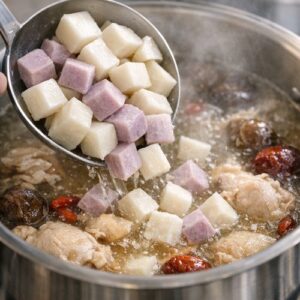
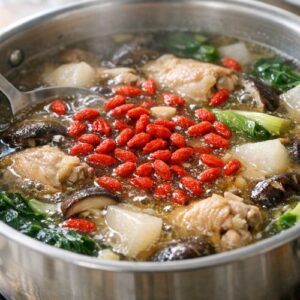
- In the final 5 minutes of cooking, scatter your dried goji berries across the top of the simmering soup. These tiny bright-red berries are delicate and benefit from only brief cooking—just enough time for them to plump slightly and infuse their subtle sweetness. Don't add them earlier or they'll lose their vibrant color and become mushy. A quick 5-minute simmer is all they need. Taste the broth now. It should be deeply flavorful, rich from the pork and mushrooms, sweetly rounded from the dates and yam, warmed from the ginger. This is the moment to adjust salt to your preference—I recommend starting conservatively and letting each person season at the table.
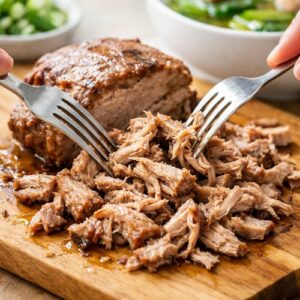
- Carefully remove the pork from the soup using tongs and place it on a cutting board. Using two forks, gently shred the meat into bite-sized pieces—it should be so tender that it nearly falls apart. Ladle the soup into serving bowls, distributing the vegetables, mushrooms, and berries evenly. Top each bowl with a portion of the shredded pork. Serve alongside small bowls of sea salt and light soy sauce so everyone can season to their own preference. This final gesture—letting people customize their own bowl—honors the individual, which is very much the Cantonese way.
Notes
FAQs
Can I make this soup without the pork blanching step?
Technically, yes—but I genuinely wouldn’t recommend it. The blanching step removes impurities that would otherwise remain in your finished broth, creating a cloudy appearance and slightly off flavor. It’s not about the taste being “bad,” but about achieving that crystal-clear, pure broth that’s the hallmark of authentic Cantonese soup. Think of it as the difference between a muddy stream and a clear spring—both are water, but one is so much more beautiful and refreshing. The step takes only minutes and makes a significant difference.
How do I know when the soup is done?
The pork is perfectly cooked when a fork easily pierces it and a piece shreds without resistance. The yams are done when a fork passes through them completely without any firmness in the center. You’re not looking for mushy—you want them tender but still holding their shape slightly. The broth should be fragrant and rich, with visible wisps of steam, and you should taste it: the flavors should be well-developed and balanced, not thin or underdeveloped.
Is this recipe vegetarian or vegan adaptable?
The pork provides significant protein and flavor, so adapting this requires thoughtful substitution. For vegetarian, you could replace the pork with extra mushrooms (double the quantity) and add a piece of kombu (seaweed) for umami depth. Cook for the same amount of time—the mushrooms will break down and create a richer broth. For vegan, follow the same approach and ensure your goji berries are processed in a facility free of animal products. However, I’ll be honest: this soup’s soul is deeply tied to the pork and its subtle depth. The vegetarian version is delicious, but it’s a different experience.
Can I use fresh instead of dried mushrooms?
Not really—this is one place where the dried versions are genuinely superior. Dried shiitake mushrooms have concentrated umami and a specific earthy depth that fresh ones simply don’t possess. Fresh mushrooms are wonderful in other preparations, but for this particular soup, they’d actually dilute the final result. That said, if you only have access to fresh shiitake, use 300 grams (about 8 fresh mushrooms), add them in the initial building stage, and reduce the final cooking time to 2.5 hours total. You’ll lose some depth, but it will still be lovely.
What if I want a richer, more concentrated broth?
After the initial 2 hours of simmering with pork, mushrooms, carrots, dates, and ginger, you can remove those elements and continue simmering the broth uncovered for another 30 minutes to reduce and concentrate the flavors. Then add your yams and continue. This creates a more intensely flavored broth but uses the same total cooking time. Alternatively, use 2.8 liters of water instead of 3.3—less liquid means naturally more concentrated flavors without any extra cooking time.
How can I make this less sweet?
The sweetness primarily comes from the red dates and goji berries. Simply reduce these quantities—use 12 grams of red dates instead of 15, and 10 grams of goji berries instead of 15. You can also balance perceived sweetness by adding more ginger (an additional 1-inch piece) or increasing the salt slightly. The carrot’s natural sweetness cannot be removed without changing the recipe fundamentally, so these adjustments combined should achieve a less sweet result while preserving the traditional character.
More Recipes You’ll Love
- BBQ Chinese Pork Recipe – Another beautiful expression of how patient cooking transforms simple pork into something transcendent, with caramelized edges and smoky depth.
- Baked Pork Chop