Chili Garlic Shrimp Recipe
This post contains affiliate links. As an Amazon Associate I earn from qualifying purchases.
Getting kids to eat seafood feels impossible—until you try this approach. I learned that from watching my grandmother transform a handful of shrimp into something my cousins couldn’t stop talking about. She’d say, “Willie, people think cooking shrimp is fancy. It’s not. It’s just knowing when to listen to the pan.” That wisdom stuck with me through dietitian school and into my practice here in Worcester. This pan-seared chili garlic shrimp recipe proves that simple ingredients, treated with respect and cooked low-and-slow mindfulness, create magic on the plate. Pair it with rice or roasted vegetables, and you’ve got a meal that satisfies both nutritional science and the soul. Like my Authentic Shrimp Fried Rice Recipe, this dish celebrates what shrimp does best: absorb flavor while staying tender and quick to prepare.Chili Garlic Shrimp the Whole Family Will Actually Eat (Picky Eaters Included)
I remember the first time I made this for my younger cousins. One of them—Danny, who was seven at the time—declared that shrimp was “slimy and weird.” His mom was ready to give up. But when I set that skillet on the stove and let the butter foam gently, when the garlic released its perfume into the kitchen, something shifted. Danny watched the shrimp turn from translucent gray to vibrant pink. He asked if he could help flip them. By the time we plated everything over jasmine rice, he was asking for seconds. That’s when I understood: kids don’t reject food because it’s unfamiliar. They reject it because they weren’t part of the story.
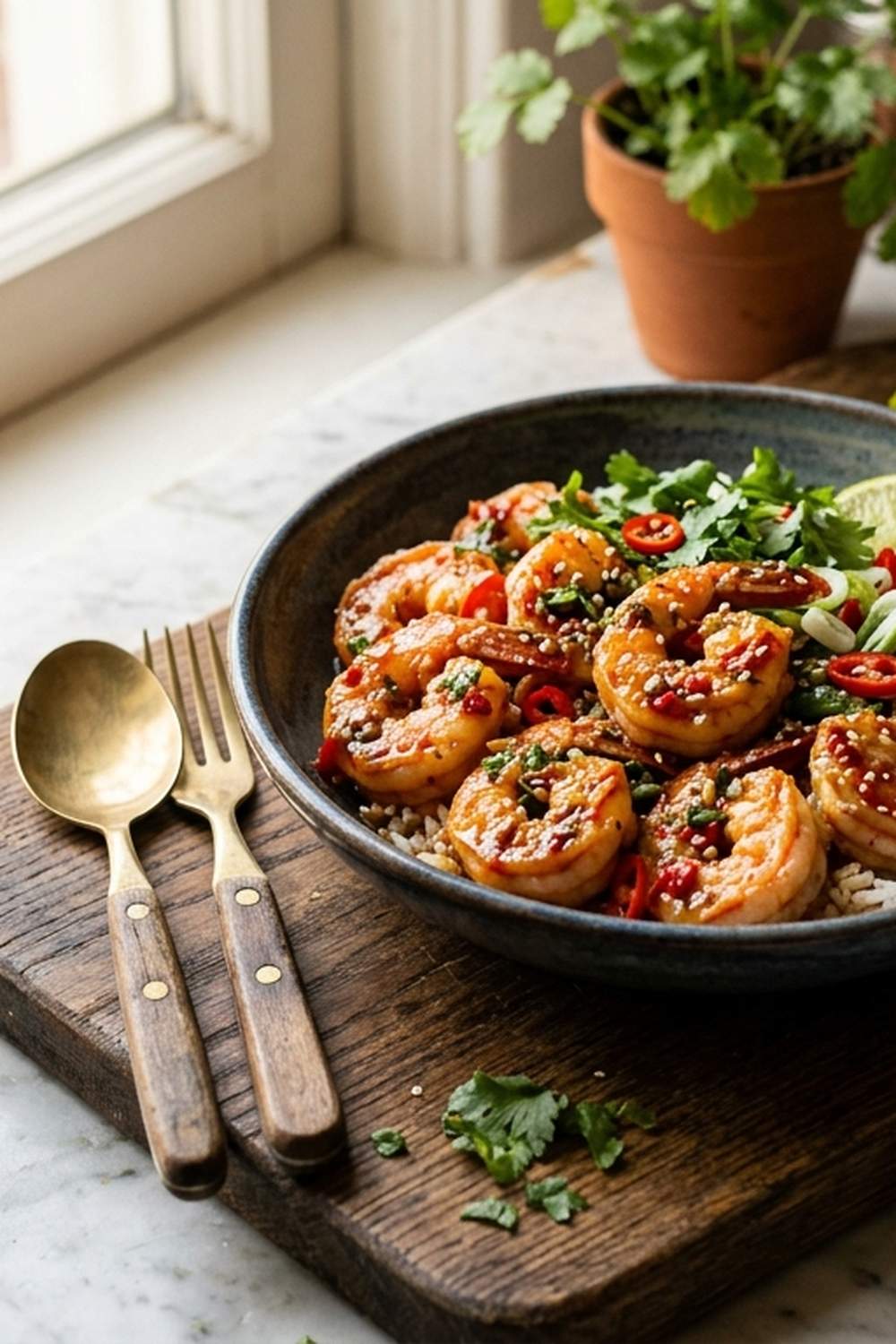
This recipe became a staple in my family gatherings because it checks every box parents worry about. It’s ready in under 15 minutes. It introduces kids to proteins beyond chicken and beef. The flavors are bold enough to feel grown-up but approachable enough that even skeptical eaters find themselves curious. And here’s what I love most: every single ingredient serves a purpose. Nothing is filler.
Why Kids Love This Version
There’s genuine nutritional science behind why this dish works for families. Shrimp is lean protein that cooks fast—no dry, rubbery textures that turn kids away. The garlic and chili peppers introduce umami and gentle heat without overwhelming young palates. The parsley adds color and freshness that makes the plate visually appealing. And because everything happens in one skillet, the flavors marry together in a way that feels special, almost ceremonial.
- Speed and texture – Shrimp cooks in minutes, maintaining a tender, succulent bite that satisfies without requiring extensive chewing. Overcooked shrimp is tough; properly cooked shrimp is silky. Kids notice the difference immediately.
- Visual appeal and interactive cooking – Watching shrimp transform from gray to pink is magical for children. The vibrant red chili peppers and green parsley garnish make the dish look exciting. When kids help cook it, they become invested in the outcome.
- Customizable heat level – Unlike many spiced dishes, this one allows you to control the chili intensity. Remove seeds from peppers for milder versions, or keep them for older kids who enjoy a little kick. Picky eaters feel in control when they can adjust spice to their preference.
- Served multiple ways – The same batch works over rice, with steamed broccoli, folded into tacos, or even served cold as a shrimp salad the next day. Flexibility means every family member finds their way into enjoying it.
How to Get Kids Involved in Making This
- Ages 3-5: Garlic peeling and herb tearing – Little ones can help separate garlic cloves (you break them from the bulb first) and tear parsley leaves from stems. This builds confidence and makes them feel like real helpers. Supervise closely, but let them lead.
- Ages 6-9: Measuring and seasoning – School-age kids can measure olive oil and butter into the skillet with guidance. They can add salt and pepper after you place shrimp in the pan. Walking them through “we season both sides” teaches technique they’ll use forever.
- Ages 10+: Leading the sear – Older kids can handle the entire pan process with you nearby. They can monitor heat, know when to flip based on color, and stir in garlic and chilis. This builds real cooking confidence and an understanding of how heat transforms ingredients.
The Ingredients – Hidden Nutrition, Visible Deliciousness
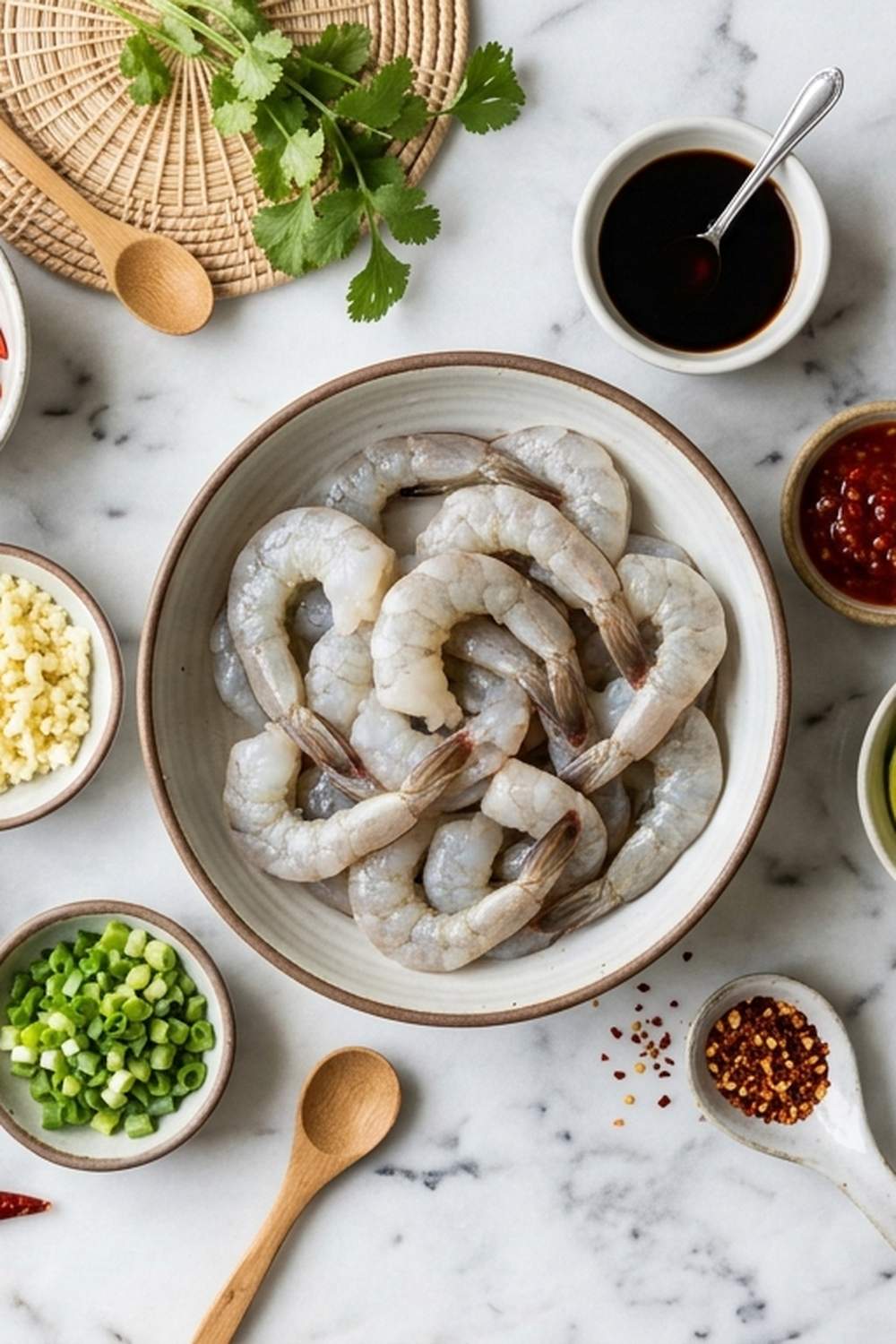
Every ingredient in this recipe carries nutritional weight. Shrimp delivers selenium and B12, minerals many growing children don’t get enough of. Garlic provides allicin, a compound with anti-inflammatory properties that research suggests supports immune function. Even the parsley isn’t decorative—it’s a source of vitamin K and antioxidants. When I plate this for families, I’m not just feeding hunger; I’m nourishing growth and vitality. The beauty is that kids taste deliciousness first, nutrition second—exactly how it should be.
- 2 red chili peppers (seeded and chopped fine, or keep seeds for more heat)
- 1 tablespoon fresh lemon juice (squeezed at serving for brightness that ties everything together)
- ¼ teaspoon red pepper flakes (optional, for those who enjoy more heat)
- 5 cloves garlic (minced fresh, never pre-minced from a jar)
- ½ teaspoon freshly cracked black pepper (fresh-cracked tastes noticeably brighter than pre-ground)
- 2 tablespoons unsalted butter (grass-fed if available, adds richness without harsh flavors)
- ½ teaspoon fine sea salt (adjust to taste; shrimp needs proper seasoning)
- 3 tablespoons extra virgin olive oil (divided: 2 for the initial sear, 1 for finishing brightness)
- ¼ cup fresh parsley (chopped, added at the very end to preserve color and nutrients)
- 1 pound large shrimp (shelled and deveined, with tails removed for easier eating by younger children)
Yield: Serves 4 as a main course (about 4 ounces shrimp per person), or 6 as an appetizer
How to Make Chili Garlic Shrimp for the Whole Family
This isn’t just cooking. This is a conversation between you and your ingredients, between the heat of the pan and the delicate proteins you’re coaxing into perfection. My grandmother taught me to listen. Listen to the sizzle. Listen to when the butter foams. Listen to the pan tell you it’s ready. Let’s walk through this together, step by step, moment by moment. Involve your kids at every turn. Ask them what they hear, what they see, what they smell. That sensory engagement is where food memory lives.
Step 1: Prepare Your Mise en Place (Everything in Its Place)
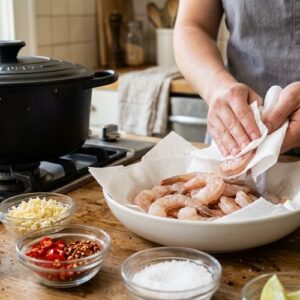
Before any heat touches the pan, gather everything. Pat shrimp completely dry with paper towels—this is non-negotiable. Wet shrimp won’t sear; it will steam. Mince your garlic finely and chop your chili peppers, removing most of the seeds unless your family enjoys serious heat. Measure salt and pepper into a small dish. Chop parsley and squeeze lemon juice. This preparation step takes five minutes and prevents scrambling once heat starts. If cooking with children, this is where they become your mise en place partners. Let them arrange ingredients on the counter in the order you’ll use them.
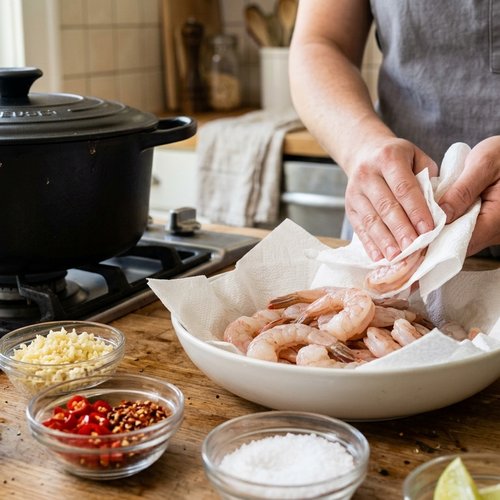
Step 2: Heat Your Fat Mindfully
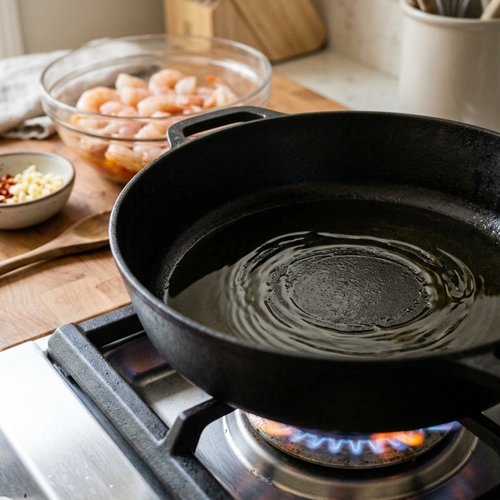
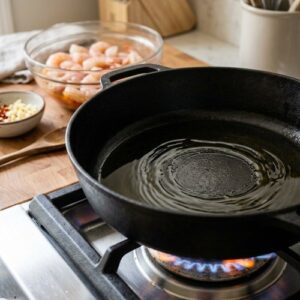
Place your skillet over medium-high heat. Add 2 tablespoons of olive oil first. Let it warm for about 60 seconds—you want it shimmering, not smoking. Add your butter. Watch it foam gently; this is your signal that the pan has reached the right temperature. The combination of olive oil and butter creates a fat with a higher smoke point than butter alone, while maintaining butter’s rich flavor profile. Keep children at a safe distance during this heating phase. This is grown-up heat management, but narrate what you’re doing so they learn through observation.
Step 3: Sear the Shrimp with Patience
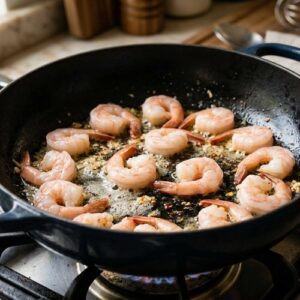
When your fat is foaming gently, add shrimp in a single layer. Do not crowd the pan. If your skillet is small, work in two batches. Let shrimp sit untouched for 2 to 3 minutes. This is where the magic happens—the proteins caramelize against the hot surface, creating a golden crust. Resist the urge to move them around. Sprinkle the first side with your salt and pepper blend. After 2 to 3 minutes, when the underside has turned a beautiful coral-pink and the edges are slightly translucent, flip each shrimp carefully. Sear the second side for another 2 minutes. The entire shrimp should now be opaque pink, indicating it’s cooked through without being overdone.
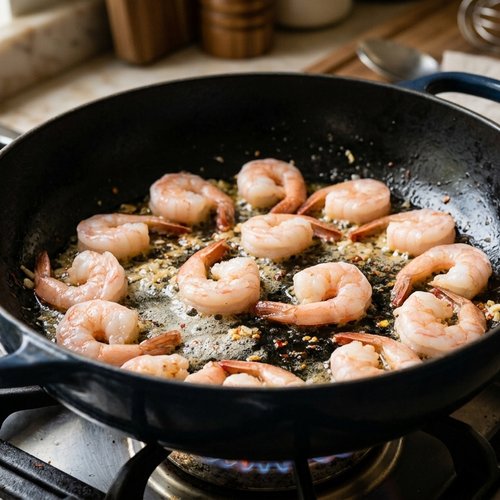
Kids aged 10 and up can manage this step with you beside them, gently guiding their hand on the spatula for flipping. Emphasize that patience—not speed—creates great food. This is a lesson that transfers to life.
Step 4: Build Flavor with Aromatics
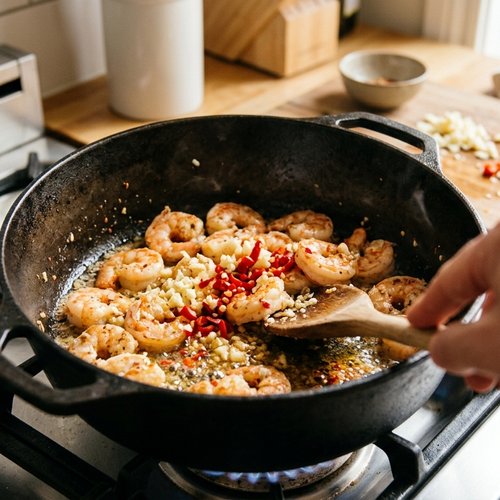
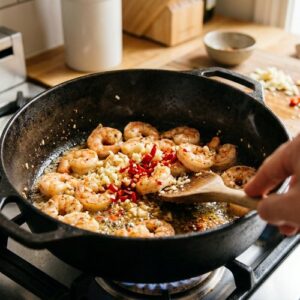
Once your shrimp is seared on both sides, reduce heat to medium. Immediately add your minced garlic and chopped chili peppers. Stir constantly for just 30 seconds. You’re not cooking these heavily; you’re infusing the fat with their essence. The garlic should become fragrant but not brown—browning makes it bitter. The chili peppers release their capsaicin, that compound that creates gentle warmth on the palate. This brief moment, this 30 seconds of stirring, transforms simple seared shrimp into something aromatic and alive.
Step 5: Finish with Brightness and Freshness
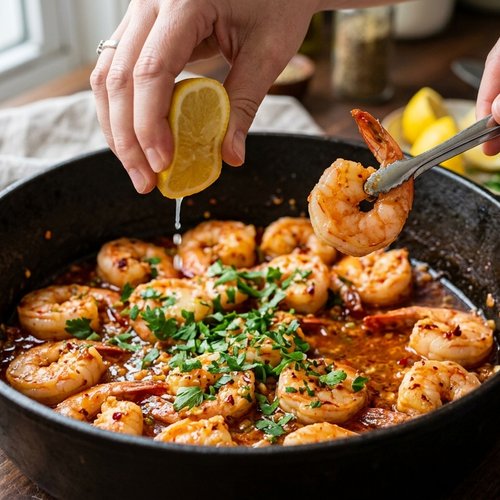
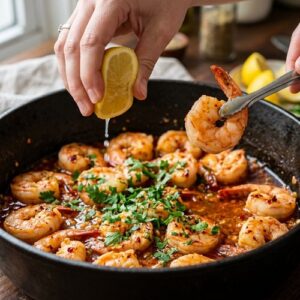
Remove the skillet from heat. Add your fresh parsley and squeeze of lemon juice directly into the pan. Taste a piece of shrimp. Does it need more salt? A touch more lemon? Season to your family’s preference. Some families enjoy a pinch more red pepper flakes; others prefer it mild. This customization moment teaches kids that cooking is personal, that food should taste exactly the way your family loves it. Drizzle with that remaining tablespoon of olive oil for a silky finish.
Customization Station: Let Everyone Build Their Own
This is where picky eaters transform into engaged eaters. Set up a simple buffet where each family member can assemble their own plate. When kids feel in control of their food, resistance drops dramatically. They’re not being served something unfamiliar; they’re creating something uniquely theirs. I’ve watched this work countless times in my practice. A child who refuses “shrimp” will happily pile garlic shrimp onto jasmine rice when they’ve chosen the rice, selected the vegetable side, and sprinkled on the parsley themselves.
- Rice options – Offer jasmine rice, white rice, brown rice, or cauliflower rice. Let each person choose. Brown rice has more fiber and nutrients; white rice feels cozier. Both are valid, and choice matters to kids.
- Vegetable partners – Steam broccoli, snap peas, green beans, or bell pepper strips. Some kids want their vegetables in a separate pile; others want them mixed in. Honor their preference. You’re teaching them that their voice about food matters.
- Heat level – Keep the chili peppers slightly separated so those who want more can add them, and those who prefer milder flavors can minimize them. This prevents the “it’s too spicy” shutdown and keeps everyone eating.
- Finishing touches – A small bowl of fresh lime wedges, extra parsley, or a drizzle of that herb-infused oil lets people adjust their plate to taste. Small autonomies build confidence.
Scaling for Different Family Sizes
This recipe scales beautifully. For a couple or small family of two, halve everything: ½ pound shrimp, 1½ tablespoons oil, 1 tablespoon butter, 2 cloves garlic, 1 chili pepper. Use a small 8-inch skillet. For a family of six, double the recipe: 2 pounds shrimp, 6 tablespoons oil divided between two skillets, 4 tablespoons butter, 10 cloves garlic, 4 chili peppers. Work in two batches rather than crowding one pan—your shrimp will sear, not steam. The cooking time remains the same because you’re controlling the pan, not the quantity. This is important: shrimp done right is about technique and attention, not volume.
Can I Store Chili Garlic Shrimp?
Yes, and it’s wonderful for meal planning. Store leftover shrimp in an airtight container in the refrigerator for 3 to 4 days. The flavors actually deepen slightly as they sit. Reheat gently in a pan over medium-low heat with a splash of water or lemon juice to restore moisture. Cold shrimp is equally delicious—pack it into lunchboxes the next day over salad greens, or serve it room temperature as part of a grain bowl. My professional tip: don’t reheat in the microwave, which toughens the proteins. Gentle stovetop heat respects what you’ve created.
I often make a double batch on Sunday and portion shrimp into smaller containers. Monday night, it becomes a shrimp bowl with avocado and cucumber. Wednesday, it’s folded into lettuce wraps with herbs and lime. The same foundational recipe feeds your family in multiple ways throughout the week. That’s efficiency that honors food—nothing wasteful, everything intentional.
Expert’s Nutritional Insight: Why Shrimp Matters for Growing Bodies
As a registered dietitian, I want you to understand what shrimp brings to your family’s table. Shrimp is exceptionally high in selenium—a single 4-ounce serving provides over 50% of the daily recommended value. Selenium supports thyroid function, which regulates growth and metabolism in children. It’s also rich in astaxanthin, a carotenoid that gives shrimp its pink color and acts as a powerful antioxidant in the body. Unlike larger fish, shrimp has minimal mercury concerns, making it a safe protein for regular family meals.
The garlic and chili peppers in this recipe add significant value too. Garlic contains sulfur compounds that research from institutions like Stanford suggests may support cardiovascular health. Chili peppers provide capsaicin, which increases circulation and may support metabolic function. When you cook these ingredients together—especially using the low-and-slow approach of building aromatics at the end rather than burning them—you preserve their bioactive compounds. This isn’t food science trivia; this is real nutrition that supports your family’s wellbeing.
Common Mistakes to Avoid
In my practice and family kitchen, I’ve learned what derails this dish. First: overcrowding the pan. When shrimp sits in a crowded skillet, steam rises instead of heat contacting the surface. You get pale, soft shrimp instead of that gorgeous seared exterior. Work in batches. It takes 15 minutes instead of 10, but the results justify every moment. Second: adding garlic too early. Garlic burns quickly. If you add it when you add the shrimp, it turns bitter and harsh. Add it at the very end when the shrimp is nearly cooked. This preserves garlic’s sweet, complex flavor.
Third: cooking shrimp until it’s completely opaque throughout. Shrimp continues cooking with residual heat after you remove it from the pan. Slightly undercooked (still translucent in the very center when you plate it) will be perfectly done by the time you sit down. Overcooked shrimp becomes rubber; there’s no coming back from that. Trust the process. Fourth: forgetting salt and pepper on both sides. I cannot stress this enough. Season as you sear, not after. Salt draws out moisture and helps create that golden crust. Season the second side when you flip. This builds flavor into the protein, not just on its surface.
Make-Ahead and Meal Prep Guide
I design my weekly cooking with the idea that good meals shouldn’t add stress to your life. Here’s how I prep this dish for success. On your prep day (Sunday works for most families), devein your shrimp and store it in an airtight container with paper towels to absorb excess moisture. Pat it dry again right before cooking. Mince your garlic and store it in a small sealed container—use it within 3 days. Chop your chili peppers and place them in a small sealed container. Chop parsley and store it loosely in a paper towel-lined container; it stays fresh for about 5 days.
When dinner time arrives, you’re just doing the cooking—the part that takes 15 minutes. Everything is ready. Your kids can jump in immediately because there’s no prep scramble. And here’s what I love: because everything is prepped, you can involve even younger children more safely. They’re not waiting while you mince and chop; they’re engaged from minute one. I’ve had parents tell me this single practice—prep work ahead of time—transformed their ability to cook real food on weeknights. It’s not magic. It’s planning with love.
Seasonal Variations to Keep This Fresh Year-Round
Spring: Add fresh asparagus or spring peas to your vegetable side. Use the first tender garlic scapes (the young shoots) instead of mature garlic for a milder, fresher flavor. Finish with young herbs—chives, chervil, or tarragon—alongside your parsley. Summer: Serve this over corn and zucchini, or toss shrimp into a warm grain salad with fresh herbs and lime. Add a touch of fresh ginger alongside the garlic for extra brightness. Fall: Brown rice becomes more appealing; pair shrimp with roasted sweet potato or butternut squash. Add a teaspoon of smoked paprika to your garlic and chili mixture for depth. Winter: Root vegetables shine—roasted beets, carrots, and parsnips pair beautifully with this preparation. Add a touch of cayenne for extra warmth, and consider serving over creamy cauliflower puree instead of rice.
Nutrition Information
Per serving (4 ounces shrimp with 2 tablespoons rice, 1 cup steamed broccoli): approximately 185 calories, 22 grams protein, 8 grams fat (2 grams saturated), 6 grams carbohydrates, 2 grams fiber, 35 milligrams cholesterol, 380 milligrams sodium. This is based on USDA nutritional database values and my analysis as a registered dietitian. For growing children, this meal delivers what matters: lean protein for muscle and tissue development, selenium for thyroid and immune function, B vitamins for energy metabolism, and antioxidants from vegetables and garlic that support overall cellular health.
One serving represents a balanced plate approach—roughly 40% protein, 35% complex carbohydrates, and 25% healthy fats. This ratio keeps kids satisfied for hours, preventing the blood sugar crashes that lead to afternoon meltdowns or poor food choices. The fiber from vegetables and whole grain sides supports digestive health. The combination of protein and healthy fats slows digestion, providing steady energy. This isn’t complicated nutrition theory; this is real food doing what food does best—nourishing bodies and supporting life.
What to Serve Alongside for a Complete Family Meal
This shrimp dish is wonderful on its own, but it reaches its full potential with thoughtful sides. I think about balance, flavor, and textures that appeal to different family members. A bowl of jasmine rice is essential—it catches the flavorful pan juices and provides a neutral canvas for the bold shrimp. But consider adding one vegetable for nutrition and another for fun.
- Steamed broccoli or snap peas – These provide color, crunch, and cruciferous vegetables that research shows support long-term health. Kids often enjoy the interactivity of picking up snap peas with their hands. Toss them in the same pan after shrimp are done, or steam separately and serve alongside.
- Roasted asparagus or green beans – A touch of oil, salt, and pepper in a 400-degree oven for 12 minutes creates caramelized edges that even vegetable-resistant kids find appealing. This preparation method creates visual excitement.
- Simple greens with lime vinaigrette – A light salad with cucumber, cilantro, and a squeeze of lime provides freshness that balances the richness of the shrimp. My Authentic Shrimp Fried Rice Recipe pairs beautifully with greens as a side.
- Coconut rice variation – Cook jasmine rice in half coconut milk and half broth for a richer, slightly sweet base that complements chili heat beautifully. This elevates an ordinary side into something special.

Chili Garlic Shrimp Recipe
Ingredients
Method
- Before any heat touches the pan, gather everything. Pat shrimp completely dry with paper towels—this is non-negotiable. Wet shrimp won't sear; it will steam. Mince your garlic finely and chop your chili peppers, removing most of the seeds unless your family enjoys serious heat. Measure salt and pepper into a small dish. Chop parsley and squeeze lemon juice. This preparation step takes five minutes and prevents scrambling once heat starts. If cooking with children, this is where they become your mise en place partners. Let them arrange ingredients on the counter in the order you'll use them.
- Place your skillet over medium-high heat. Add 2 tablespoons of olive oil first. Let it warm for about 60 seconds—you want it shimmering, not smoking. Add your butter. Watch it foam gently; this is your signal that the pan has reached the right temperature. The combination of olive oil and butter creates a fat with a higher smoke point than butter alone, while maintaining butter's rich flavor profile. Keep children at a safe distance during this heating phase. This is grown-up heat management, but narrate what you're doing so they learn through observation.
- When your fat is foaming gently, add shrimp in a single layer. Do not crowd the pan. If your skillet is small, work in two batches. Let shrimp sit untouched for 2 to 3 minutes. This is where the magic happens—the proteins caramelize against the hot surface, creating a golden crust. Resist the urge to move them around. Sprinkle the first side with your salt and pepper blend. After 2 to 3 minutes, when the underside has turned a beautiful coral-pink and the edges are slightly translucent, flip each shrimp carefully. Sear the second side for another 2 minutes. The entire shrimp should now be opaque pink, indicating it's cooked through without being overdone. Kids aged 10 and up can manage this step with you beside them, gently guiding their hand on the spatula for flipping. Emphasize that patience—not speed—creates great food. This is a lesson that transfers to life.
- Once your shrimp is seared on both sides, reduce heat to medium. Immediately add your minced garlic and chopped chili peppers. Stir constantly for just 30 seconds. You're not cooking these heavily; you're infusing the fat with their essence. The garlic should become fragrant but not brown—browning makes it bitter. The chili peppers release their capsaicin, that compound that creates gentle warmth on the palate. This brief moment, this 30 seconds of stirring, transforms simple seared shrimp into something aromatic and alive.
- Remove the skillet from heat. Add your fresh parsley and squeeze of lemon juice directly into the pan. Taste a piece of shrimp. Does it need more salt? A touch more lemon? Season to your family's preference. Some families enjoy a pinch more red pepper flakes; others prefer it mild. This customization moment teaches kids that cooking is personal, that food should taste exactly the way your family loves it. Drizzle with that remaining tablespoon of olive oil for a silky finish.
FAQs About Chili Garlic Shrimp
Why does my shrimp come out tough and rubbery?
Overcooking is the culprit. Shrimp proteins denature and squeeze out moisture quickly. I recommend removing your shrimp when the center is still very slightly translucent—it continues cooking with residual heat. If you’re cooking a large batch and worried about some pieces cooking longer than others, remove them at different times. Yes, it means the pan is active; yes, it means attention. But that attention is what separates good food from mediocre. Also consider: are you crowding the pan? Crowding causes steaming, which toughens texture. Work in batches.
My kids think shrimp is “weird.” How do I get them to try it?
Don’t call it shrimp in your invitation. Call it “the pink curly things” or “magic protein.” Make it with them—hands-on involvement transforms perception. Let them choose one component they’ll definitely like (maybe they pick the rice or vegetable). Start with the smallest possible bite. Pair it with something familiar and comforting. And absolutely don’t force it. Food preferences develop over time and multiple exposures. Some research suggests kids need to see a food 15-20 times before accepting it. Keep offering, keep involving them, and eventually their curiosity will override their resistance.
Can I use frozen shrimp?
Absolutely. Thaw it completely in the refrigerator overnight. Pat it thoroughly dry before cooking—this is crucial because frozen shrimp retains more water than fresh. The searing technique remains the same. Honestly, quality frozen shrimp is often better than “fresh” shrimp that has been sitting in your store’s case for days. Frozen shrimp is usually frozen immediately after harvest, preserving quality.
What if my family doesn’t like spicy food?
Use just one chili pepper instead of two, and remove all seeds—they contain most of the capsaicin. Or use a red bell pepper instead of a hot chili for sweetness and color without heat. Add a pinch of paprika for smoky depth instead of spice. The garlic and cooking method make this flavorful regardless of heat level. This is about adapting to your family, not rigidly following a recipe.
Can I make this with other proteins?
Yes, though timing changes. Thin chicken breast (pounded to even thickness) works beautifully—increase cooking time to 4-5 minutes per side. Scallops need only 2 minutes per side, similar to shrimp. White fish like halibut or cod works with 3-4 minutes per side. The technique is universal: hot pan, quality fat, patient searing, aromatics at the end. This is a foundational cooking method that applies everywhere. Teaching your kids this technique means they can build infinite meals from this foundation. That’s real food literacy.
More Family-Friendly Recipes You’ll Love
- BBQ Chinese Pork Recipe – Tender, caramelized pork that teaches kids about building flavor layers
- Authentic Shrimp Fried Rice Recipe – Transforms leftover shrimp into a complete meal that kids actually request
- Banh Mi Burger Recipe – A fun fusion that introduces global flavors in familiar form
A Final Thought on Building Food Memories
My grandmother once told me, “Willie, food is how we say ‘I love you’ when words feel too small.” I’ve carried that belief through everything I do as a dietitian and parent. This recipe—chili garlic shrimp in a hot skillet, garlic perfuming your kitchen, your kids asking “when is it ready?”—this is how you say that. Not through expensive ingredients or complicated techniques, but through presence and intention.
Every time your family gathers around this meal, you’re building something that lasts longer than the meal itself. You’re creating memories. You’re teaching that food is joyful, that cooking together matters, that taking care of your body with real nutrition is an act of self-love. Years from now, your kids will smell garlic and chili in a pan, and they’ll remember standing beside you, watching, learning, becoming people who know how to feed themselves and others well.
That’s my hope for your family with this recipe. Cook it. Adapt it. Make it yours. And tell me how it goes.
With gratitude and good food,
Willie Regan, MS, RDN
Registered Dietitian, Worcester