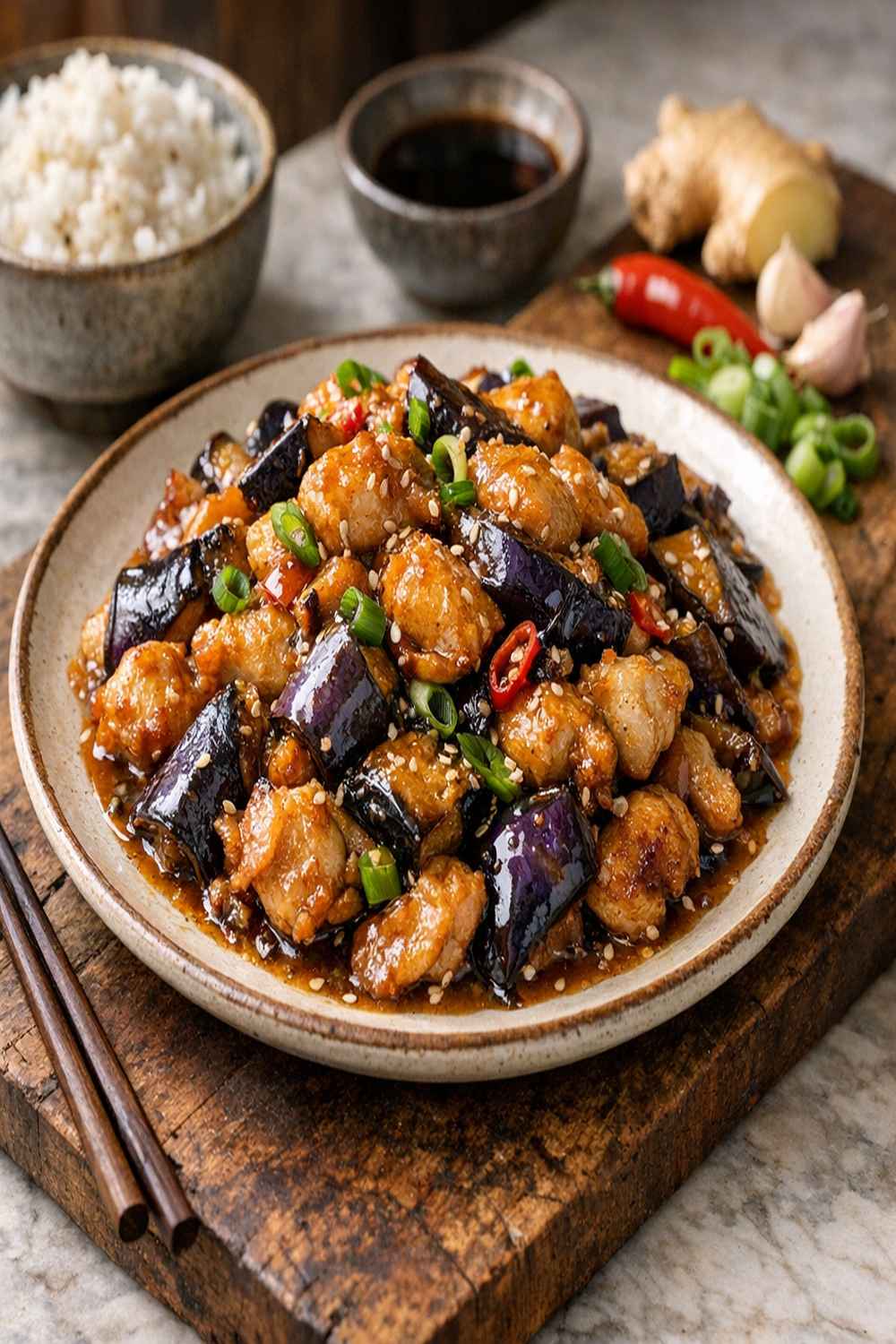

Ingredients
Method
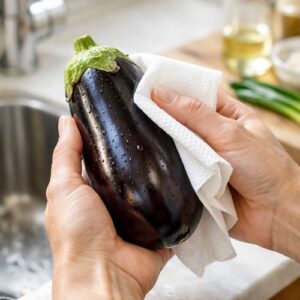
Step 1: Prepare Your Eggplant by Softening It Gently
- Begin by rinsing your eggplant under cool water and patting it completely dry with paper towels. Moisture is eggplant's enemy when you're trying to get it golden, so don't skip this. Now, trim off about ½ inch from each end of the eggplant with your sharp knife. Stand the eggplant upright on your cutting board and slice it on a diagonal—about a 45-degree angle—into pieces roughly 1 inch thick. The diagonal cut gives you more surface area for browning and looks beautiful on the plate. Don't worry if your angles aren't perfect; they're all going to taste the same. Place your eggplant pieces into a microwave-safe bowl and cover them with cold water until just submerged. Microwave on high for 1 minute, then stop and check. Open the microwave, poke a piece gently with a fork—it should give slightly but still hold its shape. If it's still very firm, microwave for another 30 seconds and check again. The goal is tender-but-not-mushy, which should take about 1 to 1½ minutes total. This pre-cooking step is crucial; it removes excess moisture and ensures your eggplant will brown beautifully instead of steam. Drain the eggplant in a colander and pat every piece completely dry with paper towels. Set aside on a clean plate.
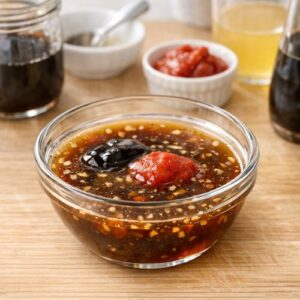
Step 2: Make Your Sauce While the Eggplant Rests
- Get a small bowl and add your ½ cup low-sodium chicken broth, ¼ cup soy sauce, 1 tablespoon oyster sauce, 1 tablespoon rice vinegar, 1 teaspoon tomato paste, 1 teaspoon sesame oil, 1 tablespoon sambal oelek, and ½ teaspoon brown sugar. Use a whisk or fork to combine everything until the tomato paste breaks down and the mixture looks uniform. Now comes the critical part: sprinkle ½ teaspoon cornstarch over the top and whisk it in thoroughly. You should see no little white specks of undissolved cornstarch floating around. This will thicken your sauce perfectly without making it gluey. Set the sauce bowl aside. Don't cook it yet; you'll add it at the very end.
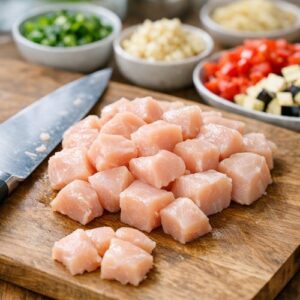
Step 3: Prepare All Your Vegetables and Aromatics (Your Mise en Place)
- This is the step that makes you feel like a real cook. Get your sharp knife and cutting board ready. Cut your chicken breast into cubes about ¾ inch on each side—like dice, but you're not aiming for perfection. Even if some pieces are slightly larger or smaller, they'll still cook beautifully because you're keeping an eye on them. Season the chicken pieces generously with salt and pepper, then set aside on a plate. Now chop your aromatics: mince your 2 cloves of garlic into tiny pieces (roughly ⅛ inch or smaller), finely chop your shallot (cut it in half, then slice thinly, then chop across—should give you about ¼ cup), and mince your fresh ginger by peeling it with a spoon and then chopping finely. Chop your bell pepper into pieces about ½ inch across—they don't need to be perfect. Slice your shiitake mushrooms about ¼ inch thick, and chop your green onions into 1-inch pieces, keeping the white parts separate from the green parts. Put all of these in one bowl together—your aromatics and vegetable prep bowl. This organization prevents panic mid-cooking.
Step 4: Cook Your Chicken Until Golden (But Not Fully Cooked)
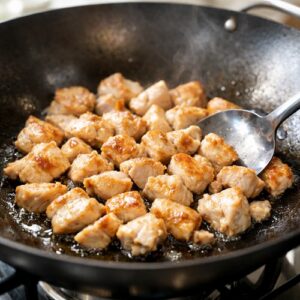
- Place your large wok or skillet on the stove over medium-high heat. Add 1 tablespoon of canola oil and let it heat for about 1 minute. You'll know it's ready when a small piece of chicken sizzles immediately when it touches the pan. Carefully add your seasoned chicken pieces in a single layer and let them sit undisturbed for about 2 minutes. Don't stir. You want them to develop a golden crust on the bottom. After 2 minutes, use a wooden spoon or spatula to turn each piece over and cook the other side for another 2 minutes until it's golden brown too. The chicken won't be fully cooked through yet—that's intentional. It'll finish cooking when everything comes back together. Transfer the chicken to a clean plate and set aside. The pan stays on the heat. Don't wipe it out; all those browned bits are pure flavor.
Step 5: Brown Your Eggplant Until It's Silky and Golden
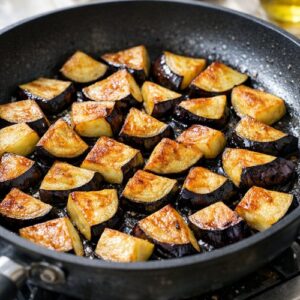
- Your pan is still hot. Arrange your dried eggplant pieces in a single layer across the bottom. This is important—if they overlap, they'll steam instead of fry. You might need to work in batches if your pan isn't large enough. Let them sit undisturbed for about 2 minutes. You should hear a gentle sizzle. Peek underneath one piece; if the underside is light golden brown, flip all the pieces. Cook the other side for another 2 minutes. The eggplant should look slightly caramelized and feel tender when you press it with your spoon. Remove all the eggplant to a clean plate and set aside.
Step 6: Sauté Your Aromatics and Build Flavor
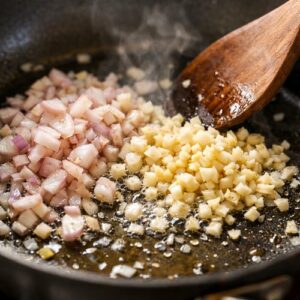
- Add your remaining 1 tablespoon of canola oil to the pan (it's still on medium-high heat). Immediately add your minced garlic and chopped shallots and cook for about 1 minute, stirring constantly. This is when the kitchen smells incredible—that's the signal you're doing it right. When the shallots look slightly translucent and soft, add your bell pepper pieces and cook for another 2-3 minutes, stirring occasionally, until they're just beginning to soften but still have a little bite to them. Add your ginger, green onion whites, and sliced mushrooms and cook for another 3 minutes, stirring gently.
Step 7: Bring Everything Together and Finish
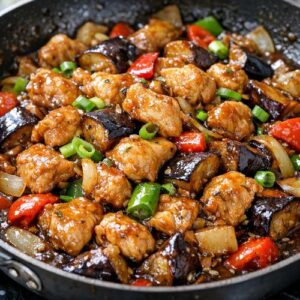
- This is the final moment. Your pan has all those beautiful sautéed vegetables, and you're going to bring back the chicken and eggplant. Give your sauce bowl a quick stir (cornstarch can settle), then pour it slowly into the pan while stirring gently. You'll watch the liquid transform almost immediately into a glossy, silky glaze. Add back your cooked chicken pieces and your eggplant and gently fold everything together for about 3-5 minutes until the sauce thickens and coats everything beautifully. The cornstarch will do its job; you'll see the sauce go from thin and liquidy to glossy and coating. Remove from heat. Taste a piece of chicken and a piece of eggplant. They should be tender and fully cooked. The sauce should coat your spoon. If it's still too thin, let the residual heat do a bit more thickening as you serve.
Step 8: Plate and Serve
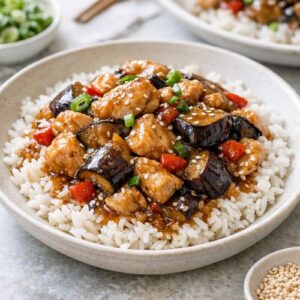
- Spoon your rice into shallow bowls or onto plates. Ladle the chicken and eggplant mixture over the rice, making sure everyone gets plenty of sauce. Garnish with the green parts of your green onions for color and freshness. Serve immediately while everything is warm.
Notes
- 1 shallot, medium-sized (sweeter than onion, milder than garlic—usually sold near the onions)
- 1 tablespoon fresh ginger, approximately 1 inch of a ginger root (peel with a spoon, not a knife, for less waste)
- 2 green onions (scallions), fresh (the white and light green parts add bite; the dark green tops add color and freshness)
- 1 cup shiitake mushrooms, fresh (these have an earthy depth; cremini mushrooms work if you can't find shiitake)
- 1½ pounds boneless, skinless chicken breast (look for breasts that are pale pink, not gray, and buy them the day you plan to cook)
- 1½ pounds Chinese purple eggplant, also called Japanese eggplant (thinner, fewer seeds, more tender than Italian eggplant—look in the produce section near the regular eggplant, or ask produce staff to point you)