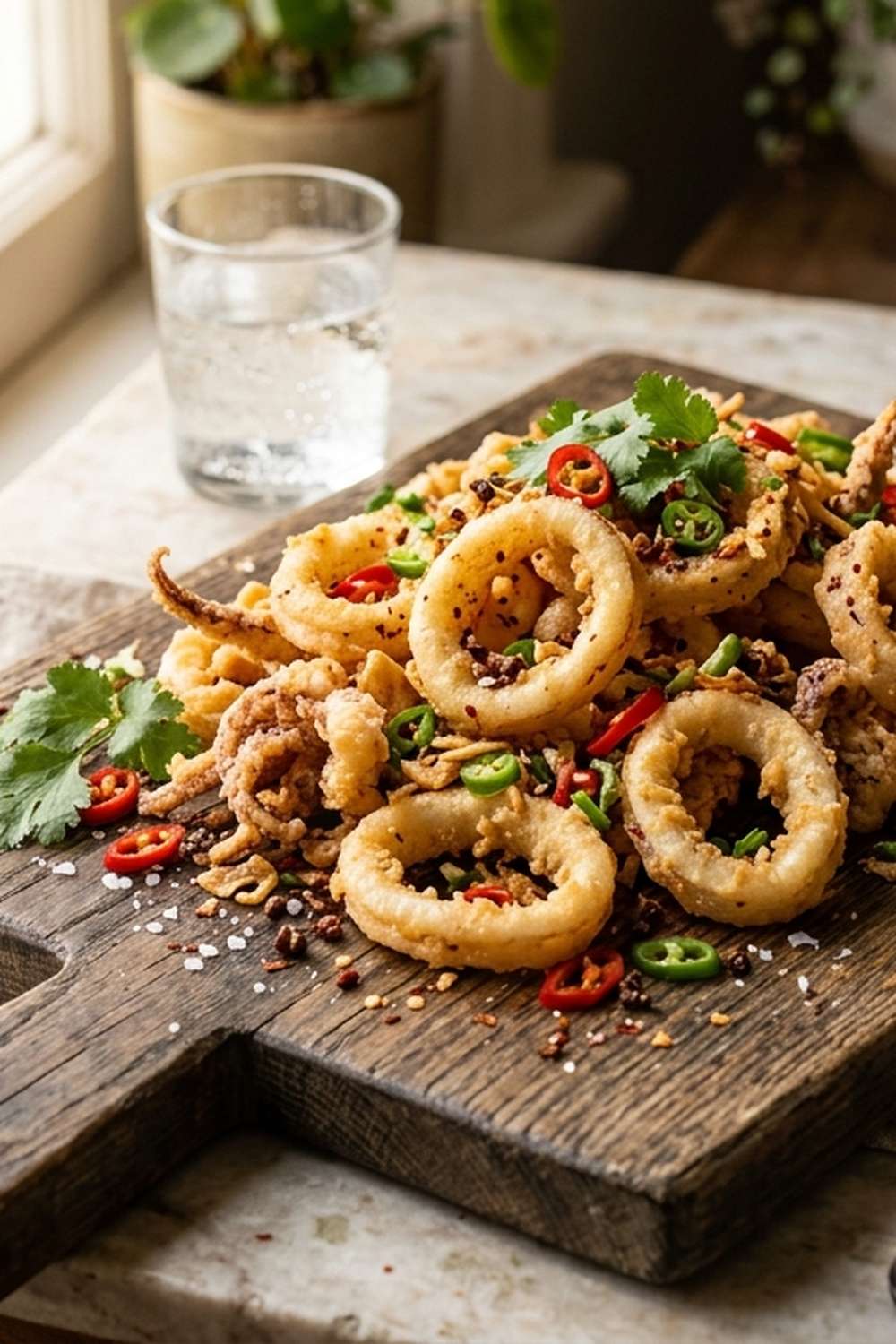

Ingredients
Method
Step 1: Prepare the Squid Properly
- If you've purchased whole squid, you'll need to clean them. Hold the body in one hand and gently pull the head away from the body—the innards will come with it. Discard these. Rinse the body cavity under cold running water, removing any remaining internal material. Peel away the thin purple membrane covering the outside (this is optional, but restaurants do it for appearance). Pat completely dry with paper towels—moisture is the enemy of crispness. For the tubes, pat them dry as well. Now cut the bodies into rings about ½ inch wide. Leave the tentacles whole or cut them in half, depending on size. The key here is uniform sizing—pieces that are the same size will cook at the same rate. Arrange everything on a clean paper towel and let it sit for a few minutes. Any remaining surface moisture will transfer to the towel.

Step 2: Make the Cold Batter
- In a medium bowl, combine the cornstarch, all-purpose flour, baking powder, salt, and white pepper. Whisk these dry ingredients together thoroughly—you want the baking powder distributed evenly throughout, or you'll get some pieces crispy and others dense. Now, add the cold tap water slowly while whisking constantly. The batter should be thin, like pancake batter, with no lumps. If you see lumps, whisk more aggressively or strain the batter through a fine mesh sieve. This is crucial: keep this batter in the coldest part of your kitchen, ideally over an ice bath, until you're ready to fry. The temperature difference between cold batter and hot oil is what creates the rapid crust formation.

Step 3: Heat the Oil to the Precise Temperature
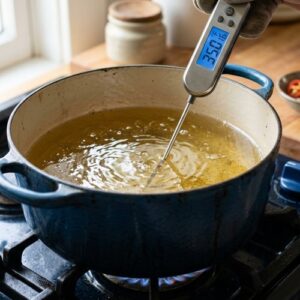
- Pour your vegetable oil into a heavy-bottomed pot to a depth of about 1.5 inches. Heat it over medium-high heat. This is where a thermometer becomes your best friend. You're targeting 350°F (175°C). At this temperature, a small piece of batter will sizzle immediately and rise to the surface within 3 to 4 seconds, surrounded by tiny bubbles. If your oil is too cool (below 340°F), the squid will absorb oil and taste greasy. If it's too hot (above 360°F), the outside will burn before the inside finishes cooking. Invest in a good instant-read thermometer if you don't have one—it will transform your frying results across all dishes.
Step 4: Coat and Fry in Batches
- Working in small batches (this is important—crowding the pot drops oil temperature), take a handful of the dried squid pieces and dip them into the cold batter, coating thoroughly. Let excess batter drip off for just a moment, then carefully place them into the hot oil. You should hear an immediate, vigorous sizzle. Fry for 60 to 90 seconds, stirring gently with a slotted spoon or spider strainer to ensure they cook evenly. The squid pieces will initially sink, then float to the surface as they become lighter. Once they've been floating for about 30 seconds and have turned golden-tan (not dark brown), remove them with a slotted spoon and transfer to a plate lined with paper towels. Work quickly—residual heat will continue to cook them slightly, and you want to catch them at that perfect moment when they're golden but still tender inside.

Step 5: Season Immediately While Hot
- This is the step that separates good from extraordinary. The moment your squid comes out of the oil and is still steaming, sprinkle it with kosher salt and white pepper. The residual heat helps these seasonings adhere and slightly permeate the crust. If you wait until the squid cools, the seasoning will just fall off or sit on the surface without integrating. Season immediately, always.

Step 6: Prepare the Chili Seasoning Blend
- In a small bowl, combine the Sichuan chili flakes or Chinese red chili powder with an additional pinch of kosher salt. Mix well. Some people like their chili salt more spicy (more chili flakes), while others prefer milder heat (less chili). This is where you customize to your preference. Taste a small pinch—it should have a pleasant, lingering heat, not a sharp bite.