
Method
Step 1: Prepare Your Eggplant Through Proper Moisture Management
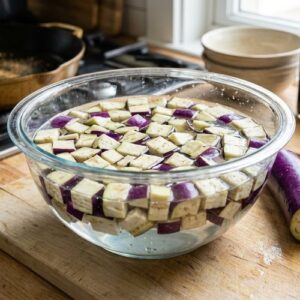
- Cut your eggplant into uniform bite-sized pieces—roughly three-quarter inch cubes work beautifully. Place them in a large bowl and cover with cool water, then add one teaspoon of salt. This seems counterintuitive, but here's the science: eggplant contains compounds that can taste slightly bitter, and they hold water that prevents proper browning. By submerging the pieces under a weighted lid (I use a smaller bowl placed directly on top) for exactly fifteen minutes, you're drawing out moisture and softening those compounds. After fifteen minutes, drain thoroughly in a colander, then pat each piece dry with paper towels. This step is non-negotiable. Moisture is the enemy of caramelization. When you place wet eggplant into hot oil, you get steaming instead of browning. You want browning. You want those deep mahogany edges.
Step 2: Create Your Finishing Sauce While the Eggplant Rests
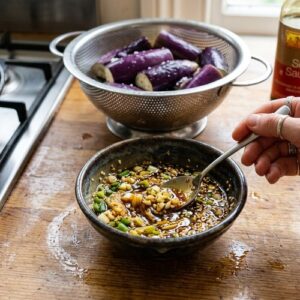
- While your eggplant is sitting in its salt bath, combine your sauce components in a small bowl: one tablespoon light soy sauce, half a teaspoon dark soy sauce (which adds color and deeper umami complexity), one tablespoon of water, and two teaspoons of sugar. Stir these together thoroughly so the sugar begins dissolving. Keep this mixture close to your cooking station—you'll need it at the exact right moment, and timing matters. The light soy provides saltiness and brightness. The dark soy adds visual depth and a slightly more complex mineral note. The water softens the intensity while the sugar balances the saltiness and brings out the eggplant's natural sweetness. This is balance in liquid form.
Step 3: Heat Your Oil and Begin the Browning Process
- Add two tablespoons of your neutral oil to a large nonstick skillet and bring it to medium-high heat. You want the oil shimmering and just barely smoking—this is roughly 375°F if you have a thermometer, though you can judge by the oil's movement and the sound it makes. The eggplant should sizzle immediately when it hits the pan. Spread your dried eggplant pieces across the bottom of the skillet in a single layer, without overlapping. This is critical. Crowded pans create steam, not browning. Work in batches if necessary—I'd rather spend an extra five minutes and achieve perfect color than rush and end up with pale, mushy eggplant. Let the eggplant sit undisturbed for three to four minutes on the first side. You're listening for the gentle sizzle to continue, watching for the bottom surfaces to turn golden-brown and slightly charred. Then, without fussing with each piece, shake the pan or use a spatula to turn everything over. Another three to four minutes on the opposite side. Total browning time runs eight to ten minutes, depending on your eggplant's size and your stove's personality. If your skillet begins smoking heavily, reduce heat slightly to medium. Eggplant can burn, and burnt tastes bitter. You want deep caramelization, not charred destruction.
Step 4: Bloom Your Aromatics in the Remaining Oil
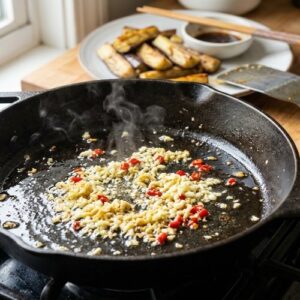
- Once your eggplant achieves that beautiful color, transfer it to a clean plate. Add the remaining half tablespoon of oil to your skillet (it should still have some residual heat), then immediately add your minced ginger and minced garlic. You'll have maybe fifteen seconds before things become urgent—this is where you need presence. Stir constantly for thirty to forty-five seconds until the garlic and ginger release their fragrance into the oil. You're awakening essential oils and compounds that will define this dish's personality. The smell should be unmistakably warm and complex. Don't let the garlic brown—burnt garlic tastes acrid and bitter. You want it softened and fragrant, not charred.
Step 5: Return the Eggplant and Finish With Your Sauce
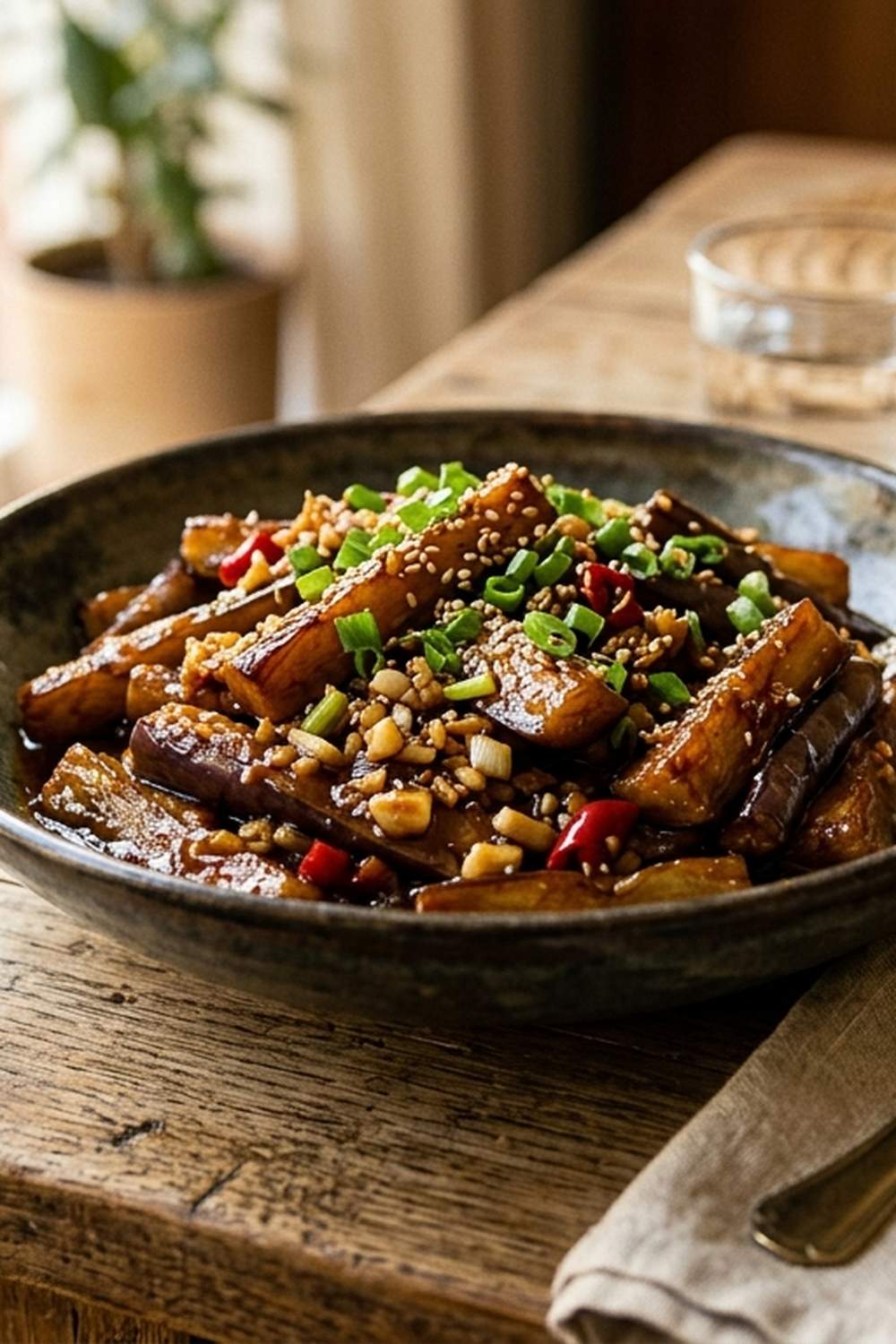
- Return all your browned eggplant to the skillet with the garlic and ginger. Give the sauce mixture a final stir to ensure the sugar has fully dissolved, then pour it directly over everything. Immediately begin stirring constantly—this takes about one minute. The liquid will reduce slightly, thicken, and coat every piece of eggplant in a glossy, mahogany finish. Transfer everything to a serving plate and present it while still warm. The sauce will continue to coat the eggplant, deepening in flavor as it sits for a few minutes.