
Ingredients
Method
Step 1: Prepare Your Ingredients With Intention
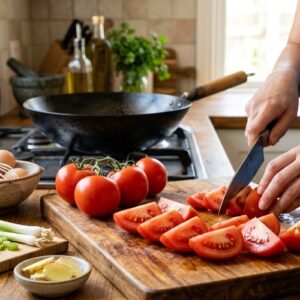
- Before any heat touches your pan, take time to prep mindfully. Cut your tomatoes into wedges, roughly ¾-inch thick. Don't dice them too small—tomatoes release their water more quickly when broken into tiny pieces, and you want some structure to remain. Chop your scallions finely. Crack your eggs into a bowl and beat them gently for about one full minute. This isn't aggressive mixing; it's a slow incorporation that ensures the whites and yolks become a unified, pale mixture. This step matters more than people realize—well-beaten eggs scramble more evenly and create a better texture. Add ¼ teaspoon of salt, the white pepper, sesame oil, and Shaoxing wine to your eggs. Stir gently to combine. Set everything beside your stove within arm's reach. This is what cooks call mise en place—everything in its place—and it's the difference between cooking that feels rushed and cooking that feels meditative.
Step 2: Warm Your Wok and Scramble Your Eggs
- Set your wok or large skillet over medium heat. Let it warm for about one minute—you'll notice the metal begin to shimmer. This is the moment to add 2 tablespoons of your vegetable oil. You want the oil to move freely across the surface, not sit in beads. When it flows like water and just barely begins to smoke at the edges, your temperature is right. Pour in your beaten eggs immediately. Here's where patience becomes crucial: let them sit for about 15 to 20 seconds before stirring. This allows the bottom to just barely set, creating those tender, larger curds rather than tiny, overworked scrambles. Then, using a wooden spoon or silicone spatula, gently push the eggs from the edges toward the center, tilting the pan so uncooked egg flows to the hot surface. This should take about one minute total. The eggs should be mostly cooked but still slightly underdone—they'll continue cooking as you combine them with the tomatoes. Transfer the eggs to a clean plate. Don't wash your wok yet; those flavorful browned bits on the bottom are liquid gold for the next step.

Step 3: Build Your Tomato Base
- Add the remaining 1 tablespoon of oil to your wok over high heat. After about 20 seconds, when the oil is hot and rippling, add your tomato wedges and the white parts of your scallions. You should hear a satisfying sizzle—this is the Maillard reaction beginning, the chemical process that creates deeper flavor. Stir constantly for one full minute. You're not trying to soften the tomatoes yet; you're trying to warm them through and help them begin releasing their juices. The kitchen should smell bright and fresh, almost alive.

Step 4: Bring Everything Together
- After that one minute of high-heat stirring, add your sugar (or honey), the remaining ½ teaspoon of salt, and between ⅓ and ½ cup of water. The amount depends on your tomatoes—ripe, juicy tomatoes need less water; firmer ones need more. Start with ⅓ cup; you can always add more. Return your scrambled eggs to the wok, stirring gently to distribute them throughout. The mixture will look loose and saucy right now. Cover the wok with a lid or even a sheet pan and reduce the heat to medium. Let this cook for 1 to 2 minutes.

Step 5: Final Reduction and Tasting
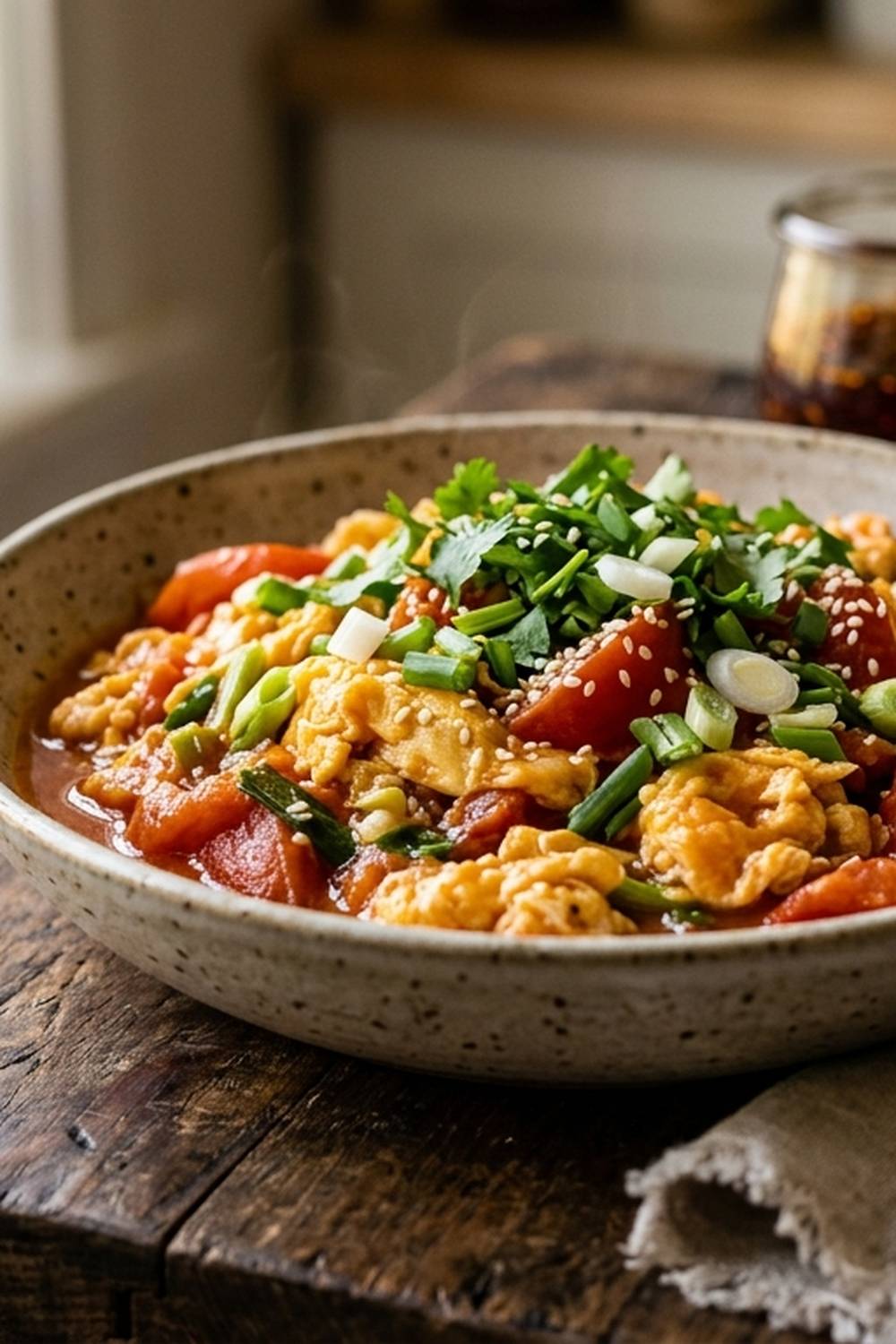
- Uncover your wok and turn the heat back to high. Stir constantly, breaking down the tomatoes with the back of your spoon. As you stir, the tomatoes will soften completely, and their juices will blend with the eggs and aromatics, creating a silky sauce. Keep stirring for 2 to 3 minutes, until the sauce thickens enough that it clings to the eggs without pooling at the bottom of the wok. Taste. This is the most important step, and it's where your palate becomes the final authority. Does it need more salt? A touch more sesame oil? A squeeze of lime juice for brightness? Make adjustments now, remembering that restraint is part of wisdom—better to add more than to over-season. Transfer to a serving bowl and scatter the green parts of your scallions on top. Serve immediately while the sauce is still slightly glossy and the eggs retain their creamy texture.

Notes
- Overworking the Eggs: Many home cooks keep stirring the eggs until they're completely set before removing them from the wok. This creates a dry, broken scramble. Remember: the eggs will continue cooking when you combine them with the tomatoes. Aim for 70 to 80 percent cooked, then remove them.
- Skipping the Sugar: I understand the impulse—sugar feels unnecessary in a savory dish. But 2 teaspoons in a dish that serves two is barely perceptible. It balances the acidity of the tomatoes and brings out their natural sweetness. Don't skip it.
- Using Unripe Tomatoes: Off-season tomatoes are heartbreaking in this recipe because the entire dish depends on their flavor and juice content. Make this dish when tomatoes are in season at your local farmers market. The difference is dramatic.
- Rushing the Initial Scramble: When you first add the beaten eggs to the hot oil, resist the urge to immediately start stirring frantically. Give the bottom 15 to 20 seconds to set gently. This creates larger, more tender curds.