Chinese Eggs And Tomatoes Recipe
This post contains affiliate links. As an Amazon Associate I earn from qualifying purchases.
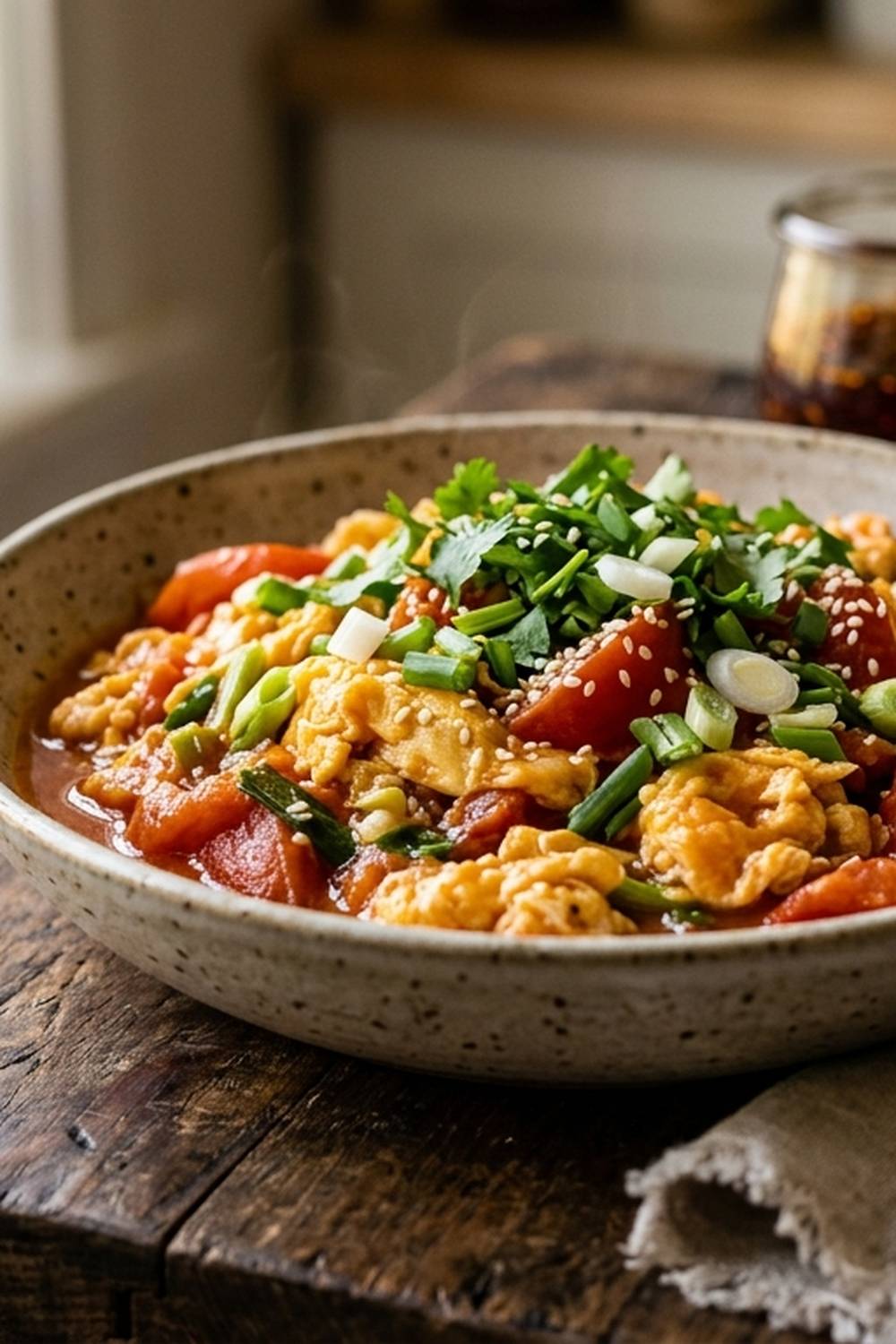
I’ll never forget watching my grandmother stand at her kitchen counter on a Tuesday evening, nothing but a carton of eggs, three tomatoes from her garden, and a worn wooden spoon in her hands. She moved with such intention, each motion purposeful yet unhurried. “Willie,” she said, not looking up from her work, “the best meals aren’t about fancy ingredients. They’re about knowing what you have and treating it with respect.” That moment shaped how I approach nutrition and cooking. This Chinese eggs and tomatoes recipe brings together the ancient wisdom of Chinese home cooking and the nutritional science I’ve built my career around—honoring simplicity while understanding the profound nourishment hiding in these humble ingredients.
Chinese Eggs and Tomatoes: Where Home Kitchen Wisdom Meets Modern Nutrition
There’s something almost magical about how this dish emerged from the resourcefulness of Chinese home cooks. During times when protein sources were scarce, eggs became a precious pantry staple—versatile, affordable, and nutrient-dense. Tomatoes arrived later through trade routes, but once they settled into Chinese kitchens, they found their perfect partner in the egg. The combination wasn’t born from culinary experimentation or restaurant innovation. It came from necessity, from mothers and grandmothers asking themselves: “What can I make tonight that will nourish my family with what’s in front of me?”
As a registered dietitian, I’ve spent years studying how traditional food pairings often reveal nutritional brilliance that science only later validates. This dish is one of those beautiful examples. The lycopene in tomatoes becomes more bioavailable when paired with the fat in eggs. The choline in eggs supports cognitive function. The vitamin C in fresh tomatoes helps your body absorb the iron in egg yolks. These foods weren’t paired together because someone read a nutrition label. They came together because they tasted right, cooked right, and made people feel nourished.
What draws me to this recipe, though, is its accessibility. In my practice in Worcester, I work with families who are juggling work, school, and the constant question: “What’s for dinner tonight?” This dish answers that question in under twenty minutes, costs just a few dollars, and provides complete protein, essential vitamins, and minerals that your body actually needs. It’s the kind of meal that makes you understand why certain dishes survive for generations.
The Wisdom in Simple Ingredients
Before I share how to make this dish, I want you to understand what each ingredient is doing. This isn’t just about following steps—it’s about understanding the “why” behind each choice, the way my grandmother always explained her cooking to me.
- White pepper and sea salt: White pepper (rather than black) doesn’t leave visible specks and has a slightly different heat profile that blends more seamlessly into Chinese cooking. Use good salt; it makes a real difference.
- Fresh scallions: More than just garnish, these add sharp onion notes and contain quercetin, a flavonoid with anti-inflammatory properties.
- Tomatoes (fresh and seasonal): These are your liquid base and your bright, acidic backbone. They contain lycopene, a powerful antioxidant, plus vitamin C for immune support and vitamin K for bone health. When you heat tomatoes gently, their cell walls break down, making these nutrients more accessible to your body.
- Vegetable oil: Use a neutral oil with a high smoke point—peanut or grapeseed work beautifully for the high heat required in this recipe.
- Eggs: Four whole eggs provide complete protein with all nine essential amino acids, choline for brain health, and lutein for eye health. The yolk contains the richest concentration of nutrients, so don’t discard it.
- A touch of sugar: Just enough to balance the acidity of the tomatoes and highlight their natural sweetness—this is the secret that many home cooks miss.
- Shaoxing wine: An aged rice wine that adds subtle sweetness and complexity, helping to round out flavors while its alcohol content burns off during cooking.
- Sesame oil: This is your bridge between ingredients—a traditional Asian seasoning that adds depth and richness while providing heart-healthy monounsaturated fats. Use it sparingly; its nutty intensity goes a long way.
Why This Simple Combination Works So Well
Let me share what I’ve learned from both my grandmother’s kitchen and my professional training: the best dishes work because their components support each other nutritionally and flavor-wise. This dish is a masterclass in that principle.
Tomatoes are naturally acidic and watery. Eggs are rich and creamy. Without something to bridge them, they’d compete rather than complement. But the gentle sweetness from a touch of sugar, the umami depth from sesame oil, and the aromatic lift from white pepper and scallions create a beautiful equilibrium. Each element has a job. The acid in tomatoes cuts through the richness of scrambled eggs. The fat in eggs carries the fat-soluble vitamins from the tomatoes—like lycopene—throughout your body more efficiently. The protein from eggs helps slow down the absorption of the natural sugars in tomatoes, keeping your blood sugar stable.
This is why I love teaching this recipe to clients in my practice. It’s not about restriction or complexity. It’s about understanding that nourishing food doesn’t require pretense. It requires attention and respect.
The Ingredients—Gathered With Care
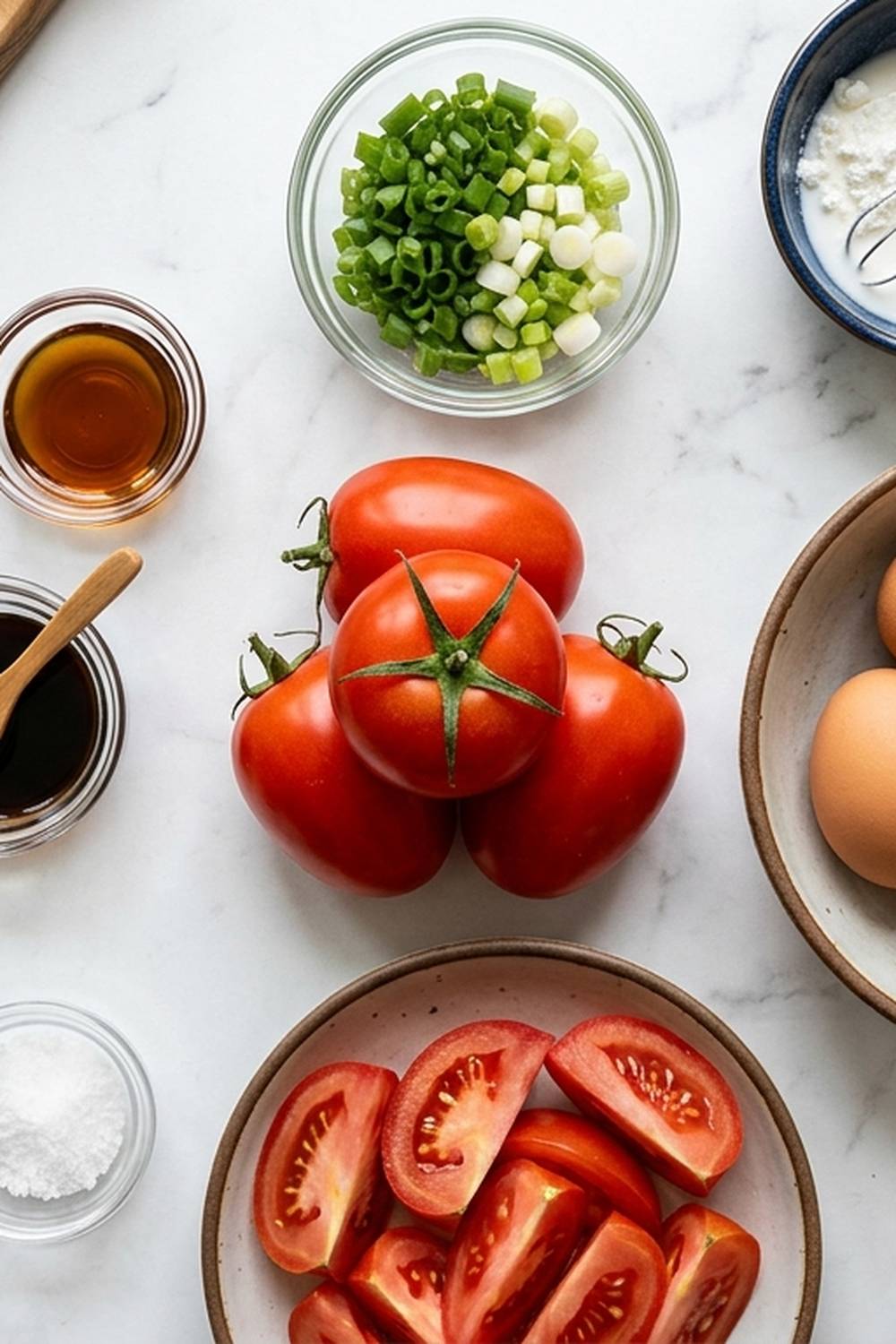
This recipe serves two people generously as a main course, or four people as part of a larger meal. Here’s what you’ll need, gathered as you would for any meaningful home-cooked meal:
- 4 to 5 medium tomatoes, about 1 pound total (ripe but still firm, ideally from a farmers market in season)
- ⅓ to ½ cup water or low-sodium vegetable broth (kept nearby, as you’ll need it mid-cooking)
- 2 teaspoons cane sugar or honey (to balance acidity)
- ¼ teaspoon white pepper (more delicate and less bitter than black pepper)
- 3 tablespoons neutral vegetable oil (divided—2 tablespoons for eggs, 1 for the tomato base)
- ¾ teaspoon fine sea salt (divided—¼ teaspoon for the eggs, ½ teaspoon for the tomatoes, or adjust to your preference)
- 2 scallions, trimmed and finely chopped (white and green parts separated, if you prefer more control over the scallion flavor)
- 1 teaspoon Shaoxing wine (or dry sherry in a pinch, though it’s worth finding the real thing at an Asian market)
- ½ teaspoon sesame oil (toasted, never skip this—it’s non-negotiable for authentic flavor)
- 4 large eggs (room temperature, which helps them scramble more evenly)
How to Make This Nourishing Dish
I’m going to walk you through this the way my grandmother taught me—with intention, with understanding, and with the knowledge that how we cook matters just as much as what we cook. This isn’t a race. It’s a conversation between you and your ingredients.
Step 1: Prepare Your Ingredients With Intention
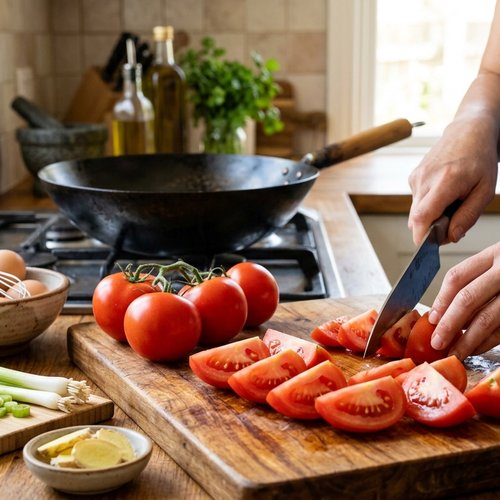
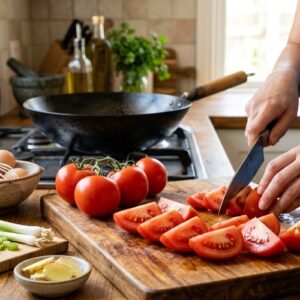
Before any heat touches your pan, take time to prep mindfully. Cut your tomatoes into wedges, roughly ¾-inch thick. Don’t dice them too small—tomatoes release their water more quickly when broken into tiny pieces, and you want some structure to remain. Chop your scallions finely. Crack your eggs into a bowl and beat them gently for about one full minute. This isn’t aggressive mixing; it’s a slow incorporation that ensures the whites and yolks become a unified, pale mixture. This step matters more than people realize—well-beaten eggs scramble more evenly and create a better texture.
Add ¼ teaspoon of salt, the white pepper, sesame oil, and Shaoxing wine to your eggs. Stir gently to combine. Set everything beside your stove within arm’s reach. This is what cooks call mise en place—everything in its place—and it’s the difference between cooking that feels rushed and cooking that feels meditative.
Step 2: Warm Your Wok and Scramble Your Eggs
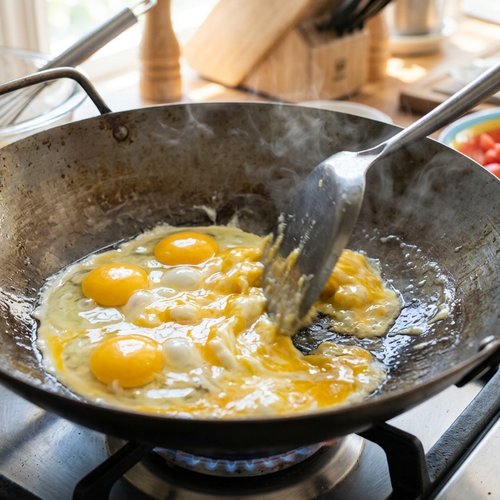
Set your wok or large skillet over medium heat. Let it warm for about one minute—you’ll notice the metal begin to shimmer. This is the moment to add 2 tablespoons of your vegetable oil. You want the oil to move freely across the surface, not sit in beads. When it flows like water and just barely begins to smoke at the edges, your temperature is right.
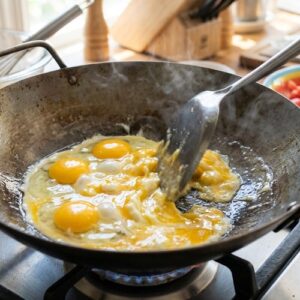
Pour in your beaten eggs immediately. Here’s where patience becomes crucial: let them sit for about 15 to 20 seconds before stirring. This allows the bottom to just barely set, creating those tender, larger curds rather than tiny, overworked scrambles. Then, using a wooden spoon or silicone spatula, gently push the eggs from the edges toward the center, tilting the pan so uncooked egg flows to the hot surface. This should take about one minute total. The eggs should be mostly cooked but still slightly underdone—they’ll continue cooking as you combine them with the tomatoes.
Transfer the eggs to a clean plate. Don’t wash your wok yet; those flavorful browned bits on the bottom are liquid gold for the next step.
Step 3: Build Your Tomato Base
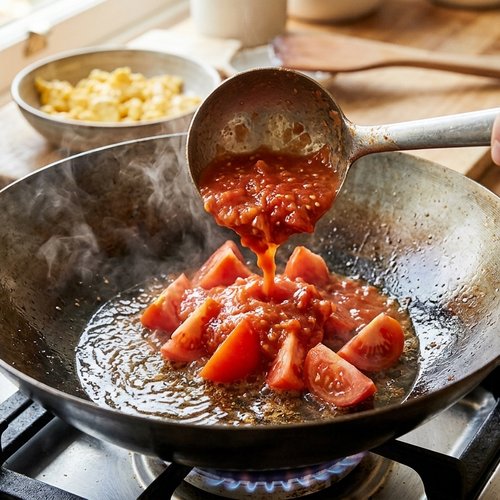
Add the remaining 1 tablespoon of oil to your wok over high heat. After about 20 seconds, when the oil is hot and rippling, add your tomato wedges and the white parts of your scallions. You should hear a satisfying sizzle—this is the Maillard reaction beginning, the chemical process that creates deeper flavor.
Stir constantly for one full minute. You’re not trying to soften the tomatoes yet; you’re trying to warm them through and help them begin releasing their juices. The kitchen should smell bright and fresh, almost alive.
Step 4: Bring Everything Together
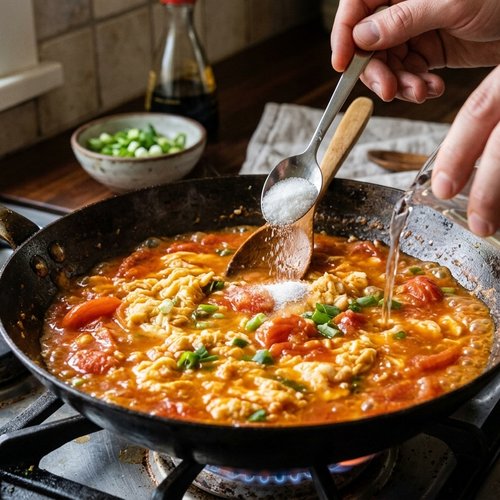
After that one minute of high-heat stirring, add your sugar (or honey), the remaining ½ teaspoon of salt, and between ⅓ and ½ cup of water. The amount depends on your tomatoes—ripe, juicy tomatoes need less water; firmer ones need more. Start with ⅓ cup; you can always add more.
Return your scrambled eggs to the wok, stirring gently to distribute them throughout. The mixture will look loose and saucy right now. Cover the wok with a lid or even a sheet pan and reduce the heat to medium. Let this cook for 1 to 2 minutes.
Step 5: Final Reduction and Tasting
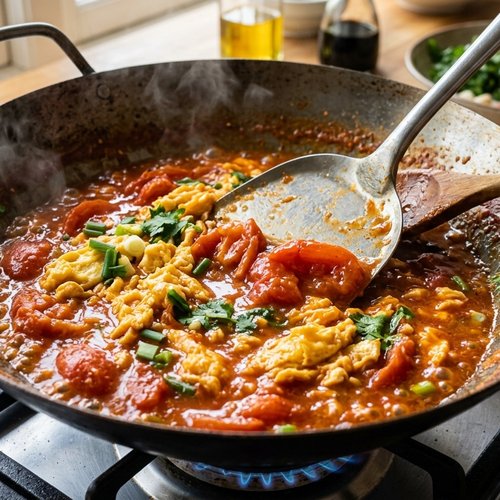
Uncover your wok and turn the heat back to high. Stir constantly, breaking down the tomatoes with the back of your spoon. As you stir, the tomatoes will soften completely, and their juices will blend with the eggs and aromatics, creating a silky sauce. Keep stirring for 2 to 3 minutes, until the sauce thickens enough that it clings to the eggs without pooling at the bottom of the wok.
Taste. This is the most important step, and it’s where your palate becomes the final authority. Does it need more salt? A touch more sesame oil? A squeeze of lime juice for brightness? Make adjustments now, remembering that restraint is part of wisdom—better to add more than to over-season.
Transfer to a serving bowl and scatter the green parts of your scallions on top. Serve immediately while the sauce is still slightly glossy and the eggs retain their creamy texture.
Expert’s Nutritional Insight: Why This Pairing Is Better Than You Think
As a registered dietitian, I want to highlight something that most recipe sites gloss over: the bioavailability factor. Lycopene, the powerful antioxidant in tomatoes, is fat-soluble, meaning your body needs dietary fat to absorb it effectively. This is where the eggs become nutritionally genius—they provide that fat. But there’s more: the choline in eggs (about 147 milligrams per egg) supports acetylcholine production, crucial for memory and learning. The B vitamins in tomatoes help your body convert choline into the compounds it needs. This is synergy at the molecular level.
Additionally, the vitamin C in fresh tomatoes helps your body absorb the non-heme iron in the egg yolks more efficiently. Pair that with the antioxidants in white pepper, and you have a meal that’s doing physiological work beyond just filling your stomach. This is why traditional pairings often beat modern nutritional engineering.
How to Customize the Flavor Balance
One of the beautiful things about this recipe is its flexibility. Depending on your taste preferences and what’s available to you, you can shift the balance:
- For a Lighter, Brighter Version: Reduce the sugar to 1 teaspoon, increase your water to ½ cup, and add the juice of half a lime or lemon at the end. This brings out the acidity of the tomatoes and creates a fresher profile.
- For a Richer, More Savory Version: Increase sesame oil to ¾ teaspoon, use half the sugar, and add a splash of low-sodium soy sauce (about 1 teaspoon). This deepens the umami and makes the dish feel more substantial.
- For Those Who Love Heat: Add fresh chile peppers—either sliced red Thai chilies mixed in during the tomato cooking phase, or a sprinkle of white pepper increased to ½ teaspoon.
- For a Protein Boost: Stir in a handful of silken tofu cubes during the final minute of cooking, or add shrimp that’s been quickly blanched beforehand.
Make-Ahead Guide: Cooking With Your Schedule in Mind
In my practice, I work with busy families who need meals that fit into real life. This dish accommodates that beautifully:
Prep Ahead (up to 4 hours before cooking): Wash and cut your tomatoes, chop your scallions, and store them in separate containers. Beat your eggs and keep them covered in the refrigerator. Have all your seasonings measured into small bowls. This “mise en place prep” means you can have dinner on the table in 15 minutes flat.
Make It Ahead (same-day consumption): This dish is best served immediately, but leftovers can be reheated gently on the stovetop the following day. Store in an airtight container for up to 2 days in the refrigerator. When reheating, use low to medium heat and add a splash of water to restore the silky sauce texture.
Does Not Freeze Well: The eggs become grainy and the tomato texture suffers. I don’t recommend freezing this particular dish.
Common Mistakes to Avoid
After teaching countless people this recipe, I’ve noticed patterns in what trips people up. Let me help you sidestep these:
- Overworking the Eggs: Many home cooks keep stirring the eggs until they’re completely set before removing them from the wok. This creates a dry, broken scramble. Remember: the eggs will continue cooking when you combine them with the tomatoes. Aim for 70 to 80 percent cooked, then remove them.
- Skipping the Sugar: I understand the impulse—sugar feels unnecessary in a savory dish. But 2 teaspoons in a dish that serves two is barely perceptible. It balances the acidity of the tomatoes and brings out their natural sweetness. Don’t skip it.
- Using Unripe Tomatoes: Off-season tomatoes are heartbreaking in this recipe because the entire dish depends on their flavor and juice content. Make this dish when tomatoes are in season at your local farmers market. The difference is dramatic.
- Rushing the Initial Scramble: When you first add the beaten eggs to the hot oil, resist the urge to immediately start stirring frantically. Give the bottom 15 to 20 seconds to set gently. This creates larger, more tender curds.
Seasonal Variations: Honoring What’s Available
My grandmother always cooked with seasons. She understood that food grown in the right season for the right climate tastes better and nourishes differently. Here’s how to adapt this recipe year-round:
Summer (Peak Season): Use the ripest tomatoes you can find, reduce the water to ⅓ cup (summer tomatoes release more juice), and add a handful of fresh basil or cilantro at the very end. The brightness of fresh herbs celebrates summer’s abundance.
Fall and Early Winter: Tomatoes are still good but less juicy. Use the full ½ cup of water. Add a touch of smoked paprika (¼ teaspoon) for deeper warmth. Consider adding a diced yellow onion along with the scallions.
Late Winter and Early Spring: Tomatoes are at their worst—use high-quality canned whole tomatoes instead (about 1 can, drained). They’re packed at peak season and often taste better than pale winter tomatoes. Add an extra scallion for brightness.
What to Serve With Chinese Eggs and Tomatoes
This dish is wonderfully complete on its own, but it also plays beautifully with other foods. Here’s how I serve it:
- Steamed White Rice: A neutral base that lets the eggs and tomatoes shine. The rice absorbs the silky sauce, making every bite satisfying.
- A Simple Green Vegetable: Stir-fried bok choy or steamed Chinese broccoli adds textural contrast and a dose of leafy greens. Try our Authentic Chinese Breakfast Recipe for more traditional pairing ideas.
- Warm Noodles: Fresh egg noodles or ramen noodles tossed lightly with sesame oil provide a comforting vehicle for the sauce.
- Baozi or Steamed Buns: If you’re making this for a weekend brunch, pair it with Vegetarian Baozi for a more celebratory meal.
- Soup: A simple broth-based vegetable soup alongside this dish creates a complete, balanced meal with multiple textures and temperatures.
Nutrition Information
Based on USDA data, one serving (serves 2; approximately 1½ cups per serving) contains:
- Calories: 240
- Protein: 14 grams (complete protein with all nine essential amino acids)
- Total Fat: 17 grams (includes heart-healthy monounsaturated fats from sesame oil)
- Saturated Fat: 4 grams
- Carbohydrates: 12 grams
- Dietary Fiber: 2 grams
- Vitamin A: 35% of daily value (from tomato carotenoids)
- Vitamin C: 28% of daily value (supports collagen and iron absorption)
- Iron: 18% of daily value
- Choline: 147 milligrams per egg (crucial for brain health and memory)
What I love about this nutritional profile is its balance. You’re getting complete protein, healthy fats, complex carbohydrates from the tomatoes, and a remarkable array of micronutrients. This isn’t a “diet” food—it’s a real food that genuinely nourishes. From a traditional Chinese medicine perspective, eggs are considered warming and yang-building, while tomatoes are slightly cooling and provide internal moisture. Together, they create balance.

Chinese Eggs And Tomatoes Recipe
Ingredients
Method
- Before any heat touches your pan, take time to prep mindfully. Cut your tomatoes into wedges, roughly ¾-inch thick. Don't dice them too small—tomatoes release their water more quickly when broken into tiny pieces, and you want some structure to remain. Chop your scallions finely. Crack your eggs into a bowl and beat them gently for about one full minute. This isn't aggressive mixing; it's a slow incorporation that ensures the whites and yolks become a unified, pale mixture. This step matters more than people realize—well-beaten eggs scramble more evenly and create a better texture. Add ¼ teaspoon of salt, the white pepper, sesame oil, and Shaoxing wine to your eggs. Stir gently to combine. Set everything beside your stove within arm's reach. This is what cooks call mise en place—everything in its place—and it's the difference between cooking that feels rushed and cooking that feels meditative.
- Set your wok or large skillet over medium heat. Let it warm for about one minute—you'll notice the metal begin to shimmer. This is the moment to add 2 tablespoons of your vegetable oil. You want the oil to move freely across the surface, not sit in beads. When it flows like water and just barely begins to smoke at the edges, your temperature is right. Pour in your beaten eggs immediately. Here's where patience becomes crucial: let them sit for about 15 to 20 seconds before stirring. This allows the bottom to just barely set, creating those tender, larger curds rather than tiny, overworked scrambles. Then, using a wooden spoon or silicone spatula, gently push the eggs from the edges toward the center, tilting the pan so uncooked egg flows to the hot surface. This should take about one minute total. The eggs should be mostly cooked but still slightly underdone—they'll continue cooking as you combine them with the tomatoes. Transfer the eggs to a clean plate. Don't wash your wok yet; those flavorful browned bits on the bottom are liquid gold for the next step.
- Add the remaining 1 tablespoon of oil to your wok over high heat. After about 20 seconds, when the oil is hot and rippling, add your tomato wedges and the white parts of your scallions. You should hear a satisfying sizzle—this is the Maillard reaction beginning, the chemical process that creates deeper flavor. Stir constantly for one full minute. You're not trying to soften the tomatoes yet; you're trying to warm them through and help them begin releasing their juices. The kitchen should smell bright and fresh, almost alive.

- After that one minute of high-heat stirring, add your sugar (or honey), the remaining ½ teaspoon of salt, and between ⅓ and ½ cup of water. The amount depends on your tomatoes—ripe, juicy tomatoes need less water; firmer ones need more. Start with ⅓ cup; you can always add more. Return your scrambled eggs to the wok, stirring gently to distribute them throughout. The mixture will look loose and saucy right now. Cover the wok with a lid or even a sheet pan and reduce the heat to medium. Let this cook for 1 to 2 minutes.

- Uncover your wok and turn the heat back to high. Stir constantly, breaking down the tomatoes with the back of your spoon. As you stir, the tomatoes will soften completely, and their juices will blend with the eggs and aromatics, creating a silky sauce. Keep stirring for 2 to 3 minutes, until the sauce thickens enough that it clings to the eggs without pooling at the bottom of the wok. Taste. This is the most important step, and it's where your palate becomes the final authority. Does it need more salt? A touch more sesame oil? A squeeze of lime juice for brightness? Make adjustments now, remembering that restraint is part of wisdom—better to add more than to over-season. Transfer to a serving bowl and scatter the green parts of your scallions on top. Serve immediately while the sauce is still slightly glossy and the eggs retain their creamy texture.

Notes
FAQs
Can I Use Cherry or Grape Tomatoes Instead of Larger Ones?
Technically, yes, but I don’t recommend it for this particular recipe. Smaller tomatoes have higher skin-to-flesh ratios, and their skins can become chewy rather than melting into the sauce. If that’s all you have, cut them in half rather than wedges, and extend your cooking time by about a minute so they soften thoroughly.
What If I Don’t Have Shaoxing Wine?
Shaoxing wine brings a specific sweetness and aged depth that’s hard to replicate, but here’s my professional recommendation: use dry sherry or a dry vermouth in a pinch. If you truly can’t find either, you can omit it entirely—your dish won’t suffer dramatically, just taste slightly more straightforward. Avoid substituting with cooking wine, which often contains added salt and preservatives.
Can I Make This Dairy-Free or Vegan?
This particular dish is defined by eggs, so making it vegan would fundamentally change what it is. That said, if you have an egg allergy, I’d recommend consulting with a nutritionist about a proper substitution rather than trying to force-fit tofu or aquafaba, which won’t create the same texture or nutritional profile.
How Do I Know When the Sauce Has Thickened Enough?
You’re looking for a texture where the sauce clings to the eggs without pooling in the bottom of the wok. When you draw your spoon through the center, you should see the bottom of the pan briefly before the sauce flows back in. It should be silky, not thick like a casserole.
Can I Double This Recipe for a Larger Group?
Absolutely, and I do this regularly. Double everything except increase the water to ¾ cup rather than a full cup—the larger surface area of the wok means slightly faster evaporation. You may need to extend the final reduction time by one minute. Work in batches if your wok is small; overcrowding creates steam rather than a proper sear.
Other Chinese Dishes That Share This Simplicity and Wisdom
If this recipe resonates with you, these dishes embody the same philosophy of simple ingredients treated with respect:
- Authentic Shrimp Fried Rice Recipe – Another dish that transforms humble pantry staples into something nourishing and delicious
- Authentic Moo Shu Recipe – Shows how a few vegetables and eggs create textural complexity
- Baked Pork Chop Rice Recipe – Demonstrates the balance of protein, starch, and vegetables in traditional Chinese cooking
- BBQ Chinese Pork Recipe – Uses slow, intentional cooking to develop depth of flavor
Storing Your Leftovers Properly
Life isn’t always perfectly portioned, so let’s talk storage:
Refrigerator Storage (Best Option): Transfer leftovers to an airtight glass container within two hours of cooking. This dish will keep for up to 2 days refrigerated. The eggs will firm slightly as they cool, and the sauce will thicken, which is completely normal.
Reheating: Gently warm in a skillet over low to medium heat, adding a splash of water or broth to restore the silky sauce texture. Microwaving is possible but less ideal—the uneven heating can make eggs rubbery. If you must microwave, do it in 30-second intervals, stirring between each.
Not Recommended for Freezing: The texture of eggs changes dramatically upon freezing and thawing. The protein structure becomes grainy, and the overall eating experience suffers considerably.
Final Thoughts on This Humble, Honest Dish
I think about my grandmother often when I make this recipe—not just for the nostalgia, though that’s part of it. I think about what she understood instinctively about nourishment. She knew that the best meals don’t require exotic ingredients or complicated techniques. They require attention, respect for what you’re cooking, and an understanding that the food you eat becomes part of your body. It matters.
This Chinese eggs and tomatoes recipe is a meditation on that truth. It’s proof that food doesn’t need pretense to be profound. It doesn’t need to be complicated to be nourishing. Sometimes the most powerful meals are the simplest ones—dishes that have survived generations because they work. They taste good. They make you feel better. And they don’t ask for more than you have to give.
So the next time you’re standing at your kitchen counter wondering what to make with what’s in front of you, remember this dish. Remember that simplicity, when approached with intention, is a strength. Remember that feeding yourself and the people you love is an act of profound care. And remember that sometimes, a couple of eggs and some tomatoes are exactly enough.
Cook with love, and let me know how this turns out for you.
—Willie Regan, Registered Dietitian, Worcester