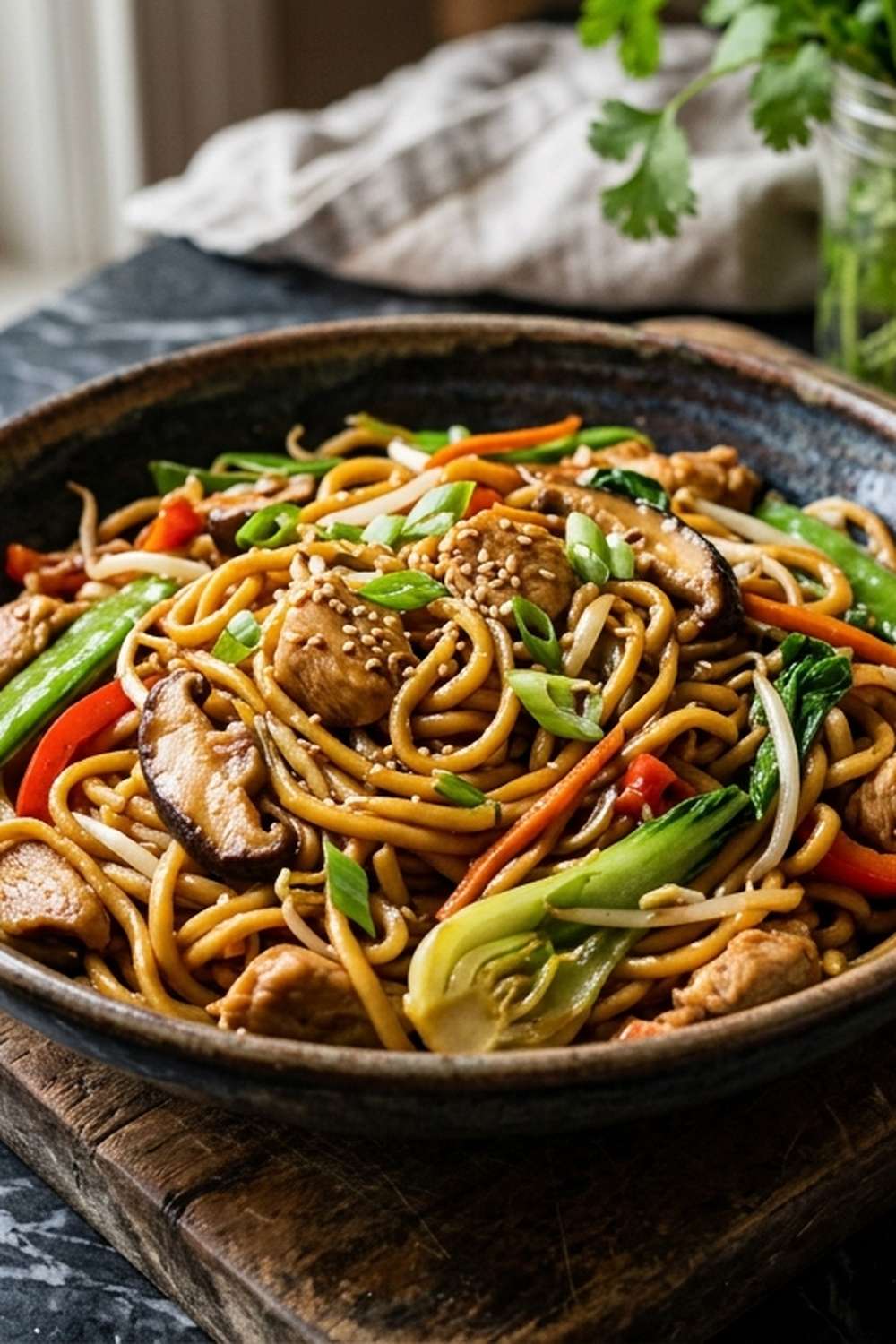

Ingredients
Method
Step 1: Build Your Sauce (The Foundation of Everything)
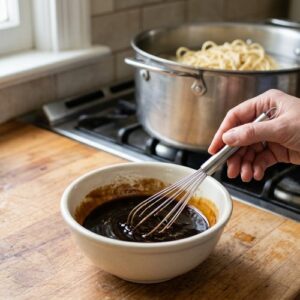
- Before heat touches your wok, your sauce must be ready. In a small bowl, whisk the cornstarch with the dark soy sauce until completely lump-free—this is critical. Lumpy cornstarch creates streaky, uneven sauce. Once smooth, add the light soy sauce, cooking wine or mirin, sugar (if using), white pepper, and sesame oil. Stir until everything is combined. This sauce is your insurance policy. When you're working quickly over high heat, you don't have time to think. The sauce is already perfect, waiting to do its job.
Step 2: Season Your Protein (A Small Act That Makes All the Difference)
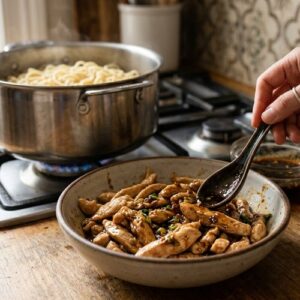
- Pour 2 teaspoons of your prepared sauce into a bowl with your sliced cooked protein. Toss gently to coat every piece. This is pre-seasoning—your protein will already be flavorful when it hits the wok, rather than waiting passively for the final sauce to do all the work. It's a small move with big results. The protein becomes the seasoned foundation rather than just another ingredient.
Step 3: Heat Your Wok (This Is Where Everything Changes)
- Pour your peanut or vegetable oil into a wok or large, heavy-bottomed skillet over high heat. Wait for it to shimmer, then wait just a bit longer until wisps of smoke appear. This heat level is non-negotiable. Your wok needs to be hot enough that vegetables caramelize rather than steam, and proteins sear rather than poach. If you're nervous about high heat, start with medium-high and work your way up as you gain confidence.
Step 4: Aromatics First (30 Seconds of Fragrance)
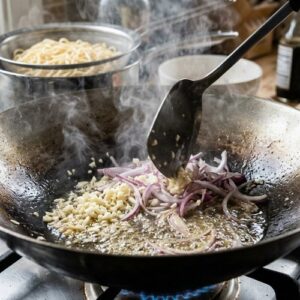
- Immediately add your minced garlic and sliced onion to the smoking oil. Stir constantly for about 30 seconds—just long enough for the raw bite of garlic to soften and the onion to begin releasing its sweetness. Your kitchen will smell incredible. This is the moment where leftovers start feeling like intention.
Step 5: Add and Sear Your Protein (One Minute of Movement)
- Add your seasoned protein to the wok and keep stirring for approximately one minute, or until the exterior is sealed and the protein is mostly white on the outside but still slightly pink or rare inside. If your protein is already fully cooked (which it probably is, since it's leftover), you're really just heating it through and building flavor through the sear. Don't overcook it—the noodles will provide additional heat in the next steps.
Step 6: Add Your Vegetables (Two Minutes of Transformation)
- Add your carrot batons and bell pepper strips. Toss everything together continuously for about two minutes. You're looking for the carrots to slightly soften while maintaining some snap, and the peppers to blister slightly at the edges. The protein will continue cooking gently in the residual heat. Everything in your wok is now infused with the flavors built so far—the garlic oil, the onion sweetness, the protein's seared exterior.
Step 7: Add Your Noodles and Sauce (The Integration)
- Add your fresh lo mein noodles and pour in your prepared sauce along with the ¼ cup water. Using two wooden spoons (or chopsticks, if you're comfortable), lift and toss the noodles for about 30 seconds, separating any clumps and ensuring every strand comes into contact with the sauce. You want movement and air, not aggressive smashing. The noodles will absorb the sauce, and the cornstarch will thicken everything into a silky coating.
Step 8: Add Green Onions and Final Toss (One Minute to Completion)
- Add your green onion pieces (whites and greens together) and toss everything for another minute until all the noodles are slick with sauce and the aromatics are distributed evenly. This is when you taste it mentally—the umami from the soy sauces, the subtle sweetness from the sugar and wine, the nuttiness from the sesame oil, the warmth from the white pepper, and the textural contrast from vegetables that still have some give.
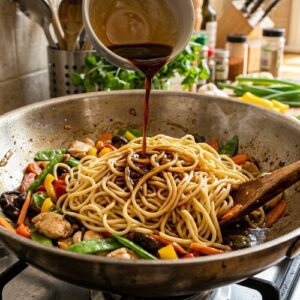
Step 9: Serve Immediately (The Critical Finishing Move)
- Transfer to serving bowls or plates right away and garnish with additional fresh green onion slices. Lo mein is best enjoyed at its hottest, when the noodles are most tender and the sauce still clings perfectly. The fresh green onion garnish adds a bright note that cuts through the richness—it's not just decoration, it's balance.
Notes
- Mistake: Skipping the sauce prep. Jumping straight to the wok without mixing your sauce first is chaos. You'll be fumbling with liquids and cornstarch while everything's heating. Spend three minutes beforehand preparing it. This alone will make you feel more confident.
- Mistake: Using noodles that are too soft. Fresh noodles can sit in your refrigerator for a few days and become mushy. Check the package date. If they're starting to dry out or feel brittle, they're actually perfect for this (they'll re-hydrate in the sauce). If they're wet and collapsing, buy fresh ones. This makes a noticeable difference.
- Mistake: Overcrowding the wok. Using too much oil or too many ingredients at once drops the temperature and causes steaming instead of searing. Work in portions if you're doubling the recipe, or use a truly large wok or wide skillet. Trust me on this—it changes everything.
- Mistake: Cooking the vegetables too long. If you can, taste a piece of carrot when you think it's done. You want it slightly soft outside but still with some snap inside. This takes practice, but once you find that sweet spot, you'll never go back to mushy lo mein.