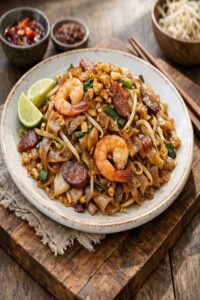
Chinese Lo Mein Noodle Recipe
This post contains affiliate links. As an Amazon Associate I earn from qualifying purchases.
Before you throw those leftovers away, turn them into something even better. This silky lo mein was born from exactly that moment—when my grandmother opened her refrigerator to find yesterday’s roasted chicken, some wilting vegetables, and a handful of fresh noodles, and somehow transformed all of it into the most craveable dish I’ve ever tasted. That’s when I learned that the best meals aren’t always planned. They’re discovered. They’re resourceful. They’re made with intention and a little kitchen magic. And the beautiful part? The nutritional profile often improves when you’re mindful about what goes in.
I’ve spent years as a registered dietitian studying how traditional cuisines maximize nutrition while minimizing waste. Chinese lo mein is a masterclass in that philosophy. It’s the ultimate leftover transformation—a celebration of using what you already have, elevated with just a few pantry essentials. If you’re looking for more ways to repurpose proteins, check out my Asian Beef Shank Recipe, which teaches similar slow-cooking wisdom.
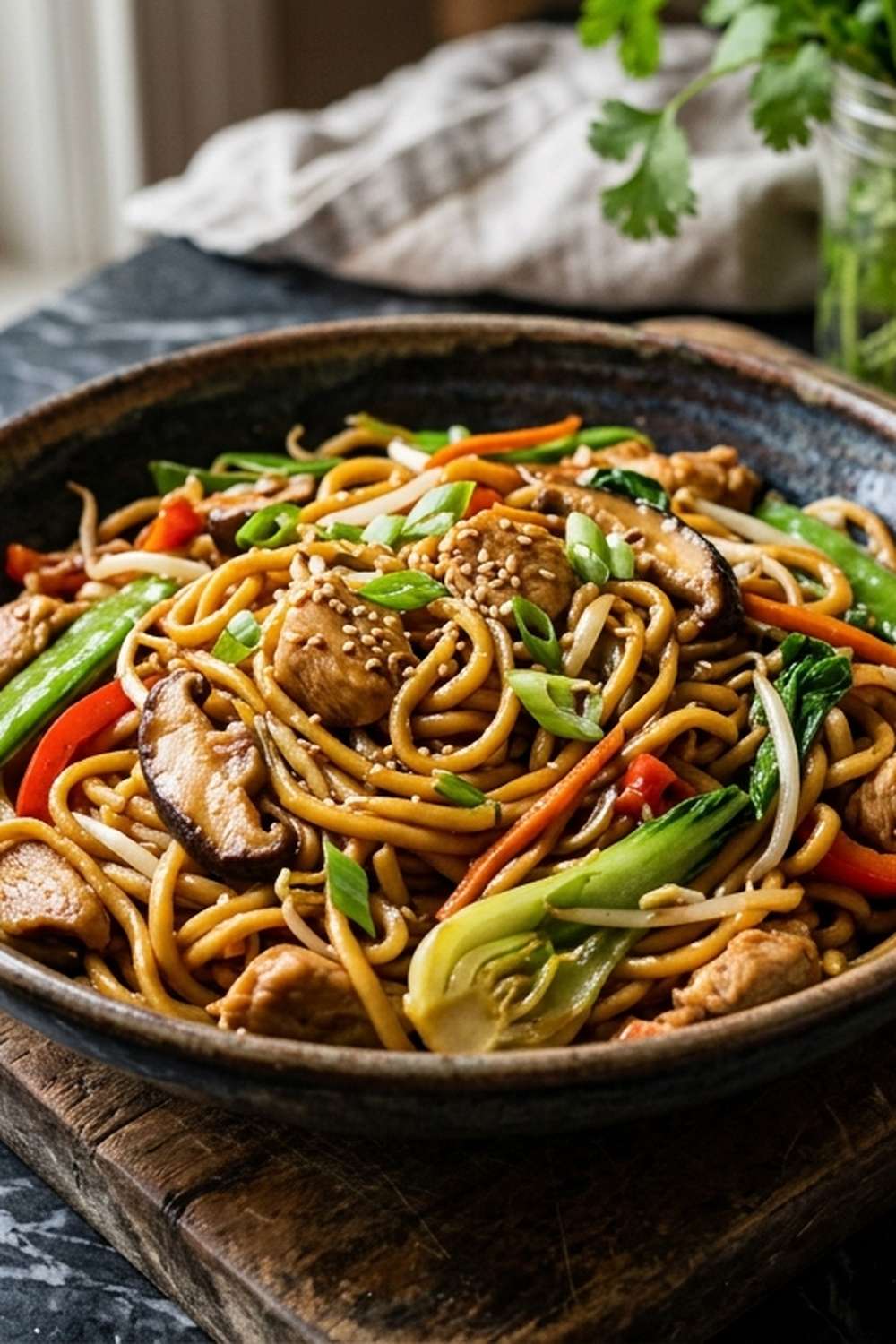
What Leftovers Work Best
Not all leftovers are created equal when it comes to lo mein. The magic happens when you understand which ingredients will shine in this transformation, and which ones need different homes. After years of helping clients meal-prep and repurpose ingredients, I’ve learned exactly what works, what can work, and what absolutely shouldn’t.
- Cooked proteins (chicken, pork, beef, shrimp) – These are the heart of your lo mein. Cold proteins from last night’s dinner warm through beautifully in the wok’s heat, becoming tender and infused with the sauce. Sliced thin, they integrate seamlessly into each bite.
- Firm vegetables (carrots, bell peppers, broccoli, snap peas) – Yesterday’s roasted or steamed vegetables add texture and nutrition. The quick wok toss brightens them, preventing that “reheated” taste.
- Fresh herbs and aromatics (garlic, ginger, green onions) – These are your secret weapons. Even if everything else is leftover, fresh garlic and green onions elevate the entire dish, creating brightness that masks any fatigue in the other ingredients.
- Avoid: Soft, creamy, or heavily sauced leftovers – Dishes with cream sauces, mayonnaise-based preparations, or overly soft vegetables won’t work here. Save those for other transformations. Instead, focus on proteins and vegetables with some structural integrity.
The Transformation Pantry: What to Keep on Hand
I always tell my clients: your pantry is where culinary creativity lives. For lo mein transformations, you need what I call “bridge ingredients”—the items that sit between your leftovers and something magnificent. These are the seasonings, oils, and bases that do the heavy lifting, turning yesterday’s dinner into tonight’s showstopper.
Keep these staples stocked and you’ll never feel limited by what you have leftover. Dark soy sauce brings umami depth and color. Light soy sauce provides saltiness without overwhelming. Cornstarch creates that silky gloss we all crave. Sesame oil adds nutty richness—just a teaspoon transforms everything. Chinese cooking wine or mirin adds subtle sweetness and complexity. And fresh egg noodles? They’re the foundation that ties everything together. These aren’t fancy ingredients. They’re accessible, shelf-stable, and they’re the difference between “I’m eating leftovers” and “I made this intentionally.”
The Ingredients – Leftovers + Bridge Ingredients
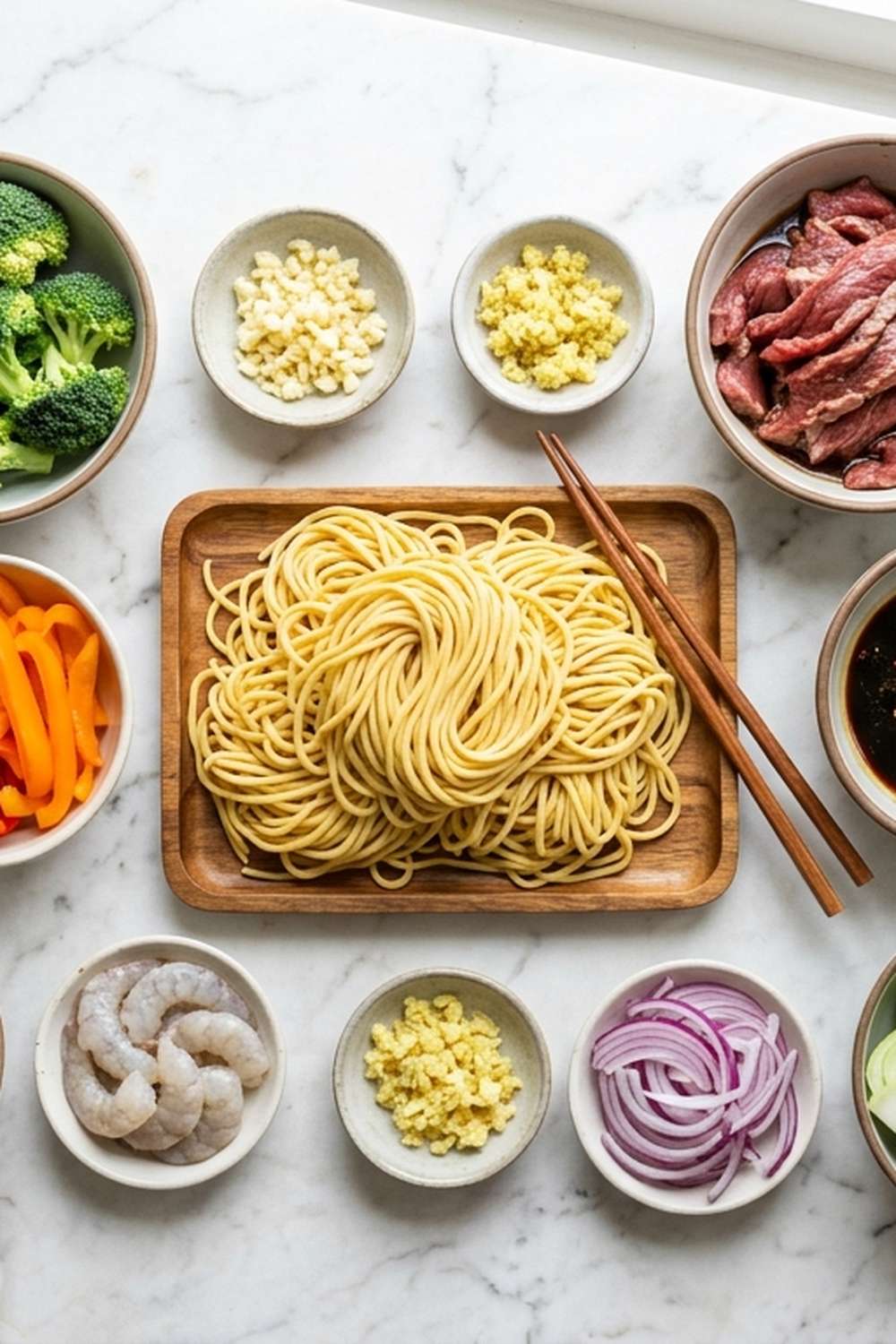
What I love most about this recipe is how it celebrates resourcefulness. You’re not following a rigid formula—you’re dancing with what you have, using these measurements as your guide. This makes approximately four generous servings, perfect for a family dinner or meal prep for the next two days.
- 4 teaspoons cornstarch (the secret to that silky, restaurant-quality finish)
- ½ medium yellow onion (finely sliced, leftover or fresh—the wok’s heat will caramelize it beautifully)
- 1 teaspoon white sugar (optional, or omit if using mirin)
- 1 large red or orange bell pepper (sliced into strips, or two small ones)
- 2 tablespoons dark soy sauce (this brings color and deeper umami)
- ¼ teaspoon white pepper (freshly cracked black pepper works too)
- 2 medium carrots (peeled and cut into thin batons, about 4 centimeters long)
- 500 grams fresh lo mein or hokkien noodles (about 1 pound—this is the backbone of your dish)
- 1.5 tablespoons peanut or neutral vegetable oil (sesame oil burns at high heat, so reserve it for finishing)
- Additional sliced green onions for garnish (fresh and bright)
- 300 grams cooked protein (chicken, pork, beef, or shrimp—sliced ½ centimeter thick for even heating)
- 6 green onions (cut into 5-centimeter lengths, whites and greens separated)
- ¼ cup water (this creates steam and helps the sauce coat evenly)
- 2 tablespoons light soy sauce (this brings saltiness and brightness)
- 2 garlic cloves (finely minced, or freshly minced from a tube if that’s what’s in your fridge)
- 1 tablespoon Chinese cooking wine or mirin (adds complexity and subtle sweetness)
- ½ teaspoon toasted sesame oil (used at the very end for nutty richness)
The Transformation: How to Make Lo Mein From Leftovers
This is where the alchemy happens. You’re not just reheating—you’re combining heat, movement, and intentional seasoning to create something new. The wok’s intense, focused heat is your tool. The timing and technique are your art. And the result? It tastes like you spent hours preparing it, when really, you simply understood how to work with what you had.
Step 1: Build Your Sauce (The Foundation of Everything)
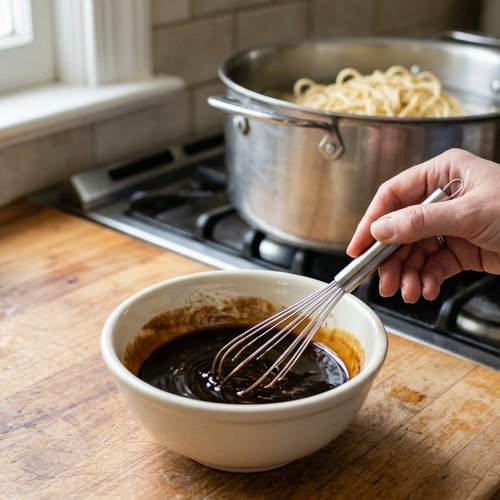
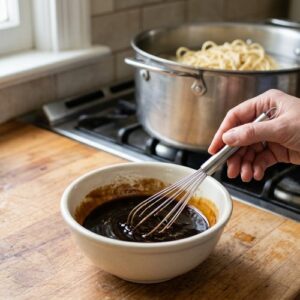
Before heat touches your wok, your sauce must be ready. In a small bowl, whisk the cornstarch with the dark soy sauce until completely lump-free—this is critical. Lumpy cornstarch creates streaky, uneven sauce. Once smooth, add the light soy sauce, cooking wine or mirin, sugar (if using), white pepper, and sesame oil. Stir until everything is combined. This sauce is your insurance policy. When you’re working quickly over high heat, you don’t have time to think. The sauce is already perfect, waiting to do its job.
Step 2: Season Your Protein (A Small Act That Makes All the Difference)
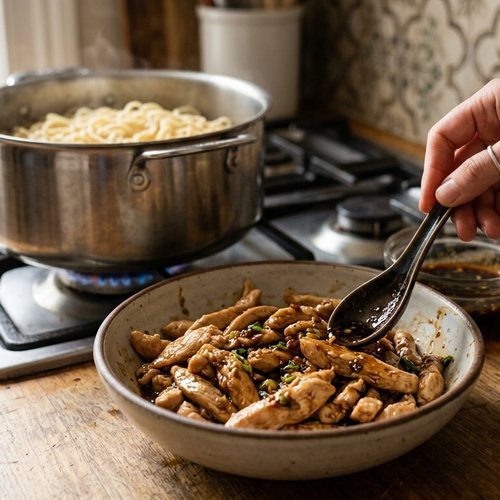
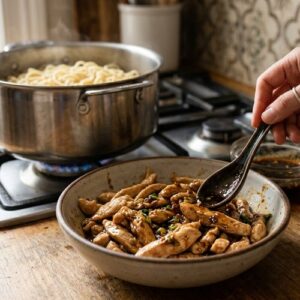
Pour 2 teaspoons of your prepared sauce into a bowl with your sliced cooked protein. Toss gently to coat every piece. This is pre-seasoning—your protein will already be flavorful when it hits the wok, rather than waiting passively for the final sauce to do all the work. It’s a small move with big results. The protein becomes the seasoned foundation rather than just another ingredient.
Step 3: Heat Your Wok (This Is Where Everything Changes)
Pour your peanut or vegetable oil into a wok or large, heavy-bottomed skillet over high heat. Wait for it to shimmer, then wait just a bit longer until wisps of smoke appear. This heat level is non-negotiable. Your wok needs to be hot enough that vegetables caramelize rather than steam, and proteins sear rather than poach. If you’re nervous about high heat, start with medium-high and work your way up as you gain confidence.
Step 4: Aromatics First (30 Seconds of Fragrance)
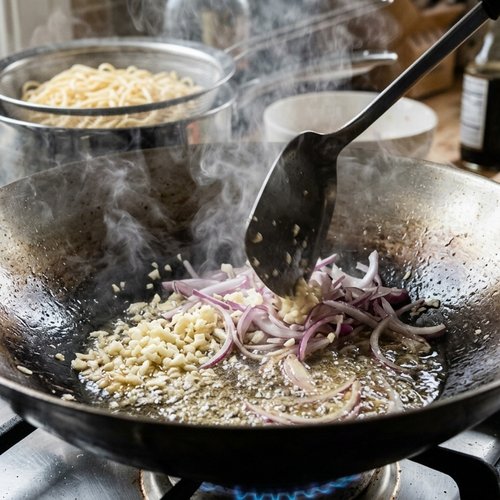
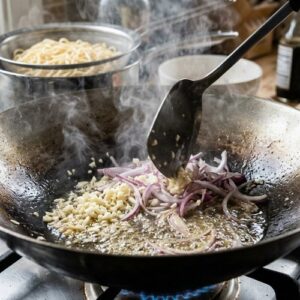
Immediately add your minced garlic and sliced onion to the smoking oil. Stir constantly for about 30 seconds—just long enough for the raw bite of garlic to soften and the onion to begin releasing its sweetness. Your kitchen will smell incredible. This is the moment where leftovers start feeling like intention.
Step 5: Add and Sear Your Protein (One Minute of Movement)
Add your seasoned protein to the wok and keep stirring for approximately one minute, or until the exterior is sealed and the protein is mostly white on the outside but still slightly pink or rare inside. If your protein is already fully cooked (which it probably is, since it’s leftover), you’re really just heating it through and building flavor through the sear. Don’t overcook it—the noodles will provide additional heat in the next steps.
Step 6: Add Your Vegetables (Two Minutes of Transformation)
Add your carrot batons and bell pepper strips. Toss everything together continuously for about two minutes. You’re looking for the carrots to slightly soften while maintaining some snap, and the peppers to blister slightly at the edges. The protein will continue cooking gently in the residual heat. Everything in your wok is now infused with the flavors built so far—the garlic oil, the onion sweetness, the protein’s seared exterior.
Step 7: Add Your Noodles and Sauce (The Integration)
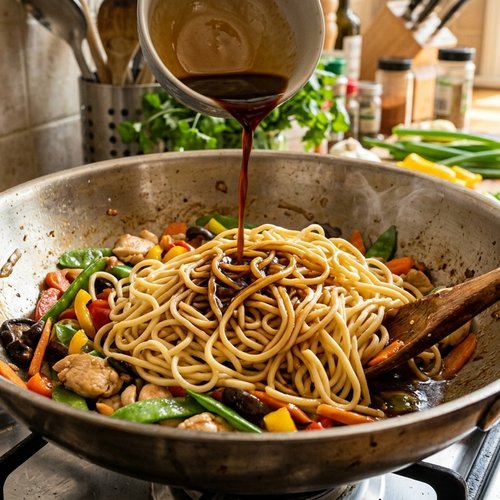
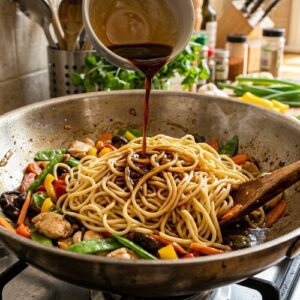
Add your fresh lo mein noodles and pour in your prepared sauce along with the ¼ cup water. Using two wooden spoons (or chopsticks, if you’re comfortable), lift and toss the noodles for about 30 seconds, separating any clumps and ensuring every strand comes into contact with the sauce. You want movement and air, not aggressive smashing. The noodles will absorb the sauce, and the cornstarch will thicken everything into a silky coating.
Step 8: Add Green Onions and Final Toss (One Minute to Completion)
Add your green onion pieces (whites and greens together) and toss everything for another minute until all the noodles are slick with sauce and the aromatics are distributed evenly. This is when you taste it mentally—the umami from the soy sauces, the subtle sweetness from the sugar and wine, the nuttiness from the sesame oil, the warmth from the white pepper, and the textural contrast from vegetables that still have some give.
Step 9: Serve Immediately (The Critical Finishing Move)
Transfer to serving bowls or plates right away and garnish with additional fresh green onion slices. Lo mein is best enjoyed at its hottest, when the noodles are most tender and the sauce still clings perfectly. The fresh green onion garnish adds a bright note that cuts through the richness—it’s not just decoration, it’s balance.
How to Adapt Based on What You Have
- If you have leftover broccoli or snap peas – Use them in place of or alongside carrots and peppers. Add them at the same time (step six) and adjust cooking time based on how tender they already are.
- If you don’t have fresh noodles – Dried lo mein noodles work well, but cook them about one minute under the package’s recommended time. They’ll continue softening slightly during the final toss with sauce.
- If your protein is shredded rather than sliced – That’s perfectly fine. Skip step two (the pre-seasoning) and just add it directly in step five. Shredded proteins warm through even faster.
- If you don’t have sesame oil – Finish with a teaspoon of butter or a drizzle of white miso paste mixed with a teaspoon of water. You’ll lose the signature nutty flavor, but you’ll maintain richness.
- If your sauce needs less salt – Use light soy sauce for both measurements instead of splitting between dark and light. The color will be less dramatic but the flavor will be less intense.
- If your leftover vegetables are soft from yesterday’s cooking – Add them only during the final noodle toss (step seven) alongside the sauce, rather than in step six. They’ll warm through without becoming mushy.
- If you want to make this vegetarian – Replace the protein with extra-firm tofu (pressed and cubed, then seared first) or with cashews or almonds for crunch and protein. The sauce works beautifully with vegetables as the star.
Zero Waste: Using Every Last Bit
One principle my grandmother taught me, and that I’ve reinforced through years of nutritional practice: every part of your ingredients deserves respect. For lo mein, this means carrot peels can be saved for vegetable broth. Bell pepper cores and seeds add wonderful flavor to stock. The white parts of green onions (what you typically discard) can be stored in the freezer and used to build aromatic bases for soups. Even leftover sauce that clings to your bowl isn’t waste—it’s seasoning for tomorrow’s rice or a base for a quick vegetable stir-fry.
I also recommend saving any noodles that don’t get used. Fresh noodles can be frozen for up to three weeks if you toss them with a tiny bit of oil and store them in an airtight container. They’ll thaw and cook just as beautifully as fresh ones.
Can I Store Lo Mein?
This is the practical question that separates theory from real life. Lo mein is technically a second-day dish already (unless you made it fresh), and it stores better than you might expect. Place any leftovers in an airtight container and refrigerate for up to three days. The noodles will firm up as they cool, which is actually perfect for fried rice applications later.
To reheat, I recommend adding just a splash of water (about one tablespoon per serving) and warming gently over medium heat in a wok or non-stick skillet, stirring frequently. Don’t use high heat on refrigerated lo mein—the noodles are fragile and will break. The water creates steam that revives the noodles without drying them out. A final drizzle of sesame oil and fresh green onions restore brightness.
Can you freeze it? Yes, though I don’t recommend it for more than two weeks. The noodles develop an icy texture that doesn’t fully recover, and vegetables lose their appeal. However, if you’ve made more than you can eat, freezing is better than discarding. Thaw overnight in the refrigerator and reheat gently.
Nutrition Information
Let me speak to this from my perspective as a registered dietitian: this dish is far more nutritionally balanced than most noodle preparations, especially when made from leftovers. A generous serving (approximately 1.25 cups) contains roughly 420 calories, 28 grams of protein, 42 grams of carbohydrates, and 12 grams of fat, with about 4 grams of fiber from vegetables and whole-grain noodles if you choose them.
Here’s what excites me nutritionally: the protein content is substantial, the vegetables provide micronutrients and fiber that offset the noodles’ carbohydrate load, and the cooking method preserves heat-sensitive vitamins better than many preparations because you’re not boiling vegetables separately. The soy sauces provide iodine and B vitamins. The sesame oil contains lignans and polyunsaturated fats.
Expert’s Nutritional Tip: The cornstarch is often criticized, but in this application, I defend it completely. Yes, it’s refined carbohydrate, but the amount used (4 teaspoons for four servings) is modest. More importantly, it enables the sauce to coat the noodles evenly, which means you’re using less total sauce to achieve satisfaction. If you want to reduce refined carbs further, use half the cornstarch and accept that your sauce will be less glossy—it’ll still taste wonderful.
These nutrition figures align with USDA standards for mixed dishes and reflect a balanced meal that I’d confidently recommend to clients focused on sustainable eating patterns.
What to Serve With Lo Mein?
The beauty of a well-made lo mein is that it’s almost a complete meal on its own. But I’m a believer in contrast—in giving your palate something to dance between. After all that heat and umami, you want brightness and cooling relief.
- A crisp cucumber salad with rice vinegar and sesame seeds – The acidity and crunch provide textural and flavor contrast to the silky noodles.
- Fresh ginger and lime slaw – Shredded vegetables tossed with lime juice, fresh ginger, and a tiny drizzle of oil. It’s palate-cleansing and brings heat in a different way.
- Simple steamed bok choy with garlic – If you want another vegetable element without overwhelming the dish, bok choy adds earthiness and freshness.
- A small side of sriracha or chili oil – For those who want additional heat. It’s not required—the dish stands alone—but it’s welcome.
If you’re building a more substantial meal, consider pairing with BBQ Chinese Pork Recipe for a complete Chinese-inspired dinner, or explore Baozi Recipe Vegetarian for a different, slower preparation that teaches similar principles of ingredient respect.
Common Mistakes to Avoid
After working with hundreds of clients and demonstrating this technique countless times, I’ve noticed patterns in where things go wrong. Let me spare you the learning curve:
- Mistake: Skipping the sauce prep. Jumping straight to the wok without mixing your sauce first is chaos. You’ll be fumbling with liquids and cornstarch while everything’s heating. Spend three minutes beforehand preparing it. This alone will make you feel more confident.
- Mistake: Using noodles that are too soft. Fresh noodles can sit in your refrigerator for a few days and become mushy. Check the package date. If they’re starting to dry out or feel brittle, they’re actually perfect for this (they’ll re-hydrate in the sauce). If they’re wet and collapsing, buy fresh ones. This makes a noticeable difference.
- Mistake: Overcrowding the wok. Using too much oil or too many ingredients at once drops the temperature and causes steaming instead of searing. Work in portions if you’re doubling the recipe, or use a truly large wok or wide skillet. Trust me on this—it changes everything.
- Mistake: Cooking the vegetables too long. If you can, taste a piece of carrot when you think it’s done. You want it slightly soft outside but still with some snap inside. This takes practice, but once you find that sweet spot, you’ll never go back to mushy lo mein.
Seasonal Variations
One of the joys of leftover transformation is that the dish adapts beautifully to seasons. This principle—using what’s at its peak—is exactly how my grandmother cooked, and it’s how I encourage my clients to think about food planning.
- Spring: Replace carrots with asparagus spears (cut into 5-centimeter pieces) and red peppers with fresh peas. Add a tablespoon of fresh lemon zest to the sauce for brightness. The dish becomes lighter and brighter.
- Summer: Include charred zucchini strips, fresh corn kernels, and cherry tomatoes added at the very end so they stay bright. A pinch of fresh basil (not traditional, but wonderful) added at the finish bridges Asian and Mediterranean.
- Fall: Add roasted butternut squash cubes, fresh mushrooms sautéed separately first, and increase the ginger slightly. Replace half the light soy sauce with tamari for deeper, slightly sweeter notes.
- Winter: Stick to root vegetables (carrots, parsnips), add shredded cabbage for volume and nutrition, and include black mushrooms. Increase the white pepper and sesame oil slightly for warming spice.
Make-Ahead Guide
As a dietitian who works with busy families, I know that real life doesn’t pause for dinner prep. This recipe can be broken into components so you’re never actually cooking when stress levels are high.
The night before: Prepare your sauce in a small container and store it in the refrigerator. It lasts up to five days. Prep and store your vegetables in separate containers—they’ll stay crisp for two days. If your protein is cooked but not yet sliced, do that now and store it separately.
Two hours before serving: Pull noodles from refrigerator and let them sit at room temperature. This prevents shocking them with the wok’s extreme heat when they’re ice-cold. Mince your garlic and slice your onions. Green onions can be cut and stored in a sealed bag.
At serving time: Everything else is just assembly and heat. You’re looking at seven minutes, start to finish, from cold ingredients to plated dinner. This is what makes the technique sustainable—it doesn’t demand a three-hour block of uninterrupted time.

Chinese Lo Mein Noodle Recipe
Ingredients
Method
- Before heat touches your wok, your sauce must be ready. In a small bowl, whisk the cornstarch with the dark soy sauce until completely lump-free—this is critical. Lumpy cornstarch creates streaky, uneven sauce. Once smooth, add the light soy sauce, cooking wine or mirin, sugar (if using), white pepper, and sesame oil. Stir until everything is combined. This sauce is your insurance policy. When you're working quickly over high heat, you don't have time to think. The sauce is already perfect, waiting to do its job.
- Pour 2 teaspoons of your prepared sauce into a bowl with your sliced cooked protein. Toss gently to coat every piece. This is pre-seasoning—your protein will already be flavorful when it hits the wok, rather than waiting passively for the final sauce to do all the work. It's a small move with big results. The protein becomes the seasoned foundation rather than just another ingredient.
- Pour your peanut or vegetable oil into a wok or large, heavy-bottomed skillet over high heat. Wait for it to shimmer, then wait just a bit longer until wisps of smoke appear. This heat level is non-negotiable. Your wok needs to be hot enough that vegetables caramelize rather than steam, and proteins sear rather than poach. If you're nervous about high heat, start with medium-high and work your way up as you gain confidence.
- Immediately add your minced garlic and sliced onion to the smoking oil. Stir constantly for about 30 seconds—just long enough for the raw bite of garlic to soften and the onion to begin releasing its sweetness. Your kitchen will smell incredible. This is the moment where leftovers start feeling like intention.
- Add your seasoned protein to the wok and keep stirring for approximately one minute, or until the exterior is sealed and the protein is mostly white on the outside but still slightly pink or rare inside. If your protein is already fully cooked (which it probably is, since it's leftover), you're really just heating it through and building flavor through the sear. Don't overcook it—the noodles will provide additional heat in the next steps.
- Add your carrot batons and bell pepper strips. Toss everything together continuously for about two minutes. You're looking for the carrots to slightly soften while maintaining some snap, and the peppers to blister slightly at the edges. The protein will continue cooking gently in the residual heat. Everything in your wok is now infused with the flavors built so far—the garlic oil, the onion sweetness, the protein's seared exterior.
- Add your fresh lo mein noodles and pour in your prepared sauce along with the ¼ cup water. Using two wooden spoons (or chopsticks, if you're comfortable), lift and toss the noodles for about 30 seconds, separating any clumps and ensuring every strand comes into contact with the sauce. You want movement and air, not aggressive smashing. The noodles will absorb the sauce, and the cornstarch will thicken everything into a silky coating.
- Add your green onion pieces (whites and greens together) and toss everything for another minute until all the noodles are slick with sauce and the aromatics are distributed evenly. This is when you taste it mentally—the umami from the soy sauces, the subtle sweetness from the sugar and wine, the nuttiness from the sesame oil, the warmth from the white pepper, and the textural contrast from vegetables that still have some give.
- Transfer to serving bowls or plates right away and garnish with additional fresh green onion slices. Lo mein is best enjoyed at its hottest, when the noodles are most tender and the sauce still clings perfectly. The fresh green onion garnish adds a bright note that cuts through the richness—it's not just decoration, it's balance.
Notes
FAQs
Can I use dried noodles instead of fresh lo mein?
Yes, absolutely. Cook them according to package directions, then drain them well and lightly toss with a tiny bit of oil to prevent sticking. They’ll be slightly less delicate than fresh noodles, but the final dish will be nearly identical. I actually prefer dried noodles when I’m being intentional about shelf-stable ingredients, though fresh noodles have a silkier mouthfeel.
What’s the difference between dark and light soy sauce, and can I just use one?
Dark soy sauce is aged longer and has caramel notes—it brings color and depth. Light soy sauce is lighter in color and more salty. Using both gives you complexity and color. If you only have one, use light soy exclusively (it’s more versatile), though you’ll lose some color depth. Never use “soy sauce” that’s labeled as “all-purpose” or “generic”—seek out bottles labeled specifically dark or light for this recipe.
My lo mein tastes too salty. How do I fix it?
Reduce the soy sauces to 1.5 tablespoons each next time. If you’ve already made it and it’s oversalted, add a tablespoon of water and a splash of rice vinegar. The acidity balances salt perception. Also, remember that once it cools slightly, you’ll taste salt more intensely, so taste-test it while it’s still very hot.
Can I make this with only vegetables and no meat?
Completely. Add extra-firm tofu (pressed and cubed), or simply increase your vegetable volume by 50 percent. Add cashews or almonds for protein and richness. The technique and sauce are vegetable-forward enough that meat is optional, not essential. This transforms it into a wonderful plant-based dish.
How do I know if my leftover protein is still safe to use?
This is important: if your cooked protein has been in the refrigerator for more than three or four days, or if it smells off, don’t use it. Trust your nose—it’s evolved to detect spoilage. If you’re uncertain, start fresh. Food safety isn’t worth the risk, and fresh protein is inexpensive compared to a food-borne illness.
More Leftover Transformation Recipes
- Baked Pork Chop Rice Recipe – Turn yesterday’s pork chops into a complete one-dish meal with rice and vegetables
- Bao Recipe Filling – Transform shredded leftover meats into pillowy bao with balanced filling techniques
Every time I make lo mein from leftovers, I’m reminded of my grandmother standing at her stove, calmly turning nothing into everything. She never saw it as “making do.” She saw it as creation. As care. As knowing that the best meals come not from exhaustive planning, but from paying attention to what you have and treating it with intention. That’s what this recipe teaches. It teaches resourcefulness without sacrifice, efficiency without loss of joy, and real cooking without pretension. Your leftovers aren’t limitations—they’re invitations. This silky lo mein is just one beautiful answer to that invitation.
Now go feed the people you love with exactly what you’ve got.
— Willie Regan, Registered Dietitian, Worcester