Asian Ground Pork Potato Recipe
This post contains affiliate links. As an Amazon Associate I earn from qualifying purchases.
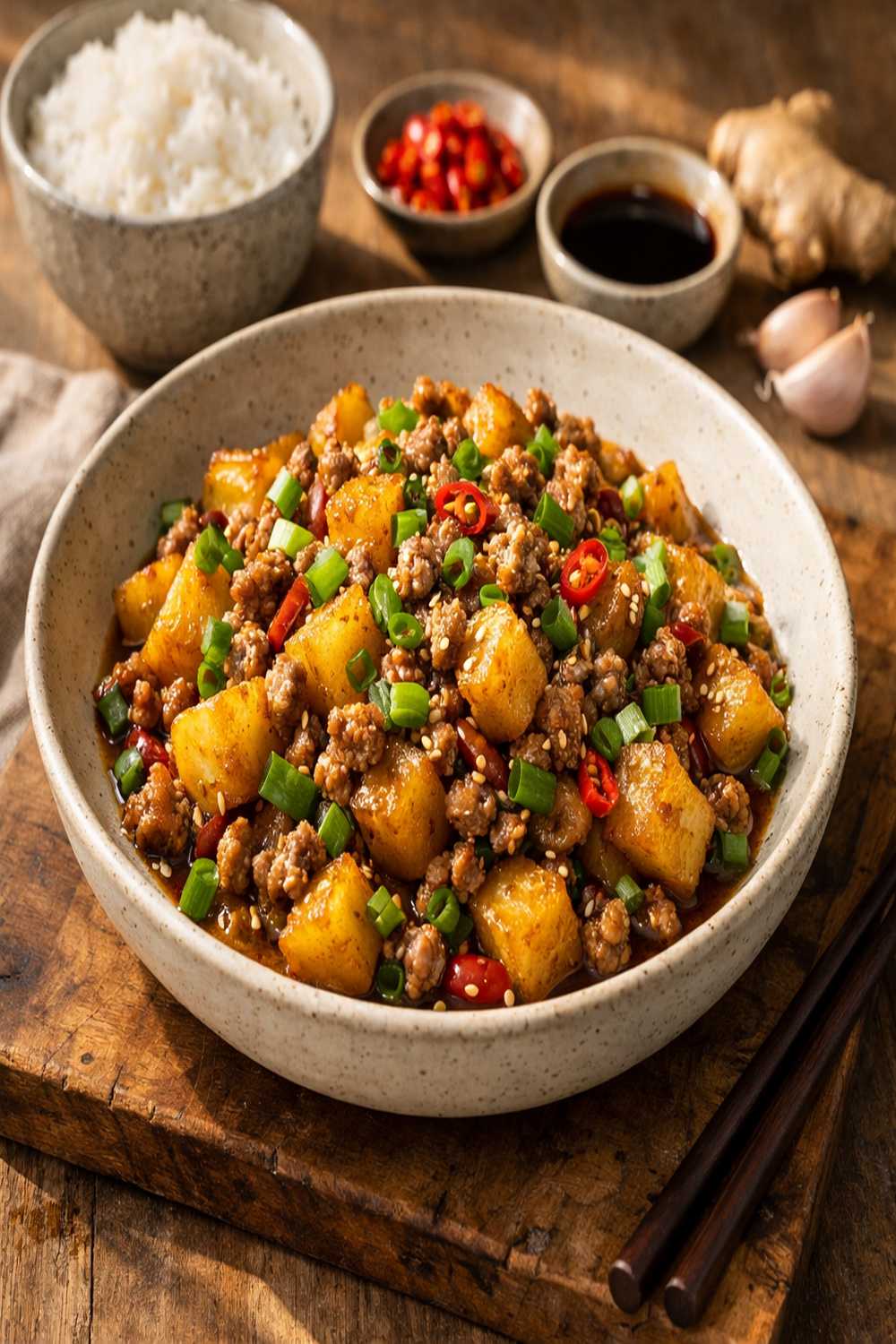
I still remember my grandmother standing at her kitchen counter in Worcester on a cold November evening, transforming a handful of humble ingredients into something that tasted like pure comfort. She didn’t follow recipes—she knew that time, heat, and intention could turn simple ground pork into something unforgettable. Today, I’m sharing that same wisdom with you, but with the nutrition science I’ve learned as a registered dietitian backing every step. This Asian-inspired ground pork dish is ready in under 30 minutes, requires just one pan, and delivers restaurant-quality depth that’ll have your family asking for seconds. Whether you’re a busy parent, a meal-prep enthusiast, or someone discovering Asian flavors for the first time, this recipe bridges tradition with modern wellness—and honestly, it’s the only pork recipe you’ll ever need in your rotation.
Why You’ll Love This Recipe
- Ready in 30 minutes flat – From cold stovetop to your table in just 25-28 minutes, making it perfect for weeknight dinners when time is tight
- Just 11 simple ingredients – No fancy equipment, no obscure Asian specialty items you can’t find, and most ingredients likely already in your pantry right now
- Caramelized, glossy, restaurant-quality coating – The low-and-slow reduction creates that signature sticky-savory glaze that clings to every morsel of tender pork
- Infinitely adaptable to your kitchen – Swap proteins, adjust heat levels, pair with rice or potatoes, or use as filling for vegetarian baozi and steamed buns
What You Need
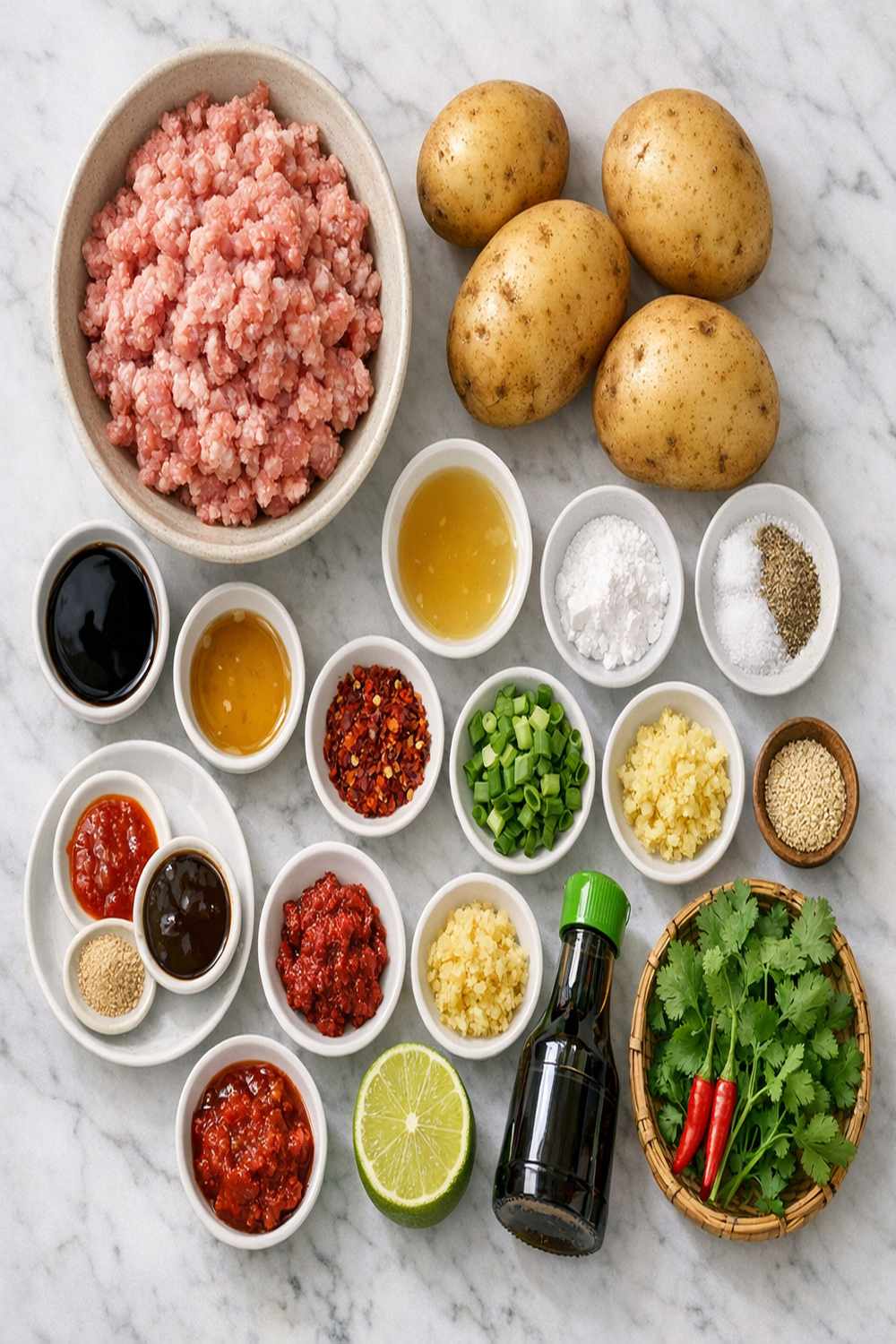
Just 11 simple ingredients, most of which you probably already have:
- 1 tablespoon grated ginger root (fresh, never powdered—the flavor is incomparable)
- 3 cloves garlic, minced (or about 1 tablespoon fresh minced garlic)
- 1 onion, finely diced (yellow onions work beautifully here)
- 455 grams (1 pound) extra lean ground pork (you can also use ground chicken, turkey, or beef)
- 2 tablespoons gochujang paste (use 1 tablespoon if you prefer milder heat)
- 2 tablespoons soy sauce (low-sodium reduces unnecessary sodium intake)
- 2 tablespoons maple syrup or raw honey (honey adds deeper mineral content)
- ¼ cup water (filtered water creates the cleanest-tasting reduction)
- 1 teaspoon toasted sesame oil (never use regular sesame oil—toasted has the flavor you’re after)
- Pinch of toasted sesame seeds (for garnish and nutty finish)
- 2 green onions or spring onions, sliced (whites and greens separated)
- Cooking spray or light oil (I prefer avocado oil spray for its neutral flavor)
- Make it vegetarian – Replace ground pork with crumbled firm tofu, extra mushrooms, or walnuts; reduce cooking time for tofu to prevent it becoming too soft, and add an extra teaspoon of soy sauce for depth
- Add vegetables for extra nutrition – Dice bell peppers, snap peas, or carrots and add them with the onion; this increases fiber content and pairs beautifully with the gochujang sauce
- Spice it up or tone it down – Use the full 2 tablespoons gochujang for fire-level heat, or stick with 1 tablespoon for a gentler introduction to Korean flavors; you can also add fresh sliced chili peppers
- Switch up your sweet component – Brown sugar, coconut sugar, or agave nectar work equally well; honey adds mineral complexity while maple syrup brings earthy depth
- Create a fusion bowl – Serve over cauliflower rice instead of regular rice for lower carbs, or pile it onto crispy tofu for a vegetarian version that still satisfies that savory craving
- Prep all ingredients the night before – Dice your onion, mince your garlic and ginger, measure out gochujang paste and soy sauce into small bowls, and store everything in airtight containers in the fridge; this cuts your cooking time down to just 15 minutes on busy weeknights
- Cook a double batch and portion it out – Make this recipe twice in one evening and divide into 4-cup portions in glass containers; you’ll have ready-to-reheat meals for lunch throughout the week, saving you roughly 25 minutes per day in meal preparation
- Freeze in portion sizes – Once cooled completely, spoon into individual freezer containers or ice cube trays; thaw overnight in the fridge and reheat gently, and you’ll have home-cooked pork ready whenever you need it
- Ground pork → Ground chicken (slightly leaner, cooks in the same timeframe), ground beef (richer flavor), or ground turkey (for lighter protein without sacrificing taste)
- Gochujang paste → Sriracha (more vinegary, less thick—add 1 tablespoon and adjust to taste) or a combination of red chili flakes and tomato paste (less traditional but effective)
- Maple syrup or honey → Brown sugar, coconut sugar, or even a teaspoon of ketchup for subtle sweetness without the syrup’s thickness
- Soy sauce → Tamari for a gluten-free version, or coconut aminos for those avoiding soy entirely (use the same amount)
- Toasted sesame oil → A small amount of regular sesame oil combined with walnut oil (toasted sesame is irreplaceable, but this combination gets you closest)
- Stirring the pork constantly while browning – Let it sit undisturbed for the first 2 minutes so it can develop that golden crust; constant stirring keeps it pale and steamed instead of seared
- Rushing the reduction – Cranking the heat to speed up the sauce thickening will cause the pork to toughen and the sauce to break; medium heat and patience create that glossy, clingy coating
- Using regular sesame oil instead of toasted – Regular sesame oil is meant for finishing salads and won’t give you that nutty, aromatic depth that makes this dish sing; it’s a $2-3 difference and absolutely worth it
- Skipping the ginger and garlic sauté step – That one-minute bloom releases their essential oils and deepens their flavor profile by about 300%; skip it and you’ll taste a one-dimensional garlic bite instead of complexity
- Spring – Add diced fresh ramps or spring onions instead of regular green onions; their mild onion flavor with a hint of garlic is perfect as the season turns warm
- Summer – Dice fresh bell peppers and zucchini, adding them with the onion to lighten the dish while keeping it hearty; serve over chilled rice for a summer bowl
- Fall – Substitute half the maple syrup with a touch of apple cider vinegar for a more complex sweetness; add diced apple to the mixture for subtle texture and autumn flavor
- Winter – This is the dish’s natural season—the warming spice of gochujang is exactly what cold-weather bodies crave; serve over creamy mashed cauliflower or alongside roasted root vegetables
- Steamed white or brown rice – The neutral starch is the perfect canvas for that glossy sauce, allowing it to be the star
- Cauliflower rice – For a lower-carb option that still provides fiber and substance to balance the pork’s richness
- Roasted vegetables – Broccoli, Brussels sprouts, or asparagus add textural contrast and keep the meal vegetable-forward
- Crispy tofu – For extra protein and a textural element that complements the pork’s tender crumble
- Quick pickled vegetables – Carrots, daikon, or cucumber pickles add brightness and cut through the richness with acidity
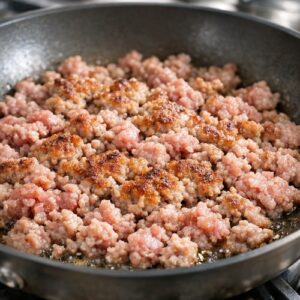
- Add the ground pork to your pan over medium-high heat and let it cook undisturbed for about 2 minutes first—this creates a beautiful golden crust. Then break it apart gently with a wooden spoon or spatula, continuing to cook until no pink remains, roughly 5-6 minutes total. This is where the magic begins. Breaking the meat into smaller pieces as it cooks ensures it'll coat evenly in the glaze later. Once browned, transfer the pork to a clean plate and set it aside. Don't discard those browned bits stuck to the pan—that's pure umami flavor waiting for us.
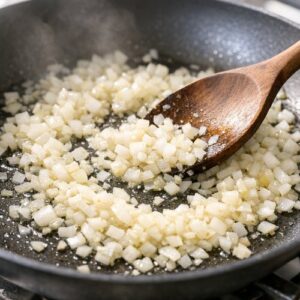
- Lightly spray the same pan with cooking oil and reduce heat to medium. Add your finely diced onion and cook for about 3-4 minutes, stirring occasionally, until it turns translucent and lightly golden at the edges. You're not rushing this step—letting the onion slowly release its natural sugars creates a subtle sweetness that balances the spice later. The onion should be soft enough to break apart easily with your spoon.
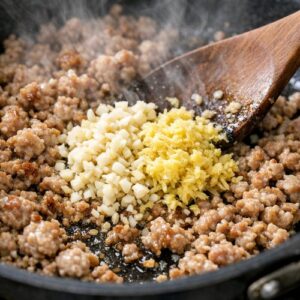
- Stir in your minced garlic and grated ginger, cooking for exactly one minute. This brief window is critical—you want those aromatics to become fragrant and release their oils, but not brown or turn bitter. The ginger's peppery warmth and garlic's pungent depth are about to become the foundation of your entire dish. You'll smell the transformation immediately; that's your cue you're on the right track.
- Return the cooked pork to the pan along with the gochujang paste, soy sauce, maple syrup, sesame oil, and water. Stir everything together until well combined, making sure the gochujang paste (which can be thick) is evenly distributed throughout. The mixture should look vibrant and aromatic. Turn the heat down to medium and let this simmer gently.

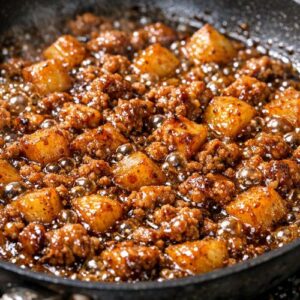
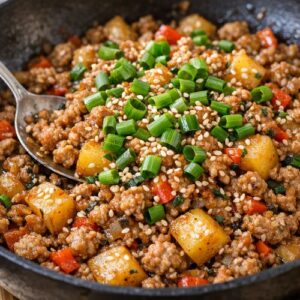
- Here's where patience becomes your secret weapon. Allow the mixture to simmer for 8-10 minutes without stirring constantly—let it bubble gently and reduce. Stir every 2 minutes or so to prevent sticking. What's happening is the liquid is slowly evaporating, concentrating all those flavors while the pork absorbs the savory-sweet-spicy sauce. You'll notice the sauce thickening and darkening, and the edges of the pork will start to caramelize slightly—that's exactly what you want. The sauce should cling to the pork pieces and look glossy, almost like a light glaze.
- Remove from heat and sprinkle the toasted sesame seeds and chopped green onion greens over the top. The white parts of the green onion can be reserved for serving on the side if you prefer a milder onion flavor. The sesame seeds add a subtle nuttiness and a touch of visual elegance that takes this from "weeknight dinner" to "I might've ordered this from a restaurant." Give it one final stir to incorporate those finishing touches, and you're done.
- BBQ Chinese Pork Recipe – A slow-cooked variation that builds flavor over hours using similar Asian-inspired techniques and spices
- Banh Mi Burger Recipe – This ground pork filling works beautifully inside crispy banh mi-style buns with pickled vegetables and fresh herbs
- Baked Pork Chop Rice Recipe – Another one-pan wonder that shares similar flavor profiles and is equally satisfying for meal prep
Makes 4 servings | Serves 2 as main course with sides, or 4 as part of a larger meal
How to Make Asian Ground Pork Potato Recipe in 6 Steps
Here’s exactly how to transform these ingredients into something extraordinary:
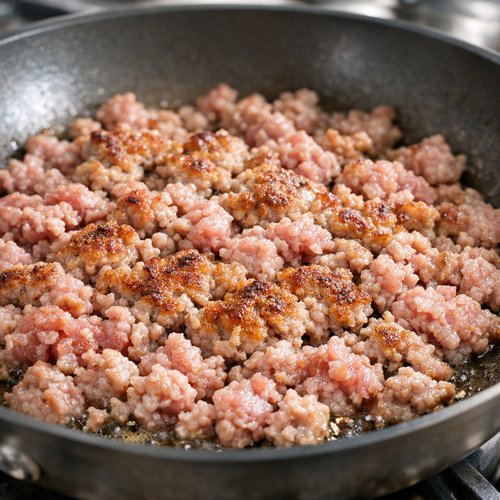
Step 1: Brown the Pork Over Medium-High Heat
Add the ground pork to your pan over medium-high heat and let it cook undisturbed for about 2 minutes first—this creates a beautiful golden crust. Then break it apart gently with a wooden spoon or spatula, continuing to cook until no pink remains, roughly 5-6 minutes total. This is where the magic begins. Breaking the meat into smaller pieces as it cooks ensures it’ll coat evenly in the glaze later. Once browned, transfer the pork to a clean plate and set it aside. Don’t discard those browned bits stuck to the pan—that’s pure umami flavor waiting for us.
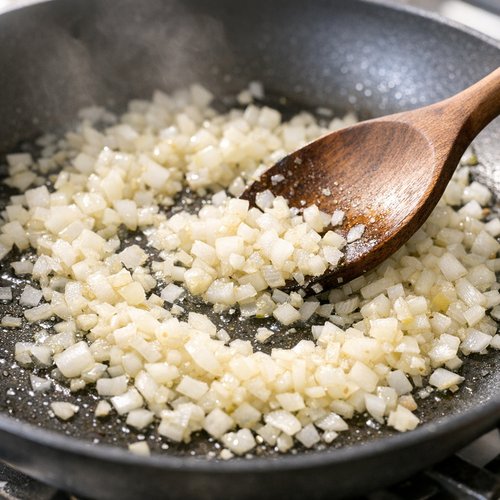
Step 2: Soften the Aromatics
Lightly spray the same pan with cooking oil and reduce heat to medium. Add your finely diced onion and cook for about 3-4 minutes, stirring occasionally, until it turns translucent and lightly golden at the edges. You’re not rushing this step—letting the onion slowly release its natural sugars creates a subtle sweetness that balances the spice later. The onion should be soft enough to break apart easily with your spoon.
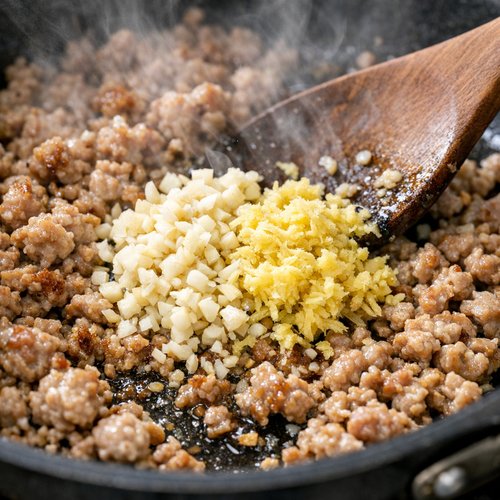
Step 3: Add Garlic and Ginger
Stir in your minced garlic and grated ginger, cooking for exactly one minute. This brief window is critical—you want those aromatics to become fragrant and release their oils, but not brown or turn bitter. The ginger’s peppery warmth and garlic’s pungent depth are about to become the foundation of your entire dish. You’ll smell the transformation immediately; that’s your cue you’re on the right track.
Step 4: Combine Pork with the Flavor Base
Return the cooked pork to the pan along with the gochujang paste, soy sauce, maple syrup, sesame oil, and water. Stir everything together until well combined, making sure the gochujang paste (which can be thick) is evenly distributed throughout. The mixture should look vibrant and aromatic. Turn the heat down to medium and let this simmer gently.
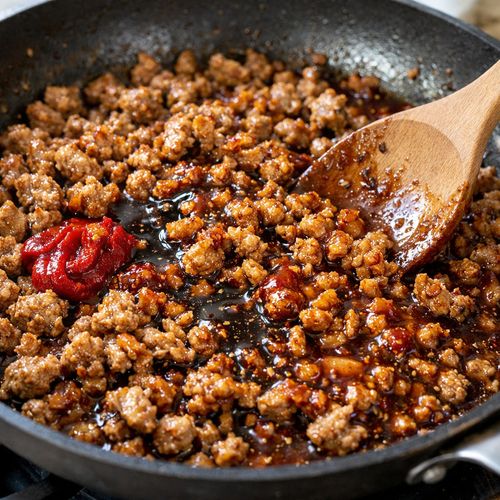
Step 5: Let It Reduce and Caramelize (The Most Important Step)
Here’s where patience becomes your secret weapon. Allow the mixture to simmer for 8-10 minutes without stirring constantly—let it bubble gently and reduce. Stir every 2 minutes or so to prevent sticking. What’s happening is the liquid is slowly evaporating, concentrating all those flavors while the pork absorbs the savory-sweet-spicy sauce. You’ll notice the sauce thickening and darkening, and the edges of the pork will start to caramelize slightly—that’s exactly what you want. The sauce should cling to the pork pieces and look glossy, almost like a light glaze.
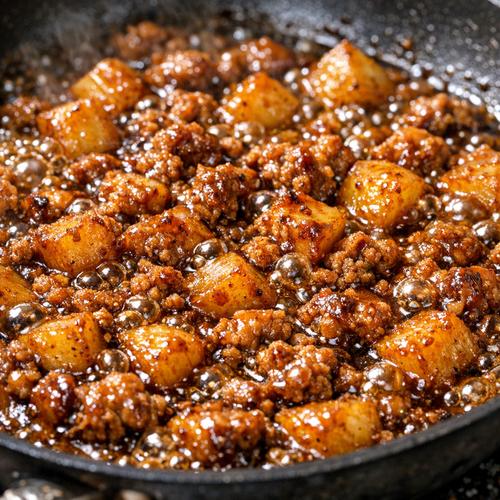
Step 6: Finish with Aromatics and Serve
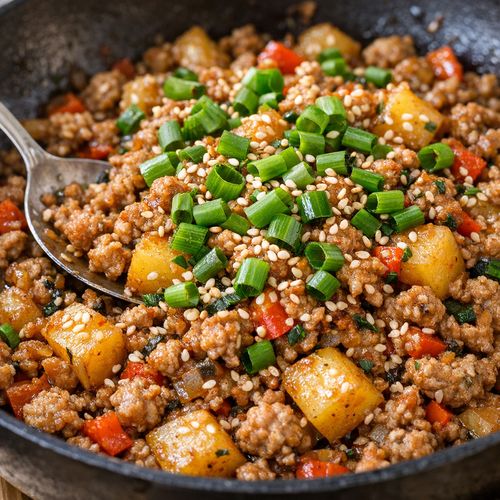
Remove from heat and sprinkle the toasted sesame seeds and chopped green onion greens over the top. The white parts of the green onion can be reserved for serving on the side if you prefer a milder onion flavor. The sesame seeds add a subtle nuttiness and a touch of visual elegance that takes this from “weeknight dinner” to “I might’ve ordered this from a restaurant.” Give it one final stir to incorporate those finishing touches, and you’re done.
5 Ways to Customize This Recipe
Make It Ahead and Meal Prep Tips
Quick Substitutions
How to Store and Reheat
Fridge: 4-5 days in an airtight glass container. Freezer: 3 months when stored properly in freezer bags or containers. Reheat gently in a skillet over medium heat with a splash of water (about 2 tablespoons) to restore the glossy sauce texture, or microwave in a covered container for 2-3 minutes, stirring halfway through. Avoid high heat, which can dry out the pork—low and slow is always the move.
Nutrition at a Glance
Per serving (based on USDA nutritional data): Approximately 280 calories, 28 grams of protein (making this an excellent post-workout meal), 12 grams of fat (mostly from the pork’s natural content and the sesame oil’s heart-healthy polyunsaturates), 15 grams of carbohydrates (primarily from the maple syrup and onion), and 480 milligrams of sodium (manageable when balanced with a low-sodium side like steamed vegetables). The ginger provides gingerol compounds with anti-inflammatory properties, while the garlic delivers allicin—both research-backed compounds that support immune function and cardiovascular health.
Expert’s Nutritional Tip: Why This Recipe Is Metabolically Smart
As a registered dietitian, I’ve learned that the secret to sustainable eating isn’t restriction—it’s building meals that satisfy both your taste buds and your body’s nutritional needs. This dish succeeds on both fronts. The extra-lean ground pork (95% lean) provides complete protein with all nine essential amino acids, which means your body uses it efficiently for muscle repair and hormone production. The ginger-garlic combination isn’t just flavor—it’s medicine. Ginger contains compounds that have been shown in peer-reviewed studies to support digestive comfort and reduce inflammation, while garlic’s sulfur compounds support liver detoxification. The soy sauce adds umami, which triggers satiety signals in your brain faster, meaning you’ll feel fuller on smaller portions. This is why my grandmother’s dishes always felt complete, even when made from simple ingredients—she was intuitively balancing nutrition with tradition.
Common Mistakes to Avoid
Seasonal Variations
Serve It With
This pork is absolutely magnificent on its own, but pair it with complementary sides to create a complete meal. Serve over fluffy white or brown rice to absorb that glossy sauce, or try authentic shrimp fried rice for a more elaborate presentation. The pork also works beautifully as a filling for steamed buns—think of it as an elevated version of the bao recipe filling your favorite restaurants serve. For a lighter approach, serve alongside bamboo sprouts and steamed bok choy for vegetables that won’t compete with the pork’s flavors.

Asian Ground Pork Potato Recipe
Ingredients
Method
Notes
FAQs
Can I use ground chicken or turkey instead of pork?
Absolutely. Both cook in the same timeframe and absorb the gochujang sauce beautifully. Chicken tends to be slightly drier, so you might want to add an extra ½ teaspoon of sesame oil or use 1 tablespoon of honey instead of maple syrup for slightly more moisture. Turkey has more robust flavor and handles the spice wonderfully—no adjustments needed.
Is gochujang paste a necessary ingredient, or can I make this without it?
Gochujang is the soul of this dish, but if you truly can’t find it, combine 1 tablespoon sriracha, ½ tablespoon tomato paste, and ½ teaspoon red chili flakes as a substitute. It won’t be identical, but you’ll capture the spicy-savory essence. That said, most mainstream grocery stores now carry gochujang in the Asian section—it’s increasingly accessible and worth tracking down.
How spicy is this recipe, and can I adjust the heat?
At 2 tablespoons of gochujang, this sits at about a medium-plus heat level—noticeable warmth but not fire-engine hot. Start with 1 tablespoon if you’re heat-sensitive, and you can always add more during the reduction step if you want more kick. You can also add fresh sliced Thai chili peppers for additional heat, which adds texture too.
Can I make this dish ahead and freeze it?
Yes, and I encourage it. This freezes beautifully for up to three months. Cool it completely, portion into freezer-safe containers, and thaw overnight in the fridge before reheating gently over medium heat with a splash of water to restore the sauce’s gloss. It’s one of my favorite meal-prep dishes because the flavors actually deepen overnight as the spices continue to marry.
What if I don’t have toasted sesame oil on hand?
Toasted sesame oil has a distinctive nutty flavor that’s hard to replicate, but if you absolutely don’t have it, you can skip it and increase the soy sauce by ½ teaspoon for more umami depth. However, I’d genuinely recommend picking up a bottle—it’s inexpensive, keeps for months in your pantry, and elevates dozens of Asian-inspired dishes beyond this one.
More Quick Recipes You’ll Love
The Story Behind the Sauce
I remember watching my grandmother make something similar on autumn Sundays, though she called it her “special pork.” She’d stand at the stove with a wooden spoon that had been darkened by decades of cooking, moving slowly as she let those aromatics bloom. She never rushed. She told me that real flavor couldn’t be hurried—that the longer you let something simmer, the more time each ingredient had to tell its story. Gochujang is a Korean fermented paste with centuries of history, built on the same principle. It’s made from soybeans, chili peppers, and time. When you cook with it, you’re not just making dinner—you’re honoring traditions that have nourished families across generations.
That’s what drew me to nutrition science. I wanted to understand not just how food tasted, but why it worked—why these combinations felt complete, why my body felt satisfied, why memories clung to flavors. This Asian ground pork dish is my love letter to that understanding. It’s fast enough for modern life, grounded in tradition, and scientifically balanced to actually nourish you.
I hope you make this tonight. I hope it fills your kitchen with that rich, aromatic steam. I hope your family asks for seconds, and I hope you feel proud knowing you created something both delicious and genuinely good for you. This is the recipe that proves you don’t need hours or complicated techniques to cook like someone who cares—you just need intention, good ingredients, and the willingness to let them do their work.
Happy Cooking!