Bo Kho Vietnamese Beef Stew Recipe
This post contains affiliate links. As an Amazon Associate I earn from qualifying purchases.
You know that Bo Kho Vietnamese Beef Stew from your favorite neighborhood Vietnamese restaurant? The one you’ve been ordering for years, the bowl that arrives steaming with tender beef that falls apart, aromatic spices dancing with coconut, and that unmistakable depth that makes you close your eyes on the first spoonful? I spent months obsessing over it, asking questions, and finally cracking the code. Here’s how to make it at home—better than the restaurant version, I promise. And while you’re building your Vietnamese cooking repertoire, you might also explore the beautiful complexity of an Asian Beef Shank Recipe that uses many of the same foundational techniques.
Copycat Bo Kho Vietnamese Beef Stew Recipe That Tastes Better Than the Restaurant Version
There’s something about watching someone you love turn simple, humble ingredients into something that feels like a warm embrace. My grandmother didn’t make Vietnamese food—she was New England through and through—but she taught me the philosophy that matters most: slow cooking, quality ingredients, and never rushing the magic. When I first tasted Bo Kho at a small restaurant in Worcester, I felt that same familiarity, that same sense of care.
I became obsessed. Not in a casual way, but in the way that only happens when you recognize something as genuinely special. I started visiting different restaurants, trying different versions, asking cooks questions when they’d let me. I began researching Vietnamese culinary traditions, learning about the spice routes and the history baked into each bowl. Then I started experimenting in my own kitchen, testing ratios, adjusting cook times, discovering which techniques made the difference between “good” and “this tastes like home.”
What you’re about to learn isn’t just a recipe—it’s the result of understanding why this dish works, how the flavors build, and how to recreate that restaurant excellence on your own terms.
What Makes the Restaurant Version So Good
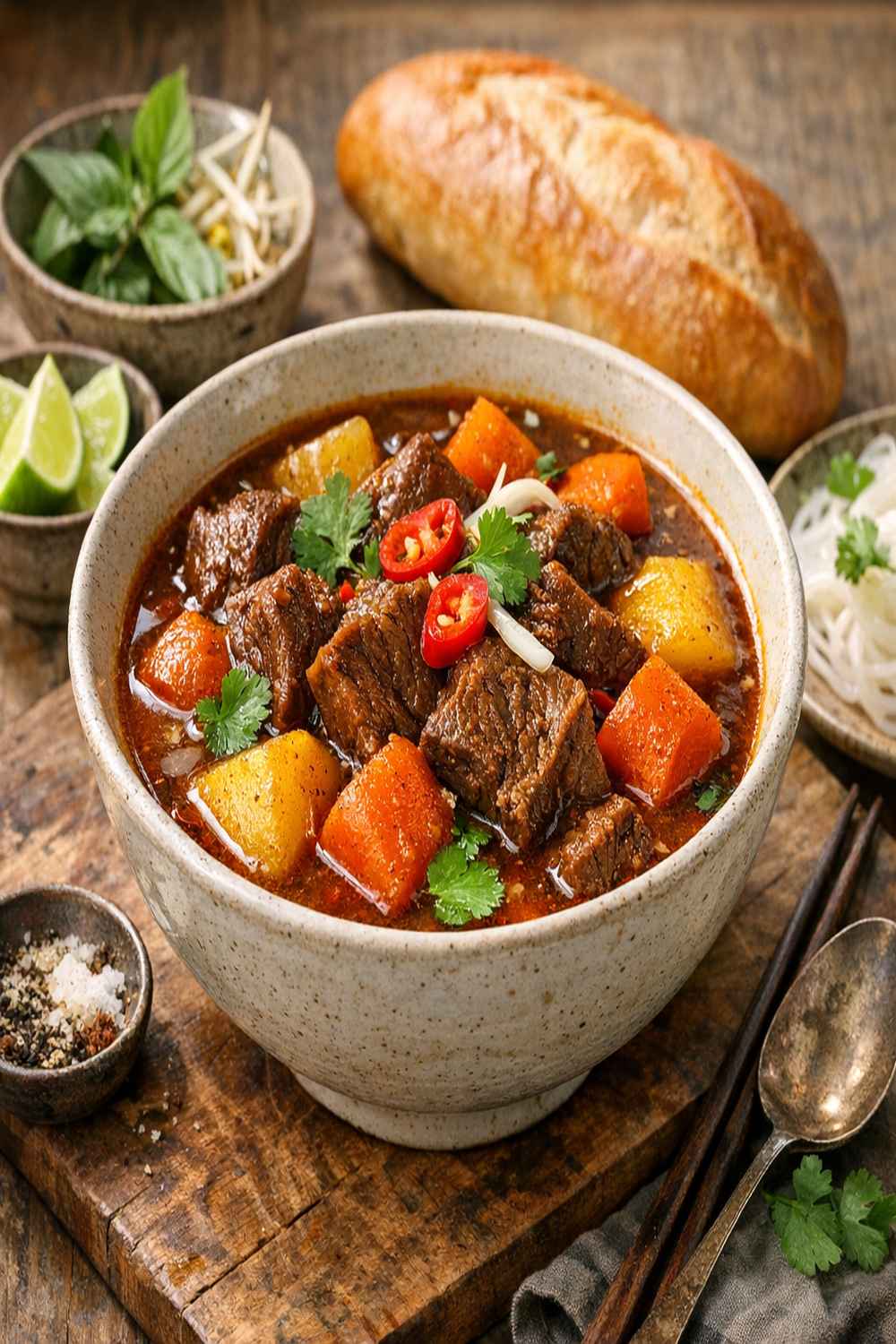
Let me be honest about what restaurants do right with Bo Kho. They have advantages we don’t—commercial-grade equipment, years of repetition, bulk purchasing power. But more importantly, they understand the principles of this dish on a molecular level, even if they don’t use those words. The best Bo Kho achieves a delicate balance: deep savory richness from the beef, bright aromatic complexity from spices, subtle sweetness from caramelized onions and coconut, and a persistent warmth that lingers on your palate.
The restaurants I studied achieved this through specific techniques that seem simple but require understanding the “why” behind each step.
- Proper browning of the beef – This creates a flavorful crust through the Maillard reaction, building the savory foundation that makes the stew taste layered and complex rather than one-dimensional
- The spice bloom – They infuse their cooking oil with lemongrass and aromatics before building the stew, which releases volatile oils and distributes flavor evenly throughout the pot rather than adding spices at the end
- The coconut-to-broth ratio – The restaurants use coconut water or juice strategically, adding richness without overwhelming the beef’s natural flavor, creating that signature creamy-but-not-heavy texture
- Extended low-temperature cooking – The beef simmers for hours, not minutes, allowing collagen to break down into gelatin, creating natural body and silkiness
How This Homemade Version Compares
Here’s my honest assessment: your homemade Bo Kho will taste fresher and more vibrant than most restaurant versions. Why? Because you’re using ingredients that aren’t sitting in a walk-in cooler, and you’re cooking with intention rather than volume. The cilantro, Thai basil, and fresh onion garnishes will be truly fresh, not slightly wilted from sitting under heat lamps.
Where restaurants excel is in consistency and equipment efficiency. They have massive stockpots that distribute heat evenly, and they’ve made this dish a thousand times. But here’s the secret: once you make this recipe three or four times, you’ll develop that same muscle memory, and your version will be superior because you control every variable.
Cost-wise, you’ll save roughly 60-70% per serving compared to restaurant pricing, and you’ll be able to customize spice levels, protein choice, and vegetable additions in ways restaurants simply can’t.
The Ingredients: Reverse-Engineered
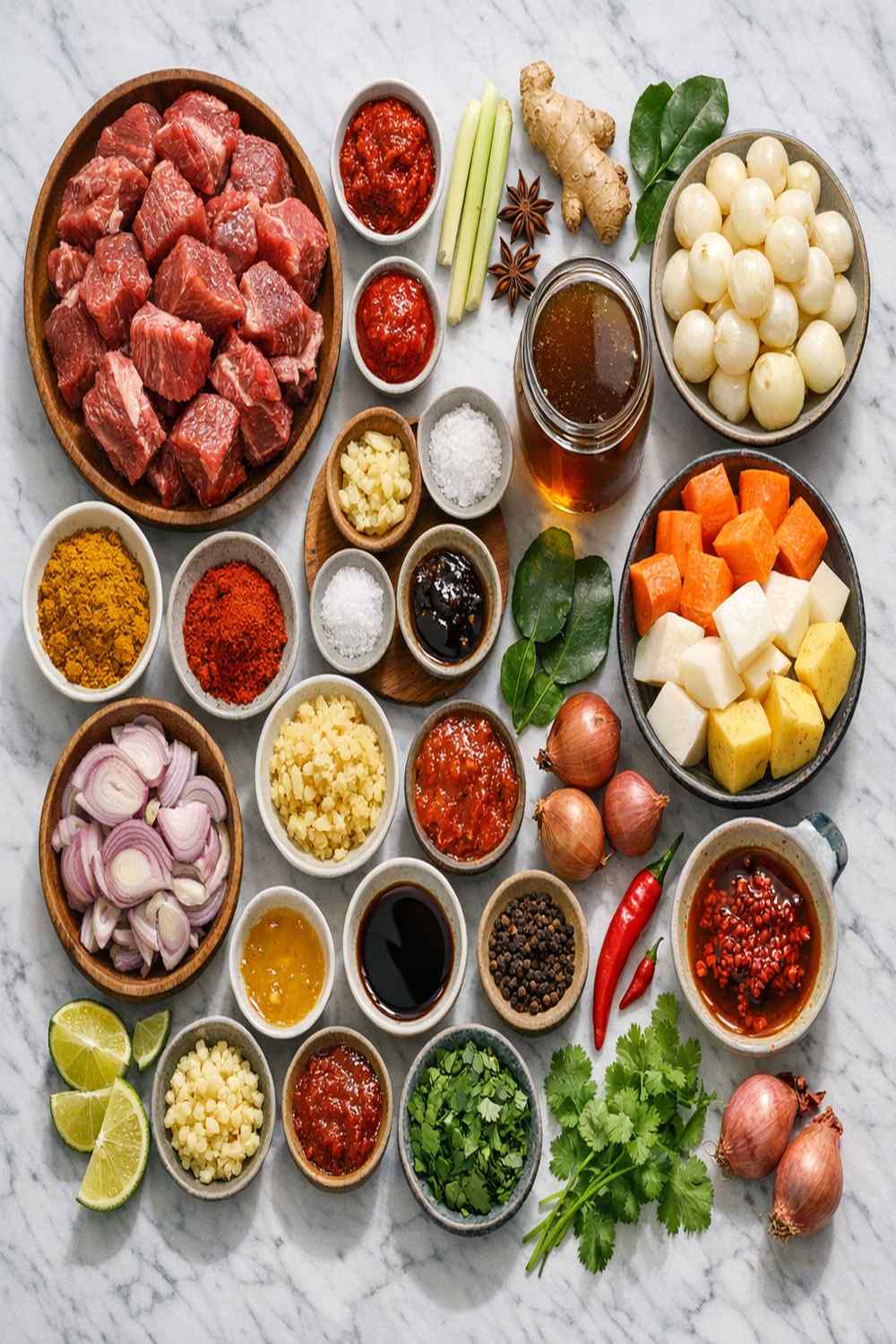
I want to walk you through how I identified each ingredient through testing and research. I started with the obvious—beef, broth, aromatics. But the magic came from understanding the supporting players. The five-spice powder gives you star anise, cloves, cinnamon, Sichuan pepper, and fennel in one ingredient, but I also add individual star anise because the restaurants do something more sophisticated than just dumping in the powder.
The fish sauce might intimidate you—it smells aggressive in the bottle, almost aggressive—but it dissolves into the background as you cook, leaving only depth and umami. The coconut water (not milk) is crucial; many home cooks make this mistake, using heavy coconut milk that masks the beef’s flavor.
Here’s what you’ll need to gather. This recipe serves 6-8 people generously, with leftovers that taste even better the next day.
- 1½ teaspoons brown sugar (for the marinade, which helps tenderize the beef)
- 1 teaspoon ground black pepper (freshly ground for maximum flavor)
- 3 stalks fresh lemongrass (cut into 3-inch lengths for infusing, plus minced for cooking)
- 3 tablespoons chili oil (or to taste, for finishing heat)
- 3 tablespoons soy sauce (for umami and saltiness adjustment)
- 1 teaspoon sea salt (added later to preserve color and texture of vegetables)
- ½ cup thinly sliced raw onion (white or red, for brightness)
- ½ cup fresh Thai basil leaves (thinly sliced, for aromatic finishing)
- 8 cups water or unsalted beef broth (homemade if possible, low-sodium if store-bought)
- 1 teaspoon ground annatto (optional but recommended, adds subtle earthiness and color)
- 1 large onion (sliced thinly, about ½ inch width)
- 3 tablespoons neutral oil (vegetable or canola, not olive oil which doesn’t have a high enough smoke point)
- 5 tablespoons fish sauce (the Vietnamese ingredient that creates depth and complexity)
- 2 cups pure coconut water or juice (not coconut milk, which is too heavy)
- 1 tablespoon paprika (Spanish smoked paprika if available, for depth)
- 8 large carrots (peeled and cut on the bias into 1½-inch chunks, more interesting than straight cuts)
- 1 pound wide rice noodles or egg noodles (cooked separately per package directions)
- 2 to 2½ pounds boneless beef chuck or brisket (cut into 1½-inch chunks for even cooking and beautiful presentation)
- 4 tablespoons tomato paste (concentrated flavor, adds subtle sweetness and acidity)
- 2 star anise pods (additional to the five-spice powder, for more pronounced anise flavor)
- 2 limes cut into wedges (for each person to adjust acidity)
- 3 tablespoons fresh ginger (minced, not grated, to preserve texture)
- 2½ teaspoons five-spice powder (star anise, cloves, cinnamon, Sichuan pepper, and fennel combined)
- 1 teaspoon chili powder (cayenne-based, for gentle heat)
- ¼ cup fresh cilantro leaves (coarsely chopped, added just before serving)
- 8 cloves garlic (minced finely, divided between the marinade and the cooking process)
The Copycat Method: How to Recreate Bo Kho Vietnamese Beef Stew Recipe at Home
Now we crack the code. These aren’t just steps—they’re techniques that restaurants have refined over years, adapted for your home kitchen. Pay attention to the “why” behind each instruction, because that’s what separates good stew from transcendent stew.
Step 1: Marinate the Beef (The Foundation)
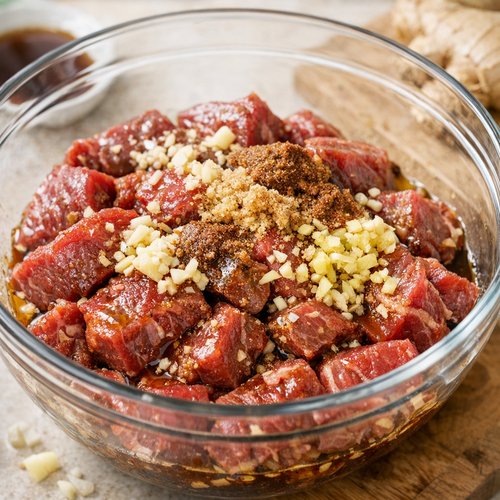
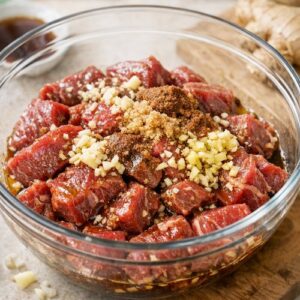
In a large bowl, combine your beef chunks with 2 cloves of minced garlic, the fresh ginger, fish sauce, five-spice powder, and brown sugar. This marinade doesn’t just add flavor—it begins breaking down the meat’s proteins, creating a more tender final result after hours of slow cooking. Make sure every piece of beef gets coated evenly; I use my hands for this, making sure the marinade reaches into the nooks and crevices.
Let this sit at room temperature for 30 minutes. Don’t skip this step, and don’t marinate for longer than an hour or the fish sauce will make the exterior mushy. This is the sweet spot that gives you maximum benefit without degradation.
Step 2: Build Your Aromatic Base (Creating Complexity)
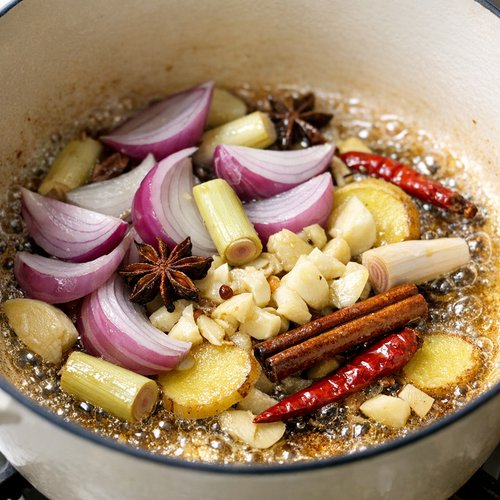
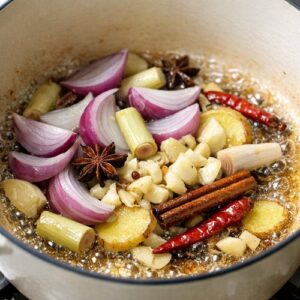
Heat 3 tablespoons of neutral oil in a large Dutch oven or heavy-bottomed pot over medium-high heat. Once it shimmers—and this is important, wait for the shimmers, don’t start cooking when it’s just warm—add the 3-inch lemongrass stalks. Let them sit in the hot oil for exactly one minute. You’ll hear them crackle slightly, and the whole kitchen will smell like a Vietnamese market in the best way possible.
Now add the minced lemongrass and the remaining 6 cloves of garlic. Cook for 2 minutes, stirring frequently, until the raw garlic smell transforms into something sweet and mellow. This technique, called blooming spices and aromatics, releases their essential oils and distributes flavor more evenly throughout the finished dish. It’s the difference between flavors you taste and flavors you feel.
Step 3: Cook the Onions (Developing Natural Sweetness)
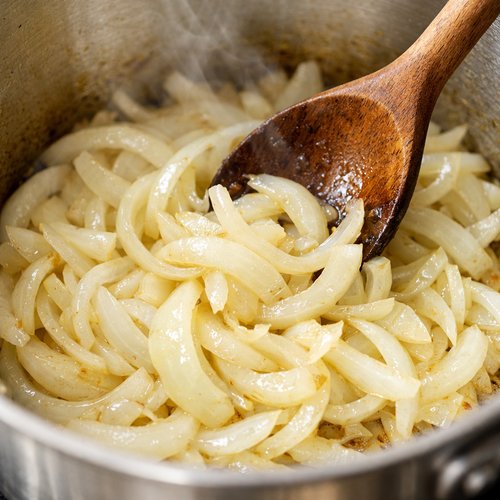
Add the sliced onions to the pot and cook, stirring occasionally, for 4-5 minutes until they become translucent and begin to soften. You’re not looking for caramelization here—that comes later. You want them to release their natural juices and become tender enough to break down further during the long simmer.
If the bottom of the pot starts to stick, that’s actually good—those browned bits are flavor waiting to be incorporated. You’ll deglaze later.
Step 4: Brown the Beef (The Maillard Reaction)
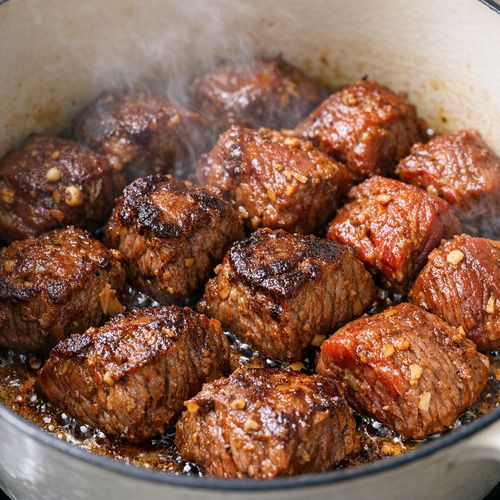
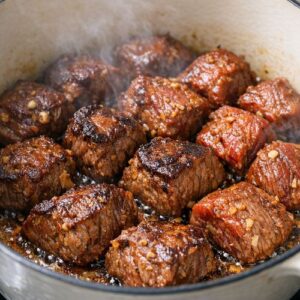
Increase heat to high and add all of your marinated beef to the pot. Don’t stir it immediately—let each piece sit on the hot surface for 2-3 minutes to develop a brown crust. This isn’t about cooking it through; it’s about creating flavor through browning. Once that side is deeply colored, stir and brown the other sides, working in batches if needed so you’re not overcrowding the pan.
This step takes about 8-10 minutes total. You’re looking for rich brown color on most surfaces, not gray, which would indicate steaming rather than browning.
Step 5: Add the Tomato Paste (Building Umami)
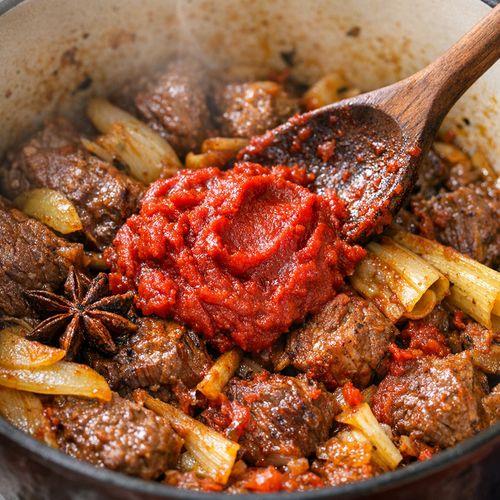
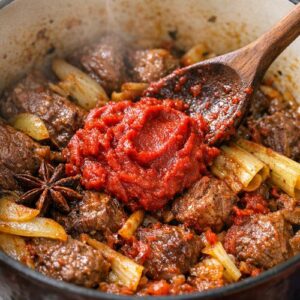
Add 4 tablespoons of tomato paste directly to the beef and aromatics. Stir well, making sure it coats the beef and vegetables. Cook uncovered for 5 minutes, stirring occasionally. Tomato paste contains glutamates, which amplify umami—that savory satisfaction that makes you want another spoonful. Cooking it in the hot pot concentrates these compounds further.
Step 6: Add Your Liquids and Spices (The Transformation)
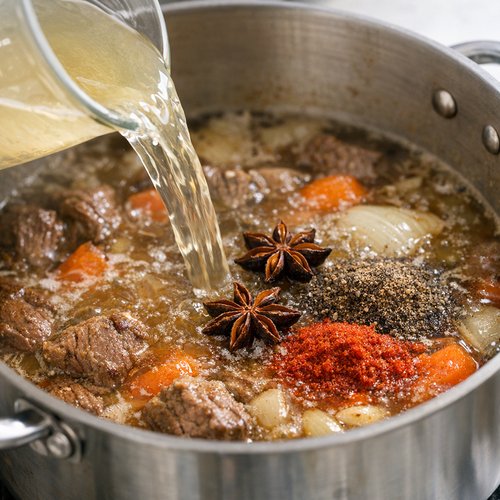
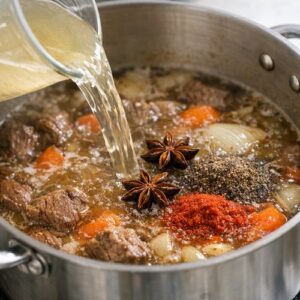
Pour in the 8 cups of water or beef broth and the 2 cups of coconut water. Add the 2 star anise pods, 1 teaspoon ground black pepper, 1 teaspoon chili powder, 1 teaspoon ground annatto (if using), and 1 tablespoon paprika. Stir thoroughly until everything is incorporated.
Bring this mixture to a boil over high heat—you want to see rolling, active boiling for about 2 minutes. This serves two purposes: it kills any bacteria on the beef and it helps the ingredients begin to meld. Then reduce the heat to medium-low, place the lid on your pot, and let it simmer.
This is where patience becomes the secret ingredient. Set a timer for 1 hour. Resist the urge to peek constantly; each time you open the pot, you release steam and extend cooking time.
Step 7: Add the Vegetables and Finishing Seasonings (Completing the Dish)
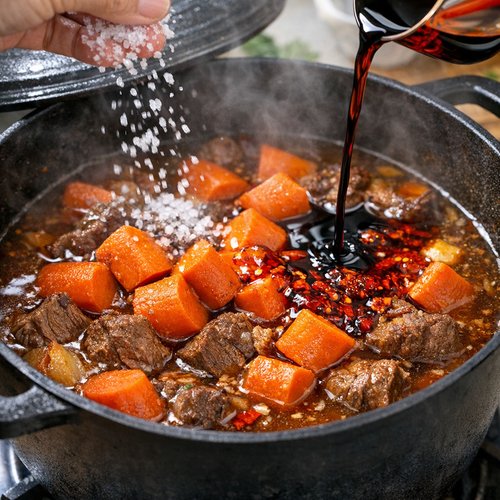
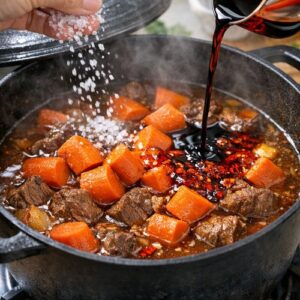
After exactly 1 hour, carefully remove the lid and add the carrot chunks, 1 teaspoon sea salt, 3 tablespoons soy sauce, and 3 tablespoons chili oil. Stir gently to distribute. The carrots will cook in the remaining 40 minutes, becoming tender but not mushy.
Return the lid and continue simmering for 40 more minutes. During this time, the beef will have transformed from firm to impossibly tender, breaking apart with just a spoon. The broth will have taken on a deeper color and richer flavor from all the dissolved collagen and aromatics.
Taste the stew. If it needs more depth, add a bit more fish sauce (½ teaspoon at a time). If it needs more heat, add more chili oil. This is your stew—make it taste like what you love.
Step 8: The Final Presentation (Theater and Flavor)
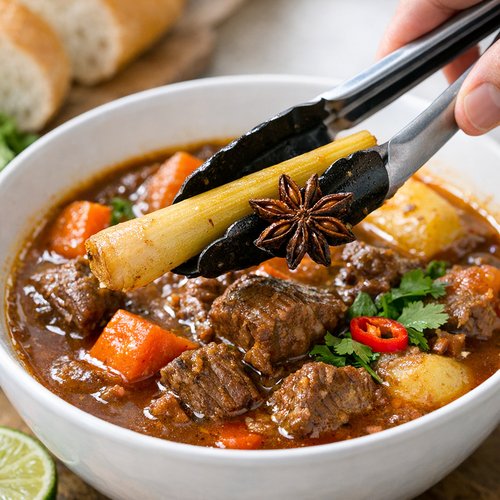
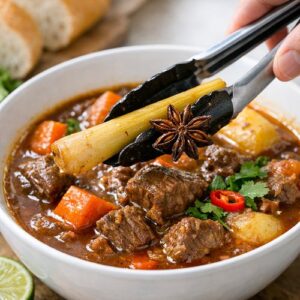
Using tongs or a slotted spoon, fish out the large lemongrass stalks and any star anise pods you can locate. These aren’t meant to be eaten, and finding a whole star anise pod with your teeth isn’t a pleasant surprise.
Cook your noodles separately according to package directions. For wide rice noodles, usually 4-5 minutes in boiling water. For egg noodles, typically 7-8 minutes. Drain them well and divide among your serving bowls.
Ladle the hot stew generously over the noodles, making sure each bowl gets plenty of beef, carrots, and broth. Finish each bowl with a small handful of fresh cilantro, a sprinkle of thinly sliced Thai basil, and a modest pile of raw onion slices. Set a lime wedge on the rim of the bowl.
Serve immediately. The fresh herbs will wilt slightly from the heat, releasing their aromatics directly into the steam rising from the bowl. This final touch is what separates casual stew from restaurant-quality Bo Kho.
The Secret Sauce: Understanding the Spice Blend
Let’s talk about the thing that makes Bo Kho taste distinctively Vietnamese rather than just “beef stew with Asian ingredients.” The secret is the interplay between four key flavor elements: the five-spice powder, additional star anise, the aromatic lemongrass, and the bright, acidic finish from lime and fresh herbs.
Five-spice powder—that combination of star anise, cloves, cinnamon, Sichuan pepper, and fennel—creates warmth and sweetness without heat. It’s the backbone of Vietnamese cooking. But here’s where restaurants elevate it: they add extra star anise pods because that licorice-like flavor is the signature note that makes someone taste your stew and say, “This is exactly what I remember.”
The other critical component is balance. You have sweetness from the five-spice and brown sugar. You have savory depth from fish sauce, beef, and tomato paste. You have warmth from the spices. You have brightness from the coconut water. And you have gentle heat from chili powder and chili oil.
The trick is that you don’t taste all of these as separate flavors—you taste them as a unified whole. This only happens if you add them at the right time and cook them long enough for them to integrate. That’s why the initial 1-hour simmer is non-negotiable, and why adding the soy sauce and chili oil later, with the vegetables, distributes them evenly without letting any single flavor dominate.
The lemongrass deserves its own paragraph. Fresh lemongrass has a bright, citrusy, slightly floral quality that you cannot replicate with bottled lemongrass juice or dried lemongrass. If you can’t find fresh lemongrass, it’s better to simply omit it than to use a substitute. That said, most Asian markets carry it year-round, and increasingly, regular supermarkets do too. Look for stalks that are pale green and fragrant, not brown and papery.
Expert’s Nutritional Insight: Why This Stew Is More Balanced Than It Tastes
As a registered dietitian, I want to address something that surprises people: Bo Kho is actually a remarkably well-balanced meal from a nutritional perspective. The beef provides complete protein and bioavailable iron. The carrots offer beta-carotene and fiber. The spices—particularly turmeric in the five-spice blend—have documented anti-inflammatory properties supported by peer-reviewed research.
The fish sauce and soy sauce add sodium, yes, but they also add umami compounds that satisfy your palate with smaller portions. People often eat less Bo Kho and feel more satisfied than with heavier, creamier stews because that savory depth triggers satiation hormones.
The coconut water contains electrolytes and is lower in fat than coconut milk, making this a genuinely nourishing dish rather than an indulgent one. And the fresh herbs at the end—cilantro, Thai basil, raw onion—add vitamins, minerals, and phytonutrients that you lose if you cook everything into submission.
This is soul food in the truest sense: it nourishes your body while feeding your spirit.
How to Make It Even Better Than the Original
- Use beef bone broth instead of water – Restaurants often use stock cubes or reduced sodium broth, but homemade bone broth adds collagen and depth that commercial options can’t match. If you have time to make it, the difference is remarkable
- Customize your heat level – Restaurants serve one spice level and hope it suits you. At home, you control it completely. Add chili oil to your own bowl after serving, or reduce it for children and guests with lower heat tolerance
- Include fresh ginger slices with the garnish – A thin slice of raw ginger at the end adds brightness and aids digestion, something cooked ginger in the broth can’t match
- Use freshly ground star anise – If you can find whole star anise and grind them yourself, the flavor is noticeably fresher and more fragrant than pre-ground versions that have been sitting in jars
- Add a tablespoon of honey instead of brown sugar – The complexity of honey’s flavor, especially raw honey, adds a subtle sophistication that brown sugar can’t achieve
Cost Comparison: Home Versus Restaurant
Let me give you actual numbers based on current market prices in my area (Worcester, Massachusetts, where I work with clients on budgets constantly).
Restaurant Bo Kho: $14-18 per bowl, usually around 12 ounces of finished product. A satisfying meal for most people costs about $16.
Homemade Bo Kho: This recipe makes 6-8 servings depending on how generous your ladle is. Ingredient cost breakdown:
- Beef (2.5 pounds at ~$6.50/lb): $16.25
- Fresh vegetables and aromatics: $8.50
- Coconut water, broth, pantry items: $6.75
- Total: $31.50 for 8 servings = $3.94 per serving
You’re looking at approximately 75% savings per bowl. If you made this once a week for a year, you’d save roughly $600 compared to restaurant pricing. More importantly, you’d know exactly what’s in your food, control sodium levels, and eat fresher ingredients.
Can I Store Bo Kho Vietnamese Beef Stew Recipe?
Refrigerator: Store covered in an airtight container for up to 4 days. The flavors actually deepen as the stew sits, making it taste better on day 2 or 3 than the day you made it. I often intentionally make this on Sunday for a full week of lunches.
Freezer: This freezes beautifully for up to 3 months. I recommend freezing it in the pot it’s cooked in with plastic wrap and a lid, or in freezer bags if you want to save space. Thaw overnight in the refrigerator, then reheat gently on the stove with a splash of broth to restore the right consistency.
Reheating: Warm gently over medium heat on the stovetop, covered, for 10-15 minutes until heated through. You can also reheat in the microwave (microwave-safe container, covered with a damp paper towel, 4-5 minutes), though stovetop reheating preserves texture better.
Important tip: Cook your noodles fresh each time you eat it. Noodles become mushy if stored in the broth, so keep them separate and assemble each bowl as you serve.
Nutrition Information
Per serving (based on 8 servings, including noodles but not garnishes or lime):
- Calories: 480
- Protein: 38g
- Total Fat: 16g (Saturated: 5g)
- Carbohydrates: 42g (Fiber: 6g, Sugar: 8g)
- Sodium: 820mg
- Iron: 4.2mg (23% of daily value)
- Vitamin A: 180% of daily value
By USDA standards, this is a protein-rich, nutrient-dense meal that provides approximately one-third of your daily caloric needs with substantial micronutrient density. The iron content is particularly significant—the heme iron from beef is far more bioavailable than plant-based iron sources, and the vitamin C in the lime garnish enhances iron absorption further.
Compared to typical restaurant Bo Kho, which often contains 30-40% more sodium and twice the fat content (due to use of coconut milk and added oils), this homemade version is notably lighter while tasting equally satisfying.
Make-Ahead Guide: Prep Like a Restaurant
The beauty of this recipe is that it accommodates actual life. Here’s how to make it work with your schedule:
The Day Before: Do all your prep work. Peel and cut carrots, store in cold water in the refrigerator. Marinate the beef completely, store in a sealed container. Mince all your garlic and ginger. This takes about 30 minutes and eliminates the rush the next day.
The Morning Of: Cut your lemongrass and slice your onion. These can sit, loosely covered, for hours without deteriorating. Get your herbs prepped—wash and roughly chop cilantro, slice basil, slice your raw onion. Keep these in separate containers on the counter, covered with damp paper towels.
Two Hours Before Serving: Start your stew. From the time you turn on the heat to the moment it’s ready to serve is approximately 2 hours and 15 minutes, almost all of which is hands-off simmering. This means you can start it mid-afternoon and have dinner ready by evening, or start early morning and have it ready for lunch.
Smart Make-Ahead Strategy: Make a double batch on Sunday, eat one portion that night or Monday, and freeze the second batch in individual portions. You now have restaurant-quality lunch for four days without any weekday cooking. This is what I recommend to all my clients who are trying to maintain healthy eating while managing busy schedules.
Common Mistakes to Avoid
Mistake 1: Using Coconut Milk Instead of Coconut Water – This is the single most common error I see in home versions. Coconut milk is thick, rich, and cloying. It overwhelms the beef and creates a heavy, almost dessert-like stew. Coconut water is the clear liquid from young coconuts, much lighter and more appropriate. If you absolutely can’t find coconut water, use half the amount of coconut milk diluted with an equal amount of chicken broth.
Mistake 2: Skipping the Marinating Step – I understand the temptation to jump straight to cooking. Don’t. Those 30 minutes matter. The acid in the fish sauce and the enzymes in the ginger are actively tenderizing the meat. Skip this, and you’ll have acceptable stew instead of transcendent stew.
Mistake 3: Not Browning the Beef Properly – If your pot isn’t hot enough or if you crowd the pan with too much beef at once, you’ll steam instead of brown. Steamed beef tastes boiled and gray. Take your time here. High heat, wait for browning before stirring, and work in batches if needed. The 10 minutes you invest here determines the flavor of your entire dish.
Mistake 4: Opening the Lid Too Frequently – Every time you lift the lid during the simmer, you release steam and interrupt the cooking process. Set a timer and trust it. The only exception is if you suspect something is wrong (smelling burnt, sizzling too aggressively), but in 30 years of cooking and working with clients, I’ve never had this recipe burn or overcook if you follow the temperatures and times.
Seasonal Variations: Adapting Bo Kho Throughout the Year
Spring: Add fresh peas in the last 10 minutes of cooking (no more than that or they’ll turn to mush). Include fresh mint alongside the cilantro for brightness. The mint-and-pea combination feels light and celebratory as the weather warms.
Summer: This might sound counterintuitive, but Bo Kho is actually spectacular served at room temperature or slightly chilled on hot days, almost like a Vietnamese poke bowl situation. Cook it the day before, chill it completely, and serve over cold noodles with extra lime and fresh herbs. The flavors become even more vivid.
Fall: Add a stick of cinnamon to the pot along with the star anise for enhanced warmth. Include one small dried chili pepper for subtle smoky notes. Root vegetables become more available and affordable—consider adding parsnips alongside the carrots for earthy sweetness.
Winter: This is when Bo Kho truly shines. Add an extra tablespoon of tomato paste for richness. Include a cinnamon stick and star anise (as in fall). Serve in wide bowls with plenty of broth and the warmth radiating up into your face. Some of my best winter memories involve sitting in a quiet kitchen at 6 PM, snow outside the windows, this stew warming me from the inside out.
What to Order/Make Alongside for the Full Experience
In Vietnamese restaurants, Bo Kho is rarely eaten alone. It’s part of an experience, a full table of complementary flavors and textures. Here’s how to recreate that at home:
- Fresh spring rolls – The cool, fresh, crunchy counterpoint to the warm, rich stew. Make them with rice paper, fresh herbs, shrimp or tofu, and serve with peanut dipping sauce
- Crispy banh mi elements – A Banh Mi Burger Recipe adapted to sandwich form gives you the bread-and-pickled-vegetables element that Vietnamese meals rely on for palate cleansing
- Pickled vegetables – Quick-pickled daikon and carrots add acidity and crunch that balance the stew’s richness. Make these while your stew simmers: julienne daikon and carrots, pack into a jar, pour over equal parts rice vinegar and water with a tablespoon of sugar and salt, let sit for 30 minutes minimum
- Steamed jasmine rice as an alternative to noodles – Some people prefer rice to noodles; having both options means everyone finds their preference
- A complementary beverage – An Iced Golden Milk Turmeric Latte Recipe served after the meal aids digestion and provides a beautiful visual and flavor transition to dessert, extending the experience mindfully
If you’re planning a larger gathering, serve this as the centerpiece with at least three of these sides. It creates the sense of abundance and celebration that makes Vietnamese meals so memorable.

Bo Kho Vietnamese Beef Stew Recipe
Ingredients
Method
- In a large bowl, combine your beef chunks with 2 cloves of minced garlic, the fresh ginger, fish sauce, five-spice powder, and brown sugar. This marinade doesn't just add flavor—it begins breaking down the meat's proteins, creating a more tender final result after hours of slow cooking. Make sure every piece of beef gets coated evenly; I use my hands for this, making sure the marinade reaches into the nooks and crevices. Let this sit at room temperature for 30 minutes. Don't skip this step, and don't marinate for longer than an hour or the fish sauce will make the exterior mushy. This is the sweet spot that gives you maximum benefit without degradation.
- Heat 3 tablespoons of neutral oil in a large Dutch oven or heavy-bottomed pot over medium-high heat. Once it shimmers—and this is important, wait for the shimmers, don't start cooking when it's just warm—add the 3-inch lemongrass stalks. Let them sit in the hot oil for exactly one minute. You'll hear them crackle slightly, and the whole kitchen will smell like a Vietnamese market in the best way possible. Now add the minced lemongrass and the remaining 6 cloves of garlic. Cook for 2 minutes, stirring frequently, until the raw garlic smell transforms into something sweet and mellow. This technique, called blooming spices and aromatics, releases their essential oils and distributes flavor more evenly throughout the finished dish. It's the difference between flavors you taste and flavors you feel.
- Add the sliced onions to the pot and cook, stirring occasionally, for 4-5 minutes until they become translucent and begin to soften. You're not looking for caramelization here—that comes later. You want them to release their natural juices and become tender enough to break down further during the long simmer. If the bottom of the pot starts to stick, that's actually good—those browned bits are flavor waiting to be incorporated. You'll deglaze later.

- Increase heat to high and add all of your marinated beef to the pot. Don't stir it immediately—let each piece sit on the hot surface for 2-3 minutes to develop a brown crust. This isn't about cooking it through; it's about creating flavor through browning. Once that side is deeply colored, stir and brown the other sides, working in batches if needed so you're not overcrowding the pan. This step takes about 8-10 minutes total. You're looking for rich brown color on most surfaces, not gray, which would indicate steaming rather than browning.
- Add 4 tablespoons of tomato paste directly to the beef and aromatics. Stir well, making sure it coats the beef and vegetables. Cook uncovered for 5 minutes, stirring occasionally. Tomato paste contains glutamates, which amplify umami—that savory satisfaction that makes you want another spoonful. Cooking it in the hot pot concentrates these compounds further.
- Pour in the 8 cups of water or beef broth and the 2 cups of coconut water. Add the 2 star anise pods, 1 teaspoon ground black pepper, 1 teaspoon chili powder, 1 teaspoon ground annatto (if using), and 1 tablespoon paprika. Stir thoroughly until everything is incorporated. Bring this mixture to a boil over high heat—you want to see rolling, active boiling for about 2 minutes. This serves two purposes: it kills any bacteria on the beef and it helps the ingredients begin to meld. Then reduce the heat to medium-low, place the lid on your pot, and let it simmer. This is where patience becomes the secret ingredient. Set a timer for 1 hour. Resist the urge to peek constantly; each time you open the pot, you release steam and extend cooking time.
- After exactly 1 hour, carefully remove the lid and add the carrot chunks, 1 teaspoon sea salt, 3 tablespoons soy sauce, and 3 tablespoons chili oil. Stir gently to distribute. The carrots will cook in the remaining 40 minutes, becoming tender but not mushy. Return the lid and continue simmering for 40 more minutes. During this time, the beef will have transformed from firm to impossibly tender, breaking apart with just a spoon. The broth will have taken on a deeper color and richer flavor from all the dissolved collagen and aromatics. Taste the stew. If it needs more depth, add a bit more fish sauce (½ teaspoon at a time). If it needs more heat, add more chili oil. This is your stew—make it taste like what you love.
- Using tongs or a slotted spoon, fish out the large lemongrass stalks and any star anise pods you can locate. These aren't meant to be eaten, and finding a whole star anise pod with your teeth isn't a pleasant surprise. Cook your noodles separately according to package directions. For wide rice noodles, usually 4-5 minutes in boiling water. For egg noodles, typically 7-8 minutes. Drain them well and divide among your serving bowls. Ladle the hot stew generously over the noodles, making sure each bowl gets plenty of beef, carrots, and broth. Finish each bowl with a small handful of fresh cilantro, a sprinkle of thinly sliced Thai basil, and a modest pile of raw onion slices. Set a lime wedge on the rim of the bowl. Serve immediately. The fresh herbs will wilt slightly from the heat, releasing their aromatics directly into the steam rising from the bowl. This final touch is what separates casual stew from restaurant-quality Bo Kho.
FAQs
Can I Use a Slow Cooker or Instant Pot Instead of a Stovetop?
Yes, with adjustments. For slow cooker: Skip the browning step (though you’ll lose some flavor—I don’t recommend this), add all ingredients to the slow cooker, cook on low for 8 hours or high for 5 hours. For Instant Pot: Do the browning step using the sauté function, then add liquids and cook high pressure for 45 minutes, natural release for 15 minutes. The stovetop method gives the deepest flavor, but these alternatives work when time is limited.
What If I Can’t Find Fish Sauce?
This is the one ingredient I’ll say is somewhat essential, but if your area doesn’t have it, you can substitute soy sauce (use 6 tablespoons instead of 5 tablespoons fish sauce) or miso paste (1 tablespoon in addition to the soy sauce). The flavor won’t be identical, but it will be delicious and deeply savory. Many online retailers ship fish sauce, and it’s worth the effort if Vietnamese cooking becomes a passion.
Can I Make This Vegetarian or Vegan?
You can, but it becomes a different dish. Replace beef with heartier vegetables like cubed potatoes, mushrooms, and extra carrots. Use vegetable broth instead of beef broth. The spice profile remains the same. Add a tablespoon of soy sauce and a tablesp