Chinese BBQ Boneless Ribs Recipe
This post contains affiliate links. As an Amazon Associate I earn from qualifying purchases.
There’s one ingredient in this Chinese BBQ boneless ribs recipe that does all the heavy lifting. Once you understand it, you’ll cook with it everywhere. That ingredient is pork loin—a lean, forgiving cut that becomes impossibly tender when you give it time and the right marinade. I discovered this years ago while watching my grandmother prepare what she called “the poor man’s ribs,” thin strips of pork that she’d season overnight and bake until they gleamed like lacquered treasure. She taught me that patience isn’t just about waiting; it’s about transformation. When you marry quality pork with a balanced Asian-inspired glaze, you’re not just cooking dinner—you’re creating something that tastes like it took hours, even though the technique is beautifully simple. This recipe honors that philosophy while weaving in nutritional balance so you can enjoy it guilt-free, again and again.
The One Ingredient That Makes This Chinese BBQ Boneless Ribs Unforgettable
Boneless pork loin is the unsung hero of weeknight elegance. When I first started my practice as a registered dietitian, I was struck by how many people assumed they had to choose between convenience and nutrition—between grabbing takeout and spending hours in the kitchen. Pork loin changed that equation for me. It’s lean enough to fit any health-conscious lifestyle, yet it’s forgiving enough that even a rushed home cook can create something restaurant-worthy.
I remember the exact moment I understood pork loin’s magic. I was visiting my grandmother in her small Worcester kitchen on a rainy October afternoon. She pulled out a package of boneless ribs—what we’d now call pork loin—and sliced them with the kind of methodical precision that came from fifty years of cooking the same dishes. She didn’t add fancy ingredients or complicated techniques. She just sliced thin, marinated overnight, and let the oven do the work. When those ribs emerged, burnished and glistening, my grandfather called it “the best thing she’d ever made,” and I believed him. That moment shaped how I approach cooking today: respect the ingredient, give it time, and let simplicity be your sophistication.
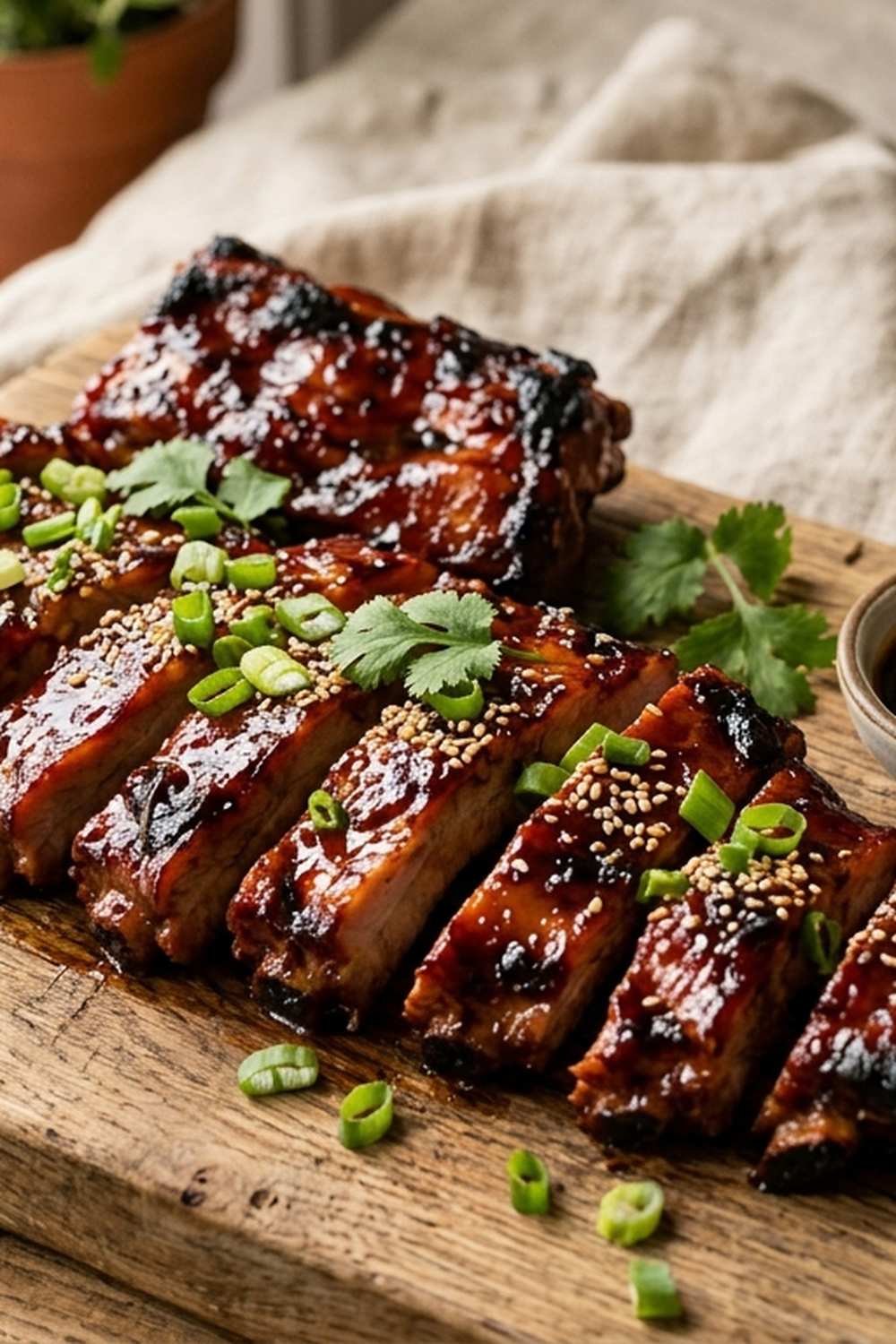
Everything You Need to Know About Pork Loin
Pork loin is a lean cut that comes from the back of the pig, running along the spine. It’s versatile, affordable, and when sliced thin and marinated, it becomes the perfect vehicle for bold Asian flavors. The key to understanding pork loin is recognizing its texture—it’s naturally tender but can dry out if overcooked, which is why this low-and-slow approach, combined with a marinade that locks in moisture, works so beautifully.
When shopping for pork loin, you’ll encounter two main options. Center-cut loin is the most tender and uniform, ideal for slicing into those thin strips we want here. Rib-end loin, closer to the shoulder, has slightly more marbling and is more forgiving if you accidentally overcook it. For this recipe, I always reach for center-cut because it slices cleanly and cooks evenly.
- Center-Cut Pork Loin – the leanest, most tender option with consistent grain; perfect for thin slicing and quick marinades
- Rib-End Pork Loin – slightly more marbled with a bit more character; ideal if you’re concerned about drying out
Look for meat that’s pale pink with minimal fat on the surface. The color should be uniform—avoid anything with dark spots or discoloration. Ask your butcher to remove the silver skin (the thin connective tissue), which will make slicing easier. If you’re buying from the grocery store case, check the sell-by date and ensure the package is cold and intact when you leave the store.
The Nutritional Power of Pork Loin
Here’s where pork loin becomes even more impressive. According to USDA data, a 3-ounce cooked serving of lean pork loin contains approximately 180 calories, 26 grams of protein, and less than 8 grams of fat. What makes this remarkable is the quality of that protein—it’s a complete protein containing all nine essential amino acids, making it ideal for muscle maintenance and recovery. Beyond protein, pork loin provides exceptional B-vitamin content, particularly thiamine (B1), niacin (B3), and B6, which are essential for energy metabolism and nervous system health.
The mineral profile is equally impressive. Pork loin delivers significant amounts of selenium, a powerful antioxidant that many people don’t get enough of, plus phosphorus for bone health and zinc for immune function. For someone managing their weight while maintaining muscle mass—a challenge many of my clients face—pork loin is genuinely a nutritional powerhouse. The key is preparation: marinades add minimal calories while boosting flavor exponentially, and this low-temperature baking method preserves the nutrient density far better than high-heat cooking would.
The Ingredients – Supporting Cast for the Star
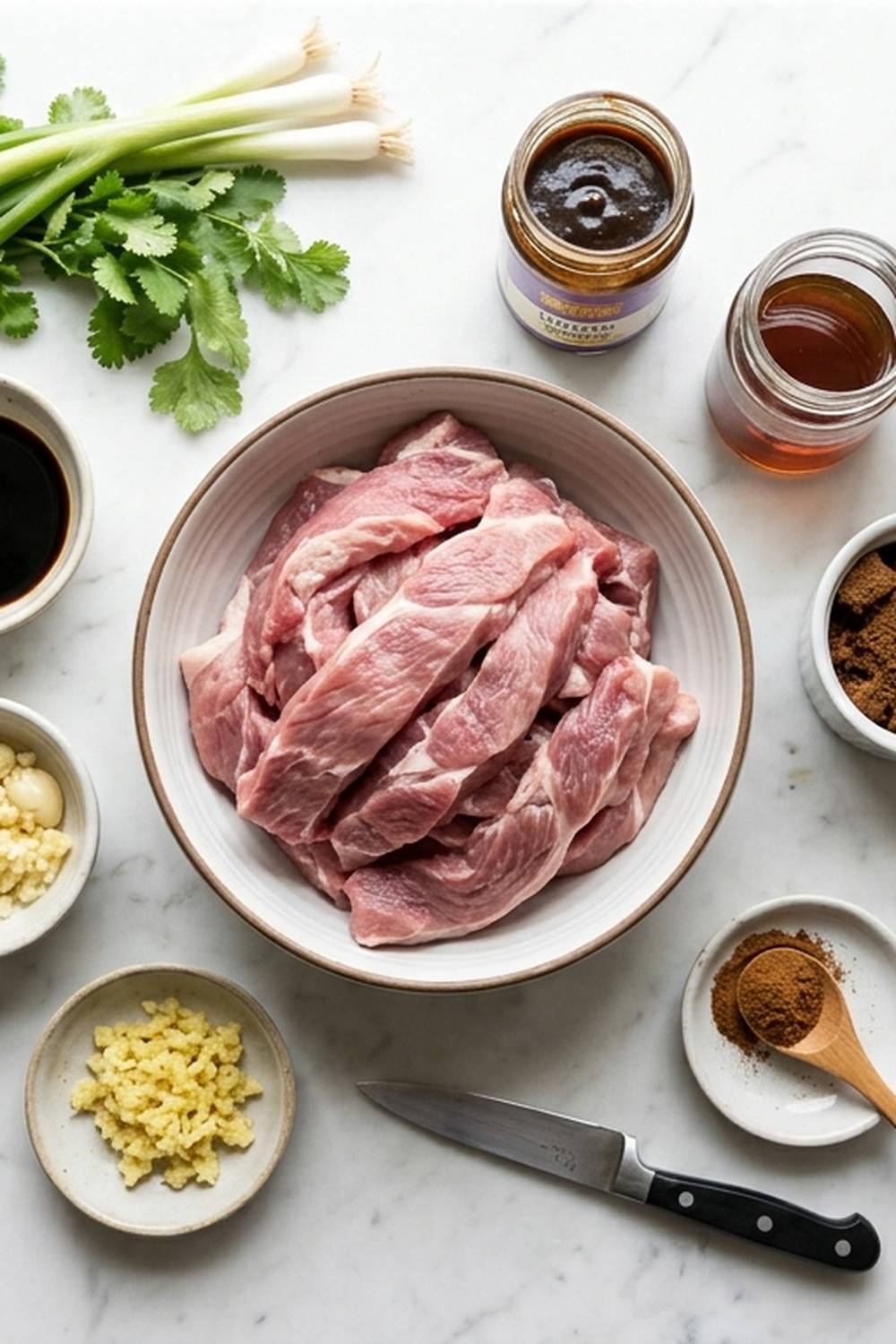
Every ingredient in this recipe exists to honor and enhance the pork loin’s delicate, slightly sweet flavor while building depth and complexity. The supporting cast works together like an orchestra, each player crucial to the final symphony.
For the Marinade
- ¼ cup dry red wine (brightens the glaze and adds subtle tannin complexity)
- ⅓ cup hoisin sauce (adds deep, fermented sweetness and body)
- 1 tablespoon natural cane sugar (balances saltiness and caramelizes during cooking)
- ½ tablespoon minced fresh garlic (provides sharp, pungent notes that round out the profile)
- ⅓ cup soy sauce (the umami foundation that penetrates the meat)
- ½ teaspoon Chinese Five Spice (the warm spice notes—star anise, clove, cinnamon—that make this distinctly Asian)
- 1.5 pounds boneless pork loin (sliced thin, about 3 inches long)
- 2 drops natural red food coloring (entirely optional, adds visual appeal that mimics restaurant presentations)
I’ve deliberately kept the ingredient list lean because that’s how my grandmother taught me to cook. She believed that five great ingredients beat fifteen good ones every time. Soy sauce is your umami anchor, hoisin brings fermented depth, and the Five Spice creates that unmistakable warmth you expect from Chinese cuisine. The red wine seems unconventional, but it’s what elevates this from simple to sophisticated—it adds brightness that prevents the marinade from becoming one-dimensional.
How to Make Chinese BBQ Boneless Ribs Letting the Hero Ingredient Shine
The technique here is deliberately simple because the magic happens during the marinade period, not during cooking. This is low-and-slow at its finest, but “slow” happens in your refrigerator, not your oven. The result is pork that’s been seasoned throughout, not just on the surface.
Step 1: Prepare Your Pork Loin with Intention
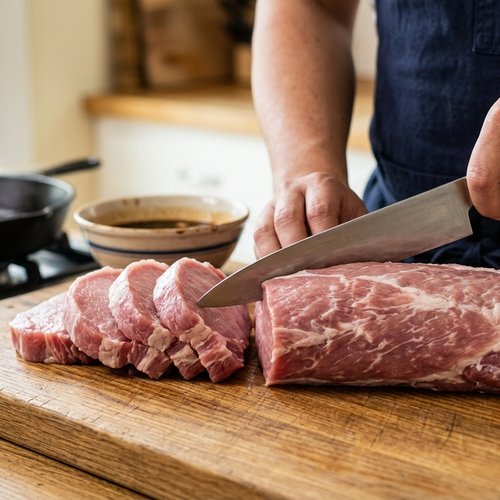
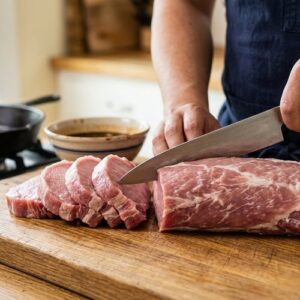
Remove your pork loin from the refrigerator and place it on a clean cutting board. Using a sharp chef’s knife, slice the meat against the grain into thin strips approximately 3 inches long and about ¼-inch thick. The key here is that you’re slicing against the grain—this breaks down the muscle fibers and ensures tenderness. If you slice with the grain, you’ll end up with chewy ribs no matter what else you do. Take your time with this step. My grandmother used to say that a knife can be your best friend or your worst enemy, and she was talking about this exact moment. A dull knife will crush the meat; a sharp one will glide through it, preserving the cell structure and ensuring even cooking later.
Step 2: Build Your Flavor Foundation
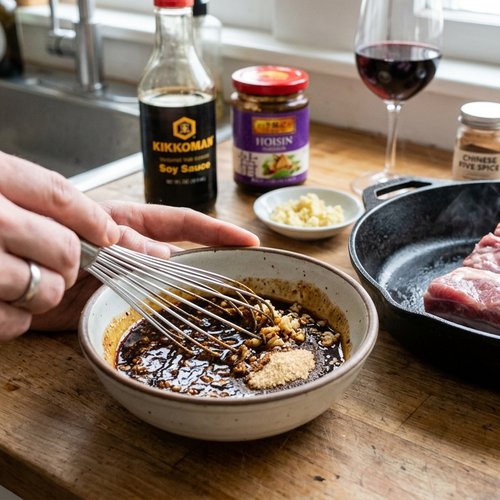
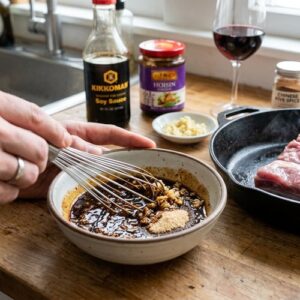
In a small mixing bowl, combine the soy sauce, hoisin sauce, dry red wine, natural cane sugar, minced garlic, and Chinese Five Spice. Whisk these ingredients together with intention—you’re not just mixing, you’re emulsifying the oil from the hoisin into the salty liquid of the soy sauce, creating a glaze that will cling to the pork rather than just pool at the bottom of a bag. Whisk until the sugar dissolves completely and the mixture is uniform in color and texture. This usually takes about thirty seconds of vigorous whisking. If you’re using the red food coloring, add it now—just two drops create a beautiful mahogany hue without any artificial taste.
Step 3: The Overnight Transformation (Or 4-Hour Shortcut)
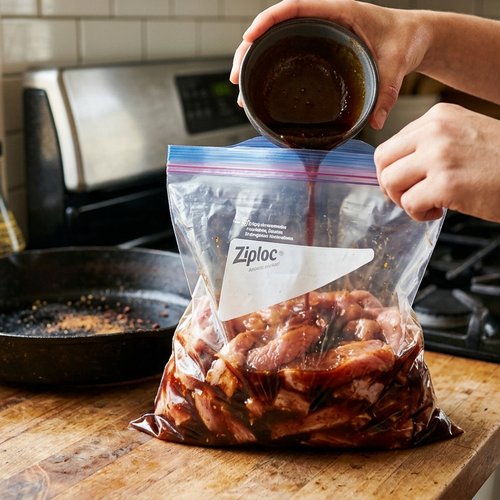
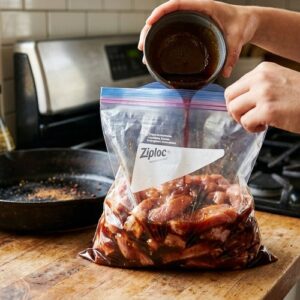
Place your sliced pork loin into a large sealable plastic bag or a glass container if you prefer to avoid plastic. Pour the marinade over the meat, making sure every piece is submerged or well-coated. If you’re using a bag, press out as much air as possible before sealing—this ensures the marinade stays in contact with the meat. If you’re using a container, stir the mixture so each slice gets coated. Now comes the hardest part: patience. Refrigerate this overnight, or for a minimum of four hours. I know overnight sounds long, but here’s what’s happening during that time: the salt in the soy sauce is breaking down the muscle proteins, allowing the marinade to penetrate deep into the meat. After just four hours, you’ll have decent results. After twelve hours, you’ll have something magical.
Step 4: Prepare Your Oven and Baking Surface
When you’re ready to cook, preheat your oven to 350°F. This is a deliberate, moderate temperature—hot enough to cook through and create a gentle caramelization, but not so hot that the exterior burns before the interior cooks. Line a large baking sheet with aluminum foil (for easy cleanup, which matters more than you’d think), and place an oven-safe baking rack on top of the foil. The rack is crucial here because it allows heat to circulate underneath the pork, ensuring even cooking and preventing the bottom from steaming in its own juices.
Step 5: Arrange and Brush with Precision
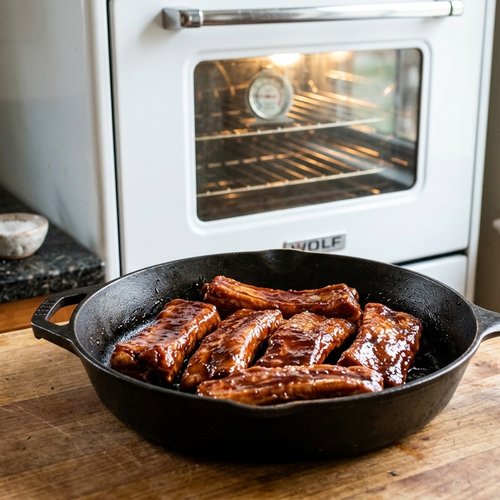
Remove the pork from the refrigerator about ten minutes before cooking—this allows the meat to come closer to room temperature, which ensures more even cooking throughout. Pour the marinade into a small bowl, reserving it for basting. Arrange the pork slices on the baking rack in a single layer, leaving a little space between each piece so heat can circulate. Don’t crowd the pan—if pieces overlap, they’ll steam instead of roast. If necessary, use two baking sheets.
Step 6: The Low-and-Slow Bake with Basting
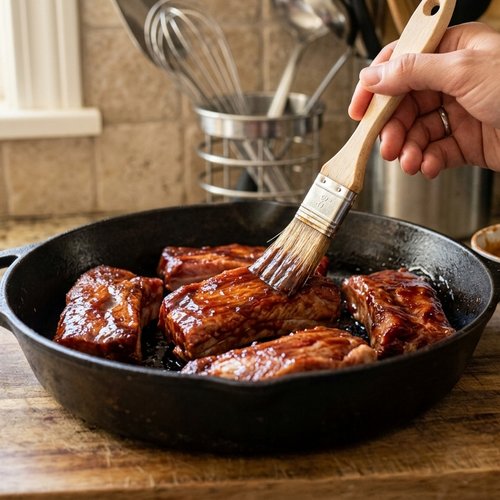
Place the baking sheet in the preheated 350°F oven. Set a timer for fifteen minutes. When it goes off, remove the sheet and, using a pastry brush or the back of a spoon, brush each piece of pork with the reserved marinade. Coat generously but don’t soak—you want a glossy layer, not a puddle. Return to the oven for another fifteen minutes. Repeat this basting process two more times, for a total cooking time of 40 to 45 minutes. Each time you baste, you’re building layers of flavor and creating that signature glossy lacquered finish my grandmother’s ribs always had.
Step 7: The Final Crisp
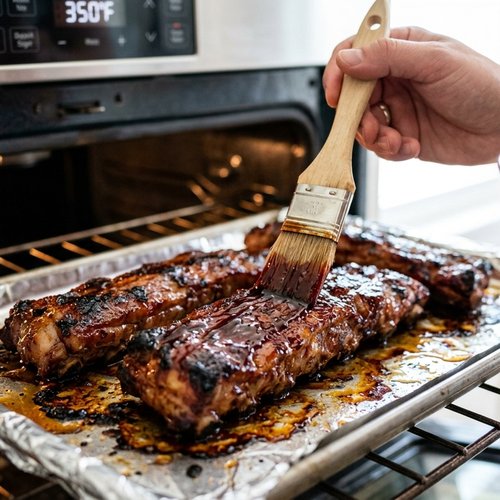
After 40 to 45 minutes, the pork should be cooked through—it will be pale and beginning to caramelize at the edges. For that final touch of restaurant-quality crust, turn your oven to broil and place the sheet on the rack closest to the heat source. Watch carefully—this is just 1 to 2 minutes, no more. You’re aiming for slightly darkened, crispy edges, not charred ribs. Broilers vary dramatically in intensity, so stay close and keep your eyes on them. This final step makes all the difference, transforming the texture from merely tender to genuinely crave-worthy.
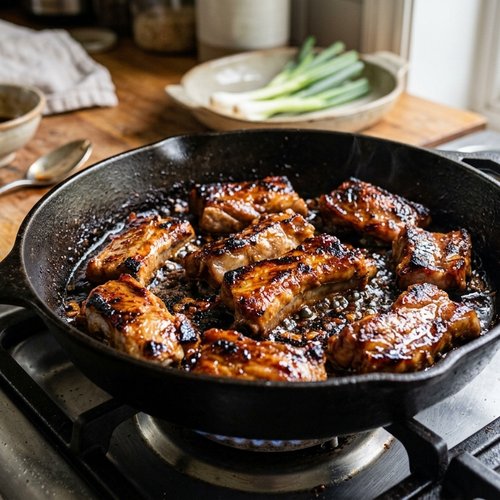
Step 8: Rest and Serve
Remove the sheet from the oven and let the pork rest for three to five minutes. This allows the juices to redistribute throughout the meat, ensuring that when you bite into a piece, it stays moist rather than releasing all its liquid onto your plate. Serve immediately over steamed white rice and alongside steamed vegetables—bok choy, broccoli, or snow peas pair beautifully. The ribs are at their best enjoyed fresh from the oven, when they still have that slight warmth and the marinade has that subtle sticky-glossy quality.
Expert’s Nutritional Tip
As a registered dietitian, I want to share something that surprised even me when I calculated the full nutritional profile: this entire recipe, made according to my instructions and serving four people, contains approximately 260 calories per serving with 38 grams of protein and just 6 grams of fat. That’s a macronutrient ratio that actually supports stable energy and muscle maintenance—exactly what I recommend to clients who are tired of feeling guilty about enjoying real food. The soy sauce and hoisin do add sodium (about 480mg per serving), so if you’re managing blood pressure, you might reduce the soy to a quarter cup. But here’s the beautiful part: the marinade is so flavorful that you won’t miss the salt. My grandmother never counted calories, but she understood intuitively that when you respect your ingredient and use technique instead of excess fat, nutrition and satisfaction align perfectly.
Make-Ahead and Meal Prep Guide
One of the reasons I love this recipe is how beautifully it works with actual life. You can prepare the marinade and slice the pork the night before (store them separately in airtight containers), then combine them in the morning before work. When you come home, you simply preheat the oven and bake. That’s genuinely just fifteen minutes of hands-on time, which is why I’ve recommended this to busy clients for years.
You can also fully cook these ribs a day ahead and reheat them gently in a 300°F oven for about eight minutes—they’ll stay moist because of the marinade’s richness. I don’t recommend freezing the cooked ribs because the texture changes slightly, becoming a bit stringy when thawed. However, you can freeze the marinated raw pork for up to three months. When you’re ready to cook, thaw it in the refrigerator (not at room temperature), and you’re good to go. Some people claim that frozen-then-thawed pork actually marinates more effectively because the ice crystals break down cell walls, but I think that’s reaching. What I do know is that this recipe is flexible enough to work with your real schedule, not some imaginary perfect day.
Common Mistakes to Avoid
After years of teaching people to cook, I’ve seen the same pitfalls repeat themselves. Let me save you the frustration. First mistake: slicing with the grain instead of against it. This creates chewy rather than tender ribs. Take thirty seconds to identify the grain direction—the muscle fibers should run lengthwise down the loin, and you want to slice perpendicular to those fibers.
Second mistake: skipping the marinade period because you’re in a hurry. I understand the impulse, but four hours is genuinely the minimum. Two hours will give you okay flavor; four hours gives you something worth eating. Overnight is when magic happens. Plan accordingly.
Third mistake: crowding the baking sheet. When pieces overlap, steam gets trapped and you end up with boiled pork instead of roasted pork. Use two sheets if you need to. Your future self will thank you.
Fourth mistake: forgetting to remove the silver skin before slicing, or slicing through it during prep. It’s that thin, grayish membrane on the outside. It won’t become tender no matter how long you cook it. Either ask your butcher to remove it or spend thirty seconds peeling it off yourself with a sharp knife. Small detail, enormous impact on eating experience.
Seasonal Variations to Keep This Fresh Year-Round
My grandmother cooked the same dishes in winter and summer, but she understood that subtle shifts kept the table interesting. This recipe adapts beautifully to seasons. In spring, add a tablespoon of fresh ginger (minced fine) to the marinade and serve over spring vegetables like asparagus and snap peas. Summer calls for a tablespoon of rice vinegar in place of the red wine—it brightens everything and pairs beautifully with cucumber salad. In fall, add a teaspoon of sesame oil to the marinade and serve with roasted root vegetables; the nuttiness complements the spices perfectly. Winter is when I make it traditionally, but I add a tablespoon of oyster sauce for deeper umami and serve with steamed winter squash. These aren’t radical changes—they’re the subtle shifts that keep you excited about cooking the same recipe month after month.
5 Other Ways to Use Pork Loin
- Thin-Sliced Pork Stir-Fry – cut even thinner than this recipe requires and cook in a screaming-hot wok for three to four minutes with vegetables and sauce; it’s weeknight elegance
- Pork Loin Roast – cook the whole loin at 425°F for about 20 to 25 minutes (until internal temperature reaches 145°F) and slice at the table for Sunday dinner
- Ground Pork – ask your butcher to grind pork loin for you, creating the leanest possible ground pork for tacos, pasta sauce, or lettuce wraps
- Pork Schnitzel – pound thin slices to ¼-inch thickness, bread, and pan-fry until golden; it’s how my grandmother made it feel fancy on regular Tuesdays
- Cold Pork Salads – cook these ribs, chill them completely, and shred them into salads with Asian vinaigrettes for nutritious lunch bowls that actually taste good
How to Buy and Store Pork Loin
Pork loin is available year-round and is one of the most reasonably priced quality proteins available. At my local Worcester market, boneless pork loin typically costs between $2.50 and $3.50 per pound, making a 1.5-pound piece somewhere between $4 and $5—genuinely economical for how elegantly it cooks. Buy from a butcher if possible; they can trim it properly and remove that silver skin, which saves you fifteen minutes of work. If you’re shopping the grocery store case, look for meat that’s bright pink with fine marbling rather than one large fat deposit.
For storage, pork loin in its original package stays fresh in the coldest part of your refrigerator for three to four days. If you’re buying several days ahead, wrap the meat in butcher paper and freeze it—it will keep for up to six months, though quality is best within three months. When thawing, do it in the refrigerator, not on the counter. It takes about 24 hours for a 1.5-pound piece to thaw, but it’s worth the wait because the meat maintains better texture than quick-thaw methods.
Once you’ve sliced the loin, consume it within 24 hours if uncooked, or within three days if cooked. If you’ve marinated it, the marinade’s salt acts as a preservative, so marinated raw pork can safely store for 48 hours—but it’s honestly better cooked within 24 hours.
Can I Store Chinese BBQ Boneless Ribs?
Absolutely. Cooked ribs store beautifully in the refrigerator for up to three days in an airtight container. To reheat, warm them gently in a 300°F oven for eight to ten minutes—this prevents them from drying out. You can also reheat them briefly in a skillet over medium heat with a splash of water or chicken stock. Do not microwave them; the intense dry heat of a microwave will make them rubbery.
Raw marinated pork stays fresh in the refrigerator for up to 48 hours, though I recommend cooking within 24 hours for best flavor and texture. The marinade’s salt acts as a preservative, so technically it lasts longer, but the longer it sits, the more the acid from the soy sauce and hoisin begins to break down the meat fibers in a way that becomes mushy rather than tender. There’s a sweet spot at about 12 to 16 hours where the marinade has done its work perfectly.
For freezing cooked ribs, I have to be honest: they don’t freeze as well as I’d like. The texture becomes slightly stringy after thawing. You can certainly try—freeze in an airtight container for up to two months—but I don’t recommend it. Raw marinated pork, however, freezes beautifully for up to three months. Thaw in the refrigerator and cook as directed.
Nutrition Information
According to USDA nutritional data and my calculations based on the recipe as written (serving 4), each serving contains approximately 260 calories, 38 grams of protein, 6 grams of total fat (2 grams saturated), 8 grams of carbohydrate, and 480 milligrams of sodium. The majority of the calories come from the pork loin itself, which contributes the impressive protein content. That protein includes all nine essential amino acids, making this a complete protein. The marinade adds minimal calories but maximum flavor impact—that’s the entire philosophy right there.
The fat comes primarily from the pork loin, which is naturally lean. The marbling you see is intramuscular fat, which is actually desirable because it keeps the meat moist during cooking. The carbohydrates come from the sugar and the naturally occurring sugars in the hoisin sauce and soy sauce. This is genuinely a macronutrient profile that supports satiety—the combination of high protein and moderate carbs means you’ll feel satisfied for hours, not reaching for snacks an hour later. The sodium is on the higher side due to the soy sauce and hoisin, but as I mentioned earlier, this is where you can adjust if needed by reducing the soy sauce.
What Pairs Perfectly With Chinese BBQ Boneless Ribs?
Everything I choose to serve with these ribs comes back to supporting the pork’s delicate, slightly sweet flavor while respecting the Asian theme. Steamed white rice is the obvious choice—its neutral starch provides balance and absorbs the marinade’s sauce beautifully. But I also love serving these with jasmine rice, which has that subtle floral note that echoes the five spice beautifully.
For vegetables, stick with Asian staples. Steamed bok choy is perfect—its slight bitterness contrasts with the pork’s richness. Snow peas provide crunch and sweetness. Broccoli brings structure and nutrition. If you want something slightly more indulgent, try authentic shrimp fried rice, which transforms these ribs into something genuinely restaurant-worthy. A simple cucumber salad with rice vinegar and sesame oil provides brightness and acidity that cuts through the richness of the marinade.
For beverages, I’m genuinely a water-with-lemon person, but if you’re inclined to wine, a dry Riesling or a light Pinot Noir complements these ribs beautifully. Beer works too—something crisp and slightly hoppy cuts through the sweetness of the hoisin perfectly. If you want to lean into the Asian theme completely, hot tea (jasmine or oolong) is traditional and aids digestion.
- White or Jasmine Rice – the neutral vehicle that lets the pork’s flavor shine through
- Steamed Bok Choy – the slight bitterness provides textural and flavor balance
- Snow Peas – crunch and gentle sweetness that echoes the marinade’s complexity
- Simple Cucumber Salad – rice vinegar and sesame oil create brightness that cuts through richness
- Broccoli – hearty vegetable that adds nutrition and substance to the plate

Chinese BBQ Boneless Ribs Recipe
Method
- Remove your pork loin from the refrigerator and place it on a clean cutting board. Using a sharp chef's knife, slice the meat against the grain into thin strips approximately 3 inches long and about ¼-inch thick. The key here is that you're slicing against the grain—this breaks down the muscle fibers and ensures tenderness. If you slice with the grain, you'll end up with chewy ribs no matter what else you do. Take your time with this step. My grandmother used to say that a knife can be your best friend or your worst enemy, and she was talking about this exact moment. A dull knife will crush the meat; a sharp one will glide through it, preserving the cell structure and ensuring even cooking later.
- In a small mixing bowl, combine the soy sauce, hoisin sauce, dry red wine, natural cane sugar, minced garlic, and Chinese Five Spice. Whisk these ingredients together with intention—you're not just mixing, you're emulsifying the oil from the hoisin into the salty liquid of the soy sauce, creating a glaze that will cling to the pork rather than just pool at the bottom of a bag. Whisk until the sugar dissolves completely and the mixture is uniform in color and texture. This usually takes about thirty seconds of vigorous whisking. If you're using the red food coloring, add it now—just two drops create a beautiful mahogany hue without any artificial taste.
- Place your sliced pork loin into a large sealable plastic bag or a glass container if you prefer to avoid plastic. Pour the marinade over the meat, making sure every piece is submerged or well-coated. If you're using a bag, press out as much air as possible before sealing—this ensures the marinade stays in contact with the meat. If you're using a container, stir the mixture so each slice gets coated. Now comes the hardest part: patience. Refrigerate this overnight, or for a minimum of four hours. I know overnight sounds long, but here's what's happening during that time: the salt in the soy sauce is breaking down the muscle proteins, allowing the marinade to penetrate deep into the meat. After just four hours, you'll have decent results. After twelve hours, you'll have something magical.
- When you're ready to cook, preheat your oven to 350°F. This is a deliberate, moderate temperature—hot enough to cook through and create a gentle caramelization, but not so hot that the exterior burns before the interior cooks. Line a large baking sheet with aluminum foil (for easy cleanup, which matters more than you'd think), and place an oven-safe baking rack on top of the foil. The rack is crucial here because it allows heat to circulate underneath the pork, ensuring even cooking and preventing the bottom from steaming in its own juices.
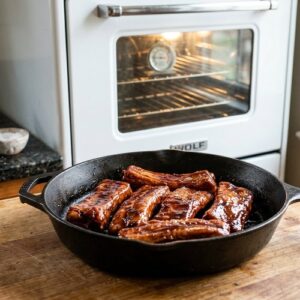
- Remove the pork from the refrigerator about ten minutes before cooking—this allows the meat to come closer to room temperature, which ensures more even cooking throughout. Pour the marinade into a small bowl, reserving it for basting. Arrange the pork slices on the baking rack in a single layer, leaving a little space between each piece so heat can circulate. Don't crowd the pan—if pieces overlap, they'll steam instead of roast. If necessary, use two baking sheets.
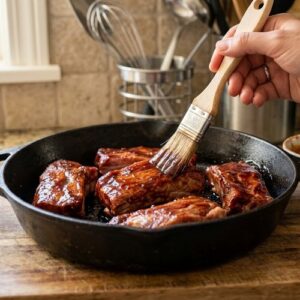
- Place the baking sheet in the preheated 350°F oven. Set a timer for fifteen minutes. When it goes off, remove the sheet and, using a pastry brush or the back of a spoon, brush each piece of pork with the reserved marinade. Coat generously but don't soak—you want a glossy layer, not a puddle. Return to the oven for another fifteen minutes. Repeat this basting process two more times, for a total cooking time of 40 to 45 minutes. Each time you baste, you're building layers of flavor and creating that signature glossy lacquered finish my grandmother's ribs always had.
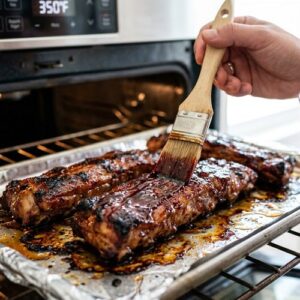
- After 40 to 45 minutes, the pork should be cooked through—it will be pale and beginning to caramelize at the edges. For that final touch of restaurant-quality crust, turn your oven to broil and place the sheet on the rack closest to the heat source. Watch carefully—this is just 1 to 2 minutes, no more. You're aiming for slightly darkened, crispy edges, not charred ribs. Broilers vary dramatically in intensity, so stay close and keep your eyes on them. This final step makes all the difference, transforming the texture from merely tender to genuinely crave-worthy.
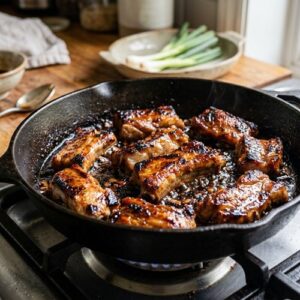
- Remove the sheet from the oven and let the pork rest for three to five minutes. This allows the juices to redistribute throughout the meat, ensuring that when you bite into a piece, it stays moist rather than releasing all its liquid onto your plate. Serve immediately over steamed white rice and alongside steamed vegetables—bok choy, broccoli, or snow peas pair beautifully. The ribs are at their best enjoyed fresh from the oven, when they still have that slight warmth and the marinade has that subtle sticky-glossy quality.
FAQs
Can I use boneless spare ribs instead of pork loin?
Yes, absolutely. Boneless spare ribs are slightly fattier than pork loin and have a bit more flavor because of that fat, though they’re also slightly less lean nutritionally. They’re typically more expensive than pork loin, but if you have them available, they’ll work beautifully in this recipe. The cooking time remains the same—the key is slicing thin and giving the marinade time to do its work. I’ve made this recipe both ways, and honestly, I prefer pork loin for its leanness and lighter finish, but boneless spare ribs create something slightly richer that some people prefer.
What if I don’t have Chinese Five Spice?
Chinese Five Spice is a blend of star anise, cloves, cinnamon, Sichuan pepper, and fennel seed. If you don’t have it, you can create a reasonable substitute by combining ¼ teaspoon ground anise seed, ¼ teaspoon ground clove, ¼ teaspoon cinnamon, and a tiny pinch of white pepper or Sichuan pepper. It won’t be identical, but it will give you that warm, complex spice note you’re aiming for. That said, Chinese Five Spice is inexpensive and keeps for years—I’d genuinely suggest buying a container because once you have it, you’ll find yourself using it constantly.
Can I use fresh ginger in the marinade?
You can, but I’d recommend substituting rather than adding. Replace the minced garlic with ½ tablespoon of minced fresh ginger (about a ½-inch piece, very finely minced so it distributes evenly). Fresh ginger creates a slightly sharper, more peppery heat than garlic, which brightens the marinade. I personally prefer the garlic version as written, but ginger absolutely works if that’s what you have on hand. Ginger also has anti-inflammatory properties, so from a nutritional standpoint, it’s an excellent choice.
Is this recipe gluten-free?
The pork loin itself is naturally gluten-free, but most soy sauce contains wheat. If you need this to be gluten-free, use tamari instead of soy sauce—tamari is a Japanese soy sauce made without wheat and tastes virtually identical. Some hoisin sauces also contain wheat, so check the label and use a gluten-free brand if needed. Making this substitution takes literally no additional effort and opens the recipe to people managing celiac disease or gluten sensitivity.
Can I make a larger batch for entertaining?
Absolutely. This recipe doubles and triples beautifully. Simply multiply all the ingredients by however many servings you need, maintaining the same ratios. You may need two or three baking sheets instead of one, and the marinade time remains the same—overnight is still your target. For entertaining, I love making this recipe a day ahead, chilling the cooked ribs completely, and then reheating gently in the oven thirty minutes before serving. It actually frees you up to enjoy your guests instead of being stuck in the kitchen. I’ve made this for dinner parties of twelve, and people always assume I spent hours cooking when really I just planned ahead and used technique.
More Recipes Featuring Pork Loin
- Baked Pork Chop Rice Recipe – a one-dish wonder that builds flavor through layering, perfect for busy weeknights
- BBQ Chinese Pork Recipe – Grandma’s Tasty Recipes – another take on Chinese-inspired pork that’s equally elegant and forgiving
I started this journey watching my grandmother work with the simplest ingredients, and that’s where I always return—to the profound realization that great food doesn’t come from complexity, but from patience, respect for your ingredients, and techniques that let those ingredients shine. Pork loin, with its lean sweetness and forgiving nature, is one of my favorite teachers in this regard. When you understand how to work with it—how to slice thin, how to marinade with intention, how to cook low and slow—you’ve learned something that will serve you for decades, across countless meals and countless occasions.
This Chinese BBQ boneless ribs recipe is proof that elegant, nutritious, satisfying food doesn’t require hours of preparation or a list of hard-to-find ingredients. It requires intention. It requires planning ahead. It requires the kind of patience my grandmother possessed naturally but that I’ve had to cultivate deliberately. If you try this recipe, give yourself the gift of starting it the night before. Let the marinade do its work while you sleep. Then tomorrow, when you’re tired and hungry and the last thing you want to do is cook, you get to experience something restaurant-worthy that took you maybe fifteen minutes of actual hands-on time.
That’s the whole philosophy right there—respecting the ingredient, honoring the technique, and feeding yourself and the people you love well, consistently, joyfully. That’s what my grandmother taught me, and that’s what I’m passing forward to you now. Now go make something beautiful.
With warmth and good appetite,
Willie Regan
Registered Dietitian, Worcester