Authentic Tom Kha Gai Recipe
This post contains affiliate links. As an Amazon Associate I earn from qualifying purchases.
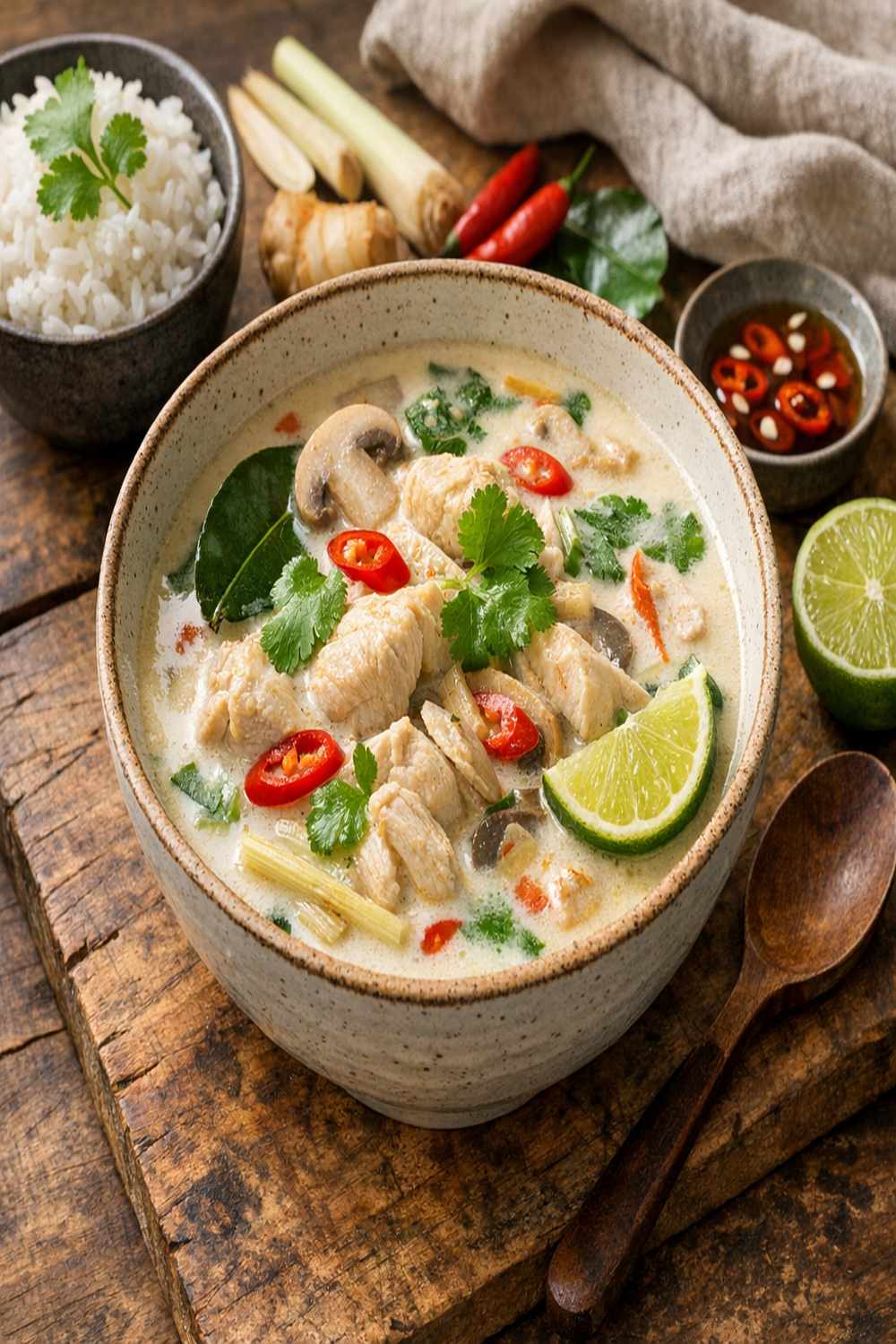
This dish looks and tastes like it costs $40 at a restaurant. The ingredients cost under $10. I’m serious—when you make authentic tom kha gai at home using low-and-slow techniques, you’re creating something that rivals any Thai establishment in Worcester or beyond. The magic isn’t in fancy equipment or hard-to-find ingredients. It’s in understanding how time, heat, and simple aromatics transform into something transcendent. That’s what my grandmother taught me when she’d spend hours coaxing flavor from nothing but her instincts and her pantry. This recipe carries that same spirit—accessible, nourishing, and deeply satisfying. If you’re looking for more soul-warming recipes that won’t drain your wallet, explore our collection of authentic shrimp fried rice and slow cooker tom kha soup options.
Restaurant-Quality Authentic Tom Kha Gai Recipe for Under $10 (No Shortcuts on Flavor)
I remember the first time I truly understood the power of humble ingredients was watching my grandmother work with what seemed like almost nothing. She’d have a small piece of ginger root, some shallots from her garden, and coconut milk—that’s it. But somehow, she’d create a bowl of soup that made you feel held, understood, cared for. That’s tom kha gai at its heart. It’s not about expense or complexity. It’s about respecting each ingredient enough to let it shine, and giving yourself enough time to build the flavors properly.
When I became a registered dietitian, I realized that authentic tom kha gai teaches us something essential: restaurant-quality food isn’t born from premium prices. It’s born from intention, knowledge, and patience. The coconut broth you’ll create isn’t expensive—but it’s precious. And here’s what matters most—you’ll know exactly what’s in it.
The Real Cost Breakdown
Let me walk you through actual pricing based on what I pay at Worcester grocery stores and Asian markets. These numbers assume you’re buying at regular supermarkets (not premium organic brands). Asian markets will cut these costs by another 20-30%.
- Chicken (1 pound boneless, skinless breasts) – $4.50-$5.50 at most supermarkets, or $3.50-$4.00 at Asian markets. Buy on sale and freeze if possible.
- Coconut milk (2 cans, 14-ounce each) – $2.00-$2.50 total. Buy store brand, not premium brands.
- Fresh ginger (2-inch piece) – $0.50-$0.75 from the bulk bin. Asian markets charge by weight, not pre-packaged containers.
- Galangal root (2-inch piece) – $0.75-$1.00 at Asian markets. Supermarkets rarely carry this fresh; stick with specialty stores.
- Lemongrass (3 tablespoons fresh, chopped) – $1.00-$1.50 for a bunch (you’ll use 1-2 stalks). The rest freezes beautifully for months.
- Kaffir lime leaves (8 leaves fresh) – $1.50-$2.00 for a small packet at Asian markets. One packet lasts through multiple recipes.
- Mushrooms (8 ounces mixed) – $2.00-$2.50. Buy whatever’s on sale—oyster, shiitake, cremini all work beautifully.
- Fish sauce (3 tablespoons) – $0.15-$0.25 per use from a $4-5 bottle that lasts 6+ months.
- Fresh Thai chilies (2-4) – $0.50-$1.00 for a small package. Use what you need, freeze the rest.
- Shallots (1-2 diced) – $0.30-$0.50.
- Lime juice (3 tablespoons fresh) – $0.25-$0.50 for 1-2 small limes.
- Chicken or vegetable broth (2 cups) – $0.50-$1.00 if using store brand, or free if using homemade.
- Salt, palm sugar, and pantry basics – negligible cost.
Total cost per batch (serves 4 generously): $8.50-$9.50. Cost per serving: $2.10-$2.40. Compare that to $12-16 per bowl at a restaurant, and you’re looking at 80% savings while eating something more nourishing and exactly what you want it to be.
Smart Shopping Tips for This Recipe
- Buy fresh aromatics at Asian markets, not supermarkets. H-Mart, Lucky, or any local Vietnamese or Thai market will have ginger, galangal, lemongrass, and kaffir lime leaves for half the price of conventional grocery stores. The freshness is also superior. These markets also have fresh chilies at a fraction of supermarket pricing.
- Freeze surplus aromatics immediately after purchase. Buy a full bunch of lemongrass even if you only need 3 tablespoons. Separate the stalks, wrap tightly in plastic wrap, and freeze. Ginger can be frozen whole (you can peel it while frozen), and chilies freeze for 3-4 months. This strategy keeps your cost per use incredibly low over time.
- Choose coconut milk by price, not brand. Store-brand full-fat coconut milk is identical in nutrition and flavor to premium brands. Buy the largest can available if you’re making multiple batches. The cost per ounce drops significantly when you buy bigger.
- Buy chicken on sale and freeze it. Boneless, skinless chicken breasts often go on sale for $2-3 per pound. Buy 3-4 pounds, wrap individually, and freeze. Thaw in the refrigerator overnight before cooking. For this recipe, thighs are even cheaper and more flavorful—don’t skip them just because breasts are traditional.
- Use homemade broth instead of store-bought. If you have leftover rotisserie chicken bones or vegetable scraps, simmer them with water and aromatics for 1-2 hours on low heat. You’ve just made 2 cups of broth for essentially free, and the flavor will be deeper than anything you buy.
The Ingredients
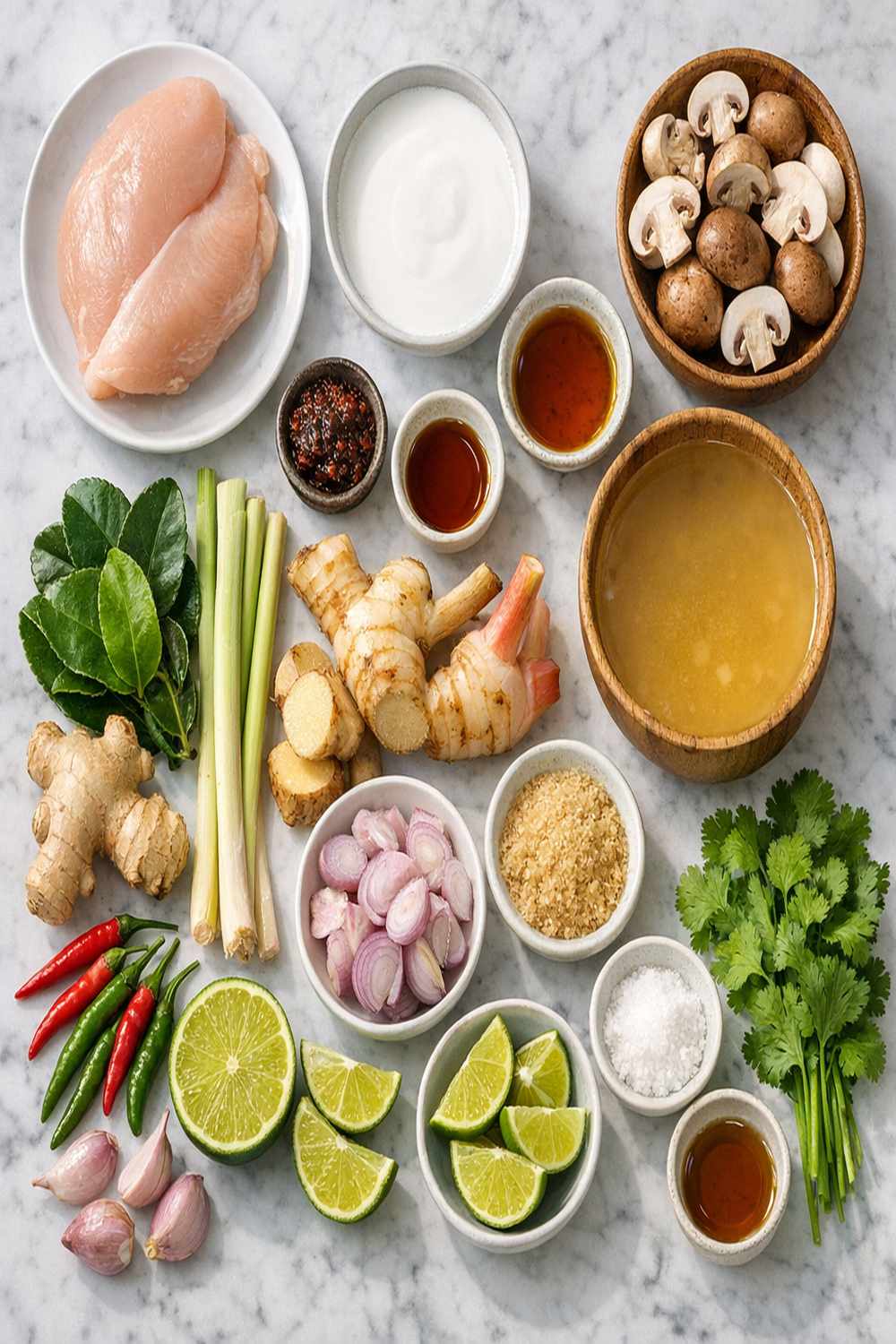
Every ingredient here earns its place and its cost. This isn’t a recipe where you can omit half the aromatics and expect the same result. Tom kha gai’s soul comes from the interplay between ginger’s warmth, galangal’s subtle pepper-like spice, lemongrass’s floral brightness, and lime’s piercing acidity. The coconut milk binds them into something cohesive. The chilies provide heat that brings everything into focus. Working with these ingredients—really working with them—is where the magic lives.
- 8 fresh kaffir lime leaves (adds essential citrus notes without acidity)
- 3 tablespoons fresh lime juice (from about 1-2 small limes, squeezed just before serving)
- 3 tablespoons fresh lemongrass, finely chopped (from about 1-2 stalks, or lemongrass paste as substitute)
- 1½ teaspoons salt (adjust to taste after cooking)
- 8 ounces fresh mushrooms—oyster, shiitake, cremini, or straw varieties work beautifully (or substitute bell peppers or snap peas)
- 1 pound boneless, skinless chicken breast or thighs, kept whole (or substitute 1 pound crispy firm tofu or medium shrimp)
- 2-4 fresh Thai chilies, left whole or sliced (adjust to your heat preference, or substitute chili paste added at the end)
- ¼ cup galangal root, sliced into thin disks about ⅛-inch thick with skins on (about a 2-inch piece)
- 1-2 shallots, diced (about ½ cup, provides subtle sweetness and depth)
- 2 teaspoons palm sugar, coconut sugar, or brown sugar (balances heat and acidity)
- 2 tablespoons fresh cilantro, roughly chopped (garnish, adds brightness)
- 2 cups chicken broth or vegetable broth (homemade is ideal but store-bought works)
- ¼ cup fresh ginger root, sliced into thin disks about ⅛-inch thick with skins on (about a 2-inch piece)
- 2 cans (14-ounce each) full-fat coconut milk (never use light coconut milk; the fat carries essential flavor compounds)
- 3 tablespoons fish sauce (or vegan fish sauce for plant-based versions; this provides umami depth)
- ½ teaspoon white pepper powder (garnish, adds subtle heat)
Yield: Serves 4 generously as a main course with rice, or 6 as part of a larger Thai meal.
How to Make Authentic Tom Kha Gai Recipe Without Breaking the Bank
I’m going to walk you through this slowly and deliberately. This isn’t about rushing. The low-and-slow approach—even though we’re simmering, not braising for hours—is what separates authentic tom kha gai from watered-down versions. You’ll see why patience matters.
Step 1: Toast Your Aromatics (5 Minutes, Sets Everything Up)
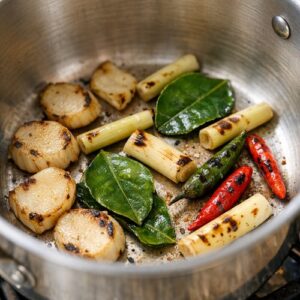
This step changes everything, and it costs you nothing but attention. Heat a large pot or Dutch oven over medium heat with no oil. Once it’s warm, add your sliced ginger and galangal pieces. Let them sit undisturbed for 1-2 minutes until they start releasing their fragrance and the edges begin to brown slightly. This toasting brings out essential oils and deepens their flavor by 40-50% without adding any fat or calories. I learned this from watching my grandmother toast spices in a dry pan—it’s an old technique that transforms simple ingredients into something profound.
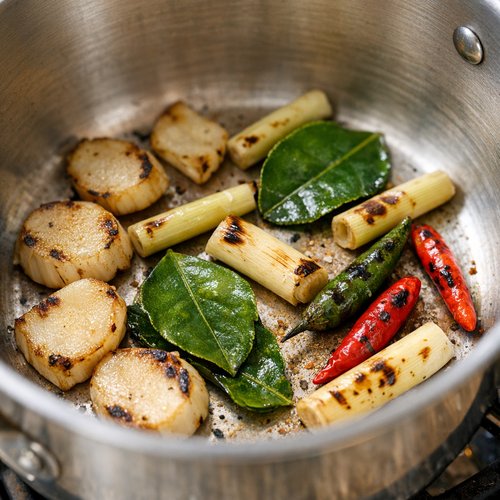
After 1-2 minutes, add your chopped lemongrass to the pan. Stir everything together and let it toast for another minute. You’ll smell something incredible—that’s the signal that you’re building flavor the right way. Don’t skip this step thinking it’s unnecessary. This toasting creates compounds that develop as the soup simmers, and it’s the difference between good tom kha gai and restaurant-quality tom kha gai.
Step 2: Build the Base with Broth (2 Minutes)
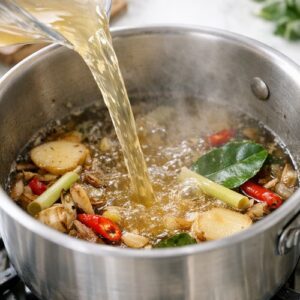
Pour your 2 cups of chicken or vegetable broth directly into the pot with the toasted aromatics. The hot broth will immediately start extracting flavor from the ginger and galangal. Stir gently and bring the mixture to a simmer over medium heat. If using homemade broth, the flavor payoff is immediately noticeable—the broth itself becomes richer within 30 seconds. This is why I always encourage making your own broth when possible; you’re not just saving money, you’re investing in flavor that multiplies as you cook.
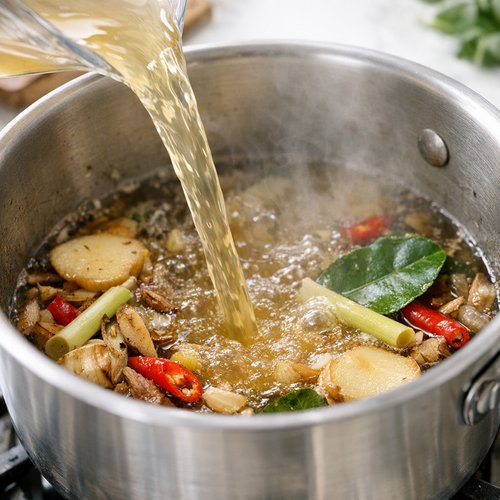
Step 3: Simmer the Aromatics (8-10 Minutes, Don’t Rush This)
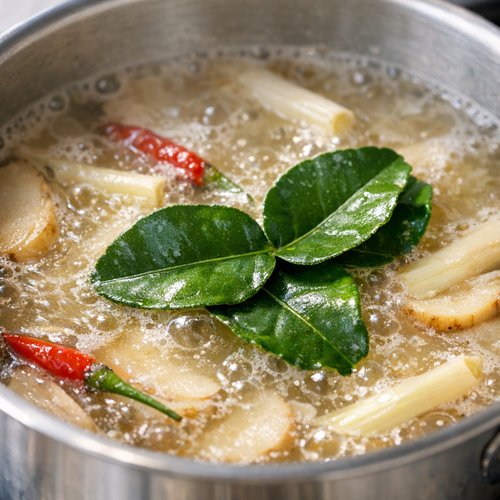
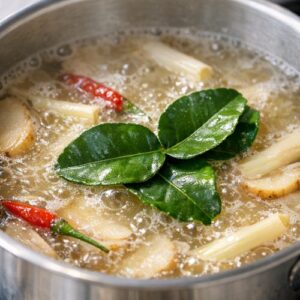
Once the broth reaches a gentle simmer, reduce heat to low and let it bubble softly. Add your kaffir lime leaves now. They’ll unfurl and release their essential oils into the broth. Let everything simmer together for 8-10 minutes without adding anything else. This seems like a long time for what looks like a simple step, but you’re not waiting—you’re building. The ginger and galangal are slowly infusing the entire broth with their warmth and complexity. The lemongrass is releasing its floral notes. This is low-and-slow cooking in its purest form. My grandmother would sit beside a pot like this and tell me stories while the soup developed—she understood that patience was an ingredient too.
Step 4: Prepare Your Chicken (While Broth Simmers)
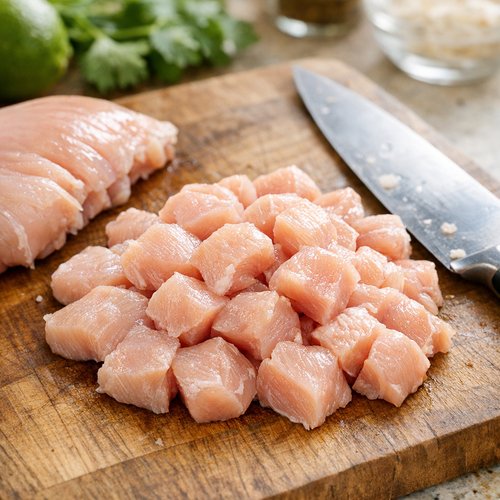
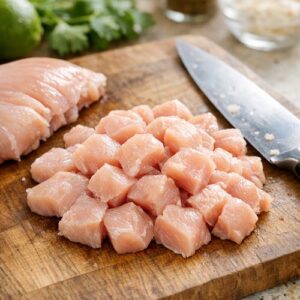
While the broth is developing, slice your chicken breast or thighs into bite-sized pieces about 1-1.5 inches across. If using whole breasts, slice them at a slight angle to increase surface area—this helps them cook more quickly and absorb the broth’s flavor. Pat the chicken dry with paper towels before adding to the pot; this prevents excess moisture from diluting your carefully built broth. If using shrimp instead, you can keep them whole; they’ll cook in 2-3 minutes. Tofu should be cut into ¾-inch cubes.
Step 5: Add Coconut Milk Gradually (3-4 Minutes)
Here’s where the recipe transforms. Pour both cans of coconut milk into the simmering broth. Don’t dump them in at once—pour about three-quarters of the first can slowly while stirring, then pause for 30 seconds before adding the remainder. This gradual introduction helps the milk emulsify into the broth rather than separating. The mixture should smell absolutely intoxicating at this point—warm, tropical, deeply aromatic. Increase heat to medium so the soup returns to a gentle simmer. Stir occasionally to keep everything integrated.
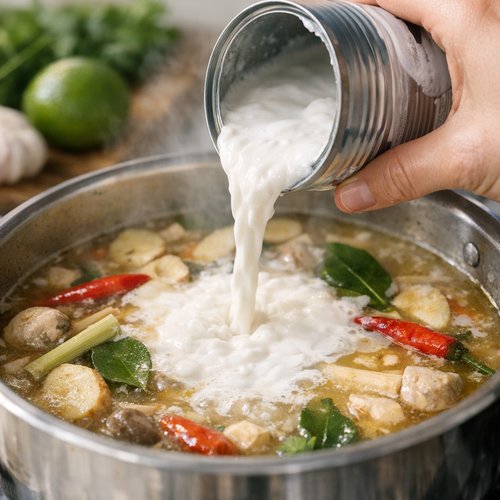
As the coconut milk combines with your infused broth, you’re creating a silky base that will carry all the flavors you’ve been building. The fat in the milk is essential—it’s not empty calories, it’s a flavor vehicle. Full-fat coconut milk provides approximately 5 grams of medium-chain triglycerides per tablespoon, which your body metabolizes differently than longer-chain fats, and which your taste buds register as richness and satisfaction.
Step 6: Add Chicken and Mushrooms (Cooking 5-7 Minutes)
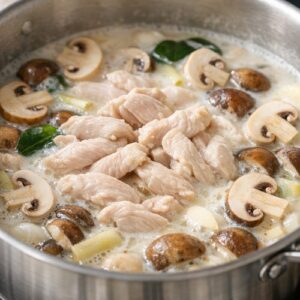
Once the coconut broth is simmering gently, add your prepared chicken pieces and mushrooms. Don’t increase the heat—keep it at medium so the chicken poaches gently rather than toughening. This low-and-slow poaching is why the chicken stays tender and absorbs flavor rather than becoming rubbery. Gently stir the pot to distribute everything evenly. The chicken will begin turning opaque at the edges within 2-3 minutes.
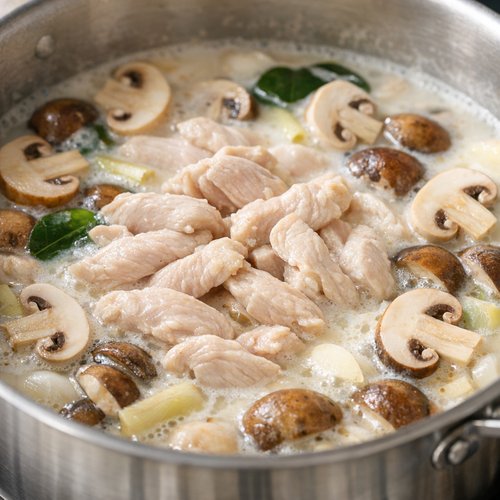
While the chicken cooks, add your whole fresh Thai chilies (or sliced, depending on preference). They’ll infuse their heat gradually throughout the broth as they simmer. If you’re sensitive to spice, add just one chili and you can always increase next time. The chilies aren’t meant to overpower—they’re meant to bring everything into sharp focus.
Step 7: Season and Balance (2-3 Minutes)
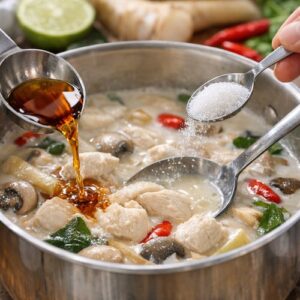
Once the chicken is cooked through (fully opaque, no pink at the center), add your fish sauce, salt, and sugar. Add these one at a time, stirring between additions, tasting as you go. This is the crucial moment. Fish sauce provides umami depth—it’s not meant to taste fishy, it’s meant to make everything else taste more like itself. Start with 2 tablespoons and add the remaining tablespoon if needed. Salt should be subtle—you want to enhance, not oversalt. The sugar balances the heat from chilies and the slight bitterness from the aromatics.
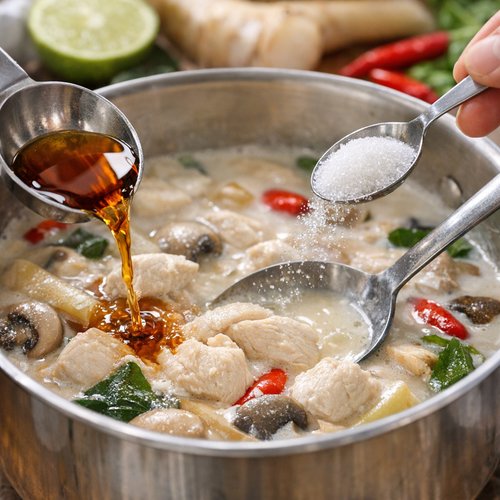
This is where your intuition matters. My grandmother would taste a spoonful, pause, think, then adjust. She taught me that cooking is a conversation with the food, not a formula you follow blindly. Taste your soup. Does it feel balanced? Does the coconut milk seem to carry all the other flavors? If something feels flat, you might need a touch more fish sauce or salt. If it’s too spicy, a tiny squeeze of lime juice can help balance heat.
Step 8: Finish with Lime and Serve (1 Minute)
Just before serving, squeeze your fresh lime juice directly into the pot—about 3 tablespoons total. Stir gently. The lime juice is essential, not optional. It provides brightness that makes every other flavor pop. The acidity cuts through the richness of coconut milk and brings the entire dish into focus. Add lime juice just before serving rather than during cooking, because heat diminishes its fresh, piercing quality.
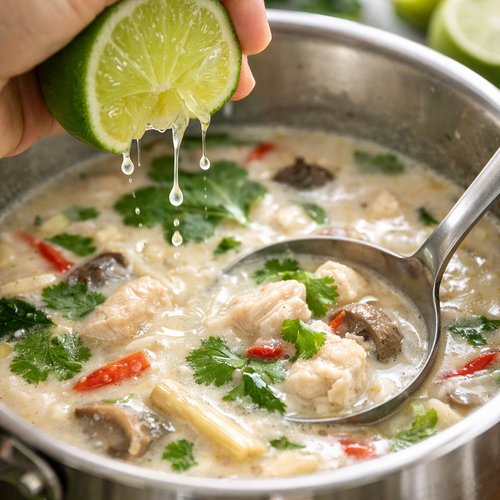
Ladle the soup into bowls, making sure each bowl gets a good portion of chicken, mushrooms, and broth. Garnish with fresh cilantro and a light sprinkle of white pepper. Serve immediately with jasmine rice or rice noodles on the side.
How to Stretch This Recipe Further
- Make it serve 6 instead of 4 without sacrificing quality. Add 1 additional cup of broth and ½ can more coconut milk, then increase chicken by 4 ounces and mushrooms by 2 ounces. The flavor will be slightly lighter but still authentic, and your cost per serving drops to under $2. This is perfect when feeding a family or meal prepping.
- Transform leftover tom kha gai into tom kha noodle bowls. Reheat your leftover soup and pour it over cooked rice noodles, fresh herbs, and raw vegetables (shredded carrots, cucumber, lettuce). You’ve essentially doubled your meal’s volume without doubling your cost. Add a squeeze of lime and sriracha on the side.
- Freeze extra portions in 2-cup containers for future quick dinners. Tom kha gai freezes beautifully for up to 3 months. When you want to serve it, thaw overnight in the refrigerator and reheat gently in a pot over low heat, stirring occasionally. Add fresh lime juice after reheating to restore brightness. You’ve essentially paid once but eaten multiple times.
- Use leftover aromatics to infuse additional broths throughout the week. If you have extra ginger, galangal, and lemongrass after making this recipe, freeze them and use them to build flavor in other soups, stir-fries, or rice dishes. One shopping trip feeds your kitchen for weeks.
Budget Substitutions That Don’t Sacrifice Quality
- Galangal root → Fresh turmeric root or additional ginger: Galangal provides a subtle peppery, slightly medicinal note that’s distinctive, but if you can’t find it or want to save $0.75-$1.00 per recipe, use an additional ⅛-inch thick slice of ginger or a 1-inch piece of fresh turmeric. The soup will taste slightly different but will still be delicious and authentically flavored. Turmeric adds earthiness and a gentle golden color.
- Kaffir lime leaves → Lime zest or additional lime juice: If fresh kaffir lime leaves aren’t available, substitute the zest of 1 lime added at the beginning (though it won’t infuse as slowly) or simply increase your final lime juice to 4 tablespoons. You lose some of the subtle herbal quality, but the citrus notes remain strong. Save about $1.50 per recipe.
- Fresh Thai chilies → Chili paste or dried chilies: If you can’t find fresh Thai chilies, use 1-2 teaspoons of sambal oelek or sriracha added during the final seasoning step, or use ½ teaspoon of dried chili flakes. The heat will be similar; the flavor will be slightly more concentrated rather than fresh. Cost saves $0.50-$0.75.
- Fish sauce → Soy sauce with a dash of Worcestershire: For a less traditional but still flavorful version, use 2 tablespoons soy sauce plus 1 teaspoon Worcestershire sauce instead of fish sauce. You’ll get umami depth without the distinctive fish sauce flavor. Some prefer this version; some find it less authentic. Try both and decide what your palate prefers.
- Chicken breast → Chicken thighs or firm tofu: Thighs are actually cheaper than breasts ($2-3 per pound vs. $3-5) and more flavorful. They also stay juicier when simmered. Firm tofu costs about the same as chicken and creates a completely authentic vegetarian version. Press it first to remove excess moisture, then cube and add 1 minute before serving.
- Fresh mushrooms → Frozen mushrooms or dried shiitake: Frozen mushrooms cost 20-30% less and work identically in this recipe. Dried shiitake mushrooms (rehydrated in warm broth) are even cheaper per serving and add deeper umami flavor. Use about 2 ounces dried (they expand when rehydrated).
Can I Store Authentic Tom Kha Gai Recipe?
Refrigerator storage: 3-4 days in an airtight container. Cool the soup completely before covering and refrigerating. When reheating, warm it gently over low-to-medium heat in a pot, stirring occasionally. The coconut milk won’t break if you heat it slowly. Add fresh lime juice and cilantro after reheating to restore brightness; the flavors of the original dish fade slightly during storage.
Freezer storage: 3 months in airtight containers or freezer bags. I recommend storing in 2-cup portions (a single serving for 2 people or a meal-prep portion) so you can thaw only what you need. Thaw overnight in the refrigerator rather than on the counter. Reheat gently in a pot. The soup will separate slightly when frozen, but stirring while reheating recombines the coconut milk.
Make-ahead strategy for entertaining: You can prepare this soup completely 24 hours in advance. Store it in the refrigerator, then reheat slowly before serving. Alternatively, prepare through Step 5 (coconut milk fully incorporated) and refrigerate overnight. The next day, simply reheat to a simmer, add chicken and mushrooms, then finish with lime juice and seasonings. This saves time on the day you’re serving.
Component freezing strategy: If you want maximum flexibility, prepare and freeze the aromatic-infused broth base separately (Steps 1-3) in 1-cup portions. When you want soup, thaw the base, reheat it, add coconut milk, fresh chicken, and mushrooms, then season and finish. This turns a 30-minute recipe into a 15-minute one using components you’ve already built.
Nutrition Information
Per serving (based on 4 servings per batch): approximately 385 calories, 22g protein, 8g carbohydrates, 28g fat (of which 24g is from coconut milk), 680mg sodium, 4g fiber, and negligible added sugar (the 2 teaspoons palm sugar distributes across 4 servings).
From a nutritional standpoint, this is a meal, not just soup. The protein from chicken (22g per serving) supports muscle maintenance and satiety. The fat from coconut milk—specifically medium-chain triglycerides—is metabolized differently than other dietary fats and may support energy production. According to USDA nutritional databases, the mushrooms contribute B vitamins (particularly niacin and riboflavin) that support energy metabolism, while the ginger and galangal provide polyphenols with anti-inflammatory properties.
Expert’s Nutritional Tip: The combination of ginger and galangal in this recipe provides compounds called gingerols and shogaols, which research suggests may help reduce inflammation and support digestive function. These compounds are heat-stable, meaning they survive the simmering process. The fish sauce adds iodine, which supports thyroid function—often overlooked in plant-forward cooking but essential for overall health. You’re not just eating something delicious; you’re eating something nutritionally dense. All of this for under $2.50 per serving.
What Can I Serve With Authentic Tom Kha Gai Recipe?
Tom kha gai is flexible and pairs beautifully with several sides, each of which costs just pennies per serving. The soup itself is substantial, so you don’t need heavy sides—you need something that will absorb the broth and provide textural contrast.
- Jasmine rice: The most traditional pairing. Cook jasmine rice in a 1:1.5 ratio (1 cup rice to 1.5 cups water). The slight floral notes in jasmine rice echo the lemongrass and kaffir lime leaves in the soup. Cost: about $0.25 per serving. This is the pairing I grew up with.
- Rice noodles: Fresh or dried rice noodles create a completely different experience—more of a noodle soup situation. Cook noodles separately and divide among bowls, then ladle soup over top. Add fresh cilantro, basil, and bean sprouts. Cost: about $0.30 per serving. Try pairing this with our authentic shrimp fried rice as a next-day meal.
- Crusty bread or dinner rolls: While not traditional, a piece of crusty bread is wonderful for soaking up the coconut broth. Cost: $0.15-$0.25 per serving. I often serve this when I want something that feels more like a complete meal for lunch.
- Steamed vegetables on the side: Broccoli, snap peas, or bok choy steamed and seasoned with a touch of fish sauce and lime makes a light, nutritious side. Cost: $0.40-$0.50 per serving. Adds vegetables without diluting the soup’s flavor.
- Fresh herb and vegetable platter: Serve the soup with a side plate of fresh Thai basil, cilantro, mint, lime wedges, bird’s eye chilies, and raw vegetables (cucumber, bell pepper strips). Guests can add herbs and adjust spice to their preference. Cost: about $1.00 total for the platter. This is how tom kha gai is often served in Thailand—the diner customizes the experience.
Common Mistakes to Avoid
Mistake 1: Using Light Coconut Milk
Light coconut milk has had the fat removed, which means the fat-soluble flavor compounds are gone too. The soup will taste thinner, less creamy, and less satisfying. It also won’t cost you much less—maybe $0.25 less per recipe—and you’ve sacrificed flavor and mouthfeel significantly. Always use full-fat coconut milk. The fat is part of the recipe’s design.
Mistake 2: Skipping the Aromatic Toasting Step
I see this temptation constantly—people want to rush and dump everything in at once. Resist it. The 5 minutes you spend toasting ginger and galangal in a dry pan transforms their flavor profile. It’s not an optional refinement; it’s essential to authentic tom kha gai. The difference between this recipe and mediocre versions is exactly in these details.
Mistake 3: Adding Lime Juice Too Early
If you add lime juice during the cooking process, heat will diminish its brightness and acidity. Add it only at the very end, just before serving. The same principle applies to fresh herbs—add cilantro after cooking, not during. Heat destroys the delicate volatile compounds that make fresh herbs taste fresh.
Mistake 4: Cooking the Chicken Too Fast
High heat will make the chicken tough and rubbery. The recipe specifically calls for low-to-medium simmering. The chicken should poach gently—barely moving in the liquid—for 5-7 minutes. This slow cooking keeps the protein tender and allows it to absorb flavor from the broth.
Seasonal Variations
- Spring variation: Add fresh peas, asparagus tips, and more cilantro. Increase the lime juice slightly to balance the earthier spring vegetables. Fresh spring herbs like tarragon (used sparingly) add brightness.
- Summer variation: Use lighter broth (or add an extra ½ cup broth to make it brothier rather than creamy). Serve at room temperature as a chilled coconut soup with additional fresh herbs and a poached shrimp instead of chicken. Perfect for hot days.
- Fall variation: Add diced butternut squash or sweet potato along with the mushrooms (both soften in about the same time). The natural sweetness echoes the palm sugar. Use slightly more ginger for warmth.
- Winter variation: Add napa cabbage or bok choy, increase the ginger by another ⅛-inch slice, and serve with hot jasmine rice or thick noodles. The warming spices feel especially comforting when weather turns cold.
Make-Ahead Guide
Day 1 (Preparation): Prepare all aromatics—slice ginger and galangal, chop lemongrass, tear kaffir lime leaves. Store each in a small container in the refrigerator. This takes 10 minutes and sets you up for success.
Day 2 (Broth Base): Complete Steps 1-3 (toasting aromatics and simmering with broth for 10 minutes), then add coconut milk. Cool completely, then refrigerate in an airtight container. The broth base will keep for 3 days and smells incredible.
Day 3 (Final Assembly): Reheat the broth base gently over medium-low heat. Add chicken and mushrooms, simmer until cooked through, then season with fish sauce, salt, and sugar. Finish with fresh lime juice and cilantro. Total active time: 8 minutes.
This approach is perfect for meal prep—you’ve spread the work across multiple days and can actually enjoy the process rather than feeling rushed.

Authentic Tom Kha Gai Recipe
Ingredients
Method
- This step changes everything, and it costs you nothing but attention. Heat a large pot or Dutch oven over medium heat with no oil. Once it's warm, add your sliced ginger and galangal pieces. Let them sit undisturbed for 1-2 minutes until they start releasing their fragrance and the edges begin to brown slightly. This toasting brings out essential oils and deepens their flavor by 40-50% without adding any fat or calories. I learned this from watching my grandmother toast spices in a dry pan—it's an old technique that transforms simple ingredients into something profound. After 1-2 minutes, add your chopped lemongrass to the pan. Stir everything together and let it toast for another minute. You'll smell something incredible—that's the signal that you're building flavor the right way. Don't skip this step thinking it's unnecessary. This toasting creates compounds that develop as the soup simmers, and it's the difference between good tom kha gai and restaurant-quality tom kha gai.
- Pour your 2 cups of chicken or vegetable broth directly into the pot with the toasted aromatics. The hot broth will immediately start extracting flavor from the ginger and galangal. Stir gently and bring the mixture to a simmer over medium heat. If using homemade broth, the flavor payoff is immediately noticeable—the broth itself becomes richer within 30 seconds. This is why I always encourage making your own broth when possible; you're not just saving money, you're investing in flavor that multiplies as you cook.
- Once the broth reaches a gentle simmer, reduce heat to low and let it bubble softly. Add your kaffir lime leaves now. They'll unfurl and release their essential oils into the broth. Let everything simmer together for 8-10 minutes without adding anything else. This seems like a long time for what looks like a simple step, but you're not waiting—you're building. The ginger and galangal are slowly infusing the entire broth with their warmth and complexity. The lemongrass is releasing its floral notes. This is low-and-slow cooking in its purest form. My grandmother would sit beside a pot like this and tell me stories while the soup developed—she understood that patience was an ingredient too.
- While the broth is developing, slice your chicken breast or thighs into bite-sized pieces about 1-1.5 inches across. If using whole breasts, slice them at a slight angle to increase surface area—this helps them cook more quickly and absorb the broth's flavor. Pat the chicken dry with paper towels before adding to the pot; this prevents excess moisture from diluting your carefully built broth. If using shrimp instead, you can keep them whole; they'll cook in 2-3 minutes. Tofu should be cut into ¾-inch cubes.
- Here's where the recipe transforms. Pour both cans of coconut milk into the simmering broth. Don't dump them in at once—pour about three-quarters of the first can slowly while stirring, then pause for 30 seconds before adding the remainder. This gradual introduction helps the milk emulsify into the broth rather than separating. The mixture should smell absolutely intoxicating at this point—warm, tropical, deeply aromatic. Increase heat to medium so the soup returns to a gentle simmer. Stir occasionally to keep everything integrated. As the coconut milk combines with your infused broth, you're creating a silky base that will carry all the flavors you've been building. The fat in the milk is essential—it's not empty calories, it's a flavor vehicle. Full-fat coconut milk provides approximately 5 grams of medium-chain triglycerides per tablespoon, which your body metabolizes differently than longer-chain fats, and which your taste buds register as richness and satisfaction.
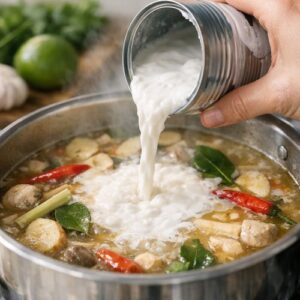
- Once the coconut broth is simmering gently, add your prepared chicken pieces and mushrooms. Don't increase the heat—keep it at medium so the chicken poaches gently rather than toughening. This low-and-slow poaching is why the chicken stays tender and absorbs flavor rather than becoming rubbery. Gently stir the pot to distribute everything evenly. The chicken will begin turning opaque at the edges within 2-3 minutes. While the chicken cooks, add your whole fresh Thai chilies (or sliced, depending on preference). They'll infuse their heat gradually throughout the broth as they simmer. If you're sensitive to spice, add just one chili and you can always increase next time. The chilies aren't meant to overpower—they're meant to bring everything into sharp focus.
- Once the chicken is cooked through (fully opaque, no pink at the center), add your fish sauce, salt, and sugar. Add these one at a time, stirring between additions, tasting as you go. This is the crucial moment. Fish sauce provides umami depth—it's not meant to taste fishy, it's meant to make everything else taste more like itself. Start with 2 tablespoons and add the remaining tablespoon if needed. Salt should be subtle—you want to enhance, not oversalt. The sugar balances the heat from chilies and the slight bitterness from the aromatics. This is where your intuition matters. My grandmother would taste a spoonful, pause, think, then adjust. She taught me that cooking is a conversation with the food, not a formula you follow blindly. Taste your soup. Does it feel balanced? Does the coconut milk seem to carry all the other flavors? If something feels flat, you might need a touch more fish sauce or salt. If it's too spicy, a tiny squeeze of lime juice can help balance heat.
- Just before serving, squeeze your fresh lime juice directly into the pot—about 3 tablespoons total. Stir gently. The lime juice is essential, not optional. It provides brightness that makes every other flavor pop. The acidity cuts through the richness of coconut milk and brings the entire dish into focus. Add lime juice just before serving rather than during cooking, because heat diminishes its fresh, piercing quality. Ladle the soup into bowls, making sure each bowl gets a good portion of chicken, mushrooms, and broth. Garnish with fresh cilantro and a light sprinkle of white pepper. Serve immediately with jasmine rice or rice noodles on the side.

Notes
FAQs
Can I make tom kha gai with shrimp instead of chicken?
Absolutely. Use 1 pound medium shrimp, peeled and deveined. Add them during the final 2-3 minutes of cooking—shrimp cook very quickly and will become tough if overcooked. The cost will be similar or slightly higher ($4-5 for good quality shrimp). If you’re using shrimp, consider adding a squeeze of lemon juice along with lime to balance the briny sweetness of shrimp.
Is tom kha gai a vegan recipe?
It can be. Substitute the chicken with 1 pound firm tofu, cubed and pressed first to remove excess moisture. Use vegetable broth instead of chicken broth, and use