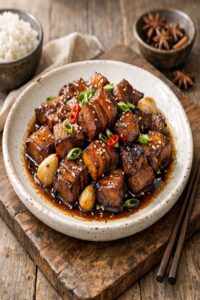
Chicken Adobo With Coconut Milk Recipe
This post contains affiliate links. As an Amazon Associate I earn from qualifying purchases.
I’ll never forget the first time my grandmother taught me to make chicken adobo. I was barely tall enough to see over the kitchen counter, and she let me crush the peppercorns by hand—real peppercorns, not ground spice from a tin. The kitchen filled with this warm, earthy fragrance, and she whispered, “This is how we remember home, Willie. This is how we love people.” That dish taught me more about nutrition and nourishment than any textbook ever could. When you cook with intention, when you honor the traditions that shaped your family’s story, the food becomes medicine. Today, I’m sharing her recipe—refined through my work as a registered dietitian—so you can experience that same soul-warming magic.
Authentic Chicken Adobo With Coconut Milk Recipe (One-Pot, 75 Minutes)
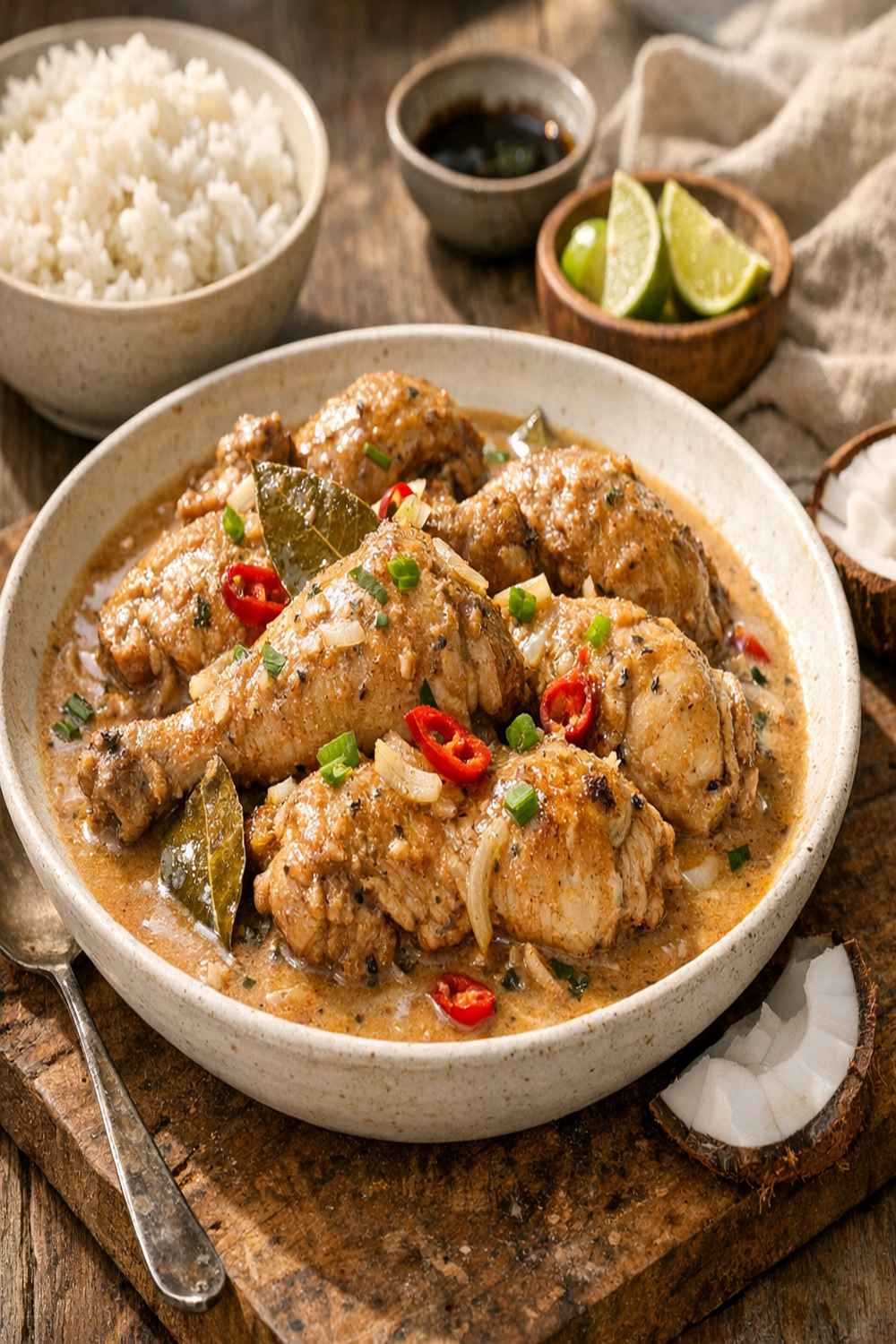
This is the only chicken adobo recipe you’ll ever need. It’s grounded in Filipino tradition, built on the foundation of low-and-slow cooking that coaxes every ounce of flavor from simple, honest ingredients. The coconut milk transforms the sauce into something velvety and rich without any of the guilt—just real food that nourishes your body and feeds your soul.
Why You’ll Love This Recipe
- Ready in 75 minutes total – 5 minutes of prep work, then you let the pot do the work while you rest or spend time with family
- One pot, minimal cleanup – Everything cooks in a single large pot, so you spend less time at the sink and more time enjoying your meal
- Chicken so tender it falls off the bone – The low-and-slow method breaks down collagen into gelatin, creating that signature, melt-in-your-mouth texture
- Endlessly adaptable – Works with different proteins, vegetables, and serving styles depending on what your family loves or what you have on hand
The Story Behind Chicken Adobo
Chicken adobo is the unofficial national dish of the Philippines, and for good reason. The word “adobo” comes from the Spanish adobar, meaning “to marinate” or “to season,” a linguistic bridge between two cultures that collided centuries ago. But this dish is unmistakably Filipino—it belongs to the people who adapted what they had into something profoundly their own.
The technique of braising meat in vinegar and spices emerged as a way to preserve chicken without refrigeration in a tropical climate. The acid from vinegar prevented spoilage while the spices—peppercorns, garlic, bay leaves—added flavor and antimicrobial properties. My grandmother grew up making this with whatever protein was available: chicken, pork, even water buffalo. She taught me that adobo isn’t about fancy ingredients; it’s about respecting the ingredients you have.
When you add coconut milk—a staple of Southeast Asian cooking—you’re not straying from tradition; you’re honoring the coconut groves that grow throughout the islands. The creamy richness balances the vinegar’s sharp notes, creating a sauce that’s simultaneously bold and comforting. From a nutritional standpoint, the coconut milk provides medium-chain triglycerides (MCTs), which your body can use for quick energy, plus it contains lauric acid, which research shows may support immune function.
What You Need
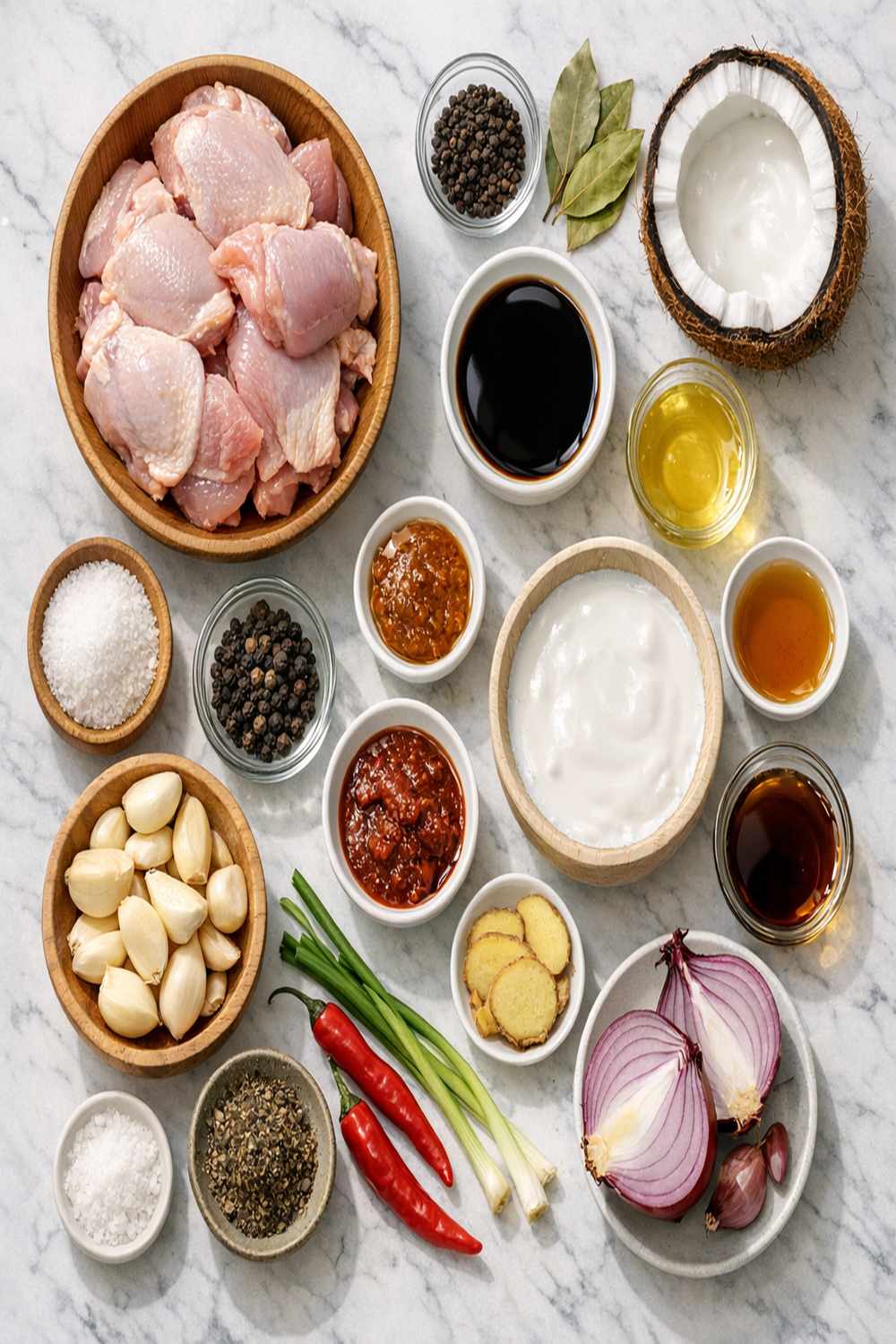
Just 10 simple ingredients—many of which you likely have in your pantry right now:
- 4 pounds bone-in, skin-on chicken drumsticks and thighs (the bones create gelatin that thickens the sauce naturally)
- 2 tablespoons coconut oil (use refined if you prefer a neutral flavor, virgin for more coconut taste)
- 15 garlic cloves, roughly chopped (fresh garlic is non-negotiable here; it mellows beautifully during cooking)
- 2 teaspoons whole black peppercorns (fresh-cracked pepper loses potency quickly, so whole peppercorns are worth the effort)
- 1 teaspoon freshly ground black pepper (this gets added later for a fresher bite)
- ½ teaspoon red-pepper flakes (adjust to your heat preference; start with less if you’re sensitive)
- 1 cup unsweetened coconut milk (full-fat, not lite—the fat carries flavor and creates proper sauce consistency)
- ½ cup coconut vinegar (apple cider vinegar or white vinegar work if coconut vinegar isn’t available)
- ½ cup low-sodium soy sauce (or tamari if you need gluten-free)
- 8 fresh bay leaves (dried bay leaves work, but fresh ones add a subtler, more delicate note)
How to Make Chicken Adobo With Coconut Milk Recipe in 4 Steps
Here’s exactly how to do it—no complicated techniques, just patience and proper heat management:
Step 1: Toast the Aromatics Until Golden and Fragrant
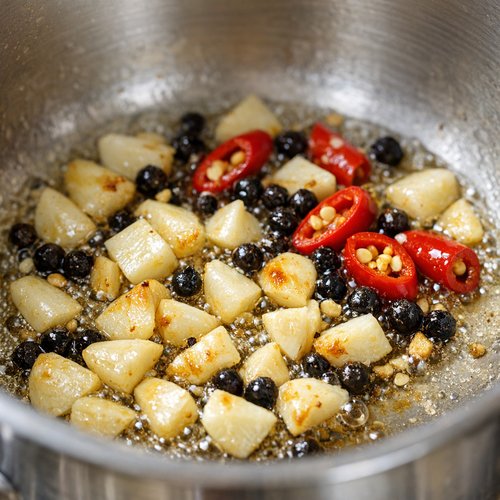
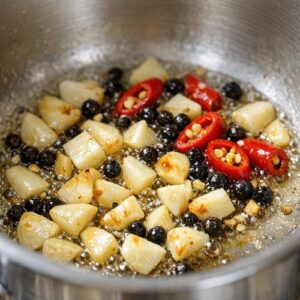
Heat your coconut oil in a large pot over medium-high heat until you see it shimmer slightly. Add your roughly chopped garlic, whole peppercorns, freshly ground black pepper, and red-pepper flakes all at once. Lower the heat to medium-low—this is crucial. You want the garlic to toast slowly, releasing its essential oils and developing a golden color, not burning.
Stir occasionally as you watch the garlic transform from raw and pungent to soft, caramelized, and almost candy-like in its sweetness. This takes about 5 minutes. Your kitchen should smell incredible by now—warm, garlicky, with a subtle spiciness underneath. This aroma is the foundation of everything that follows.
Step 2: Sear the Chicken Until the Skin Crisps
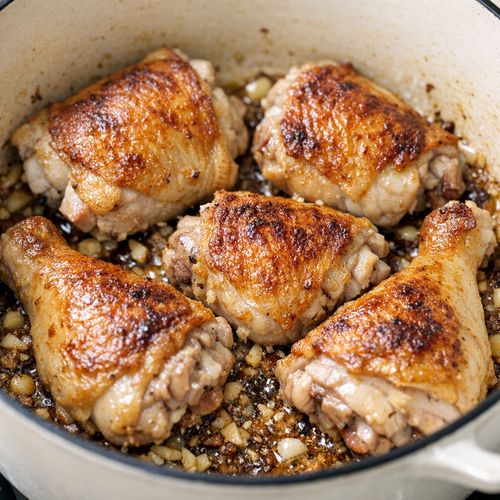
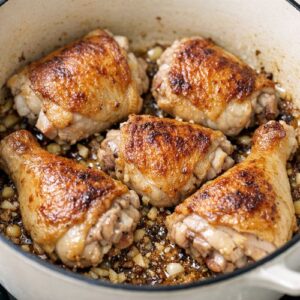
Place your chicken pieces skin-side down into the pot with the garlic mixture, then increase the heat back to medium-high. Don’t move them. This is where patience becomes your secret weapon. Let the skin render—that means the fat under the skin will slowly melt into the pot, crisping the skin and enriching the base you’re building.
After about 5 minutes, you’ll hear the sizzle die down slightly and notice the skin pulling away from the sides of the pieces. This tells you the rendering is complete and the skin has crisped. The skin is packed with collagen and fat-soluble flavor compounds; don’t skip this step.
Step 3: Braise Low and Slow Until the Meat Falls Off the Bone
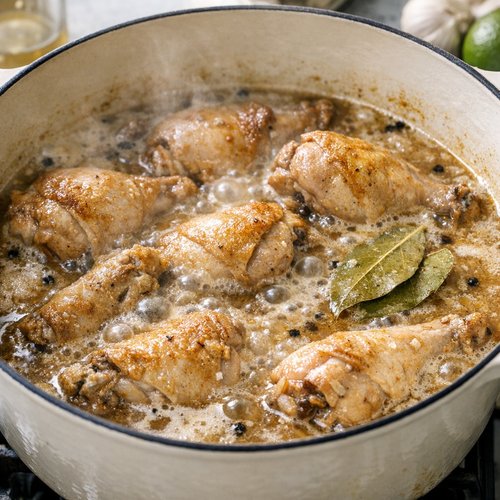
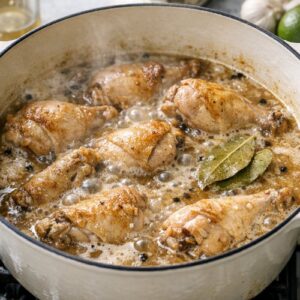
Add the coconut milk, coconut vinegar, soy sauce, bay leaves, and 1 cup of water to the pot, then bring everything to a gentle boil. Once you see bubbles breaking the surface, reduce your heat to medium-low and let it simmer, uncovered. This is the long, slow part—about 1 hour of gentle simmering.
Halfway through (around the 30-minute mark), stir the pot once to ensure even cooking. The chicken will start to pull away from the bone, the sauce will deepen in color, and the kitchen will smell like comfort itself. You’re not just cooking chicken; you’re transforming tough muscle fibers into something tender through low-temperature moist heat.
Step 4: Reduce the Sauce Until It Coats a Spoon
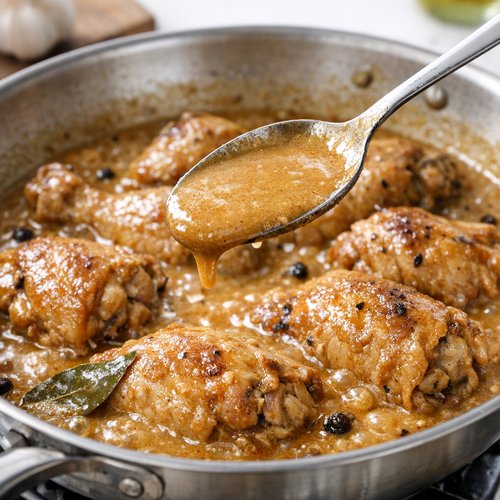
After the chicken has simmered for about 1 hour, increase the heat to medium-high and cook uncovered for another 15 minutes, stirring occasionally. Watch the liquid level drop. What you’re doing now is concentrating the flavors and allowing the collagen from the bones to transform the braising liquid into a velvety, glossy sauce that clings to the chicken.
You’ll know it’s ready when the sauce coats the back of a spoon and runs slowly when you tilt the spoon sideways. Taste it now—does it need more salt? More acidity? Adjust to your preference. Serve the chicken and sauce over steamed rice, allowing the grain to absorb every precious drop.
Expert’s Nutritional Tip: Why This Dish Is More Balanced Than You Think
Many home cooks worry that coconut milk makes adobo heavy or unhealthy. Here’s what my training taught me: coconut milk contains roughly 17 grams of fat per cup, but about 12 grams of that is saturated fat—specifically, MCTs that your liver metabolizes differently than long-chain fats. Combined with the protein from bone-in chicken (which includes collagen for joint health) and the probiotic-friendly vinegar (which aids digestion), this dish becomes a nutrient-dense meal.
The bone-in, skin-on chicken provides more than just flavor. The bones contribute minerals like calcium and magnesium that leach into the braising liquid through the slow-cooking process. The skin provides fat-soluble vitamins A, D, E, and K that your body needs to absorb these minerals. Add the garlic—a prebiotic that feeds beneficial gut bacteria—and you’re looking at a meal that nourishes at the cellular level, not just fills your stomach.
5 Ways to Customize This Recipe
- Add vegetables for more fiber – In the last 15 minutes of braising, toss in halved baby potatoes, quartered onions, or whole carrots. They’ll absorb the sauce and add natural sweetness that balances the vinegar
- Make it with pork instead – Substitute pork shoulder cut into 2-inch chunks. The fattier pork creates an even richer sauce, though it needs the full 90 minutes to become tender
- Go spicier with more heat – If your family loves heat, increase the red-pepper flakes to ¾ teaspoon and add 2 Thai bird’s eye chilies whole (remove before serving or crush them in)
- Use different vinegars for different flavor profiles – Apple cider vinegar adds warmth and slight sweetness; white vinegar gives you brighter, sharper acidity; rice vinegar softens the edge and adds delicate sweetness
- Finish with fresh herbs – Just before serving, stir in fresh cilantro or mint, or sprinkle chopped scallions over the rice. The fresh herbs cut through the richness and add brightness
Make It Ahead and Meal Prep Tips
- Prepare the aromatics the night before – Chop your garlic and measure your peppercorns, red-pepper flakes, and bay leaves into a small bowl. Cover and refrigerate. This cuts your active cooking time from 5 minutes to literally 2 minutes of execution
- Cook the entire dish up to 3 days in advance – Store the chicken and sauce together in an airtight container in the refrigerator. The flavors actually deepen as they sit. Reheat gently over medium-low heat, stirring occasionally, until warmed through (about 10 minutes), then serve over fresh rice
- Freeze for up to 3 months – Portion the cooled adobo into individual containers or freezer bags, leaving ½ inch of headspace for expansion. Thaw overnight in the refrigerator, then reheat as described above. The frozen version tastes every bit as good as the fresh
- Cook double and use the sauce for other dishes – Make two batches, then use the extra sauce as a braising liquid for Asian beef shank recipe or as a glaze for BBQ Chinese pork. The same technique works across cuisines
Quick Substitutions
- Coconut oil → Use vegetable oil, olive oil, or butter if coconut oil isn’t available (though coconut oil’s higher smoke point is better for this application)
- Coconut milk → Heavy cream or whole milk creates a milder sauce without the coconut flavor, though you lose some nutritional benefits
- Coconut vinegar → Apple cider vinegar, rice vinegar, or white vinegar all work; use the same amount and adjust salt to taste
- Soy sauce → Tamari for gluten-free, or use liquid aminos at a slightly reduced amount (they’re saltier)
- Fresh bay leaves → Dried bay leaves work; use half the amount since they’re more concentrated
Common Mistakes to Avoid
Mistake 1: Skipping the searing step. Some cooks rush straight from the garlic into adding all the liquid. The searing step renders the fat from the chicken skin, enriching your sauce and crisping the exterior. This takes 5 minutes but transforms the final dish from good to exceptional.
Mistake 2: Using boneless, skinless chicken. I understand the appeal—it seems healthier and cleaner. But boneless chicken becomes dry and stringy during the long braising. Bone-in, skin-on chicken stays moist because collagen in the bones turns to gelatin, which keeps the meat tender. You’re not adding unhealthy fat; you’re using it intentionally.
Mistake 3: Cranking up the heat to speed things along. Adobo can’t be rushed. High heat causes the chicken to toughen, the sauce to break, and flavors to become sharp and one-dimensional. Medium-low heat for a full hour allows collagen to dissolve into gelatin gradually, flavors to meld smoothly, and the sauce to thicken naturally.
Mistake 4: Not tasting and adjusting at the end. Every pot, every stove, every water hardness is different. Don’t assume the recipe needs no adjustment. Take a spoonful of sauce, taste it, and decide: does it need more salt for savory depth? More vinegar for brightness? More red-pepper flakes for heat? Trust your palate.
Seasonal Variations: How to Adapt This Recipe Year-Round
Spring: Add fresh spring vegetables in the last 20 minutes—fresh peas, young asparagus cut into 2-inch pieces, or baby artichoke hearts. The vinegar and coconut milk sauce brightens these delicate vegetables beautifully. Serve over lighter grains like couscous or jasmine rice.
Summer: Make it ahead and serve chilled or at room temperature as a vibrant, protein-rich salad. Shred the cooled chicken, toss with the thickened sauce and crisp vegetables like cucumber, radish, and bell pepper, then serve over bed of greens with a squeeze of fresh lime.
Fall: Add root vegetables—diced sweet potato, parsnips, or regular potatoes—in the last 20 minutes. Their natural sweetness complements the autumn season and creates a heartier, more substantial dish.
Winter: Keep this as written—it’s the perfect cold-weather comfort food. Make it in a slow cooker on low for 8 hours if you prefer hands-off cooking, or make a double batch to have it readily available for quick weeknight dinners.
How to Store and Reheat
Refrigerator: Store the cooled adobo in an airtight glass or plastic container for up to 4 days. The chicken and sauce keep together beautifully.
Freezer: Portion into freezer-safe containers and freeze for up to 3 months. Thaw overnight in the refrigerator before reheating.
Reheating: Transfer to a pot and warm over medium-low heat, stirring occasionally, until the sauce is steaming and the chicken is heated through (about 10 minutes). Alternatively, microwave in a covered dish at 50% power for 5-7 minutes, stirring halfway through. The low-temperature reheating method preserves the tender texture of the chicken.
Nutrition at a Glance
Per serving (1 chicken thigh and drumstick with sauce over 1 cup cooked rice): 520 calories, 28 grams protein, 18 grams fat (including 8 grams saturated fat), 62 grams carbohydrates, 2 grams fiber, and 1,240 milligrams sodium. The USDA data shows this meal provides substantial protein for muscle repair and growth, plus the collagen from the bones supports joint and skin health. The coconut milk contributes beneficial MCTs, and the garlic provides allicin, a sulfur compound with potential anti-inflammatory properties.
Serve It With
Adobo demands something to absorb that velvety sauce. I grew up eating it over plain white rice, and that’s still my preference—let the simplicity of the rice highlight the complexity of the adobo. But you have wonderful options. Try it over jasmine rice for floral notes, brown rice for nutty depth, or even bao recipe filling for a fusion twist that works beautifully at dinner parties.
- Steamed white or jasmine rice – The neutral base allows the adobo sauce to shine
- Cauliflower rice or roasted vegetables – For a lower-carb option that doesn’t sacrifice satisfaction
- Simple cucumber salad – Fresh, cool contrast to the rich, savory sauce
- Pickled vegetables – Additional acidity cuts through the richness and aids digestion
- Fresh lime wedges – Squeeze over just before eating for brightness and a hint of floral notes

Chicken Adobo With Coconut Milk Recipe
Ingredients
Method
- Heat your coconut oil in a large pot over medium-high heat until you see it shimmer slightly. Add your roughly chopped garlic, whole peppercorns, freshly ground black pepper, and red-pepper flakes all at once. Lower the heat to medium-low—this is crucial. You want the garlic to toast slowly, releasing its essential oils and developing a golden color, not burning. Stir occasionally as you watch the garlic transform from raw and pungent to soft, caramelized, and almost candy-like in its sweetness. This takes about 5 minutes. Your kitchen should smell incredible by now—warm, garlicky, with a subtle spiciness underneath. This aroma is the foundation of everything that follows.
- Place your chicken pieces skin-side down into the pot with the garlic mixture, then increase the heat back to medium-high. Don't move them. This is where patience becomes your secret weapon. Let the skin render—that means the fat under the skin will slowly melt into the pot, crisping the skin and enriching the base you're building. After about 5 minutes, you'll hear the sizzle die down slightly and notice the skin pulling away from the sides of the pieces. This tells you the rendering is complete and the skin has crisped. The skin is packed with collagen and fat-soluble flavor compounds; don't skip this step.
- Add the coconut milk, coconut vinegar, soy sauce, bay leaves, and 1 cup of water to the pot, then bring everything to a gentle boil. Once you see bubbles breaking the surface, reduce your heat to medium-low and let it simmer, uncovered. This is the long, slow part—about 1 hour of gentle simmering. Halfway through (around the 30-minute mark), stir the pot once to ensure even cooking. The chicken will start to pull away from the bone, the sauce will deepen in color, and the kitchen will smell like comfort itself. You're not just cooking chicken; you're transforming tough muscle fibers into something tender through low-temperature moist heat.
- After the chicken has simmered for about 1 hour, increase the heat to medium-high and cook uncovered for another 15 minutes, stirring occasionally. Watch the liquid level drop. What you're doing now is concentrating the flavors and allowing the collagen from the bones to transform the braising liquid into a velvety, glossy sauce that clings to the chicken. You'll know it's ready when the sauce coats the back of a spoon and runs slowly when you tilt the spoon sideways. Taste it now—does it need more salt? More acidity? Adjust to your preference. Serve the chicken and sauce over steamed rice, allowing the grain to absorb every precious drop.

Notes
FAQs
Can I make this in a slow cooker?
Absolutely. Sear the chicken skin-side down in a hot skillet for 5 minutes to render the fat and crisp the skin. Toast the garlic and spices in the same skillet for 2 minutes. Transfer everything to a slow cooker, add remaining ingredients (reduce water to ½ cup since slow cookers don’t evaporate as much liquid), and cook on low for 8 hours. In the last 30 minutes, switch to high and leave the lid off to reduce the sauce to your desired thickness.
What if my sauce is too thin?
After the chicken is tender, increase the heat to medium-high and simmer uncovered until the sauce reduces to your preferred consistency. This is why Step 4 is important—don’t skip the final reduction. If you’re in a hurry, mix 1 tablespoon of cornstarch with 2 tablespoons of water, stir it into the simmering sauce, and let it bubble for 1 minute until thickened.
Can I use chicken breasts?
I don’t recommend it, though I understand the temptation toward leaner meat. Boneless, skinless chicken breasts become dry and tough during the 1-hour braising time. If you must use breasts, reduce the cooking time to 30-40 minutes and check for doneness earlier. The results won’t be as satisfying, so I’d urge you to embrace the thighs and drumsticks—they’re nutrient-denser anyway.
Is this dish authentically Filipino?
Traditional adobo doesn’t usually include coconut milk—that’s a regional variation more common in Visayas and Mindanao regions of the Philippines. Luzon-style adobo is made without coconut milk, relying on the vinegar and peppercorns for flavor. Both versions are authentically Filipino. I’m sharing the coconut milk version because it provides creamy richness that many Western palates find approachable, and it adds nutritional benefits.
What wine pairs well with this dish?
The dish’s acidity and richness work beautifully with slightly sweet wines like Riesling or Gewürztraminer, or crisp whites like Sauvignon Blanc. If you prefer red wine, try a light, fruity Pinot Noir. The wine should complement rather than compete with the sauce’s complex flavors.
More Quick Recipes You’ll Love
- Banh Mi Burger Recipe – A fusion creation that merges Vietnamese sandwich tradition with comfort food format
- Bamboo Sprouts Recipe – Delicate Asian vegetable that adds texture and nutrition to rice bowls
Final Thoughts
Every time I make this chicken adobo, I think of my grandmother standing at the stove, crushing peppercorns by hand, waiting patiently for the garlic to turn golden. She understood something profound: that good food is never rushed, that tradition carries wisdom our bodies need, and that nourishing people is one of the highest forms of love.
This recipe is my way of passing that wisdom forward to you. It’s grounded in Filipino tradition, guided by nutritional science, and built on the foundation of low-and-slow cooking that transforms simple ingredients into something extraordinary. Make it this week. Invite people you love to share it. Let the adobo work its magic—on their palates, on their memories, and on their sense of feeling genuinely cared for.
Happy Cooking!