Chicken Asparagus Stir Fry Recipe
This post contains affiliate links. As an Amazon Associate I earn from qualifying purchases.
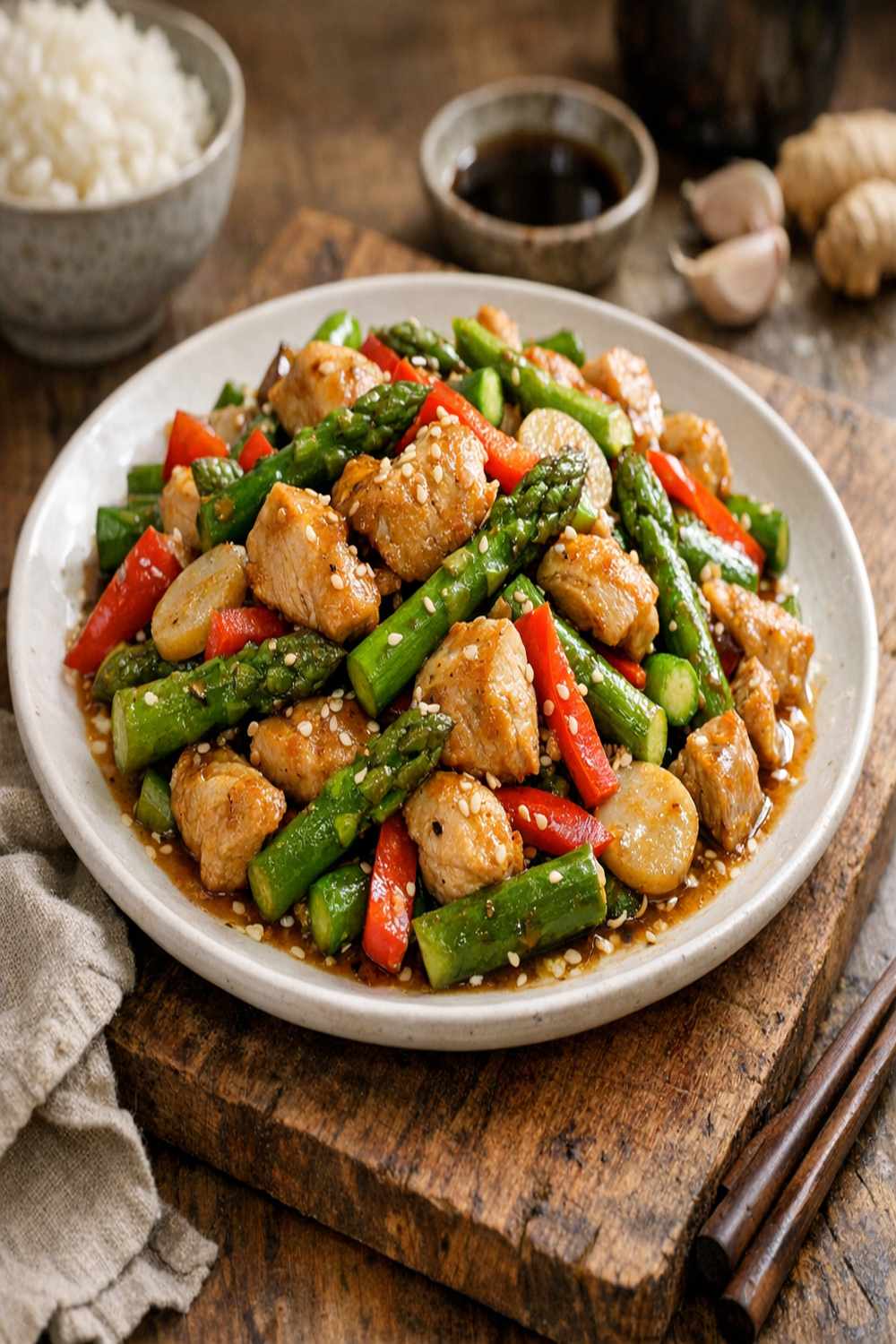
Picture this: it’s a Wednesday evening, the kitchen is warm from the stove, and the unmistakable aroma of garlic hitting hot oil fills every corner of your home. My grandmother didn’t teach me to cook Chinese food—she taught me to create moments. Years ago, watching her wok dance with chicken and vibrant green spears, I realized that some of the most nourishing meals come together in mere minutes, yet taste like they’ve been simmering all day. That’s the magic of a well-executed stir fry. This chicken asparagus recipe carries that same philosophy I’ve built my career as a registered dietitian around: taking time-honored techniques and pairing them with whole ingredients to create something that feels indulgent while actually fueling your body.
Whether you’re planning a weeknight dinner that feels special or impressing guests without spending hours in the kitchen, this dish delivers on both fronts. I’ve spent years helping families find balance between flavor and nutrition, and this recipe might be my favorite proof that they’re not mutually exclusive. The tender chicken, the crisp-tender asparagus with its natural sweetness, and the silky sauce that brings it all together—it’s everything comfort food should be.
Chicken Asparagus Stir Fry Recipe That Will Transform Your Tuesday Night Into Something Memorable
I still remember the first time I truly understood why my grandmother loved cooking stir fries. It was during a particularly chaotic family gathering—cousins running through the kitchen, my grandfather calling from the living room, cousins debating which sauce was superior. Instead of disappearing into stress, my grandmother moved to her wok with this quiet confidence, and within fifteen minutes, she’d created something that brought everyone to the table, silent except for the sounds of contentment.
That’s when it clicked for me. A stir fry isn’t just efficient cooking—it’s a meditation. It’s presence. And when you’re cooking with intention, even on a busy weeknight, that presence carries through to everyone who eats what you’ve made.
When to Make Chicken Asparagus Stir Fry Recipe
This recipe shines during specific moments in your life and calendar. Let me paint the picture for each one:
- Spring Weeknights (March Through May) – Fresh asparagus season arrives, and this is when the vegetable tastes its absolute best. The tender spears practically sing with natural sweetness. I make this at least twice weekly when asparagus hits farmers markets in my Worcester community.
- When You Need Dinner Fast But Want to Feel Proud – From pan to table in under 20 minutes, yet it tastes like you’ve been planning it all day. Perfect for those evenings when work ran late and you need something both quick and genuinely nourishing.
- Date Night In or Small Dinner Parties – This is the dish that makes people think you’ve been to culinary school. It’s elegant enough to impress, accessible enough that you won’t be stressed in the kitchen while your guests arrive.
- When You’re Meal Planning for the Week – Components prep beautifully ahead of time, making this ideal for Sunday preparation when you’re thinking about what Tuesday and Thursday dinners will be.
What Makes This Chicken Asparagus Stir Fry Recipe Special
As a registered dietitian, I’ve spent my career helping people understand that “healthy eating” doesn’t mean sacrificing flavor or the comfort of meals that bring back memories. This recipe is my answer to that false choice. What elevates this beyond everyday cooking is the combination of technique, timing, and ingredient respect.
First, there’s the marinade technique. By coating the chicken in a mixture of cornstarch, a touch of oil, and oyster sauce before cooking, we’re creating what professional cooks call “velveting”—a method used in Chinese cuisine for centuries that keeps lean protein incredibly tender despite high heat. This isn’t just a cooking trick; it’s nutrition-conscious cooking. We get protein-rich chicken without relying on fattier cuts.
Second, the asparagus treatment matters deeply. Most people boil asparagus into submission. In a stir fry, it maintains its structural integrity and nutritional density—all those B vitamins, folate, and chromium stay locked in because we’re using high heat for brief time. The spears finish crisp-tender, which is how they’re meant to taste.
Third, and this is where my grandmother’s wisdom meets modern nutrition science: the sauce. Instead of heavy cream or excess oil, we’re using a cornstarch slurry that creates silkiness through chemistry, not fat. The sesame oil adds profound flavor in just a quarter teaspoon—that’s how you build taste without compromise.
Scaling for Your Crowd
One of my favorite aspects of stir fries is their flexibility. Whether you’re cooking for yourself on a solo Tuesday or feeding eight friends on a weekend, the technique remains consistent—only the quantities shift. Here’s how I approach scaling:
- For 2 People (Date Night or Quiet Weeknight) – Use 8 ounces chicken breast, 10 ounces asparagus, and halve all sauce components. Cook in a smaller wok or large skillet over medium-high heat. Reduce searing time by 10 seconds on each side. You’ll finish in about 12 minutes total. Serves 2 generously with rice on the side.
- For 4-6 People (Family Dinner or Small Gathering) – This is the recipe as written. Use 12 ounces chicken, 1 pound asparagus, and all sauce ingredients as listed. The standard wok works perfectly. Total cooking time remains under 18 minutes. Serves 4-6 depending on appetites and what sides you’re serving.
- For 8+ People (Entertaining or Family Gathering) – Double the entire recipe and cook in two batches rather than crowding one wok. This maintains the high-heat sear that makes chicken texture perfect. Each batch takes the same 18 minutes, but you’ll finish the first serving while the second cooks, which is actually ideal for staggered plating. Alternatively, if you have access to two woks or large skillets, cook simultaneously.
The Ingredients
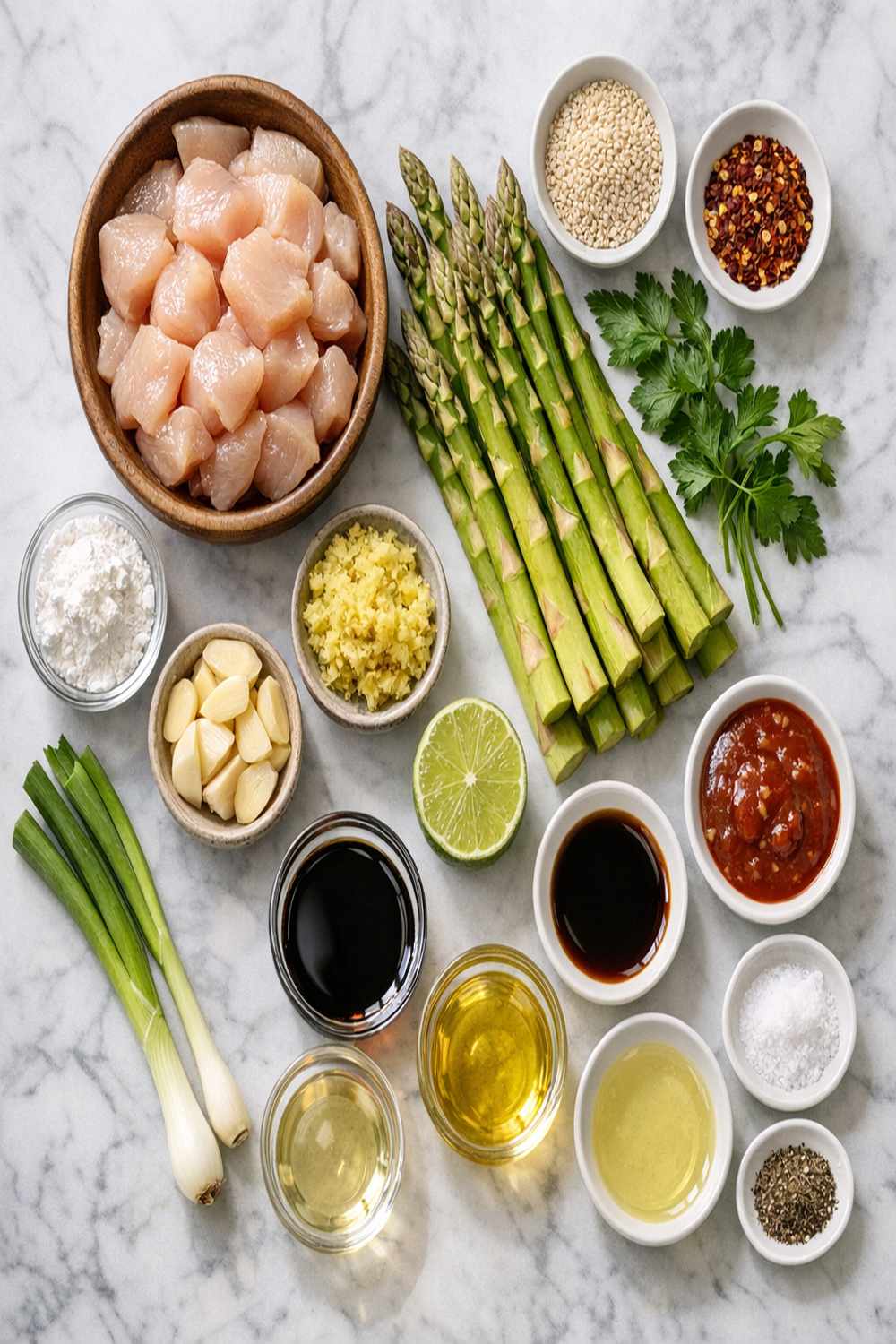
Here’s everything you’ll need to create this restaurant-quality dish at home. Each ingredient serves a purpose, nothing is there for filler:
For the Chicken
- 1 tablespoon water (for the marinade, helps distribute coating evenly)
- 1 teaspoon oyster sauce (for the marinade, adds umami to chicken itself)
- 1 teaspoon cornstarch (for the marinade to coat chicken)
- 12 ounces boneless, skinless chicken breast (sliced thin, about ¼-inch thickness, for even cooking)
- 1 tablespoon neutral cooking oil such as canola or vegetable (for the marinade)
For the Sauce
- ¼ teaspoon ground white pepper (white pepper has less spice bite than black, lets other flavors shine)
- ¼ teaspoon sugar (balances salty and savory elements)
- ½ cup low-sodium chicken stock or water (the base)
- 2 teaspoons cornstarch (creates silky texture without cream)
- 1 tablespoon oyster sauce (umami backbone of the sauce)
- ¼ teaspoon sesame oil (aromatic, powerful in small amounts)
- 1 tablespoon light soy sauce (provides salt and depth)
For Cooking
- 1 clove garlic (minced fine, aromatic foundation)
- 2 scallions (thinly sliced, for garnish and freshness)
- 1 pound fresh asparagus (trimmed, bias-cut into 2-inch pieces for better surface area)
- 2 tablespoons neutral cooking oil divided (1 tablespoon for chicken, 1 for vegetables)
- 1 tablespoon Shaoxing wine or dry sherry (adds complexity, alcohol cooks off)
How to Make Chicken Asparagus Stir Fry Recipe for Your Occasion
This is where technique matters. A stir fry isn’t difficult, but it does require focus and preparation. The Chinese culinary term “mise en place”—having everything ready before you begin—is non-negotiable here. Once that wok hits temperature, things move fast, and you won’t have time to slice asparagus.
Step 1: Prepare Your Chicken and Create the Marinade
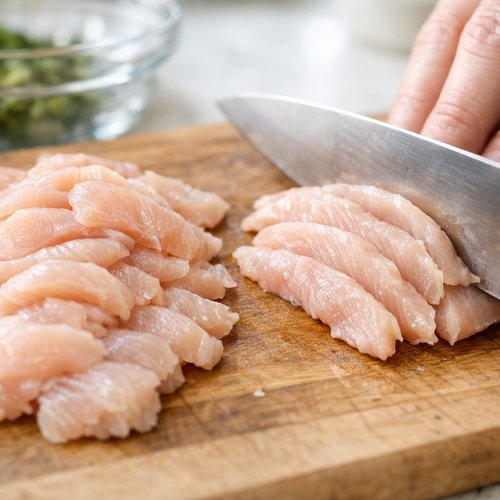
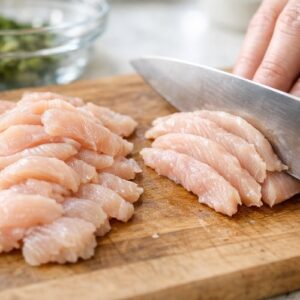
Slice your chicken breast against the grain into thin pieces—roughly ¼-inch thick. This matters more than most people realize. Grain direction determines whether your finished chicken feels tender or tough. In a medium bowl, combine the sliced chicken with 1 tablespoon water, 1 teaspoon cornstarch, 1 tablespoon neutral oil, and 1 teaspoon oyster sauce. Mix until the chicken is evenly coated and the liquid absorbs into the meat. Don’t skip this step—this is the velveting technique that keeps lean protein from becoming tough under high heat.
Set the marinating chicken aside for 15 to 30 minutes. If you’re in a rush, even 10 minutes helps. This resting time allows the cornstarch to fully coat the protein and start its protective work. From a nutritional standpoint, this marinade is doing something brilliant: we’re achieving the tender texture that usually requires higher-fat cuts, but we’re doing it with lean poultry. That’s efficient nutrition.
Step 2: Mix Your Sauce Components While Chicken Marinates
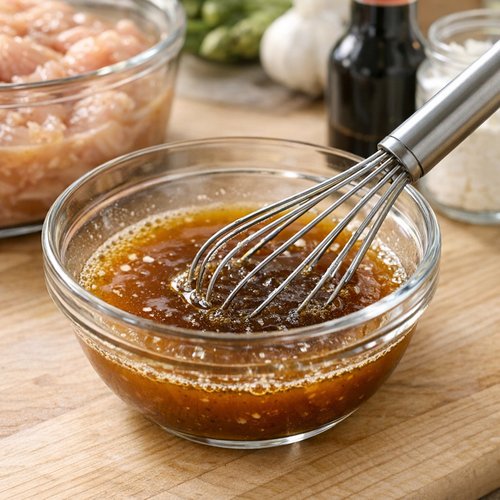
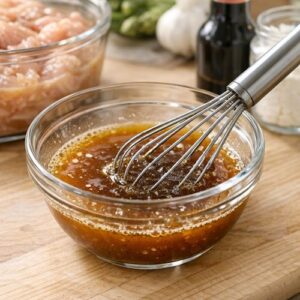
While the chicken rests, whisk together your sauce in a small bowl: ½ cup chicken stock, 2 teaspoons cornstarch, 1 tablespoon light soy sauce, 1 tablespoon oyster sauce, ¼ teaspoon sesame oil, ¼ teaspoon white pepper, and ¼ teaspoon sugar. Whisk thoroughly, paying particular attention to the cornstarch—you want no lumps, or your finished sauce will have gritty spots. This is your mise en place for the hot cooking phase, so everything is ready when you need speed.
Step 3: Prepare Your Asparagus and Aromatics
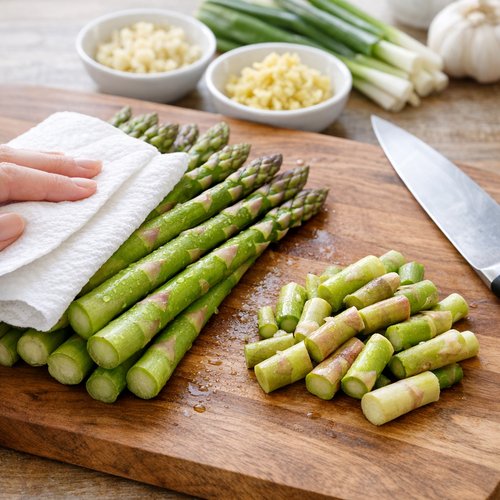
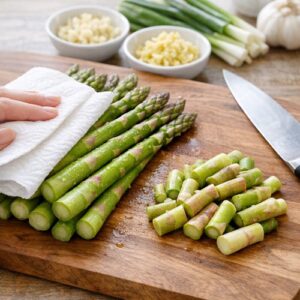
Trim the woody bottom ends of your asparagus—usually about 1 to 2 inches depending on thickness. Rinse and pat dry thoroughly; excess moisture creates steam instead of the high-heat sear we’re after. Slice the asparagus on a sharp angle into 2-inch pieces. This bias cut creates more surface area for caramelization and looks more refined on the plate than straight cuts. Mince your garlic fine. Have your Shaoxing wine measured and ready.
Step 4: Heat Your Wok and Sear the Chicken
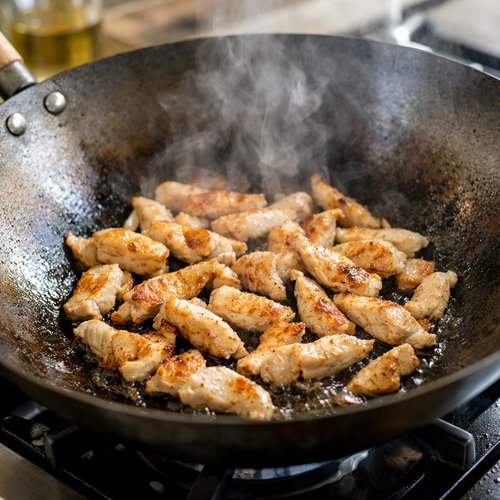
This is the moment where hesitation costs you. Place your wok (or large skillet if you don’t have a wok) over high heat and let it preheat for 2 to 3 minutes. You’re looking for the surface to just barely start smoking—this temperature is critical for proper searing. Add 1 tablespoon of neutral oil and immediately spread the chicken in a single layer.
Now resist the urge to stir. Let the chicken sit undisturbed for 30 seconds. This is where the Maillard reaction—that beautiful browning that creates flavor—happens. After 30 seconds, stir and cook for another 30 seconds. The chicken should be about 75 percent cooked at this point; it will finish cooking when we add the sauce. Remove the chicken to a clean plate.
Step 5: Cook the Aromatics and Asparagus
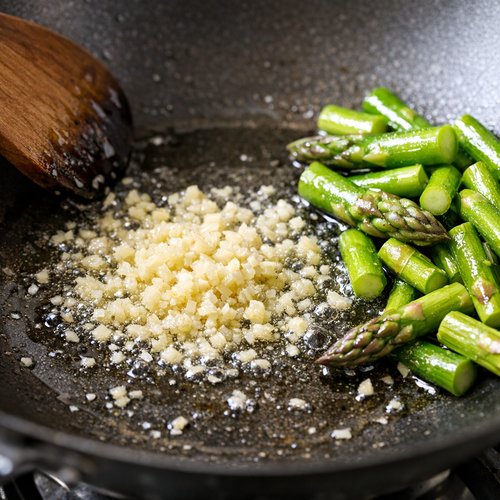
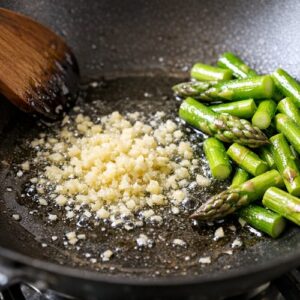
Add the remaining 1 tablespoon of oil to your wok along with the minced garlic. Cook for 15 seconds—we’re not trying to brown garlic here, just wake up its aromatic compounds. Immediately add your asparagus pieces and stir-fry for 1 minute. You want some color on the asparagus, some slight browning at the tips, but maintain that crisp-tender quality. Add the Shaoxing wine and stir for another 30 seconds, letting the alcohol cook off.
Step 6: Create the Sauce and Bring It Together
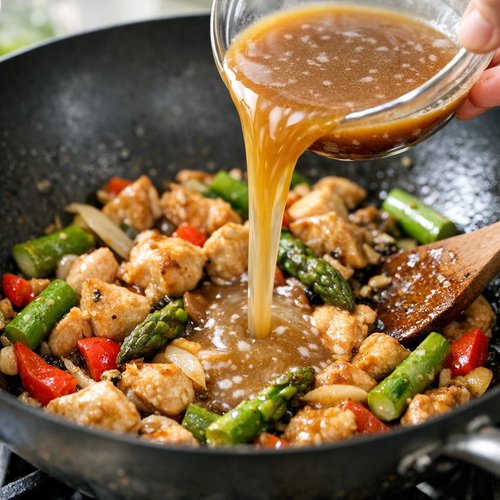
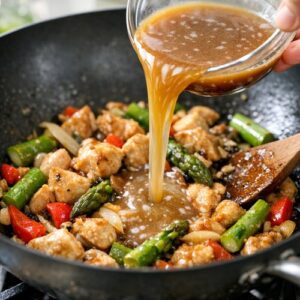
Give your sauce mixture a final whisk to ensure the cornstarch is fully suspended—you’ll see it look slightly opaque. Pour the sauce into the wok with the asparagus and stir gently. The sauce will come to a simmer within 30 to 45 seconds. This is the starch beginning to gelatinize and thicken the liquid into something silky.
Return the chicken to the wok and stir gently for another 30 seconds, just until everything is combined and the chicken finishes cooking. The entire process from hot oil to plated dish should take about 15 to 18 minutes. The sauce should coat the back of a spoon—that’s your visual cue for proper thickness. Taste and add salt if needed, though the soy and oyster sauces usually provide sufficient seasoning.
Make-Ahead Timeline
As someone who helps families plan meals that actually happen despite busy schedules, I’ve built this recipe for real life:
- 3 Days Before – Purchase your chicken and asparagus. If buying asparagus more than 2 days ahead, store upright in a glass of water in your refrigerator; it stays fresher this way.
- 1 Day Before – Slice your chicken, create the marinade mixture, and refrigerate in an airtight container. Trim your asparagus, cut on the bias, store in a damp paper towel in a container. Mix your sauce components in a small jar and refrigerate. When you do this prep, you’re literally removing the cooking friction from your evening.
- Day Of, 30 Minutes Before Serving – Remove chicken marinade from refrigerator and let it sit at room temperature for 10 minutes (this helps it cook evenly). This is also when you’d preheat your wok and have all components in arm’s reach.
- Cooking Time – Follow Steps 4 through 6 above. Everything comes together in the time it takes to boil water for rice.
Expert’s Nutritional Tip
As a registered dietitian, I want to highlight something many home cooks miss: the asparagus in this dish isn’t just a vegetable filler. Fresh asparagus is an exceptional source of chromium, a trace mineral that helps your body regulate blood sugar and improve insulin sensitivity. That compound is especially concentrated in the vibrant green color. When we cook asparagus quickly using high heat—as in this stir fry—we preserve both the color and the chromium content. Traditional boiling can leach chromium into the water. The other often-overlooked nutritional powerhouse here is the Shaoxing wine. Just one tablespoon adds complex flavor compounds that your brain registers as richness and satisfaction, which means you feel more satisfied with appropriate portions. This is how we build genuinely nourishing meals that don’t feel like deprivation.
How to Present and Plate Chicken Asparagus Stir Fry Recipe
The visual beauty of a dish affects how our brains perceive its taste—this isn’t just aesthetic preference, it’s neuroscience. When you plate thoughtfully, people enjoy the food more deeply. Here’s my approach:
- Use a Warmed Bowl or Shallow Plate – Stir fries are best served immediately in warmed vessels. Cold plates cool the dish faster and make the sauce appear dull. Warm your serving bowls in a 200-degree oven while you cook.
- Create Height and Visual Movement – Spoon the chicken and asparagus into the center of the bowl in a gentle mound rather than spreading it flat. This makes the dish look more substantial and intentional. Use tongs or chopsticks to arrange a few asparagus pieces leaning against the chicken dramatically.
- Pour Sauce Intentionally – Don’t drown the dish. Use about ¾ of the sauce in the bowl, and let a bit pool around the base. This shows off the silky texture of your sauce work. Spoon any remaining sauce over the top, creating shine.
- Finish with Fresh Elements – Top with sliced scallions and, if you have them, a few sesame seeds. These add color pop, textural contrast, and signal “intentionally prepared” to everyone at the table. Fresh garnish is never wasted effort in plating.
Common Mistakes to Avoid
I’ve taught enough home cooks to recognize the patterns that derail stir fries. Here are the ones I see most often:
- Overcrowding the Wok – Putting all ingredients in at once creates steam instead of sear. Each component gets its moment. Patience here is what separates home cooking from restaurant cooking.
- Using Cold Sauce – Adding cold sauce to a hot wok causes temperature shock and breaks the silky texture. The sauce should be at room temperature before it hits the heat, which is why mixing it ahead matters.
- Skipping the Chicken Marinade – Some cooks see this as an extra step and skip it. This is where the difference between tough and tender happens. The 15 minutes of marinating is non-negotiable.
- Not Preparing Ingredients First – Stir frying moves faster than most home cooks expect. If you’re still slicing asparagus when your chicken is in the wok, you’ve already lost texture and timing. Prep everything, then cook.
Seasonal Variations
- Spring and Early Summer (Peak Asparagus Season) – Follow the recipe exactly; fresh asparagus from April through June is perfect. Add a squeeze of fresh lemon juice at the very end for brightness. Consider mixing in a handful of fresh peas if they’re available—they cook in the same time and add sweetness that plays beautifully against the savory sauce.
- Late Summer Through Fall – Swap asparagus for sliced bell peppers (red and yellow together create visual interest) or fresh snap peas. Use green beans if you want to maintain the “spear” aesthetic. Increase cooking time for bell peppers by 30 to 45 seconds since they need more softening than asparagus. The technique remains identical; only ingredients change.
- Winter (When Asparagus Is Imported and Expensive) – Shift to broccoli florets, sliced carrots on the bias for visual echo, or Brussels sprout leaves that get shredded and add textural contrast. Winter vegetables benefit from slightly longer cooking—add 45 seconds to the vegetable cooking time. Consider adding a splash of rice vinegar to cut through the earthiness of winter vegetables.
What to Serve Alongside Chicken Asparagus Stir Fry Recipe
A stir fry isn’t complete without thoughtful sides. Here’s how I build a balanced meal around this dish:
- Steamed Jasmine or Basmati Rice – The most traditional choice. Jasmine rice’s subtle floral notes complement the savory sauce beautifully. Serve in a separate bowl so people can control their rice-to-stir-fry ratio.
- Brown Rice or Farro – If you’re prioritizing whole grains and sustained energy, brown rice adds nuttiness. Farro’s chewiness provides textural contrast to the tender chicken and crisp asparagus.
- Cauliflower Rice (Lower-Carb Alternative) – For those watching carbohydrate intake, cauliflower rice absorbs sauce beautifully and keeps the meal light without sacrificing satisfaction.
- Simple Cucumber Salad with Rice Vinegar – The acidity and coolness balance the richness of the finished dish. Slice cucumbers thin, toss with rice vinegar, a touch of sugar, and sliced scallions. This adds freshness and aids digestion of the richer components.
- Edamame as a Side Protein Boost – If you’re serving this to vegetarians or want additional protein options, steamed edamame with sea salt complements the meal without competing with it.
- Appetizer Consideration – If this is a formal dinner, consider starting with something light. A simple miso soup or Authentic Chinese Breakfast Recipe style dumpling would complement perfectly without overwhelming.
For beverages, I recommend serving this with jasmine tea (hot or iced, depending on season), or a crisp white wine if you’re going that route. The wine’s acidity plays beautifully against the umami-forward sauce.
Can I Store Chicken Asparagus Stir Fry Recipe?
Storage is where stir fries present a unique challenge—asparagus doesn’t maintain that crisp-tender quality once cooled. Here’s my professional take on handling leftovers:
Best-case scenario: serve immediately. Stir fries are genuinely best eaten within 5 minutes of plating. However, I live in the real world, and sometimes you have leftovers.
Storage for up to 24 hours: Place cooled stir fry in an airtight container and refrigerate. The chicken will stay safe for 3 to 4 days, but the asparagus quality degrades after the first day. When you reheat, do it gently in a skillet over medium heat with a splash of water—never microwave, which will turn the asparagus to mush and unevenly heat the chicken.
A better approach: store components separately. Keep leftover chicken and sauce in one container, and leftover asparagus in another. Reheat the chicken and sauce gently, then add fresh raw asparagus or briefly blanched asparagus at the last moment. This preserves the texture that makes this dish special.
Freezing is not recommended for this particular dish. The delicate balance of textures breaks down through freeze-thaw cycles. Stir fries are genuinely best made fresh.
Nutrition Information
Per serving (based on 4 servings without rice, USDA data): 195 calories, 24g protein, 8g fat, 6g carbohydrates, 2g fiber, 580mg sodium, 15 IU Vitamin A, 8mg Vitamin C, 34mg calcium, 1.2mg iron. The protein content comes primarily from the chicken breast—an exceptional source of B vitamins, particularly niacin and B6, which support energy metabolism. The asparagus contributes folate and chromium. The sauce components—soy and oyster sauces—provide umami, which research shows increases satiety, meaning you feel satisfied with appropriate portions. This is genuinely nutrient-dense cooking.

Chicken Asparagus Stir Fry Recipe
Ingredients
Method
- Slice your chicken breast against the grain into thin pieces—roughly ¼-inch thick. This matters more than most people realize. Grain direction determines whether your finished chicken feels tender or tough. In a medium bowl, combine the sliced chicken with 1 tablespoon water, 1 teaspoon cornstarch, 1 tablespoon neutral oil, and 1 teaspoon oyster sauce. Mix until the chicken is evenly coated and the liquid absorbs into the meat. Don't skip this step—this is the velveting technique that keeps lean protein from becoming tough under high heat. Set the marinating chicken aside for 15 to 30 minutes. If you're in a rush, even 10 minutes helps. This resting time allows the cornstarch to fully coat the protein and start its protective work. From a nutritional standpoint, this marinade is doing something brilliant: we're achieving the tender texture that usually requires higher-fat cuts, but we're doing it with lean poultry. That's efficient nutrition.
- While the chicken rests, whisk together your sauce in a small bowl: ½ cup chicken stock, 2 teaspoons cornstarch, 1 tablespoon light soy sauce, 1 tablespoon oyster sauce, ¼ teaspoon sesame oil, ¼ teaspoon white pepper, and ¼ teaspoon sugar. Whisk thoroughly, paying particular attention to the cornstarch—you want no lumps, or your finished sauce will have gritty spots. This is your mise en place for the hot cooking phase, so everything is ready when you need speed.
- Trim the woody bottom ends of your asparagus—usually about 1 to 2 inches depending on thickness. Rinse and pat dry thoroughly; excess moisture creates steam instead of the high-heat sear we're after. Slice the asparagus on a sharp angle into 2-inch pieces. This bias cut creates more surface area for caramelization and looks more refined on the plate than straight cuts. Mince your garlic fine. Have your Shaoxing wine measured and ready.
- This is the moment where hesitation costs you. Place your wok (or large skillet if you don't have a wok) over high heat and let it preheat for 2 to 3 minutes. You're looking for the surface to just barely start smoking—this temperature is critical for proper searing. Add 1 tablespoon of neutral oil and immediately spread the chicken in a single layer. Now resist the urge to stir. Let the chicken sit undisturbed for 30 seconds. This is where the Maillard reaction—that beautiful browning that creates flavor—happens. After 30 seconds, stir and cook for another 30 seconds. The chicken should be about 75 percent cooked at this point; it will finish cooking when we add the sauce. Remove the chicken to a clean plate.

- Add the remaining 1 tablespoon of oil to your wok along with the minced garlic. Cook for 15 seconds—we're not trying to brown garlic here, just wake up its aromatic compounds. Immediately add your asparagus pieces and stir-fry for 1 minute. You want some color on the asparagus, some slight browning at the tips, but maintain that crisp-tender quality. Add the Shaoxing wine and stir for another 30 seconds, letting the alcohol cook off.
- Give your sauce mixture a final whisk to ensure the cornstarch is fully suspended—you'll see it look slightly opaque. Pour the sauce into the wok with the asparagus and stir gently. The sauce will come to a simmer within 30 to 45 seconds. This is the starch beginning to gelatinize and thicken the liquid into something silky. Return the chicken to the wok and stir gently for another 30 seconds, just until everything is combined and the chicken finishes cooking. The entire process from hot oil to plated dish should take about 15 to 18 minutes. The sauce should coat the back of a spoon—that's your visual cue for proper thickness. Taste and add salt if needed, though the soy and oyster sauces usually provide sufficient seasoning.
Notes
FAQs
Can I use chicken thighs instead of breast?
You absolutely can, though the nutrition profile and cooking time shift slightly. Chicken thighs are fattier, so they can handle less careful cooking, but the marinade technique still benefits them. They’ll stay incredibly juicy. The trade-off: thighs have about 15g of fat versus 5g in breast meat, so per-serving calories increase from 195 to roughly 245. From a flavor perspective, many people prefer thighs’ deeper taste. If substituting, slice them the same thickness and follow identical cooking times.
Is Shaoxing wine necessary, or can I substitute it?
Shaoxing wine brings particular complexity that’s hard to fully replicate, but you have options. Dry sherry works well and is often easier to find. In a pinch, dry white wine or even a quality sake works. What you’re achieving by adding wine is depth—the alcohol carries aromatic compounds that cook off, leaving complexity. Skip it entirely if you must, but the dish will taste flatter, less sophisticated. A ratio: 1 tablespoon Shaoxing wine equals roughly 1 tablespoon dry sherry, or ¾ tablespoon dry white wine (white wine is more neutral, so less is needed).
What if I don’t have a wok? Can I use a large skillet?
Yes, absolutely. A large stainless steel or cast-iron skillet works perfectly. The advantage of a wok is its shape—it concentrates heat at the bottom and cools at the sides, giving you temperature zones. A skillet is flat, so heat distribution is different, but for home cooking, this makes almost no practical difference. Use your largest skillet, get it equally hot, and follow the same steps. You might need an extra 30 seconds on the cooking time, but the result will be excellent.
Can this be made vegetarian?
Yes, though you’ll lose the protein component that makes this a balanced meal. To veganize: replace the chicken with firm tofu cut into bite-sized pieces (press tofu between towels first to remove excess moisture, then coat in the marinade). Add extra vegetables—mushrooms, broccoli, snap peas—to increase volume and nutritional density. Replace oyster sauce with tamari or additional soy sauce. The cooking time remains the same since tofu requires no longer cooking. Consider adding a tablespoon of sesame paste or tahini to the sauce to add protein and richness that replaces the chicken fat. Serve over rice or with a side of edamame to complete the protein profile.
How far in advance can I prep for this meal?
This is where stir fries shine for meal planning. You can prep everything except the actual cooking 24 hours in advance. Slice and marinate chicken, cut and store vegetables, mix sauce components—all doable the night before. From a food safety perspective, marinated chicken should stay refrigerated, and asparagus keeps better if stored upright in water. When you’re ready to cook, let the marinade come to room temperature for 10 minutes, then proceed with cooking as written. This is genuinely a 15-minute cooking project after 5 minutes of assembly-line prep the day before.
More Recipes for Your Table
- Authentic Beef Broccoli Recipe – A companion dish with similar technique and seasonal versatility, perfect for those who prefer beef to chicken.
- Bao Recipe Filling – If you love the flavors here but want to explore different formats, these steamed buns pair beautifully with stir-fry sauce concepts.
- Authentic Moo Shu Recipe – Another quick-cooking Mandarin technique that uses similar aromatics and proteins for variety throughout your week.
- BBQ Chinese Pork Recipe – When you want to explore other proteins while staying within the traditional technique framework I love.
As I look back on all those evenings in my grandmother’s kitchen, I realize the real magic wasn’t just in her technique—though she was masterful. It was in how she understood that feeding people is a form of love, and that the fastest meals often carry the most intention. This chicken asparagus stir fry carries that same philosophy. It’s quick enough for Tuesday nights, impressive enough for guests you want to impress, and nourishing enough that you feel genuinely fueled afterward, not just full.
Cook this for someone you care about. Notice how the kitchen fills with aroma within minutes. Watch how quickly the table fills afterward. Those moments, built around simple ingredients handled with respect—that’s what I’ve built my career around as a registered dietitian. Food isn’t just fuel; it’s how we create memories, how we show care, how we build togetherness.
Make this recipe your own. Adjust the garlic if you love it stronger. Swap asparagus for whatever vegetable speaks to you this season. Serve it over rice or cauliflower rice or noodles. The technique remains constant, but your personal touch makes it genuinely yours.
Happy Cooking!